I have to stop you there. I'm sorry.
We're going to MP Gill for two and a half minutes.

Evidence of meeting #38 for Agriculture and Agri-Food in the 45th Parliament, 1st session. (The original version is on Parliament’s site, as are the minutes.) The winning word was soil.
A video is available from Parliament.
Liberal
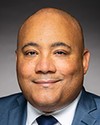
The Chair Liberal Michael Coteau
I have to stop you there. I'm sorry.
We're going to MP Gill for two and a half minutes.
Bloc

Marilène Gill Bloc Côte-Nord—Kawawachikamach—Nitassinan, QC
Thank you very much, Mr. Chair.
Mr. Caron, the committee has received one of your former students, Vincent Poirier. He's a professor at the Université du Québec en Abitibi‑Témiscamingue, or UQAT. He said that, according to you, we were 30 cm away from famine.
I'd like to address the issue of soil again.
Both you and Mr. Poirier said that field research is important because you can't always use a greenhouse to replicate soil conditions.
We know that there have been budget cuts and closures.
What would be necessary for research if we want a significant research network?
I spoke about the regions earlier. It was said that the research should cover all of Canada. You said earlier that resources would need to be added.
Can you tell us more about the subject?
Professor and Agronomist, Université Laval, As an individual
Farmers are caught in market situations that, in a way, make them prisoners of the crops they can sell and export, such as soybeans and grain corn when these are not consumed locally. Alternatives must be provided that will have effects on soil health. However, no one wants to develop these solutions because of the risks they pose and the fear of the unknown.
At the moment, a broad consensus has been established in Quebec—and it's also gaining support from our colleagues in other provinces—regarding the need for reference plots for testing other solutions, for example, by rotating with new species. To do that, you need plots. Research teams are also needed in Canada's various regions. The recent closures go in the opposite direction of the collective effort and the solution we need for future generations.
In Quebec, right now, we're structuring the entire network of what we call “flagship plots” to provide alternatives to producers and test them, such as long rotations with forage species to restore the health of compacted soils, which has now deteriorated too much. I'm also thinking about rotations using agroforestry systems that will provide ecosystem services beneficial to society.
I won't hide from you the fact that the recent closures have had a profound impact on our planning, so these decisions will reduce our ability to provide solutions to the next generation.
Liberal
The Chair Liberal Michael Coteau
Thank you.
We'll now go to the Conservatives for five minutes.
Mr. Bexte.
Conservative

David Bexte Conservative Bow River, AB
Thank you again, Mr. Chair.
For the second round, I get to go back to the question we got cut off on. I'll reiterate quickly.
We're looking at a Mercosur trade deal with South America. Animal health and disease migration are a big part of business risk management and are the justification for a lot of the programs we talked about, such as the reliance mechanism for veterinary products. From a food safety perspective, how important is it that we get our systems right and that we look very carefully at what we might be doing with Mercosur?
President and Chief Executive Officer, Canadian Animal Health Institute
It's an extremely important portion of that, certainly. Countries like Brazil that are massive producers in terms of livestock and that are looking to expand their export markets are also at the table at groups like the Codex Alimentarius committee, which looks at everything from maximum residue limits of veterinary drugs in all kinds of animal tissues....
The more opportunity we have to work with the regulatory authorities of countries that we're looking to partner with on this, and the more we actually work together in terms of looking at harmonizing and making sure that the standards they are applying are ones that we apply to ourselves and that we are consistent.... That is really important from that food safety perspective, unquestionably.
Conservative
David Bexte Conservative Bow River, AB
Has there been enough work, or even a modicum of work, done in that space to date with Mercosur countries?
President and Chief Executive Officer, Canadian Animal Health Institute
It's starting. I don't think we're entirely there yet.
Conservative
David Bexte Conservative Bow River, AB
I appreciate that.
I'm going to shift tacks here a little.
Mr. Caron, I'm really interested in what you're talking about—soil health at depth. I started growing corn about four years ago on my irrigated farm in southern Alberta. I see some effects and work to mitigate it.
I wonder if you could comment on how important it is that we maintain tracts of land in the country's research inventory—like the research centres that have recently been threatened—for a long period of time. You said that it takes 10 years to cause damage and 10 years to mitigate that damage, so we have to study specific parcels of land for 20 years to understand. Could you comment on the circumstance we find ourselves in right now and what the alternatives might be, if any?
Professor and Agronomist, Université Laval, As an individual
Yes, absolutely.
Thank you for the question, Mr. Bexte.
I work a lot with agricultural producers, and I have conducted soil health monitoring all over North America, in several U.S. states and in several Canadian provinces. The situation we have in Quebec is somewhat like what we see everywhere.
The problem we have when we want to work on solutions with our agricultural producers is that, even as researchers, even in partnership programs, we cannot maintain trials for sufficiently long durations. It's understood that agricultural producers won't wait 10 years or 20 years until they see results. That's why we need places where we are guaranteed that, for 10 to 20 years, we can take repeated measurements and observe changes. That's very significant.
It's a bit like a public health database. When these structures disappear, the entire legacy is lost. As a result, it's very important to have permanent structures that allow us to establish a reference point, because farmers are not willing to do it. Even if we wanted to do it, they wouldn't want to enter 10- or 20-year lease agreements to conduct our trials. We can't succeed as researchers by working with these scenarios.
The argument they raise is that the farm might be sold or transferred. In that case, you need to maintain areas where plots of land are guaranteed to remain for 10 or 20 years.
Conservative
David Bexte Conservative Bow River, AB
I appreciate that.
You're suggesting that it may take 10 or 20 years to start over in a different location, in terms of what might get lost with places like Indian Head.
Professor and Agronomist, Université Laval, As an individual
Yes. That's right.
Conservative
David Bexte Conservative Bow River, AB
Exactly. Again, we really need to make sure these stations are protected.
Thank you very much.
Is there anything else you'd like to add, Dr. Filejski?
President and Chief Executive Officer, Canadian Animal Health Institute
The opportunity to continue raising these issues is incredibly important. We really appreciate the ability to be here.
My pitch is always that we are starting down the road of fixing some of these issues, but we need to look at the comprehensive picture of what it is that limits the ability of companies to invest in Canada, in terms of bringing products here and keeping them here.
Conservative
David Bexte Conservative Bow River, AB
If you have anything else you'd like to table with the committee, please feel welcome to table it.
President and Chief Executive Officer, Canadian Animal Health Institute
Something that—
Liberal
The Chair Liberal Michael Coteau
I have to stop you there. We've gone past time.
To the witnesses, we have specific time slots. I have to stick to them. I don't like cutting you off.
We'll go to the Liberals now, for the last five minutes.
MP Mingarelli.
Liberal

Giovanna Mingarelli Liberal Prescott—Russell—Cumberland, ON
Thank you, Mr. Chair.
Thank you to all the witnesses for being here today.
I'm going to start my questions with you, Madam Filejski.
Animal health status directly affects export access, as you know. How should BRM programs account for trade risks linked to disease outbreaks?
President and Chief Executive Officer, Canadian Animal Health Institute
Doing it at the tail end of things becomes very hard. That's why we're looking at trying to advocate a complementary part of the BRM that looks at upfront management, early detection and early intervention. That is the key.
I'll go back to my example of blackhead disease in turkeys. If you can catch the outbreak and intervene effectively early on, you can circumvent the ongoing piece of that. Predicting outbreaks and the movement of disease is incredibly hard. That's what makes it so volatile and unpredictable for both veterinarians and farmers alike.
Liberal
Giovanna Mingarelli Liberal Prescott—Russell—Cumberland, ON
Are there successful models of collaboration between government and the animal health sector that could be expanded?
President and Chief Executive Officer, Canadian Animal Health Institute
The current work that has been happening with reliance is probably the best example out there right now. At every international meeting I go to, people ask about reliance. The United States is asking us about our experience with reliance. Other jurisdictions are beginning to look at it.
Implementing successful programs depends, fundamentally, on a conversation between the people who will be using the model—whether it's reliance or another one—and the government trying to design a program that is actually going to make a difference. The work that's been done over the last year in particular has been remarkably successful in terms of creating something companies are going to be able to use.
Liberal
Giovanna Mingarelli Liberal Prescott—Russell—Cumberland, ON
That's great. Thank you.
My next questions are for you, Ms. Cohen Boulakia, from Équiterre.
Are business risk management programs fair for small farms, young farmers and diversified farms?
Agronomist and Project Manager, sustainable agriculture, Équiterre
I don't have the exact data, but I know there's a lot of discussion on this topic. In fact, it's mainly the large farms that tend to benefit from the programs, particularly because all payments and compensation are given based on the number of hectares. The larger the farm, the greater the compensation.
Because of that, there are many small businesses that feel somewhat disadvantaged regarding the business risk management programs.
Liberal
Giovanna Mingarelli Liberal Prescott—Russell—Cumberland, ON
How can we ensure that the green transition does not increase inequalities in the agricultural sector?
Agronomist and Project Manager, sustainable agriculture, Équiterre
That's a good question.
Mr. Caron could help me answer this question, since I do not have a simple answer.