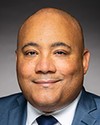
Evidence of meeting #38 for Agriculture and Agri-Food in the 45th Parliament, 1st session. (The original version is on Parliament’s site, as are the minutes.) The winning word was soil.

A video is available from Parliament.

On the agenda

Members speaking

Before the committee

Filejski  President and Chief Executive Officer, Canadian Animal Health Institute
Honsberger  Interim Executive Director, Canadian Alliance for Net-Zero Agri-food
Cohen Boulakia  Agronomist and Project Manager, sustainable agriculture, Équiterre
Caron  Professor and Agronomist, Université Laval, As an individual
Pratt  Interim Commissioner of Competition, Competition Bureau Canada
Hollingworth  Acting Deputy Commissioner of the Competition Promotion Branch, Competition Bureau Canada

11 a.m.

Liberal

The Chair Liberal Michael Coteau

I'd like to call this meeting to order.

Welcome to meeting number 38 of the House of Commons Standing Committee on Agriculture and Agri-Food.

Today's meeting is taking place in a hybrid format, pursuant to the Standing Orders. Members are attending in person in the room and remotely using the Zoom application.

Before we continue, I'd like to ask all in-person participants to consult the guidelines written on the cards on the table. These measures are in place to help prevent audio feedback incidents and to protect the health and safety of all participants, including our interpreters. You'll also notice a QR code on the card, which links to a short awareness video.

I'd like to make a few comments for the benefit of witnesses and members.

Please wait until I recognize you by name or you are asked a question directly by a member before speaking. For those participating by teleconference, click on your microphone icon to activate your microphone, and please mute yourself when you're not speaking. For those on Zoom, at the bottom of your screen, please select the appropriate channel for interpretation: floor audio, English or French. For those in the room, you can use the earpiece and select the desired channel.

I'd like to remind witnesses that committee members may ask questions in either French or English. If you will need interpretation, please take a moment now to prepare your earpiece and select the listening channel you need in advance, in order to take full advantage of the time allocated for questions and answers.

As a reminder, all comments should be addressed through the chair. For members in the room, if you wish to speak, please raise your hand. For members on Zoom, please use the “raise hand” function. The clerk and I will manage the speaking order to the best of our ability, and we appreciate your patience and understanding in this regard.

Pursuant to Standing Order 108(2) and the motion adopted by the committee on Thursday, September 18, 2025, the committee is resuming its study on business risk management programs in Canada's agricultural sector.

As witnesses today, we have, from the Canadian Alliance for Net-Zero Agri-food, Ashley Honsberger; from the Canadian Animal Health Institute, Dr. Filejski; and from Équiterre, Adeline Cohen Boulakia. Appearing alongside them is Jean Caron.

We also have substitutes today. For Mr. Barlow, we have Mr. Bexte; for Mr. Lemire, we have Ms. Gill; and for Mr. Epp, we have MP Cathy Wagantall.

Thank you for joining us at the committee.

Each of our witnesses will have up to five minutes. We'll start with the Canadian Animal Health Institute for five minutes.

Thank you for being here.

Catherine Filejski President and Chief Executive Officer, Canadian Animal Health Institute

Thank you, Mr. Chair.

Good morning, Mr. Chair and committee members, and thank you for the invitation to appear today.

As you heard, my name is Catherine Filejski. I'm a licensed veterinarian and the president and CEO of the Canadian Animal Health Institute, known colloquially as CAHI.

As the head of CAHI, I represent the developers, manufacturers and distributors of the vital veterinary medicines that safeguard Canada's livestock and poultry sectors. We are a national association, serving as the trusted science-based voice of the Canadian animal health industry since our founding in 1968. Our full-member companies are responsible for sales of approximately 95% of Canada's animal health market.

As this committee reviews the future of business risk management programs ahead of the next FPT agreement negotiations, our core message is simple: an ounce of prevention is worth a pound of cure.

Animal agriculture is characterized by unique and highly volatile realities of animal disease outbreaks and biosecurity threats. When a pathogen enters a barn or a pasture, the financial devastation is often immediate, compounding and catastrophic.

Historically, our BRM suites, like AgriStability and AgriRecovery, have been essential lifelines. However, the agricultural policy community widely recognizes that relying solely on BRM programs creates a reactive framework that compensates for losses only after financial ruin has already occurred.

BRM programs can and in fact must be substantially improved by strategically complementing them with proactive animal health and biosecurity initiatives. We must modernize our definition of risk management to include the regulatory tools that allow us to prevent disease outbreaks from triggering these multi-million-dollar tax payouts in the first place.

To modernize business risk management programs effectively, we need to align our regulatory policies with our agricultural resilience goals. Rapid access to innovative veterinary medicines is a fundamental pillar of national biosecurity. If our producers do not have the necessary tools to protect their herds, no stabilization fund will be able to compensate for lost market opportunities.

Right now, Canadian producers face a critical vulnerability: a lack of access to veterinary medicines due to Canada-specific regulatory hurdles. Because Canada represents only about 2.5% of the global animal health market, international innovators frequently choose not to navigate our costly, lengthy and unique bureaucratic pathways.

Consider the ongoing issues with histomoniasis, commonly known as blackhead disease, in Canadian turkeys. This disease is often fatal to turkey flocks, causing immense animal suffering and severe financial strain for producers. Currently, there is no licensed treatment available in Canada. An effective and licensed treatment does currently exist in Italy. However, because of current Canadian regulatory requirements, it is not economically feasible to register this product in Canada, and Canadian turkey farmers currently have no viable, efficient way to access this medicine to save their flocks. They are left exposed, and when a flock is lost, our BRM programs are forced to bear the cost.

To fix this, the next FPT agreement must incorporate clear policy outcomes that are focused on regulatory reform and policy coherence. We urge the government to improve BRM resilience by investing in our regulatory infrastructure in two concrete ways.

First, create abbreviated regulatory pathways that allow for simultaneous review or, better yet, recognition of approvals from trusted international jurisdictions like the European Union or the U.S.

Second, reduce Canada-specific data requirements that don't significantly enhance the safety of veterinary medicines but do delay market access to them. By removing these unnecessary barriers, we can equip Canadian farmers with global standard tools to prevent and control outbreaks before they become disastrous and trigger BRM payouts. Proactive animal health is the ultimate form of risk mitigation.

Thank you. I welcome your questions.

The Chair Liberal Michael Coteau

Thank you very much.

Next, we'll go to the Canadian Alliance for Net Zero Agri-food. Welcome.

Ashley Honsberger Interim Executive Director, Canadian Alliance for Net-Zero Agri-food

Thank you, Mr. Chair.

Thank you all for inviting me to participate in this study.

My name is Ashley Honsberger. I'm the interim executive director for CANZA.

CANZA is a national alliance that brings together producers, commodity associations, food companies, financial institutions, tech experts and researchers to advance practical, scalable solutions that help manage risk, strengthen resilience and support long-term competitiveness.

We appreciate the committee's recognition that Canada's BRM programs must continue to evolve to meet the realities facing producers today. Canadian producers are managing increasing volatility, particularly from extreme weather events, and many current BRM programs were designed primarily to respond to episodic and catastrophic risk. Increasingly, however, producers are also managing longer-term, more systemic challenges associated with climate volatility, soil health and water management. There's growing pressure to strengthen resilience while remaining competitive.

From a Canadian perspective, BRM modernization represents an opportunity to better support proactive risk reduction and long-term resilience across the sector. Supporting producers with tools and approaches that build adaptive capacity can help reduce exposure to future risks while also encouraging long-term competitiveness.

As governments also prepare for future FPT negotiations, we believe that there's an important opportunity to modernize BRM programming in ways that better strengthen resilience, innovation and producer adoption.

Today I would like to highlight three key considerations for the committee.

First, BRM programs should better recognize and support practices that improve long-term farm-level resilience. Healthy soil is not only an environmental asset; it's a strategic Canadian asset tied directly to agricultural productivity, economic resilience, healthy environments, food production capacity and, ultimately, long-term competitiveness.

Canada benefits from some of the most productive farmland in the world. Protecting and strengthening our natural asset base is increasingly important in a global environment shaped by climate volatility and supply chain disruption. Many producers have already started adopting practices that lead to climate adaptive outcomes; however, transition periods to new practices can create uncertainty and financial risk for producers, particularly when margins are already tight. Programs that help producers adopt resilience practices can enable practical producer-led innovation while strengthening long-term viability.

Second, modernization efforts should ensure that BRM programs continue evolving alongside the realities that producers face today. As climate volatility increases, producers are experiencing more frequent and complex disruptions, while governments face growing pressures within these programs designed to respond to those risks. In that context, there's an important opportunity to explore approaches that not only respond after losses occur but also build resilience and reduce risk before events happen.

As approaches to agricultural risk assessment continue to evolve, there's an opportunity for BRM programs to adapt how risk is assessed and managed. This could include approaches that better recognize proactive risk reduction over time while maintaining producer trust and confidence in how information is used, protected and shared. These discussions are also becoming increasingly relevant within broader financial and investment conversations. Initiatives such as Canada's Nature Advantage and work under way on nature-related financial disclosures are helping shape how resilience, natural assets and long-term risk are assessed. Canada can increase ag productivity and resilience by supporting approaches that improve competitiveness, reduce adoption barriers and translate on-farm resilience into economic value.

Third and finally, coordinating actors from across the system is essential to strengthening the effectiveness of risk management across the sector. Improving how risk is measured, managed and reduced over time will require coordination across industry, financial institutions, supply chains and more, and each plays a role in advancing practical solutions that help producers manage risk and build resilience. A key consideration is ensuring that approaches reflect regional differences in production systems and risk exposure. Effective risk management also depends on solutions tailored to local realities.

In this context, improving consistency and clarity on how outcomes are understood can help strengthen the overall effectiveness of risk management. Producers are looking for practical tools that improve competitiveness, strengthen resilience and support long-term viability. Canada can support that goal through modernized risk management and approaches that are collaborative and flexible and reflect on-the-ground farm realities.

Thank you very much for the opportunity to appear today. I do look forward to your questions.

The Chair Liberal Michael Coteau

Thank you very much.

Next we'll go to Équiterre, online.

Welcome. You have five minutes.

Adeline Cohen Boulakia Agronomist and Project Manager, sustainable agriculture, Équiterre

Mr. Chair, members of the committee, on behalf of Équiterre, thank you for giving us this opportunity to speak.

My name is Adeline Cohen. I'm an agronomist and project manager in sustainable agriculture at Équiterre. I'm accompanied by Jean Caron, professor and researcher at Université Laval, holder of the chair in conservation and restoration of organic soils, and author of several articles cited in our brief on risk management.

With the beginning of discussions on the next strategic framework for agriculture, we welcome the major progress made in integrating agro-environmental practices into risk management programs. However, we are here today to present you with a strengthened vision, because our society will soon no longer have the means to financially cover losses in a purely reactive manner.

Jean Caron Professor and Agronomist, Université Laval, As an individual

I'll continue by testifying, as a researcher, on the points raised in the report.

To ensure our food and economic sovereignty, it's essential that we integrate soil health into the very foundation of our agricultural management, as healthy soil is our first and best defence against climate shocks.

We're currently facing both an environmental and an economic crisis. The degradation of agricultural soils incurs a colossal cost, already estimated at $3 billion per year in Canada. In Quebec in particular, 90% of agricultural soils in the main large-scale farming regions are considered to be in poor condition. Heavy machinery has caused deep, often irreversible compaction, and we've lost 40% of our grasslands to row crops since 2006, which has eliminated our best natural decompaction tools.

The economic consequences are direct and measurable. Soil compaction now causes a 1% decrease annually in corn crop yields in Quebec. In the next decade, the profitability of many businesses could be seriously compromised. At the same time, the increase in climate hazards is putting unprecedented pressure on public funds. If this trend continues, this explosion in costs will threaten the financial viability of programs and will inevitably cause the rates charged to producers to skyrocket.

11:15 a.m.

Agronomist and Project Manager, sustainable agriculture, Équiterre

Adeline Cohen Boulakia

This brings us to the heart of the matter, which is how to adapt our current programs. Although essential, risk management programs were designed for another era. The safety net paradoxically encourages producers to maintain climate-vulnerable farming practices, such as monoculture. Conversely, producers who practise crop diversification, an agronomic practice that's recognized for reducing input use and stabilizing yields, are not rewarded.

On the other hand, research shows promising results on adapting programs to encourage good practices. In Saskatchewan, they have a program that covers up to 30% of farmland that uses diversification practices, thereby encouraging experimentation with new approaches, such as intercropping. In Quebec, there's a pilot project that reduces the insurance premium by 5% for winter soil cover of 75%. These are just two examples. The complete list is available in our 40‑page report.

Here are our four main recommendations for the next strategic framework. First, we recommend integrating soil health into actuarial risk assessment. We recommend looking at introducing advanced soil diagnostics to the list of eco-conditionality measures and modernizing digital data collection by provincial agencies.

Second, we recommend protecting and funding innovation. It's known that innovation involves a certain degree of risk. Farms experimenting with new soil conservation practices should have access to specialized insurance that protects them from losses. Furthermore, an enormous amount of support is needed for agricultural research.

Third, we recommend financially rewarding proactive risk reduction with premium discounts or enhanced coverage for good practices.

Fourth, we recommend supporting short channels and combatting food waste. Crop insurance must stop conditioning farmers to expect compensation for totally abandoning a damaged field, so that imperfect products can be harvested for food banks. Reference prices must also stop penalizing producers who choose to sell using short distribution channels.

In conclusion, changing our risk management programs is not solely an environmental concern. It has become an essential condition to ensure the economic survival of our farms.

We thank you for your attention. We will be pleased to answer your questions.

The Chair Liberal Michael Coteau

Thank you very much. We appreciate all of the witnesses today.

First, we'll go to the Conservatives for six minutes.

Go ahead, Mr. Gourde.

11:15 a.m.

Conservative

Jacques Gourde Conservative Lévis—Lotbinière, QC

Thank you, Mr. Chair.

Mr. Caron, you spoke about the problem of soil compaction. I think it's really real because I see it on my own land.

Farmers now use equipment that is very heavy for spreading manure. We're talking here about manure tanks of 7,000 to 8,000 gallons, or around 30,000 litres. It has a huge effect on soil compaction.

Do you have any comments on how producers could better equip themselves?

11:20 a.m.

Professor and Agronomist, Université Laval, As an individual

Jean Caron

In fact, the main machines responsible are the harvesting equipment, such as oversized combines and, especially, the grain trailers that move around all over the fields. That's problematic. There are also, as you mentioned, the manure tanks.

Recent studies conducted by Agriculture and Agri-Food Canada have shown that mobile manure spreading booms are technological pieces of equipment that significantly reduce the axle load.

The problem is that equipment that is too heavy will compact the soil to a depth of about one metre. However, very few people measure soil health to this depth. As a result, the problem is difficult to pinpoint. It manifests as a loss of soil drainage capacity and a loss of surface aeration, which, in our opinion, is the cause of the productivity losses we've started to observe.

This phenomenon has been observed not only in Quebec. It's also been observed throughout the “corn belt” region of the U.S.

11:20 a.m.

Conservative

Jacques Gourde Conservative Lévis—Lotbinière, QC

You also talked about soil degradation. Over the medium and long term, monocultures deplete soil of its organic matter.

Are there any methods to remedy this?

11:20 a.m.

Professor and Agronomist, Université Laval, As an individual

Jean Caron

Clearly, all external inputs of organic matter are desirable. The problem is with the overall appraisal. If we only do monocultures that take away the organic matter, inevitably, year after year, it decreases steadily. The latest Black report still indicated actual losses of organic matter in the soils, which harms their long-term productivity.

Let's talk about solutions. One would be to increase the proportion of rotations that return organic matter to the soil, such as green manures or forage rotations. We've lost nearly 40% over the past few years. This loss particularly harms the chances we have of maintaining soil health for future generations.

11:20 a.m.

Conservative

Jacques Gourde Conservative Lévis—Lotbinière, QC

Mr. Caron, I believe that forage plants are a medium and long-term solution to increase organic matter.

However, there was a research centre in Saint-Augustin-de-Desmaures that was conducting advanced research to find new plant varieties and help farmers.

What effect did the budget cuts and the loss of the Saint-Augustin centre have on the region?

11:20 a.m.

Professor and Agronomist, Université Laval, As an individual

Jean Caron

Well, there has been strong opposition to the recent closures of Agriculture and Agri-Food Canada research centres. In our opinion, this is a very bad decision. We have reported this to several members of Parliament from different regions.

The problem is that we need experts to help us. A loss of soil health accompanied by a 1% loss in its productivity represents a loss of about 10% of the business's net profit each year when it's raising a monoculture. That means that, within 10 years, most businesses will be operating at a loss. This means one thing: We have to move quickly.

When a research centre is closed and people are relocated, many do not follow. The result is that you lose staff with 25 or 30 years of experience. Experience is not something that you can restore immediately by hiring young people. Merely replacing staff following the relocation will have particularly harmful consequences on Agriculture and Agri-Food Canada's ability to generate the research results needed to address soil degradation.

It's particularly the forage crops research group and the soil health group that are affected by the closure of the Sainte-Foy agricultural research centre. These research groups are essentially relocated and will inevitably lose the interest they had in regional research. Now, as a previous speaker said, the solutions in the Canadian agriculture sector are often regional. This means that it's important to still have this ability to respond regionally to agricultural producers' needs.

11:20 a.m.

Conservative

Jacques Gourde Conservative Lévis—Lotbinière, QC

If we don't take action, what will happen in 10 years if soil degradation continues at this rate?

11:20 a.m.

Professor and Agronomist, Université Laval, As an individual

Jean Caron

Essentially, you will have to compensate producers more and more. They'll be in a financial situation that will be very difficult to get out of. It'll become more difficult to help them because they won't have the margins they need to reintroduce corrective crops, for example.

One thing must be understood. When soil is degraded, it does not regain its health in one year. It takes five to ten years. That means that if farmers are in trouble, it'll take 10 years before they can see real benefits. That means the financial impact for a business is huge.

11:25 a.m.

Conservative

Jacques Gourde Conservative Lévis—Lotbinière, QC

Are there currently any programs to address the situation or is it just left up to government to make an ad hoc decision?

11:25 a.m.

Professor and Agronomist, Université Laval, As an individual

Jean Caron

I think help is necessary.

According to an economic study, in Quebec, corn grain production, for example, is 10.5 tonnes per hectare. Farmers are essentially making zero profit.

The Chair Liberal Michael Coteau

I'm going to have to intervene. I apologize for interrupting you, but we're going to have to move to the next MP. Thank you very much.

Next, we'll go to MP MacDonald, for six minutes.

Kent MacDonald Liberal Cardigan, PE

Thank you, Mr. Chair.

Thank you to the witnesses.

Dr. Filejski, in my former life I was a dairy farmer for 40 years, so I've worked extensively with products. I was pleased that you said in your opening comments, “An ounce of prevention is worth a pound of cure.” I think that's a good approach. I think we've come a long way as producers in preventing illnesses and using biosecurity to protect the economic viability of our operations and prevent disease.

I met with veterinarian clinics in my riding. They expressed a lot of frustration with the availability of certain pharmaceutical products. You did in your opening statement as well. I'll just give you an example, so that people can see what the problem is. They talked about what I'm going to call DES. It's a medication used to treat urinary incontinence in spayed dogs and cats. There is an alternative medicine in Canada, but it's very expensive and has to be used more periodically. In this particular situation, the cost has been a considerable financial burden on pet owners.

I wrote a letter to Health Canada and the Minister of Health, outlining the situation and the problems with the availability of certain drugs.

Is Canada going far enough? Have we made the right move? I know we're now starting to streamline approvals through trusted foreign agencies or bodies. Can you elaborate on that for me, please?

11:25 a.m.

President and Chief Executive Officer, Canadian Animal Health Institute

Catherine Filejski

Thank you for the opportunity to comment on that.

The current reliance order, which we expect to be published in part II of the Canada Gazette this summer, is a good first step. Is it the end of the road for improving that, and a silver bullet? Absolutely not.

The reality of the Canadian market is that we are small. Every additional regulatory cost or burden that contributes to that makes it difficult.

When you're talking about relatively specialized pharmaceuticals, like something you use to treat urinary incontinence in female spayed dogs, you're talking about a fairly minor use in the overall market; therefore, the cost of registration for that kind of product.... It's not just that, because there's also the cost of labelling specifically for the Canadian market. There are also all the logistical costs of actually bringing something in that we're not necessarily manufacturing here.

I think the reliance order is a good first step, because we don't then have to reinvent the wheel of what other trusted jurisdictions have done on that. However, we also need to look at all the other Canadian-specific requirements around labelling and product management. Currently, we still require paper product monographs with every drug. Other jurisdictions have moved to a QR code-based thing, where you basically scan the QR code and don't have to print out a paper version of the monograph in French, but you have the option of going to a French version of it. It reduces packaging, the costs and some of the issues that make it difficult to bring products here.

The other side of that is that once a product is here, there are also ongoing costs related to maintaining it on the market here. There are drug establishment licence costs for every piece of the manufacturing chain that goes into producing that specific drug.

A regulatory package came into force in 2019 that increased the requirements for veterinary active pharmaceutical ingredients. That has led directly and largely to the loss of products that are important to dairy farmers, for example. You've lost your injectable vitamins. You've lost a lot of your supplements that have been around for decades. That's partially because producers are having a hard time finding manufacturing sites that will meet new Canadian manufacturing requirements for components of those injectable vitamins and supplements, and it becomes unsustainable in the long term to keep them on the Canadian market.

Therefore, I also think we need to look at the cost of maintaining products here, and all of the cumulative regulatory burdens that create a problem with respect to the availability of veterinary medicines across the board.

Kent MacDonald Liberal Cardigan, PE

Obviously we're linked with the U.S. on a lot of pharmaceutical products used by large-animal practices in Canada. Is there a valid reason that these products are so hard to get approved for Canada, other than...?

11:30 a.m.

President and Chief Executive Officer, Canadian Animal Health Institute

Catherine Filejski

It's a bit of a perfect storm. Our regulatory fees are high relative to our market size. Particularly for food-producing animals, the fees are much higher, because we're requiring a lot more clinical data, a lot more Canadian-specific studies.

To your point, a lot of these animals are moving back and forth across the border in the production cycle. To say that we have requirements just for Canadian cattle or Canadian dairy overlooks the fact that the animals—including American ones—move back and forth across the border, so it becomes difficult to justify why we have a lot of very Canadian-specific requirements, particularly when we're dealing with products that are licensed and used extensively in the United States.

If you look at the American compendium of what American veterinarians and producers have available to them in terms of the choice of products, their product selection is far beyond what we have available in Canada. Over the last five to seven years, we've seen a loss of products rather than an increase. The reliance order is a good step to start remedying that, but I think there needs to be a comprehensive approach, looking at all the factors that contribute to that.

The Chair Liberal Michael Coteau

Thank you very much.

Next, we'll go to MP Gill for six minutes.

Marilène Gill Bloc Côte-Nord—Kawawachikamach—Nitassinan, QC

Thank you very much, Mr. Chair.

I thank all the witnesses for being with us today, as well as Mr. Caron and Ms. Cohen, who are participating in the meeting via video conference.

Obviously, everything we're talking about right now interests us. I will have some questions to ask about soil, but I'll come back to that a little later.

Ms. Cohen, the report you presented discusses the creation of a pilot insurance project that would cover losses related to experimenting with different agro-environmental practices. You didn't have the chance to talk about it earlier.

Of course, for farmers, changing practices involves costs and risks.

In your opinion, what effects could this pilot project have on agro-environmental practices?

11:30 a.m.

Agronomist and Project Manager, sustainable agriculture, Équiterre

Adeline Cohen Boulakia

Thank you for the question.

In fact, these practices exist in Europe and Prince Edward Island. The main consequence is related to the fact that agricultural producers, in general, are risk-averse. However, changing practices requires making investments and accumulating knowledge that can take a few years. Therefore, covering losses associated with experimentation really serves as an incentive. Programs of this type already exist in certain jurisdictions, where they have met with some success.

I recently attended a presentation on a similar program that is being introduced in France's wine industry. It looked quite promising, and the producers have continued to experiment thanks to this insurance.

Marilène Gill Bloc Côte-Nord—Kawawachikamach—Nitassinan, QC

That means there's already experience with projects. You're talking about a pilot project, but it already exists in some provinces. That means that it would be about creating programs in Canada so that everyone can participate. They should also be diverse.

There's already evidence showing that it's beneficial for farmers.

Is that right?

11:30 a.m.

Agronomist and Project Manager, sustainable agriculture, Équiterre

Adeline Cohen Boulakia

Yes. I can send you some presentations if you need them.

Marilène Gill Bloc Côte-Nord—Kawawachikamach—Nitassinan, QC

Thank you very much.

I'll continue by addressing a topic that interests Ms. Cohen and Ms. Honsberger. It's related to export markets.

This issue has been addressed in various speeches. For example, my colleague Sébastien Lemire, who is the agriculture spokesperson, has already spoken about it. Here on the Côte‑Nord, we know all about long distribution channels. We naturally want our population to have access to quality local products. Of course, it involves risks.

Ms. Cohen, what can we do to feed our people before we look at exports?

What can we, the members of Parliament, do for the farmers?

11:35 a.m.

Agronomist and Project Manager, sustainable agriculture, Équiterre

Adeline Cohen Boulakia

Mr. Carney said in Davos that a country that cannot feed itself, supply its own energy or defend itself has few options. We definitely agree. Agriculture really is a strategic sector. However, it's largely export-oriented. We believe there is a real opportunity to invest in local value chains. Some examples of local infrastructure have been lost over the years. It would be interesting to reinvest in those chains.

At Équiterre, we work extensively on local sourcing for institutions. We work with universities and hospitals, among others, to have them source local products. There's a lot of work to be done. There are a lot of barriers to buying local.

Regarding risk management programs in particular, the reference prices used to calculate the compensation to producers are based on the wholesale price. However, the wholesale price is much lower than the short channel price, which does not take into account all the intermediaries in the value chain. As a result, products have a higher value on short channel markets. We believe that reference prices should reflect the exact value of short channel sales. It's one of our recommendations.

Marilène Gill Bloc Côte-Nord—Kawawachikamach—Nitassinan, QC

Thank you very much.

Ms. Honsberger, what do you think?

11:35 a.m.

Interim Executive Director, Canadian Alliance for Net-Zero Agri-food

Ashley Honsberger

From a CANZA perspective, we do very much see strong alignment between the agriculture sector and national defence. If we're feeding ourselves, then we absorb shocks much better as the global volatility continues.

The space that CANZA's working in is convening strong partners who work at the grassroots from a technological perspective, all the way up to business risk management programs, which are an essential tool to helping farmers mitigate volatility.

At the end of the day, I very much agree with our friends at Équiterre in terms of everything starting with the soil. If the soil is reinforced and invested in, it's going to continue to give, grow and increase domestic production.

The investments that we're looking to make through some of the programming and some of the data collection make it easier to tell that story, to say that farmers are building resilience on farm, that they're mitigating their own risks in an upstream manner.

The Chair Liberal Michael Coteau

Thank you. I'm sorry, but you've run out of time. I'm sorry to cut you off.

We'll go to the Conservatives now, for five minutes.

Mr. Bexte, please.

11:35 a.m.

Conservative

David Bexte Conservative Bow River, AB

Thank you very much, Chair.

Welcome, witnesses and colleagues.

I appreciate this discussion. It's fascinating. It's fascinating how many different threads there are and how interconnected a lot of the work is that we have here today as a committee and in society in general.

I want to ask some questions about CAHI's reliance model deal with Health Canada, the justification of that model and why certain features of it are better than others. Could you discuss a little bit why the reliance model is better than a provisional approval from a trusted jurisdiction?

11:35 a.m.

President and Chief Executive Officer, Canadian Animal Health Institute

Catherine Filejski

There are different options. It really depends on which one makes the most sense from both a financial regulatory fees perspective and.... There are business cases to be made for both.

The reliance model allows for a licensing in Canada that remains permanent. That product then enters the market and has the potential to stay on the market, as long as the maintenance fees and all the requirements that follow from that, the post-market part of it.... It's probably a more permanent solution for us, in terms of keeping the product here.

In the way that the reliance model is structured as it currently stands right now, and we have the incorporation by reference list, there are still some restrictions and carve-outs. Currently the proposal is that for livestock medications, reliance will apply only to antimicrobial medications—your antibiotics, your antivirals, your antiparasitics, internal antiparasitics—that are licensed in the United States. It will still exclude anything that's licensed in the European Union, the United Kingdom, Australia or New Zealand.

11:40 a.m.

Conservative

David Bexte Conservative Bow River, AB

That's a great segue. I was wondering if you could comment, then, on how we would select trusted partners or other trusted jurisdictions, and what criteria we would use to put other countries or organizations, like the EU, on the list.

11:40 a.m.

President and Chief Executive Officer, Canadian Animal Health Institute

Catherine Filejski

The basis of the selection of the five jurisdictions right now is simply regulators that Health Canada, Agriculture Canada and the CFIA work with closely on a routine basis. They all sit at the VICH table, which is the international collaboration harmonization initiative. They meet regularly. They are very aware of what each other's approval processes look like, and they're comfortable that the safeguards that are in place in those other jurisdictions will not put Canadian food safety and Canadian animal health at risk.

There are, however, examples where, if we're talking about aquaculture drugs, which we have a dire necessity for in this country, the primary countries that have a decent list of aquaculture drugs would be Chile and Norway. Neither one of those currently falls into anything like that.

The argument to be made for Norway is that their regulatory system is closely aligned with that of the European Union. They're not part of the EU, but they have a very similar structure. I think what we've been trying to advocate is looking at expanding that list of trusted jurisdictions on the basis of similarity of levels of control and requirements, particularly for countries like Norway that are very closely aligned already with another jurisdiction that we do consider to be trusted.

11:40 a.m.

Conservative

David Bexte Conservative Bow River, AB

As you may know, I have a private member's bill in the queue, Bill C-273, the farm act, to try to establish a trusted jurisdiction regime for feed, seeds, pesticides, fertilizers and veterinary products. It's much built on the reliance model that you have.

I wonder if you believe it's necessary to formalize these sorts of programs in legislation, as opposed to just negotiating temporary solutions with Health Canada or Ag Canada.

11:40 a.m.

President and Chief Executive Officer, Canadian Animal Health Institute

Catherine Filejski

I think it's really important to enshrine them in legislation. Temporary solutions are just that: They are temporary. If we're doing things on the basis of policy, we know from experience that the way in which policy guidelines are interpreted changes from reviewer to reviewer in terms of who is looking at a file and how much experience they have with a given field.

Reliance is going to be enshrined in regulation and legislation, and I think that's fantastic. We need to expand that to the full suite of animal health products.

11:40 a.m.

Conservative

David Bexte Conservative Bow River, AB

I appreciate your forecasting that it will be enshrined in legislation, in anticipation of our passing this bill.

The European Union suspended imports of some Brazilian animal products. We're talking about the Mercosur trade deal, which includes a lot of meat imports into Canada. Could you talk about the risk related to that, how that relates to business risk management and mitigation, and how we select countries to partner with?

The Chair Liberal Michael Coteau

I'm sorry to interrupt, but that is time. I'm sorry about that.

Next, we'll go to MP Harrison for five minutes.

Emma Harrison Liberal Peterborough, ON

Thank you.

To Équiterre and the Canadian Alliance for Net-Zero Agri-food, are the current BRM programs sufficiently encouraging investments in soil health and water management and for farmers and producers who are wanting to transition the model of farming that they do into a more regenerative one or a new path forward?

11:40 a.m.

Interim Executive Director, Canadian Alliance for Net-Zero Agri-food

Ashley Honsberger

That's a great question.

I can't really comment on the nuances of the specific programs, but I can comment on what I see across the landscape, which is private and public partnerships emerging quite strongly across the countryside. We have corporate entities that are looking to invest in their supply chains. We have provincial governments, through the last FPT agreements, investing. The combination of all of that is creating an opportunity that's ripe for investment at the farm level in these practices.

One of the issues that we see is fragmentation. The one-stop shop concept for a farmer doesn't quite exist yet. Something we're very curious to see emerge out of the BRM modernization, as well as the next FPT, is whether there will be more of an alignment around farmers going in, and reducing friction in the spaces where they're looking for different funding and investment.

11:40 a.m.

Agronomist and Project Manager, sustainable agriculture, Équiterre

Adeline Cohen Boulakia

For our part, we have conducted a study of various risk management programs. Indeed, the measures currently in place are minimal. For example, when it comes to ecoconditionality measures, the focus is on complying with laws and regulations. I'm thinking of avoiding farming along shorelines, or adhering strictly to phosphorus standards. That's the bare minimum required to comply with these laws and regulations.

Additionally, a new ecoconditionality measure was added to the AgriInvest program this year or last year. We're still waiting to see the results of all this. There are certainly other things to do.

What's interesting about risk management programs is that the vast majority of farmers subscribe to this insurance. As a result, it's a truly exceptional way to take action on soil health and encourage the implementation of good practices.

We're not necessarily in favour of coercive measures. I think there are a lot of things we can do with incentives. For example, insurance premiums could be reduced or risk coverage could be improved when farmers diversify crops or things like that. You can actually achieve a lot this way.

Mr. Caron, do you have anything to add?

11:45 a.m.

Professor and Agronomist, Université Laval, As an individual

Jean Caron

I want to add something regarding the question asked by Mr. Gourde earlier. Obviously, any incentive that promotes the reduction of equipment size and crop rotations will be beneficial. When you look at the measures in place, it's a bit like a doctor having to work without blood tests.

For example, soil analysis is not thorough enough, and there's very little discussion about it. The decision to conduct these analyses is instead left to agronomists. However, very few of them are aware of the problems that are developing deep down in the soil.

In the end, as was said earlier, the loss of regional expertise is problematic. Research teams and provincial and federal resources must be maintained. This is a particularly concerning issue that would require more resources.

Emma Harrison Liberal Peterborough, ON

I'm going to share my time with my colleague, Ms. Dandurand.

Marianne Dandurand Liberal Compton—Stanstead, QC

Thank you very much.

I'd like to ask another question of the representative from Équiterre.

In your comments, you suggested adding soil analyses to the risk management programs.

How can we do that?

If soil analyses were incorporated into risk management programs, what would that look like?

11:45 a.m.

Professor and Agronomist, Université Laval, As an individual

Jean Caron

Usually, basic analyses of the pH level and the amount of certain nutrients are done in order to formulate agronomic recommendations. That's the standard. What is not done is an in-depth diagnosis of what is happening with the soil's drainage capacity and surface aeration.

The Canadian government has made significant efforts to reduce denitrification and combat greenhouse gases. However, when soil becomes compacted, it loses its ability to breathe, nitrogenous fertilizer escapes into the air and is eliminated in the form of nitrous oxide, or N2O. Analyses that measure surface aeration and deep drainage capacity would then clearly be appropriate so that we can examine soil degradation more accurately.

Ms. Cohen Boulakia, would you like to add to my answer?

11:45 a.m.

Agronomist and Project Manager, sustainable agriculture, Équiterre

Adeline Cohen Boulakia

The way we could incorporate that into the program to manage—

The Chair Liberal Michael Coteau

I have to stop you there. I'm sorry.

We're going to MP Gill for two and a half minutes.

Marilène Gill Bloc Côte-Nord—Kawawachikamach—Nitassinan, QC

Thank you very much, Mr. Chair.

Mr. Caron, the committee has received one of your former students, Vincent Poirier. He's a professor at the Université du Québec en Abitibi‑Témiscamingue, or UQAT. He said that, according to you, we were 30 cm away from famine.

I'd like to address the issue of soil again.

Both you and Mr. Poirier said that field research is important because you can't always use a greenhouse to replicate soil conditions.

We know that there have been budget cuts and closures.

What would be necessary for research if we want a significant research network?

I spoke about the regions earlier. It was said that the research should cover all of Canada. You said earlier that resources would need to be added.

Can you tell us more about the subject?

11:45 a.m.

Professor and Agronomist, Université Laval, As an individual

Jean Caron

Farmers are caught in market situations that, in a way, make them prisoners of the crops they can sell and export, such as soybeans and grain corn when these are not consumed locally. Alternatives must be provided that will have effects on soil health. However, no one wants to develop these solutions because of the risks they pose and the fear of the unknown.

At the moment, a broad consensus has been established in Quebec—and it's also gaining support from our colleagues in other provinces—regarding the need for reference plots for testing other solutions, for example, by rotating with new species. To do that, you need plots. Research teams are also needed in Canada's various regions. The recent closures go in the opposite direction of the collective effort and the solution we need for future generations.

In Quebec, right now, we're structuring the entire network of what we call “flagship plots” to provide alternatives to producers and test them, such as long rotations with forage species to restore the health of compacted soils, which has now deteriorated too much. I'm also thinking about rotations using agroforestry systems that will provide ecosystem services beneficial to society.

I won't hide from you the fact that the recent closures have had a profound impact on our planning, so these decisions will reduce our ability to provide solutions to the next generation.

The Chair Liberal Michael Coteau

Thank you.

We'll now go to the Conservatives for five minutes.

Mr. Bexte.

11:50 a.m.

Conservative

David Bexte Conservative Bow River, AB

Thank you again, Mr. Chair.

For the second round, I get to go back to the question we got cut off on. I'll reiterate quickly.

We're looking at a Mercosur trade deal with South America. Animal health and disease migration are a big part of business risk management and are the justification for a lot of the programs we talked about, such as the reliance mechanism for veterinary products. From a food safety perspective, how important is it that we get our systems right and that we look very carefully at what we might be doing with Mercosur?

11:50 a.m.

President and Chief Executive Officer, Canadian Animal Health Institute

Catherine Filejski

It's an extremely important portion of that, certainly. Countries like Brazil that are massive producers in terms of livestock and that are looking to expand their export markets are also at the table at groups like the Codex Alimentarius committee, which looks at everything from maximum residue limits of veterinary drugs in all kinds of animal tissues....

The more opportunity we have to work with the regulatory authorities of countries that we're looking to partner with on this, and the more we actually work together in terms of looking at harmonizing and making sure that the standards they are applying are ones that we apply to ourselves and that we are consistent.... That is really important from that food safety perspective, unquestionably.

11:50 a.m.

Conservative

David Bexte Conservative Bow River, AB

Has there been enough work, or even a modicum of work, done in that space to date with Mercosur countries?

11:50 a.m.

President and Chief Executive Officer, Canadian Animal Health Institute

Catherine Filejski

It's starting. I don't think we're entirely there yet.

11:50 a.m.

Conservative

David Bexte Conservative Bow River, AB

I appreciate that.

I'm going to shift tacks here a little.

Mr. Caron, I'm really interested in what you're talking about—soil health at depth. I started growing corn about four years ago on my irrigated farm in southern Alberta. I see some effects and work to mitigate it.

I wonder if you could comment on how important it is that we maintain tracts of land in the country's research inventory—like the research centres that have recently been threatened—for a long period of time. You said that it takes 10 years to cause damage and 10 years to mitigate that damage, so we have to study specific parcels of land for 20 years to understand. Could you comment on the circumstance we find ourselves in right now and what the alternatives might be, if any?

11:50 a.m.

Professor and Agronomist, Université Laval, As an individual

Jean Caron

Yes, absolutely.

Thank you for the question, Mr. Bexte.

I work a lot with agricultural producers, and I have conducted soil health monitoring all over North America, in several U.S. states and in several Canadian provinces. The situation we have in Quebec is somewhat like what we see everywhere.

The problem we have when we want to work on solutions with our agricultural producers is that, even as researchers, even in partnership programs, we cannot maintain trials for sufficiently long durations. It's understood that agricultural producers won't wait 10 years or 20 years until they see results. That's why we need places where we are guaranteed that, for 10 to 20 years, we can take repeated measurements and observe changes. That's very significant.

It's a bit like a public health database. When these structures disappear, the entire legacy is lost. As a result, it's very important to have permanent structures that allow us to establish a reference point, because farmers are not willing to do it. Even if we wanted to do it, they wouldn't want to enter 10- or 20-year lease agreements to conduct our trials. We can't succeed as researchers by working with these scenarios.

The argument they raise is that the farm might be sold or transferred. In that case, you need to maintain areas where plots of land are guaranteed to remain for 10 or 20 years.

11:55 a.m.

Conservative

David Bexte Conservative Bow River, AB

I appreciate that.

You're suggesting that it may take 10 or 20 years to start over in a different location, in terms of what might get lost with places like Indian Head.

11:55 a.m.

Professor and Agronomist, Université Laval, As an individual

Jean Caron

Yes. That's right.

11:55 a.m.

Conservative

David Bexte Conservative Bow River, AB

Exactly. Again, we really need to make sure these stations are protected.

Thank you very much.

Is there anything else you'd like to add, Dr. Filejski?

11:55 a.m.

President and Chief Executive Officer, Canadian Animal Health Institute

Catherine Filejski

The opportunity to continue raising these issues is incredibly important. We really appreciate the ability to be here.

My pitch is always that we are starting down the road of fixing some of these issues, but we need to look at the comprehensive picture of what it is that limits the ability of companies to invest in Canada, in terms of bringing products here and keeping them here.

11:55 a.m.

Conservative

David Bexte Conservative Bow River, AB

If you have anything else you'd like to table with the committee, please feel welcome to table it.

11:55 a.m.

President and Chief Executive Officer, Canadian Animal Health Institute

Catherine Filejski

Something that—

The Chair Liberal Michael Coteau

I have to stop you there. We've gone past time.

To the witnesses, we have specific time slots. I have to stick to them. I don't like cutting you off.

We'll go to the Liberals now, for the last five minutes.

MP Mingarelli.

Giovanna Mingarelli Liberal Prescott—Russell—Cumberland, ON

Thank you, Mr. Chair.

Thank you to all the witnesses for being here today.

I'm going to start my questions with you, Madam Filejski.

Animal health status directly affects export access, as you know. How should BRM programs account for trade risks linked to disease outbreaks?

11:55 a.m.

President and Chief Executive Officer, Canadian Animal Health Institute

Catherine Filejski

Doing it at the tail end of things becomes very hard. That's why we're looking at trying to advocate a complementary part of the BRM that looks at upfront management, early detection and early intervention. That is the key.

I'll go back to my example of blackhead disease in turkeys. If you can catch the outbreak and intervene effectively early on, you can circumvent the ongoing piece of that. Predicting outbreaks and the movement of disease is incredibly hard. That's what makes it so volatile and unpredictable for both veterinarians and farmers alike.

Giovanna Mingarelli Liberal Prescott—Russell—Cumberland, ON

Are there successful models of collaboration between government and the animal health sector that could be expanded?

11:55 a.m.

President and Chief Executive Officer, Canadian Animal Health Institute

Catherine Filejski

The current work that has been happening with reliance is probably the best example out there right now. At every international meeting I go to, people ask about reliance. The United States is asking us about our experience with reliance. Other jurisdictions are beginning to look at it.

Implementing successful programs depends, fundamentally, on a conversation between the people who will be using the model—whether it's reliance or another one—and the government trying to design a program that is actually going to make a difference. The work that's been done over the last year in particular has been remarkably successful in terms of creating something companies are going to be able to use.

Giovanna Mingarelli Liberal Prescott—Russell—Cumberland, ON

That's great. Thank you.

My next questions are for you, Ms. Cohen Boulakia, from Équiterre.

Are business risk management programs fair for small farms, young farmers and diversified farms?

11:55 a.m.

Agronomist and Project Manager, sustainable agriculture, Équiterre

Adeline Cohen Boulakia

I don't have the exact data, but I know there's a lot of discussion on this topic. In fact, it's mainly the large farms that tend to benefit from the programs, particularly because all payments and compensation are given based on the number of hectares. The larger the farm, the greater the compensation.

Because of that, there are many small businesses that feel somewhat disadvantaged regarding the business risk management programs.

Giovanna Mingarelli Liberal Prescott—Russell—Cumberland, ON

How can we ensure that the green transition does not increase inequalities in the agricultural sector?

11:55 a.m.

Agronomist and Project Manager, sustainable agriculture, Équiterre

Adeline Cohen Boulakia

That's a good question.

Mr. Caron could help me answer this question, since I do not have a simple answer.

11:55 a.m.

Professor and Agronomist, Université Laval, As an individual

Jean Caron

Your question leaves me speechless. Could you clarify it?

In what sense are you speaking of inequality? Are you saying that having programs would disadvantage small producers compared with large producers? I just want to make sure I understand the question.

Noon

Liberal

Giovanna Mingarelli Liberal Prescott—Russell—Cumberland, ON

Do the criteria you propose for soil, for example, work everywhere in Canada or just in Quebec?

Noon

Professor and Agronomist, Université Laval, As an individual

Jean Caron

Soil is a regional reality in Quebec, Ontario and so on. A big distinction can be made between the east and the west. There are broad principles, but the climate situations are very different. If we want very effective programs, flexibility is needed when adapting the programs. They are too inflexible, so regional accommodations are needed to take local realities into account.

Noon

Liberal

Giovanna Mingarelli Liberal Prescott—Russell—Cumberland, ON

Perfect. Thank you.

I'm going to turn to you for my last question, Madam Honsberger.

CANZA focuses on scaling smart climate practices. How could BRM programs better reward farmers who adopt practices that reduce emissions and improve resilience?

Noon

Interim Executive Director, Canadian Alliance for Net-Zero Agri-food

Ashley Honsberger

Thank you for the question.

Very quickly, a lot of our work relies on data management, data collection and the quantification of what farmers are doing to invest proactively in their farms. Practice change, resilient agriculture and regenerative agriculture are all things that are going to help us mitigate risk and volatility. Without a centralized data platform that speaks to all the different tools we're using—be they insurance tools or banking and financial institution tools—we're going to miss the boat.

That's what I would encourage. Look at business risk management programs in terms of the ecosystem of supports that farmers need.

Noon

Liberal

The Chair Liberal Michael Coteau

Thank you very much.

I'd like to thank all the witnesses for joining us here today. We appreciate that.

That concludes this portion of our meeting, and it also concludes our study of business risk management programs in Canadian agriculture. I'd like to thank all the witnesses, over many meetings, who got us to this point. We appreciate it.

We'll suspend, now, for a few minutes. We're probably going to take two minutes and then jump right into the next meeting. We have the last 15 minutes reserved for draft instructions and some other pieces.

Thank you so much.

The Chair Liberal Michael Coteau

Okay, folks, I'm going to begin.

Pursuant to Standing Order 108(2) and the motion adopted by the committee on Thursday, September 18, 2025, the committee is commencing its study on food security in the face of global instability.

I'd like to welcome our guests joining us today. From the Competition Bureau of Canada we have Ms. Pratt, who's the interim commissioner of competition, Mr. Hollingworth and Mr. Durocher.

You have five minutes for your presentation, and then we'll open up for questions. Welcome, and thank you for joining us today.

Jeanne Pratt Interim Commissioner of Competition, Competition Bureau Canada

Mr. Chair, members of the committee, thank you for inviting us to appear before you today.

My name is Jeanne Pratt. I am the interim commissioner of competition. As mentioned, I am joined by my colleagues, Anthony Durocher, who is acting senior deputy commissioner responsible for our mergers and monopolistic practices branch, and Mike Hollingworth, who is acting deputy commissioner of the competition promotion branch.

The Competition Bureau is an independent law enforcement agency that is tasked with protecting and promoting competition in Canada. We administer and enforce the Competition Act, which is a law that applies across all sectors of the economy. Our work includes investigating abuses of market power, reviewing mergers that can lessen competition, addressing price fixing and other cartel behaviour, and tackling deceptive marketing practices. We also advocate for government policies and regulations that support competitive markets.

Your study addresses issues that matter deeply to Canadians. It comes at a crucial time, when Canadian households are feeling the pressure of rising food prices across the country.

Competition is an important factor in food security and affordability. Stronger competition leads to lower prices, more choice and greater opportunity for Canadians. It supports productivity, encourages investment and helps ease cost-of-living pressures. We also recognize that competition is one of many factors impacting food affordability.

We have been prioritizing issues of affordability in our work, particularly as it relates to food. In 2023 we published the findings of our market study on the retail grocery sector. The study focused on barriers that are limiting competition, reducing choice and increasing prices for Canadians.

Our study found that Canada's grocery industry is concentrated, with most Canadians buying their groceries in stores owned by five grocery giants: Loblaws, Sobeys, Metro, Costco and Walmart. It also highlighted barriers to competition, such as property controls blocking the opening of new stores, and areas of innovation in the industry, such as online grocers and delivery services.

These findings remain relevant today. We continue to engage with governments across Canada to encourage the implementation of the recommendations we made in our report. For example, Manitoba recently adopted legislation to prohibit property controls in the grocery sector.

Moving now to our enforcement work, grocery and the broader food supply chain are a significant priority for us. For example, we are investigating the use of property controls by the companies that own Loblaws and Sobeys. Since we started, I'm happy to report that Loblaw have taken steps towards eliminating their use of property controls, and we are monitoring their commitment. However, our investigation into the use of property controls in the Canadian grocery sector remains ongoing. To help businesses comply with the law, we also published guidance on property controls in 2025, setting clear guardrails on the use of arrangements between landlords and grocers that can limit entry from other retailers who sell food.

In our merger work, we also recently secured a binding agreement with Parrish and Heimbecker to address concerns arising from its proposed acquisition of GrainsConnect Canada operations. Parrish and Heimbecker has agreed to sell GrainsConnect's grain elevator business in the area around Reford, Saskatchewan, to address our concerns. This will help ensure that farmers in the region continue to benefit from competition when selling their wheat and other grains.

We know our work is far from done. Going forward, we will continue to prioritize potential competition issues throughout the food supply chain.

Before we proceed to your questions, I would note that the Competition Act requires us to conduct our investigations in private and to keep confidential the information we obtain. This means that there can be limits on what we can say about specific matters and investigations, including whether certain investigations exist.

Thank you again for the opportunity to appear before you.

We look forward to your questions.

The Chair Liberal Michael Coteau

Thank you very much.

We'll start with the Conservatives for six minutes. We have MP Wagantall.

12:10 p.m.

Conservative

Cathay Wagantall Conservative Yorkton—Melville, SK

Thank you so much, Chair, and thank you, witnesses, for being here today.

I'm from Saskatchewan. We live to farm and farm to live. We value our environment incredibly. This really is to approach how we deal with food insecurity. I'm very concerned that our environment focus is impacting our ability to do what we do so well, because we're not recognized for what we already do. With the competition challenges that we see across our nation, I totally get that. I don't get to grocery shop much either, like the Prime Minister. I did it one day, and my husband called and said, “Where are you?” I said I was still looking at the romaine lettuce. It is frightening, where we're at.

I understand the work that you do to deal with that competition challenge among the big boys in Canada. That alone, when it comes to competition, is not going to make the difference that we need for everyday Canadians who need to buy their groceries. Have you looked at the co-operatives across western Canada, where it is another alternative? The people who live and shop there also have an investment in it and an opportunity to make a difference in their own lives and with the pricing of food across their province.

12:10 p.m.

Interim Commissioner of Competition, Competition Bureau Canada

Jeanne Pratt

We haven't looked specifically at that. Our job really is to promote competitive markets. Our work there revolves around if there are regulations or public barriers to competition that would stop offers from co-operatives or other small and medium-sized enterprises, or indeed other people, from entering the market to add that competitive vigour, which we believe leads to lower prices, better choices, better quality products and efficiency across the economy. The co-operatives themselves can offer, in some areas of the country, that competitive vigour. On our enforcement work, we would look at those co-operatives. There has been a transaction activity involving those. We view them as vigorous competitors in those transactions, and we seek to protect the competition that they provide.

12:10 p.m.

Conservative

Cathay Wagantall Conservative Yorkton—Melville, SK

I appreciate that. I'm a small business owner, and the challenge is the impact on what I would consider is a unique dynamic that doesn't exist anymore, and that is an individual store that is totally, truly independent. Are there any dynamics like that in our country, where there are actual independent grocers?

12:10 p.m.

Interim Commissioner of Competition, Competition Bureau Canada

Jeanne Pratt

In our 2023 retail grocery market study, one of the areas of focus was how we can incentivize more independent grocers to enter and expand, in addition to encouraging additional international grocers to enter. That competitive vigour that would challenge the incumbents is something that is important for both small and medium-sized enterprises that are trying to enter and expand, but also for consumers who are looking for the benefits of competition at the grocery store. Those independents are a key part of our recommendations to try to tackle things like the property controls in local markets that might stop them from even offering a sampling of food products, or a full array.

12:15 p.m.

Conservative

Cathay Wagantall Conservative Yorkton—Melville, SK

A significant example of that would be farmers' markets.

12:15 p.m.

Interim Commissioner of Competition, Competition Bureau Canada

12:15 p.m.

Conservative

Cathay Wagantall Conservative Yorkton—Melville, SK

Right now they are being significantly challenged from being able to provide certain food items—as an example, eggs—that have been provided generationally throughout our nation in our small stores, markets. Are you engaged at all in protecting them?

12:15 p.m.

Interim Commissioner of Competition, Competition Bureau Canada

Jeanne Pratt

I think we would want to hear if they are facing barriers to selling eggs at those farmers' markets. What is stopping them? Are there regulatory...or rules around food safety or supply? We're really interested in understanding where the points of friction are for small producers to offer competition at the farmers' market, at the grocery store or even in food processing. That's something we would want to hear about. Our job is to advocate reducing those barriers, or to enforce, when we see conduct by companies that have market power...that stop them in their tracks.

12:15 p.m.

Conservative

Cathay Wagantall Conservative Yorkton—Melville, SK

It wouldn't be direct, but it would probably be happening through other means.

I'll talk about my province a bit more. The reality is that what we grow is the best in the world, and we are very creative. I'm not challenging what's out east. I can't even say “out east”, because I have a son-in-law who's from out east. He says, “Mom, Ontario is not east.”

The bottom line is that we are very focused on the environment, soil quality, working with our water agencies and whatnot, and the opportunity to have regenerative farming. We need to do more, I believe, in this country to recognize the high quality of food that we have and do everything we can to make sure that farmers can be competitive in those environments, because I think that's becoming more and more difficult in this current economic environment.

12:15 p.m.

Interim Commissioner of Competition, Competition Bureau Canada

Jeanne Pratt

Thank you.

The Chair Liberal Michael Coteau

Thank you very much.

We'll go to the Liberals and MP Dandurand for six minutes.

12:15 p.m.

Conservative

Cathay Wagantall Conservative Yorkton—Melville, SK

Thank you.

Marianne Dandurand Liberal Compton—Stanstead, QC

Thank you, Mr. Chair.

Ms. Pratt, thank you very much for being with us today.

I'd like to ask you several questions over the next two hours. I'll try to do that fairly quickly.

In your opinion, do agricultural producers, particularly vegetable growers, have sufficient bargaining power compared with large buyers in Canada?

12:15 p.m.

Interim Commissioner of Competition, Competition Bureau Canada

Jeanne Pratt

Thank you very much for your question.

I'll respond in English if you don't mind, because of the economic vocabulary in English.

Our enforcement mandate is not really to regulate the inequality of bargaining power. Our focus is really on whether the big guys are being big and bad. Are they doing something that would stop the vigour of their customers or their suppliers to compete? We believe it's the competitive process that gives us the benefit of lower prices, so we're not here to protect competitors within the system but to protect the process that leads to those outcomes.

Where there is inequality of bargaining power, we have to look at the contributing factors to that. Are there regulatory barriers that are making it more difficult or that are impeding the competing positions of the parties? That's where our work to advocate for reducing those public restraints on competition comes in. Although we don't really get in the middle of those negotiations and an inequality of bargaining power, we are there to protect the process to make sure that they don't face constraints in their ability to compete in the market.

Marianne Dandurand Liberal Compton—Stanstead, QC

In this case, do you think there are obstacles to fair negotiations between producers and the major players in the world who buy their products, particularly in the vegetable sector?

12:15 p.m.

Interim Commissioner of Competition, Competition Bureau Canada

Jeanne Pratt

As part of our dissemination work, we could look at transactions that can increase the market power of the largest players; transactions that will support it.

Our merger work is the first line of defence to stop that market power from growing. That is one area of our work where we look at what the impact is of a potential transaction on concentration levels. Is it going to negatively impact suppliers or customers?

Our focus, again, is on that competitive process, because we want to make sure that competing suppliers or competing purchasers have the benefit of competition at whichever end of the negotiations they happen to be on.

Marianne Dandurand Liberal Compton—Stanstead, QC

Okay.

In this regard, do you think that the Competition Bureau Canada has the tools and resources necessary to effectively monitor challenges in the agri-food sector?

Competitors are not necessarily found among the major chains. There may also be competitors within the chain itself.

Do you have the tools to intervene now?

12:20 p.m.

Interim Commissioner of Competition, Competition Bureau Canada

Jeanne Pratt

The Competition Act was modernized in 2022, 2023 and 2024. We are making it a priority to address all potential concerns related to the entire supply chain. We have tools.

We have a record number of cases before the Competition Tribunal and the courts. We are putting those tools to use. Would more resources help us bring more cases? Absolutely.

We are using the generational upgrades to our legislation that this honourable place helped put in place over the last few years. We are hyperfocused on making sure that we're using all of the tools at our disposal to attack any competition issues that address affordability issues for Canadians in the entire supply chain.

On our competition promotion work, it will continue to be a focus for us to understand what barriers.... We've done our retail grocery market study to look at barriers to competition, but that's at the very end. There's a very long line before that food gets on the shelves in the grocery store. That will continue to be a focus of our work. We are interested in looking into competition issues throughout the supply chain, so that we can understand whether there are barriers to entry or recommendations that we can make to governments at all levels to help that competition work better.

Marianne Dandurand Liberal Compton—Stanstead, QC

I have just a bit of speaking time left, so I'd like to ask you to respond in writing to my next question.

Our monetary power is not quite there yet, but could the committee recommend legislative amendments that would allow the Competition Bureau to intervene more effectively in the supply chain to counter anti-competitive practices?

12:20 p.m.

Interim Commissioner of Competition, Competition Bureau Canada

Jeanne Pratt

We'll follow up.

The Chair Liberal Michael Coteau

Thank you very much.

I see we have a new member of Parliament down there. It's nice to see you.

MP Gill, you have six minutes.

Marilène Gill Bloc Côte-Nord—Kawawachikamach—Nitassinan, QC

Thank you very much, Mr. Chair.

As you can see, we enforce competition.

Ms. Pratt, Mr. Durocher and Mr. Hollingworth, thank you for being with us today.

We're interviewing witnesses as part of our study, and new topics are emerging in the news at the same time.

Over the past few weeks, we've heard about the issue related to dynamic pricing. What do you think about this practice? Is it debatable?

How can consumers deal with such a challenge so that they can know the exact price they should pay?

12:20 p.m.

Interim Commissioner of Competition, Competition Bureau Canada

Jeanne Pratt

I could tell you what comes next.

Algorithmic pricing is a focus for us at the moment, because it is impacting pricing across industries. We put out a study. We conducted a study with stakeholders so that we could better understand what some of the competition issues could be in relation to algorithmic pricing and surveillance pricing. I recommend our report to you so that you can see that, from our perspective, it isn't clear that it's all bad or all good. Algorithmic pricing can lead to more efficient pricing. It can lead to better offers. Anyone who may be offered a free coffee on their birthday might see a benefit from some of those.

We see potential issues from a competition perspective. For example, it could, in certain circumstances, lead to colluded outcomes if we have a concentrated market and everyone is using the same algorithmic pricing models. That is one area of concern. We're also concerned, in our deceptive marketing work, that price transparency for consumers is important so that they can make informed choices and use their power as a consumer in the best way possible.

Algorithmic pricing is one of many practices being used in the online marketplace, in addition to dark patterns, urgency cues, drip pricing and a lot of other things. We are focused on identifying what the potential enforcement issues are under our legislation, but we're also looking at ways we can advise the government on policy choices and pro-competitive regulation as algorithmic pricing becomes more prolific.

Marilène Gill Bloc Côte-Nord—Kawawachikamach—Nitassinan, QC

In fact, I was putting myself in the consumer's shoes by telling you what's good and what's bad. However, it's true that it affects several sectors of the economy. In short, we see it in everything related to housing—it happens, of course—and travel.

I'll get back to agriculture.

You wrote a report. I'll review it, of course.

We're talking about information. Do you think that the current state of research allows for an understanding of the situation—one that I might not describe as exhaustive, but which would at the very least be substantive enough for us, as lawmakers, to be able to form a comprehensive picture and take a position on it?

You also talked about modification or how we can adjust to ensure compliance with the law. Compliance still depends on a certain willingness.

Do you think we have enough information to be able to make proposals or, at the very least, suggest avenues for research and reflection over the coming years?

Mike Hollingworth Acting Deputy Commissioner of the Competition Promotion Branch, Competition Bureau Canada

Thank you very much for the question.

Our retail grocery market study in 2023 provided a great overview of the retail grocery market and the degree of competitive intensity, particularly on the store shelves. One area where we still have work to do, as Ms. Pratt spoke about, is within the whole food supply chain. That is not an area that has been looked at in depth from a true competitive perspective. There are some pieces of academic research in Canada, but they are few and far between.

Our work overall has been focused on specific markets or industries, but we are aware that those markets and industries, particularly in agriculture, are so interconnected. That's why we are focusing our efforts going forward on looking further into barriers to competition, regulatory impediments or the degree of competitive intensity across the food supply chain as best we can to weave that narrative together.

Thank you.

Marilène Gill Bloc Côte-Nord—Kawawachikamach—Nitassinan, QC

Thank you very much.

The Chair Liberal Michael Coteau

You have 40 seconds.

Marilène Gill Bloc Côte-Nord—Kawawachikamach—Nitassinan, QC

I'll stop here, but I'll take back 10 seconds during my second round of questions, if you'll allow me. That would be great.

The Chair Liberal Michael Coteau

You can claim this time in the next round. You can have 10 seconds in the next round. That's not a problem.

We'll go to the Conservatives now for five minutes.

Mr. Bexte.

12:25 p.m.

Conservative

David Bexte Conservative Bow River, AB

Thank you, Chair.

I appreciate everybody's participation today.

Welcome, witnesses.

This is a very interesting study. It shows, as it did in the previous hour, that the interconnections are quite stark, whether they're in business risk management or global trade.

You've touched on the different layers of the food supply chain. You're really looking at the retail level right now, but I want to look at the level under that.

Canada's meat processing industry is quite concentrated, and that sector is dominated by a small number of large facilities. Is the Competition Bureau looking at that specifically at all yet, or is that future work?

12:30 p.m.

Interim Commissioner of Competition, Competition Bureau Canada

Jeanne Pratt

As Mr. Hollingworth said, we're starting to look at competitiveness within the entire food chain. That goes from fertilizer and inputs all the way through wholesale, transportation and distribution to retail.

We are aware that, frankly, it's not just the food sector. Concentration levels across industries in Canada...businesses have become more concentrated. We've seen less entry. We've seen less dynamism over the last 20 years. One of the things we think can help is the changes to our laws that were passed between 2022 and 2024, particularly with respect to our merger laws. We saw significant changes in December 2023 and June 2024 that mean that we can now actually take concentration into account.

12:30 p.m.

Conservative

David Bexte Conservative Bow River, AB

Good. That leads me in another direction.

Federally inspected meat processors are very concentrated, but there are also provincial processors, or regional ones that are provincially inspected. This whole dynamic sets up a very interesting circumstance.

Related to interprovincial trade, is this difference acting as an interprovincial trade barrier? If yes, to what magnitude, and what are some of the remedies?

12:30 p.m.

Interim Commissioner of Competition, Competition Bureau Canada

Jeanne Pratt

I think it probably does. For example, in food processing, we've seen little food hubs and shared kitchens that want to do processing. Depending on where you are in the country, you may face municipal, provincial...or you may be regulated by facility. You may be regulated by the 10 people who are using that shared kitchen. The myriad of regulations and that disparity cause a huge barrier to small and medium-sized enterprises that want to expand into other parts.

Interprovincial trade barriers and public restraints on competition in general.... If we could tackle those, we think would add 4% to 8% to GDP across the Canadian economy. It is a huge bang for the buck.

12:30 p.m.

Conservative

David Bexte Conservative Bow River, AB

Is that just in food?

12:30 p.m.

Interim Commissioner of Competition, Competition Bureau Canada

Jeanne Pratt

No, that is across the economy. For example, looking at agriculture and agri-food stats in 2024, it generated $149 billion, which is about 7% of GDP. If we look at what 4% to 8% of GDP proportionally looks like in the food sector, we may see a significant amount of competitive vigour.

12:30 p.m.

Conservative

David Bexte Conservative Bow River, AB

There are two features of the circumstance. One is that, because of the concentration of the market, there's an obvious food security concern if there is an upset—a black swan event or something weird. Then, just generally for affordability, food, interprovincial trade and GDP, there's a whole other level. Does that make this rank higher in your triage of things to investigate?

12:30 p.m.

Interim Commissioner of Competition, Competition Bureau Canada

Jeanne Pratt

Yes, I would say affordability across the food chain is—

12:30 p.m.

Conservative

David Bexte Conservative Bow River, AB

I mean specifically in the meat processing industry and the provincial inspection versus CFIA.

12:30 p.m.

Interim Commissioner of Competition, Competition Bureau Canada

Jeanne Pratt

Not that, in particular. However, as we said, we are at the beginning of looking deeper into the food chain and at all of those levels. We have to look at each and every input in each and every place and identify where the opportunities are to improve competition.

12:30 p.m.

Conservative

David Bexte Conservative Bow River, AB

As part of your investigation, do you look at how easy a solution might be to elevate into your priorities? For example, if CFIA and the provincial inspection agencies could coordinate their system so there would be no gaps and no overlap, that would be an easy win for the whole system. Would that be something that you could—

The Chair Liberal Michael Coteau

We're going to have to stop there. Thank you.

We'll go to the Liberals now for five minutes.

MP Connors, go ahead.

Paul Connors Liberal Avalon, NL

Welcome to the witnesses here today.

We're studying food security, and, as we all know, food security can have many different definitions. Are we producing enough food? Is the food affordable? Is it accessible? There are many things that factor in.

Canada has always been recognized for a safe and healthy food supply. I want to talk more about the domestic food supply. I guess that's what you would be concerned with as well.

Through your research, what do you think would happen to our domestic food supply from an agricultural perspective if competition is not there in order to keep the prices...and the markets open?

12:35 p.m.

Interim Commissioner of Competition, Competition Bureau Canada

Jeanne Pratt

We believe very strongly, as the competition enforcer and promoter in Canada, that competition is what leads to lower prices, better quality and innovation. On agricultural markets, Canada has a stellar reputation from its producers. To maintain or improve that demands that we have competitive markets and that they face competition. It's the race between the two of them that leads to better prices, better processes and using data better in their farming practices to increase production. It's the process that leads to those outcomes that we think is a key lever for leading to more affordable outcomes at the grocery store, at the farmer's market and wherever Canadians are buying their food.

Paul Connors Liberal Avalon, NL

Just for a bit of clarification, does an issue have to be brought to your attention or to the commission's attention, or do you do your own research and decide on what you are going to investigate?

12:35 p.m.

Interim Commissioner of Competition, Competition Bureau Canada

Jeanne Pratt

It is a bit of both. On the enforcement side, we welcome complaints and information from Canadians or stakeholders, which can inform our enforcement work. We have partnerships with law enforcement across the country as well, such as the Canadian anti-fraud centre.

In our promotion work, we are looking more proactively at how we can use the resources of the bureau to get the biggest bang for the buck, to promote competition in markets that matter the most to Canadians. We want to hear from everyone as to what is concerning them, so that we can inform our priorities. As I've said, our number one priority right now is affordability for Canadians—that is in food, and that is in all essential services. That is our annual plan and our priority, and we will continue to do that.

Mr. Hollingworth might be able to give you a bit more detail on how we decide on our promotion work and where to put our resources.

12:35 p.m.

Acting Deputy Commissioner of the Competition Promotion Branch, Competition Bureau Canada

Mike Hollingworth

Just very quickly, again under that work to advocate for lower barriers, to remove regulatory irritants, we look at where we can provide the biggest bang for the buck, quite frankly. Is there a market that we're aware of that may already have a degree or a level of concern for us with respect to the competitive dynamics? As our colleagues on the other side of the table mentioned, where there's very concentrated industry, is there a recognizable remedy, proposal or recommendation that we can make that is clear and will lead to a more competitive marketplace?

I will say, for the last part in response to your question, that the bureau can—with respect to market studies themselves—be directed by the Minister of Industry to do a study.

Paul Connors Liberal Avalon, NL

We heard the word “advocate” in your opening remarks, for policy to protect competition. Expand on that a little. What do you mean by advocate?

12:35 p.m.

Interim Commissioner of Competition, Competition Bureau Canada

Jeanne Pratt

Our retail grocery market study is a perfect example of that. We have a wealth of information from businesses, from our enforcement work, so we understand how particular markets work. Sometimes we understand the barriers they face, but sometimes we need to do additional studies so that we can understand, not just from an enforcement perspective but also from a public policy perspective, if there are constraints happening on competition.

That retail grocery market study is a perfect example of how we can use the information and our powers to collect information to make the most informed recommendations possible to government on issues that are priorities for Canadians.

Paul Connors Liberal Avalon, NL

Is that all done independently?

12:35 p.m.

Interim Commissioner of Competition, Competition Bureau Canada

The Chair Liberal Michael Coteau

Thank you.

Next, we'll go to the Bloc for two minutes and 40 seconds.

Sébastien Lemire Bloc Abitibi—Témiscamingue, QC

Thank you for your welcome, Mr. Chair.

I thank the witnesses for their testimony.

Essentially, your role is to stimulate competition and tackle deceptive marketing practices. However, it's the Canadian Food Inspection Agency, or CFIA, that issues the fines.

What are your connections with the CFIA?

How do you work together to tackle deceptive marketing practices?

12:40 p.m.

Interim Commissioner of Competition, Competition Bureau Canada

Jeanne Pratt

With respect to food, the CFIA does “made in Canada” and “product of Canada” claims, for example. They are the lead. They are the ones who have particular regulations with respect to food.

We do have a large mandate for deceptive marketing practices, generally. If there are false or materially misleading marketing practices that are dampening a consumer's ability to make an informed choice, that is where our enforcement work comes in. For example, we have an ongoing case against DoorDash for drip pricing, because we need to make sure that the price consumers see for their delivery is the price that is attainable. That is an example in the food sector, where deceptive marketing is part of our work to make sure the price consumers see is the price that consumers pay.

Sébastien Lemire Bloc Abitibi—Témiscamingue, QC

Indeed, several errors were noted. According to a CBC report on April 14, Loblaws and Sobeys were overcharging consumers for meat that was not the correct weight. There were also several labelling errors regarding the origin of products.

The grocers' code of conduct has been adopted. In your opinion, what have been the repercussions since it was adopted?

12:40 p.m.

Acting Deputy Commissioner of the Competition Promotion Branch, Competition Bureau Canada

Mike Hollingworth

Thank you very much for the question.

With respect to food labelling and weighting, that's covered under the food act, which is governed by the CFIA.

With respect to the grocery code of conduct, the bureau is not involved in that work. That's overseen by an independent office of the grocery code. That is meant to deal with the inequality of bargaining power among suppliers and retailers in the grocery sector itself. I don't believe that it covers issues relating to labelling or ticketing. It is very much to provide some predictability with respect to contractual relationships between grocery retailers and their suppliers.

The Chair Liberal Michael Coteau

Thank you. That concludes our time.

Ms. Pratt, thank you to you and your team for being here. We appreciate it.

We will now suspend for a few minutes to go in camera.

Thank you so much.

[Proceedings continue in camera]