Thank you, Mr. Barrett.
Mr. Al Soud, you have five minutes. Go ahead.

Evidence of meeting #46 for Access to Information, Privacy and Ethics in the 45th Parliament, 1st session. (The original version is on Parliament’s site, as are the minutes.) The winning word was privacy.
A recording is available from Parliament.
Conservative
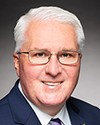
The Chair Conservative John Brassard
Thank you, Mr. Barrett.
Mr. Al Soud, you have five minutes. Go ahead.
Liberal

Fares Al Soud Liberal Mississauga Centre, ON
Thank you, Chair.
Mr. Thurlow and Mr. Conacher, thank you both for taking the time to be with us today.
Mr. Thurlow, it's clear to me that you've been following the work we've been doing all along here in committee, so my next line certainly won't surprise you. I've been fairly vocal in saying that Mississauga Centre is home to one of the most vibrant small business scenes in the country. They're fundamental to our economy, but they're not always heard, because they're busy doing the work. They're busy feeding their families. It's coffee shops. It's Shawarma Stops. It's clothing boutiques. It's important to me that they always feel they can speak to me freely. I think it's great that people feel they can come up to me and say, “Hey, I own a little boutique just down the street, and here's my biggest challenge right now.” People don't always feel as though their priority is worth writing in on, but when they see you around, just walking about, or when you walk in to ask for a cup of coffee, they're happy to explain to you what their biggest challenge is.
What impact could default registration have on businesses that occasionally communicate with federal officials but don't maintain a dedicated government relations staff?
Founder, Thurlow Law, As an Individual
It's administrative burden. One of the edicts that all parliamentarians have heard come from the Prime Minister is that this government should be interested in reducing red tape, not creating it.
My personal view is that the smallest of businesses are busy doing other things. If they have a really big problem, they go to their chamber of commerce. They go to their larger trade associations. Those are the individuals who have more expertise with the registration process.
I would use this opportunity, though, to say that if any of these small business people are paid board members for the Retail Council or whatever, the Retail Council should be able to handle their registrations. This is another one of those areas where it just makes sense that the experts who are dealing with this type of administrative work be able to include them.
I don't see it as nefariously as Mr. Conacher does. I see it as these are not experts in government paperwork. These are people who don't want to have another registration. You can lower the limit for the registration if you want, but they should be allowed to have the fiduciary responsibility that they have reflected in the registration for that organization.
Liberal
Fares Al Soud Liberal Mississauga Centre, ON
Thank you.
Based on your practical experience advising clients, which aspects of the current Lobbying Act are working effectively and should be preserved during this review, and which aspects perhaps aren't and should be revisited?
It's a big question, forgive me.
Founder, Thurlow Law, As an Individual
In my opinion, I think we have a very clear definition of what registerable communication is.
I just want to go back to the last panel, because there was a little bit of a miscommunication about who has to register and who has to report. If you're being paid to do the work, you have a registration obligation based on the threshold. It's not a communications obligation. The communications obligation is triggered once you're registered. If you are registered and then you have that spontaneous conversation, if it's oral and arranged in advance, it would be captured. Under the commissioner's recommendations, it would be all of those spontaneous communications about registerable activity.
I think that's going to cause way more problems for the people at this table than it's going to cause for the lobbying community, because you are also going to have to track that information for verification of whether or not there has been a violation of the act...apparently 19,000, which I will take at face value.
As for what's not working so well, I would like to see the commissioner have further powers to exempt. I would like to see the commissioner have discretion to say, you've only worked in government for nine months, we're going to give you a little bit more leeway as it relates to how long your prohibition should be. I think it's a little weird that someone should be prohibited for longer than they actually worked in government, but again, there's a sliding scale there.
There are certain people in government who have a little more influence, and so they're going to be treated a little bit differently. However, if you're limited to one department, maybe you should be limited to that department for what you can or can't do. It shouldn't be all of government, for example.
I think that's something that you could take valuable committee time to look at. This is something that impacts people's professional lives, 100%, both at the beginning of a career and at the end of their career. They might say, “I'm going to retire at a certain time and I'd like to share that expertise in the private sector.” That sometimes gets in the way. Quite frankly, sometimes that's not what they signed up for.
Certainly, in 2005, before the Federal Accountability Act, there were people who had a different vision for what their retirement life was going to be, and then there was a five-year ban that was placed on them. It could be very difficult to do that type of planning with what I'm going to call a sliding scale, unless it's Parliament that establishes what that sliding scale is.
Liberal
Fares Al Soud Liberal Mississauga Centre, ON
In the 15 seconds I have left, what are your thoughts on recommendation number nine as it pertains to grassroots lobbying?
Founder, Thurlow Law, As an Individual
I don't love it. I think grassroots lobbying is free speech.
If you choose to tweet towards your office in Mississauga Centre, that is pretty conspicuously in the public domain. It has its own accountability mechanism by the fact that it is, in fact, in the public domain.
Should people who organize those campaigns have a registration obligation? Absolutely. However, the people who engage in them, I think that's a little bit too close to regulating speech.
Conservative
The Chair Conservative John Brassard
Okay. Thank you, Mr. Thurlow.
Thank you, Mr. Al Soud.
Mr. Fortin, you have the floor for five minutes.
Bloc
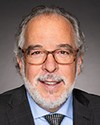
Rhéal Fortin Bloc Rivière-du-Nord, QC
Thank you, Mr. Chair.
Mr. Thurlow, I'd like to pick up where we left off a few moments ago regarding the work of MPs. As an MP, I experience this first-hand. I deal with it constantly. I often think about how this should all be structured.
For instance, say someone comes to see me to discuss an issue. It could be a cultural community, an advocacy group or whatever. They ask to meet with me, and we spend half an hour or an hour talking about whatever their organization's issue is. I don't feel I'm obligated to declare anything about it, but perhaps I should.
I'd like to hear your thoughts on this. You said that this is precisely what needs to be clarified. How do we clarify it, and where do we draw the line?
Founder, Thurlow Law, As an Individual
The first thing you can do is just ask them. For 20 years, parliamentarians have been asking, “Are you a registered lobbyist, yes or no?” I would guess that most people would know if they should be a registered lobbyist. If their answer is, “No, I'm not being paid to do this”, that's the end of the conversation right now.
The second point that I would make in response to what you just asked is, Parliament did a really good job of articulating some of the things that require registration. The one that could benefit from a little bit more parliamentary decision is what a change in policy is. Depending on where you sit, a change in policy could be very broad. For a piece of legislation, I can figure out what that is. There's a website that lists all the statutes. If it's about advancing a new piece of legislation, I can figure that out very quickly, but a change in policy I think could have a little bit more definition lumped into it.
The other thing that could help Parliament is a preambular statement about what lobbying is or isn't. To specifically say that the work of a member of Parliament working with his constituents does not constitute lobbying or shouldn't constitute lobbying has no effect in law, I think, but does give guidance to the commissioner to say what the intent of Parliament is.
Bloc
Rhéal Fortin Bloc Rivière-du-Nord, QC
At the beginning of your presentation, you said that the first question should be: Are you being paid to be here today or not?
We often meet people who are full-time employees of organizations. This is probably the most typical form of lobbying we encounter. Are you saying we should consider these people lobbyists and report these meetings?
Founder, Thurlow Law, As an Individual
Absolutely we should, if they meet the threshold, which I think Parliament should set. This is one of the reasons there shouldn't be the registration by default. If it's the one person who is having their first conversation with you because it's going to affect their livelihood, that's not eight hours and that's not 32 hours. That's not 50 hours, as in the case of Ontario.
It should be up to Parliament to define what that is, and I think it should be a little bit higher.
Bloc
Rhéal Fortin Bloc Rivière-du-Nord, QC
I'd like to talk about the compensation criterion. Aren't there situations where a person isn't compensated but still derives some benefit from their actions? In such cases, doesn't the compensation criterion somehow skew the assessment?
Founder, Thurlow Law, As an Individual
I'm not being paid to be here, and I'm getting a lot of personal satisfaction out of it. Should I register the work that I'm doing to influence you? Probably not.
What I would say is that, ultimately, it's financial. Finance is not just money. It can also be the increase in property value. It can also be the increase in share value. Open your mind to what that benefit could be.
Bloc
Co-founder, Democracy Watch
As I said, the unpaid lobbying loophole has to be closed. It allows all sorts of people to.... Retired business executives who have been the head of the business for a long time and are doing a favour because they got to know all the cabinet ministers and top government officials during that time now volunteer to continue lobbying for the business that's paying them a pension. They are not captured right now at all. It has to be closed.
If you want to draw a threshold, B.C. has it right. Although, add in that if the person is a former public office holder or is somebody who has done a favour for you as an MP—campaigning, fundraising or any kind of assistance—then they are required to register, so we can track that trading of favours.
Conservative
The Chair Conservative John Brassard
Thank you, Mr. Fortin.
We'll go to Mr. Cooper and then Mr. Chang.
Go ahead for five minutes, Mr. Cooper.
Conservative

Michael Cooper Conservative St. Albert—Sturgeon River, AB
Mr. Conacher, would you agree that there is a significant transparency gap insofar as only oral communications that are arranged, advanced and initiated by a lobbyist are reportable?
Co-founder, Democracy Watch
Yes, it's one of the biggest gaps. It should be closed. B.C. requires all communications, as you heard from the registrar when he testified. That gap should be closed because essentially it is hiding mostly the extent of big business lobbying—how many people are involved, and how much contact and access they have to key decision-makers.
Conservative
Michael Cooper Conservative St. Albert—Sturgeon River, AB
Would you agree that it facilitates secret lobbying?
Co-founder, Democracy Watch
Yes, it does very much so. If you don't have to register again because of the time threshold, then you're also allowed to do favours for all of those people—fundraise or campaign for them—so it also facilitates unethical lobbying.
Conservative
Michael Cooper Conservative St. Albert—Sturgeon River, AB
Would it be fair to say that this secret lobbying is widespread as a result of this gap and this loophole?
Co-founder, Democracy Watch
We don't know how widespread it is. We have some indication from the threshold being lowered down from 32 hours to eight hours. The commissioner's annual report, which was just released, says that registrations went up by 17% as a result of that. Communications registrations went up as well because there are more people registered, and they're communicating. Obviously, if we closed the communications loopholes, we would see much more lobbying registered and disclosed.
Conservative
Michael Cooper Conservative St. Albert—Sturgeon River, AB
We have heard testimony that somehow anything other than the status quo would be burdensome. It seems to me that we ought to be looking at the nature of the activity. Namely, is it lobbying, or is it not lobbying? If it is lobbying, then it should be reported.
Would you agree?