Evidence of meeting #36 for Fisheries and Oceans in the 45th Parliament, 1st session. (The original version is on Parliament’s site, as are the minutes.) The winning word was year.

A recording is available from Parliament.

On the agenda

Members speaking

Before the committee

Vigneault  Director General, Ecosystem Science Directorate, Department of Fisheries and Oceans
Williams  Senior Director, Resource Management - Operations, Department of Fisheries and Oceans
Davis  Regional Director, Fisheries Management Branch, Pacific Region, Department of Fisheries and Oceans

11:30 a.m.

Regional Director, Fisheries Management Branch, Pacific Region, Department of Fisheries and Oceans

Neil Davis

They are important questions. Thank you.

I'll begin by stepping back to one point. The return that was forecast was well within the range the department had set out pre-season, which was between three-quarters of a million fish and 13,000 fish when it came to sockeye. I assume that's the species we're talking about. The run returned at around nine million in the end, when we tallied up all of the returns and made our final estimate.

There were points in season when the U.S. proposed to undertake fisheries, and Canada disagreed. The key reason for that is that when we manage Fraser sockeye, there are many stocks within that species that are returning, and we manage all of those stocks in four management units. Not all of those management units return at the same levels of abundance. As a result, the ones that return at lower levels of abundance—in particular, the late summer management unit—constrain opportunity for the other, more abundant management units that they comigrate with. They're moving through the system at the same time.

In the case of the fishery the U.S. proposed, which I think you're referring to, Canada was concerned about the impacts the fishery would have on the total allowable mortality that we were trying to achieve in the late summer run—

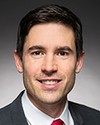
The Chair Liberal Hedy Fry

Can you please wrap up? You're over time, but finish your sentence. Thank you.

11:30 a.m.

Regional Director, Fisheries Management Branch, Pacific Region, Department of Fisheries and Oceans

Neil Davis

That is the main reason Canada opposed it, and Canada's opposition was borne out. The U.S. did harvest more than its share of the late summer run, and that was the basis for Canada's concern.

The Chair Liberal Hedy Fry

Thank you very much.

It's over to you for six minutes, please, Patrick.

Patrick Weiler Liberal West Vancouver—Sunshine Coast—Sea to Sky Country, BC

Thank you, Chair.

I want to thank our officials for being here in person and also by video conference to answer questions.

I want to pick up on a very local concern for me and my constituents. In this study, we've heard from witnesses who have pointed to some localized science and monitoring in Howe Sound, indicating a very low interaction risk of stocks of concern. They referenced a DFO stock assessment in 2022, which found that encounters of Fraser River stocks of concern were very rare, posing near zero risk in Howe Sound. They pointed to a DFO-led reference fishery in 2024, which sampled 354 adult chinook in April and May and found that none identified as originating from the Fraser River stocks of concern. Obviously, a limited mark-selective fishery in this area would deliver significant social and economic benefits, and it's been a big frustration for folks locally that there haven't been retention opportunities.

Given the testimony and the available data, what is the primary factor currently preventing DFO from authorizing any retention opportunities in Howe Sound? To what extent is the current non-retention decision driven by biological risk specific to Howe Sound, versus the application of the broader precautionary principle or other management constraints?

11:35 a.m.

Director General, Ecosystem Science Directorate, Department of Fisheries and Oceans

Bernard Vigneault

Thank you for the question.

Yes, in fact, the department has conducted testing in Howe Sound to look at the possibility of future opportunities for a mark-selective fishery. The results are encouraging, as the member mentioned. A significant proportion of the catch were the targeted species, the marked chinook salmon—around 30% to 40%. There are a limited number of stocks that we aim to protect, so that's all encouraging. However, we cannot just extrapolate. We have to continue to analyze. In this case in particular, these data are all from our own science work. We also need to do the correlation with the data that's collected from the creel survey and to do the extrapolation of those numbers during a full recreational harvest under a mark-selective scenario.

The Government of Canada announced the future expansion of a mark-selective fishery in the Pacific region. That would certainly be a candidate, with the signs that have been collected and the analysis ongoing on the creel survey extrapolation. We'll be able to provide advice on that.

Patrick Weiler Liberal West Vancouver—Sunshine Coast—Sea to Sky Country, BC

Thank you, Mr. Vigneault.

That's some encouraging testimony to hear. I was wondering whether you might be able to speak to what specific evidence, thresholds or changes in conditions would be required for DFO to consider opening up a limited controlled-retention fishery in that area?

11:35 a.m.

Director General, Ecosystem Science Directorate, Department of Fisheries and Oceans

Bernard Vigneault

I will ask my colleague Neil Davis to add information about that. It depends on the science. He'll also describe the capacity to mark fish, which is increasing as well.

Neil, go ahead.

11:35 a.m.

Regional Director, Fisheries Management Branch, Pacific Region, Department of Fisheries and Oceans

Neil Davis

Thank you for the question. I think you have the gist of it, in that in doing that extrapolation and assessing all of the data we have, we'd be looking at a few things.

The first is that conservation risk: What would the encounter rates of any stocks of concern be? That's not necessarily limited to just Fraser-bound stocks. I believe there have also been some questions about the ability to collect sufficient brood stock for local chinook stocks in Howe Sound, which we would also be assessing.

As my colleague mentioned, we would also be looking at moving forward. If we were to contemplate fisheries here, what kind of capacity do we have to mass mark, such that it could facilitate mark-selective fisheries? In a fishery we permit, would the rate of capture of marked fish be high enough such that our concern for the catch of unmarked fish—and the subsequent release of those fish and any associated mortality—is low enough that we think it doesn't pose any risks to those unmarked stocks that would be caught and returned to the water? Those are examples of some of the factors we would carefully assess.

Patrick Weiler Liberal West Vancouver—Sunshine Coast—Sea to Sky Country, BC

Thank you.

I'm going to switch gears and bring up a point that was brought up earlier, which is the rush to get to these fisheries as they're opening up and some of the challenges with in-season decision-making and communication.

I was hoping you might be able to speak to how Fisheries and Oceans is improving the timeliness, predictability and communication of in-season opening decisions, particularly for small commercial harvesters who oftentimes, and certainly this is the case for harvesters from my riding, face long travel times and financial risk from uncertain or late announcements.

11:35 a.m.

Senior Director, Resource Management - Operations, Department of Fisheries and Oceans

Todd Williams

Fisheries and Oceans has a number of processes in place, both formal and informal. Formally, it's through our advisory committee process, which meets annually.

In addition to that, we have frequent communications through email and through other communication notices to harvesters, which are much more timely and are able to get that information out faster for those in-season decisions. This is critically important, particularly for salmon fisheries on the west coast.

The Chair Liberal Hedy Fry

Thank you, Mr. Weiler.

I now go to Mr. Champoux for six minutes, please.

Martin Champoux Bloc Drummond, QC

Thank you, Madam Chair.

I also want to thank the witnesses for being here today.

What I would like to talk about is the material resources and operational capacity available to the Department of Fisheries and Oceans, or DFO, and the Coast Guard. According to the testimony we've heard, that seems to be one of the main things holding up the opening of the snow crab fishery in the southern Gulf of St. Lawrence.

A while ago, the committee heard testimony from Daniel Desbois, the president of the Association des crabiers gaspésiens inc. He made it abundantly clear that, while the process has improved over the years, the system doesn't seem to be keeping up. It's ready on paper, but not at sea.

For example, this year, the icebreaker was due to arrive in early March, but it came a month later, in early April. The tugboat was unavailable in Paspébiac for a month. Specialized equipment like frogs and hovercraft weren't available, so the icebreakers had to come back several times because the ice had time to build up again and again. Mr. Desbois also explained the impact it had on crab harvesters.

Just a few days' delay in the spring delayed harvesting days in June, which resulted in extra fuel costs and relocating harvesting operations during a period when the risk of right whale interactions increases significantly.

That's what I want to discuss with you. You work with the Coast Guard. Perhaps this would be an opportunity to explain why the Coast Guard regularly lacks equipment, such as frogs and hovercraft.

Is it a budget issue? Is it a fleet availability issue? Is it the way operations are prioritized at this time of year? Is it an annual planning problem?

I'd like to hear what you have to say about that.

11:40 a.m.

Senior Director, Resource Management - Operations, Department of Fisheries and Oceans

Todd Williams

Thank you for your question.

In terms of our approach with the Coast Guard, there are a couple of points.

First, the Coast Guard is no longer a part of Fisheries and Oceans. That is known. However, we do work very closely with the Coast Guard, as I noted in my opening remarks, with respect to those opening dates and making sure, to the best of our ability, that we have the equipment in the right place at the right time.

The honourable member is absolutely correct in that there is a greater risk of whale interactions with North Atlantic right whales later in the season. One of the best mitigation measures is to actually start fishing earlier in the season. With that, there is a greater chance of ice interactions and ice preventing harvesters from getting out.

We do work very closely with the Coast Guard. On a daily basis, we interact with the Coast Guard, Transport Canada and the harvester associations to keep them informed if there is going to be a delay. I can't speculate, and I won't speculate, in terms of the finances or availability in a particular case with respect to the Coast Guard, but I can say that the relationship is very strong and we work together on a daily basis.

Martin Champoux Bloc Drummond, QC

I don't doubt that relationship, but some issues are more unpredictable than predictable.

For example, this year, obviously, there's the delayed opening due to ice and the equipment shortage, but there's also the fact that a whale was detected in area 12 much earlier than usual. That factor has to be taken into account too.

At the end of a season like the one that's starting now, which is particularly difficult for crab harvesters, I would imagine you're working closely with your collaborators. As you said, the Coast Guard co-operates with you.

Are measures being taken to prevent similar events in the next fishing season?

For example, in 2027, will DFO take concrete action to ensure that every effort has been made to allow harvesters to start the season earlier, or at least as early as possible, to avoid the kinds of situations we don't always have control over?

11:40 a.m.

Senior Director, Resource Management - Operations, Department of Fisheries and Oceans

Todd Williams

Thank you for your question.

Indeed, at the end of every season, there is a debrief and a recap of the season in terms of what went right and what we could do better in terms of our integration with the Coast Guard and collaboration in that regard.

At the same time, there are a number of natural environmental elements that we don't have control over from year to year, whether that's the ice conditions or the appearance of whales, which result in closures. We understand the negative impact that has on harvesters. We also realize the importance of having these closure measures in place from a market access perspective and in ensuring a comparability finding with the United States market under the Marine Mammal Protection Act.

We do try, certainly, to work with the harvesters post-season and with the Coast Guard to identify where improvements could be made.

Martin Champoux Bloc Drummond, QC

Would it be possible to set a target date for harbour de-icing at the end of March or the beginning of April, rather than basing it solely on general ice conditions in the gulf?

Is that an approach your teams could consider?

11:45 a.m.

Senior Director, Resource Management - Operations, Department of Fisheries and Oceans

Todd Williams

Thank you for your question.

Indeed, we do have ice reports generated daily, and we do provide that information to harvesters in collaboration with the Coast Guard.

The Chair Liberal Hedy Fry

Thank you, Mr. Champoux.

I now go to the second round, which is a round of five minutes, five minutes, two and a half minutes, five minutes and five minutes.

I'll start with Mr. Small for five minutes, please.

11:45 a.m.

Conservative

Clifford Small Conservative Central Newfoundland, NL

Thank you, Madam Chair. Welcome to this committee as our chair.

Thank you to the witnesses for being available to us today for this study.

Monsieur Vigneault, Americans are fishing mackerel right now. They've set a quota of nearly 11,000 metric tons. Will Canadian harvesters have to sit idly by this year and watch Americans fish mackerel while their mackerel fishery stays closed? Will that happen?

11:45 a.m.

Director General, Ecosystem Science Directorate, Department of Fisheries and Oceans

Bernard Vigneault

Thank you for the question.

We're aware of the change in decision for the mackerel fisheries in the U.S., which we discussed at our previous meeting. What we have undertaken to address this is to do science advice for Atlantic mackerel a year before schedule. It's now scheduled for May 2027. That will allow us not only to use the most recent egg and larvae survey in our observation, but also to include in our calculation the removals that have been decided on in the U.S. That will feed into the advisory committee meeting. We'll be able to share the information—

11:45 a.m.

Conservative

Clifford Small Conservative Central Newfoundland, NL

How about if your scientists go to sea and they don't find the eggs and larvae, as has been the experience in the past? Will you consider the experience of the fishers who are on the water?

The Prime Minister, in the April before last, was in Newfoundland and Labrador and said that he'd make decisions based on what he heard on the wharves. Are you going to go along with what the Prime Minister said when he made that statement? Are you going to consider harvester observations this year?

11:45 a.m.

Director General, Ecosystem Science Directorate, Department of Fisheries and Oceans

Bernard Vigneault

Yes, and there are different components to the decision process. For the science advice, we'll continue to work with the harvesters to do the updated science with the best information and science data available. There will be representatives from the industry participating and that will be presented to the advisory committee. From a departmental perspective, the stakeholder inputs are considered specifically in parallel to the science. That's part of the advisory committee process.

11:45 a.m.

Conservative

Clifford Small Conservative Central Newfoundland, NL

Under this current Minister of Fisheries, is it the current policy of DFO to match the American quota pound for pound, as has happened for decades in the past? Is that still the policy? Please answer yes or no.

11:45 a.m.

Director General, Ecosystem Science Directorate, Department of Fisheries and Oceans

Bernard Vigneault

I can't speak to that.