Evidence of meeting #7 for Fisheries and Oceans in the 45th Parliament, 1st session. (The original version is on Parliament’s site, as are the minutes.) The winning word was shrimp.

A recording is available from Parliament.

On the agenda

Members speaking

Before the committee

Gagné  Captain-Owner-Operator, As an Individual
Lanteigne  General Director, Fédération régionale acadienne des pêcheurs professionnels
Bonnell  Vice-President, Sustainability and Engagement, Ocean Choice International
Gallant  Fish Harvester, As an Individual
Bernatchez  Director General, Coopérative des Capitaines Propriétaires de la Gaspésie
Boucher  General Manager, Regroupement des pêcheurs professionnels du Nord de la Gaspésie

The Chair Liberal Patrick Weiler

I call this meeting to order.

Welcome to meeting number seven of the Standing Committee on Fisheries and Oceans.

I want to start by acknowledging that we are gathered on the ancestral and unceded territory of the Algonquin Anishinabe people and by expressing gratitude that we're able to do the important work of this committee on lands that they have stewarded since time immemorial.

Pursuant to Standing Order 108(2), the committee is meeting to continue its study on the attribution of redfish quotas and exploratory lobster fishing licences. This is the last meeting that we have scheduled for this study.

Today’s meeting is being held in a hybrid format in accordance with the Standing Orders. Members may participate in person or over Zoom.

I think we have everybody here in person.

Before we continue, I would like to ask all in-person participants to consult the guidelines written on the cards on the table. These measures are in place to help prevent audio and feedback incidents and to protect the health and safety of all participants, particularly our interpreters. You will also notice a QR code on the card, which links to a short awareness video.

Pursuant to our routine motions, I would like to advise committee members that all witnesses appearing virtually today have conducted the required technical testing.

I would like to make a few comments for the benefit of the witnesses and members.

Please wait until I recognize you by name before speaking. Those participating by video conference, click on the microphone icon to activate your mic, and please mute yourself when you're not speaking.

For interpretation for those on Zoom, you have the choice, at the bottom of your screen, of floor, English or French. For those in the room, you can use the earpiece and select the desired channel.

I will remind you that all comments should be addressed through the chair.

For members in the room, if you wish to speak, please raise your hand. The clerk and I will manage the speaking order as best we can. We appreciate your patience.

With that, I would like to welcome our witnesses.

We're joined here by Camille Gagné, captain, owner and operator. Jean Lanteigne, general director of the Fédération régionale acadienne des pêcheurs professionnels, is joining us by video conference.

In person, we have Carey Bonnell, vice-president, sustainability and engagement, Ocean Choice International.

We'll begin with the opening remarks from the witnesses.

Ms. Gagné, you have the floor.

Camille Gagné Captain-Owner-Operator, As an Individual

Good afternoon, committee members.

Let me introduce myself. My name is Camille Gagné. I'm a former captain and owner of a commercial fishing operation in Quebec. I say “former” because I haven't had anything to fish for in a number of years. I'm in debt and I can no longer make a living from my occupation.

I'm speaking today as an individual to shed light on the mistakes made in order to prevent them from happening again and to ensure the well‑being of future generations. It's important to look back at past events to avoid repeating the same mistakes, hence my decision to share my story.

I've worked in the fishing industry my entire life. In spring 2020, I acquired my own core licence for herring and mackerel. In fall 2020, I acquired a crab licence, with quotas and a vessel.

By winter 2021, the crab quota had dropped to 30%. However, the landing price was good and I continued fishing for mackerel. Despite this decline, I managed to end the year with a slightly positive balance sheet.

A few weeks before the 2022 fishing season, I learned that my crab quota had dropped to 19%. Moreover, two days before the season opened, the herring and mackerel fisheries were officially closed without notice or consultation. The Department of Fisheries and Oceans, or DFO, told us that this wasn't a moratorium, but that the fisheries were closed for an indefinite period. Since debts and payments must be honoured, I had no choice but to go crab fishing. That year, we counted as many lobsters as crabs in my traps. In some places, there were only lobsters. We informed the associations and told DFO that the situation wasn't normal. Lobsters scare crabs away, and these two species aren't supposed to end up at the same depths. We asked to keep this bycatch in order to protect our crabs and to help us financially, but this request was categorically denied. The annual balance sheet was negative. I ultimately used the entire surplus from the previous year to make my payments.

In winter 2023, my crab quota remained at 19%. I took on every small contract possible to find a way to make ends meet. For one of these contracts, I got involved in the reconciliation process. I ran a school boat for a first nation in my area. I wanted to provide a positive introduction to the snow crab fishing industry for young people from a first nation who had struggled in school. We sounded the alarm again about the presence of lobsters and asked once more to keep the bycatch. However, once again, DFO flatly refused. Profitability dropped to zero.

In winter 2024, my quota was set at 17%. It should be noted that 17% of 50,000 pounds isn't profitable. However, I had no choice. I had to voluntarily get myself into even greater financial trouble in order to receive assistance from the Quebec department of agriculture, fisheries and food, or MAPAQ. Given that my year‑end balance sheet showed a deficit, MAPAQ came to my aid. My creditors, who had also heard rumours about the distribution of lobster licences, did the same. They hoped that our struggling fleet in crab zone 12A would receive support. We were five fish harvesters in the zone facing the same situation.

In December 2024, the rumours were confirmed and we had high hopes. Yet when DFO began to release the information and criteria, which were open to interpretation and debatable, I was disqualified from obtaining a mackerel licence owing to my crab fishing licence and my place of residence. I was also disqualified from the Anticosti zone because my fishing zone isn't considered administratively connected, even though it's geographically connected.

My fleet was concerned. Only 43% of us would receive a licence, while almost 100% of the members of other fleets would receive a licence. We were disillusioned. On the day of the allocation, DFO's Quebec office refused to recognize my 2023 fishing year on the grounds that I operated my boat as a captain under an indigenous flag. This disqualified me for the fourth time from the direct allocation. I tried a draw. When the draw ended, I called the account manager to tell her that things weren't going well.

The allocation of lobster licences in 2025 helped people in need. However, it also made millionaires even richer and gave retirees the opportunity to return to fishing. It left young people like me floundering, struggling to get by and racking up debt. We have nothing left to fish for and may go bankrupt. Above all, we have lost confidence in the department's management.

The Chair Liberal Patrick Weiler

Thank you, Ms. Gagné.

Mr. Lanteigne, you have the floor for six minutes or less.

Jean Lanteigne General Director, Fédération régionale acadienne des pêcheurs professionnels

Good afternoon.

My name is Jean Lanteigne. I'm the general director of the Fédération régionale acadienne des pêcheurs professionnels. Our offices are in Shippagan, New Brunswick. I've been doing this job here for 18 years.

Thank you for inviting me today to discuss the allocation of redfish quotas announced by the former minister, Diane Lebouthillier, on January 26, 2024.

The official announcement of the reopening of the redfish fishery in the Gulf of St. Lawrence stated that the first two‑year transitional phase would allow for data collection, give fish harvesters time to prepare, further develop markets and strengthen the sector's capacity to transform. A second phase of long‑term development would involve establishing a fishery with a modernized allocation key. In view of the scientific data, this phase would be one of expansion.

At the same time, the former minister Lebouthillier announced a reduction of nearly 80% in shrimp quotas in the same zones. Shrimpers in New Brunswick, Quebec and Newfoundland and Labrador would receive only 10% of the allocated redfish quotas. This was a real blow for our fish harvesters, especially after previous contradictory announcements. In 2018, the fisheries minister at the time, Dominic Leblanc, said that he would prioritize shrimpers for redfish allocations.

For New Brunswick, this amounts to 1,050 metric tonnes. It's also possible to access an additional quota allocated to the category of mid‑shore vessels between 65 feet and 100 feet. This quota is divided between New Brunswick and Quebec fish harvesters. This could amount to a total of about two trips to sea. However, with these quantities, fish harvesters can't afford to buy trawls and modify their boats to practise this type of fishing.

Since 2016, during DFO consultations, we've been voicing our concerns about the impact of redfish on shrimp stocks. Our comments have been ignored. We requested two measures. We wanted priority access for shrimpers in the three provinces, since they would be the first affected, and sufficient allocations to ensure the survival of these fleets, since shrimp is the only resource for most shrimpers.

Last year, as a result of costly fishing conditions combined with insufficient quotas, only 3,000 metric tonnes of the allocated 60,000 metric tonnes were caught. This year, through a project funded by the Atlantic fisheries fund, we're testing six different trawls in co‑operation with nine shrimpers for a total of 36 trips to sea. If we combine all this with the other regions, we estimate that 10,000 to 15,000 metric tonnes will be caught out of the 60,000 metric tonnes allocated.

The verdict is clear. The distribution of allocations isn't working. The issue isn't the availability of the resource, but rather the allocation of quotas to fish harvesters. Our members, along with fish harvesters in Quebec and Newfoundland, don't have enough quotas to develop a business plan. It's impossible to invest for just a few fishing trips. Processing plants can't plan production lines because the total allocations in their region aren't enough to justify the investments. As the minister said, after two years, the plan must be reviewed and modified.

Here are our proposals for your consideration today.

First, fleet allocations must be redistributed, taking into account the profitability and viability of shrimp fishing companies.

Second, each fish harvester must receive a sufficient allocation so that they can develop a business plan.

Third, the Atlantic fisheries fund must be renewed with a component for vessel modifications and equipment. The same applies to the processing plants affected.

Fourth, targeted support is needed for marketing in order to develop new markets and increase the value of redfish.

Lastly, an Atlantic forum should be held, bringing together all stakeholders in order to avoid duplication and identify best practices.

Thank you for listening.

The Chair Liberal Patrick Weiler

Thank you, Mr. Lanteigne.

With that, we'll move on to our final opening remarks from Mr. Bonnell.

The floor is yours for five minutes.

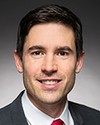
Carey Bonnell Vice-President, Sustainability and Engagement, Ocean Choice International

Good afternoon, Mr. Chair and committee members. Thank you for the opportunity to appear before the Standing Committee on Fisheries and Oceans.

I'm here today representing Ocean Choice International. Ocean Choice is a family-owned Newfoundland and Labrador seafood company founded 25 years ago by brothers Martin and Blaine Sullivan. Today we are a vertically integrated global leader operating five processing plants in rural communities and a fleet of offshore factory freezer vessels, managing our own quota access for key species, and partnering with approximately 2,000 independent fish harvesters. Headquartered in St. John's with sales offices around the world, we deliver premium Canadian seafood to over 30 countries. Our operations support 1,400 employees across 300 communities throughout the province of Newfoundland and Labrador, reflecting our deep commitment to people and communities.

Sustainability is at the core of our business. Over 93% of the seafood we harvest, by value, is certified sustainable by the Marine Stewardship Council or managed through a robust fishery improvement project. Ocean Choice's success, and the strength of Canada's fishing industry as a whole, depends on responsible science-based management and stable access to the resource. This stability allows companies like ours to make long-term investments, create year-round jobs and build sustainable futures in coastal communities.

This brings me to why we are here today—namely, to discuss the allocation of unit 1 redfish and the importance of management grounded in historical and stable access to the resource. Before discussing allocations, it is important to note that the unit 1 redfish fishery dates back to the 1950s, when it was developed by the offshore sector, which historically held about 78.7% of the quota. Even after the commercial fishery was closed in the early 1990s, a 2,000-metric-ton index fishery continued under DFO-defined proportionate quota shares aligned with historical allocations.

Regarding the minister's decision in February 2024, while some have portrayed the offshore sector as winners, Ocean Choice and other offshore redfish participants actually lost 20% of their historical share. There are some unfortunate economic and biological realities when it comes to unit 1 redfish that must be recognized. The size of the redfish in unit 1 has actually stalled at around 24 to 25 centimetres since 2021, and scientists do not expect further growth. By comparison, most global redfish exceed 40 centimetres in length, putting Canadian producers at a market disadvantage. The overall biomass has also declined sharply from a peak of over four million tonnes in 2019 to about 1.7 million tonnes in 2024. Without new recruitment, the science suggests the biomass could fall to roughly 10% of the original level within the next eight years, even with limited fishing activity.

These factors, combined with overly precautionary management measures, have led to very limited activity in this fishery over the past two years. Despite these challenges, Ocean Choice and our partners in the offshore sector have invested millions of dollars to develop and expand markets for smaller-sized fish. These investments include innovations in harvesting and processing, market diversification and long-term strategies to position Canadian redfish competitively on the world stage.

Stable access to fisheries like unit 1 redfish, through secure quota shares, is essential for building a strong and sustainable industry. It enables companies to invest in market diversification, equipment, infrastructure and workforce development. Stability supports resilient coastal communities, aligns harvesting capacity with available resources and improves the quality and value of seafood products. Economically, it fosters self-reliant enterprises, supports skilled year-round employment and creates meaningful career opportunities for young people in the industry.

Long-standing quota-sharing arrangements are the foundation of responsible and transparent fisheries management in Canada and are reflected in current fisheries policy. For example, when closed fisheries are reopened, the minister generally respects historic fleet shares, recognizing past participation and dependency as the basis for allocations.

Ocean Choice has invested heavily in the fishery, paying fair market value for every pound of quota, including unit 1 redfish. Beyond securing access, we built global markets for Canadian seafood and invested in advanced technology, including our green class vessel, the MV Calvert. Our significant investment in the Calvert was made possible because of stable access to such species as unit 1 redfish and other groundfish stocks. These kinds of long-term, multi-million dollar investments are not possible without confidence in secure quota access.

In summary, these examples—from long-term investments in market diversification to the Calvert—illustrate how stability of access underpins not only the sustainability of the resource but also meaningful employment, economic growth and the long-term viability of Canada's fishing sector. Looking ahead, future allocation decisions, including for unit 1 redfish, must respect historical access so that participants can continue to invest and contribute to strong, sustainable fisheries.

Thank you for the opportunity to make a statement. I welcome the committee's questions and comments.

The Chair Liberal Patrick Weiler

Thank you very much, Mr. Bonnell.

With that, we will go into our six-minute round of questioning, starting with Mr. Small from the Conservative Party.

The floor is yours.

3:50 p.m.

Conservative

Clifford Small Conservative Central Newfoundland, NL

Thank you, Mr. Chair.

I have a question here that I'm going to put to all witnesses.

Mr. Bonnell, I'll start with you. Can you shed some light on the influence of foreign, Liberal-funded ENGOs on fisheries management after 10 years of this Liberal government and seven ministers of fisheries? Has there been an impact on the unit 1 redfish quota because of the stakeholder status of some of these ENGOs, do you think?

3:50 p.m.

Vice-President, Sustainability and Engagement, Ocean Choice International

Carey Bonnell

I've been in the private sector now for about eight years. I've been engaging with the ENGOs. I've attempted many times over to build a relationship with the ENGO community, maybe having an idealistic or a naive view that we could build a positive relationship with the ENGO community. It has been tremendously challenging. Certainly groups like Oceana Canada have taken a strong position on Unit 1 redfish, and the reopening, and suggested quotas that are much smaller than those that were set. I find them challenging at times around the advisory table, for sure. They're taking positions that are much more extreme than I would have seen ENGOs take in the past. They have been challenging to deal with.

I've always said to them, and it may be my last comment on this, that with the ENGO community you have the option of the carrot versus the stick. There's much more progress that can be made in engaging with the industry and working more collaboratively to find some common ground, but much of their positioning has been, really, towards closed fisheries, MPAs, restricted fishing access, different things that are far more preservationist probably than sustainable fishing or conservation measures.

Those are some general concerns, I would say, I would have related to the ENGO community.

3:50 p.m.

Conservative

Clifford Small Conservative Central Newfoundland, NL

Thank you, Mr. Bonnell.

Madam Gagné, I heard you mention the closure of the herring and mackerel fisheries in your region. Do you think in part that is due to the growing influence of foreign-funded ENGOs, like Oceana and Oceans North?

3:50 p.m.

Captain-Owner-Operator, As an Individual

Camille Gagné

Can you just repeat the question, sorry?

3:50 p.m.

Conservative

Clifford Small Conservative Central Newfoundland, NL

I heard you mention in your opening remarks the devastation you've endured because of the closure of the mackerel and herring fisheries in your region. Do you think that ENGOs like Oceana and Oceans North contributed to the demise of the mackerel fishery?

3:50 p.m.

Captain-Owner-Operator, As an Individual

Camille Gagné

Public studies, particularly in the United States, have shown that mackerel is a highly migratory fish. It can travel long distances in a short time.

These large vessels may indeed have adversely affected this fishery. However, on the east coast of the Atlantic, there's currently a double standard. We go fishing with a maximum of 200 hooks, yet we're considered to have the same quotas as seiners.

I would say yes, but I couldn't tell you how much they have affected small‑scale coastal hook‑and‑line fish harvesters like us. That remains to be seen.

3:50 p.m.

Conservative

Clifford Small Conservative Central Newfoundland, NL

Thank you.

Monsieur Lanteigne, can you shed some light on the growing impact of foreign-funded ENGOs on our stock advisories?

3:50 p.m.

General Director, Fédération régionale acadienne des pêcheurs professionnels

Jean Lanteigne

I will answer to this, Mr. Small, that when the redfish did appear in 2011, the answer from DFO was to close the zone to the shrimp fishery. We ended up having to protect the redfish, and at the same time those redfish were eating shrimp like crazy, to the point where we lost 80% of the stock.

When you ask how Oceana and those ENGOs played the game there, they were putting pressure, enormous pressure, on DFO to make sure we would protect a resurgence of that redfish fishery. We lost the shrimp fishery in the gulf and we don't actually have a redfish fishery, so what did we accomplish with the pressure of the ENGOs? To answer the question basically is to provide a sad answer, because what they ended up doing was ruining one fishery and not having a profitable one. If they had listened to what the fishery industry was telling DFO, it was to keep on this shrimp fishery and at the same time reopen as soon as possible this redfish fishery to diminish the impact that it finally did have on the shrimp fishery before it ended up the mess that it actually is.

I would answer to you that, yes, for the strong impact that Oceana and company had on DFO at those dates, really, we are paying the bill today for that.

The Chair Liberal Patrick Weiler

Thank you very much.

Mr. Cormier, you have the floor for six minutes.

Serge Cormier Liberal Acadie—Bathurst, NB

Thank you.

Good afternoon, Mr. Lanteigne. I assume that you're coming to us live from Shippagan. Thank you for joining us.

You just said that we waited too long to open the redfish fishery. You and I have always agreed on this. It took too long, which affected the shrimp stocks. Of course, you and I, and likely everyone here, know that this wasn't the only factor that affected the shrimp. There were other factors as well. However, this factor had a major impact on the resource.

You and I disagree somewhat on one issue. This issue is the 10% share of the total allowable catch of redfish allocated to shrimpers. We've already had a chance to talk about this. You know my position on the topic. My view is that at least we started somewhere. You received a 10% share that you didn't have before. However, the fact remains that it isn't enough to make your fleet profitable again, as you and I both know.

That said, you also spoke about your new project, which is backed by the Atlantic fisheries fund and which was announced a few months ago to help your industry.

With regard to the 10% quota, I asked department officials for explanations during a number of committee meetings. They responded that this quota made it mathematically impossible for shrimpers to cover their costs. Since the department already knew this, why do you think that it failed to allocate a larger share of redfish to shrimpers over the past two years? You and I know that the minister has complete control over the allocation of these resources.

I would also like to hear your comments on your new project, in partnership with the Atlantic fisheries fund, to go out to sea and harvest redfish.

3:55 p.m.

General Director, Fédération régionale acadienne des pêcheurs professionnels

Jean Lanteigne

As I said earlier, the issue right now isn't the total allowable catch. In 2024, about 3,000 tonnes of redfish were caught out of the 60,000 tonnes of allowable catch. This amounts to only 5% of the total allowable catch. The allowable quantity was more than enough. The same will be true this year. The catches will likely amount to 15% or 20% of the total allowable catch.

The issue is the distribution of quotas. The 10% quota currently allocated to shrimpers would give them enough for one trip out to sea, or possibly two. As a result, they can't come up with a satisfactory business plan for financial institutions that would help them fund the necessary modifications for their boats to harvest redfish. In other words, the distribution of redfish quotas prevents fishing companies in Quebec, New Brunswick and Newfoundland and Labrador from developing a business plan that would enable them to make use of these quotas. The same is true for processors. They don't receive enough redfish to submit a satisfactory business plan to their financial institution.

We heard some comments earlier that I don't want to debate. However, some people received too much redfish and others didn't receive enough.

4 p.m.

Liberal

Serge Cormier Liberal Acadie—Bathurst, NB

Of the total allowable catch of 60,000 tonnes, around 10,000 tonnes have been caught. Is that right?

4 p.m.

General Director, Fédération régionale acadienne des pêcheurs professionnels

Jean Lanteigne

That's about right, according to my estimate, based on what I see.

4 p.m.

Liberal

Serge Cormier Liberal Acadie—Bathurst, NB

If a percentage of the total allowable catch currently going unharvested were redirected to fleets such as yours, or others in greater difficulty, would a market emerge for selling this redfish? Would this provide financial assistance to struggling fish harvesters? The unharvested resource is available.

Some companies are here today. I'll be asking them questions. Other companies have appeared before the committee in the past. They have redfish quotas but they don't harvest redfish for various reasons. If their redfish quotas were transferred to you, could you harvest and sell redfish for processing in a profitable manner?

4 p.m.

General Director, Fédération régionale acadienne des pêcheurs professionnels

Jean Lanteigne

Excellent question. The profitability isn't there.

As part of the Atlantic fisheries fund project discussed, we currently receive 20¢ per pound from the processor. A typical trip brings in about 100,000 pounds. We come back with $20,000 worth of fish. However, a trip out to sea costs from $50,000 to $60,000. Even with the money from the fund, fish harvesters are unable to go out and fish and make a profit. This explains why these quotas of fish aren't being harvested. It isn't worth it. We can't make a fishery profitable with such a low price. Right now, it's impossible to make a trip out to sea profitable. It will take a real marketing effort to bring the price up so that, in the medium term, we can make this redfish fishery profitable.

4 p.m.

Liberal

Serge Cormier Liberal Acadie—Bathurst, NB

Thank you.

4 p.m.

Liberal

The Chair Liberal Patrick Weiler

Thank you, Mr. Cormier.

Mr. Deschênes, you have the floor for six minutes.

Alexis Deschênes Bloc Gaspésie—Les Îles-de-la-Madeleine—Listuguj, QC

Thank you, Mr. Chair.

Ms. Gagné, you wrapped up your remarks by saying that the allocation of exploratory lobster fishing licences had made millionaires even richer. What do you mean by that?