Thank you very much.
Mr. Brunelle‑Duceppe, you have the floor for six minutes.

Evidence of meeting #12 for Foreign Affairs and International Development in the 45th Parliament, 1st session. (The original version is on Parliament’s site, as are the minutes.) The winning word was kong.
A video is available from Parliament.
Liberal
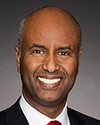
The Chair Liberal Ahmed Hussen
Thank you very much.
Mr. Brunelle‑Duceppe, you have the floor for six minutes.
Bloc

Alexis Brunelle-Duceppe Bloc Lac-Saint-Jean, QC
Thank you, Mr. Chair.
I’d like to thank the witnesses for being with us today and the committee for agreeing to hold this meeting at short notice. I’d also like to thank the clerk for arranging the meeting despite everyone’s busy schedule.
Ms. Gallagher, it’s good to see you again.
In your view, to what extent are Mr. Lai’s detention conditions and associated legal proceedings consistent with international law?
Lead International Counsel to Jimmy Lai, As an Individual
Thank you very much for your question. You have my apologies that I'm answering in English rather than French.
My view is in line with that of the UN special rapporteur on torture and with that of the UN working group on arbitrary detention that Jimmy Lai's conditions amount to inhuman and degrading treatment. That's my view.
It is very clear that being in a circumstance of prolonged solitary confinement violates international law. Prolonged solitary confinement is solitary confinement for a period of more than 15 days. Jimmy Lai has spent almost five years in solitary confinement. That in itself is a deep concern under international law, just the very fact of solitary confinement. When you combine it with the fact that he's elderly and he's diabetic, it hugely increases the risk of morbidity, I'm afraid. That's why the statistics that I gave a little earlier are so worrying, because it's against a backdrop of many of those prisoners not having been in solitary confinement, but Jimmy Lai is.
This is a very clear violation of international law. That's the view of the expert international bodies. That's the view of expert international lawyers. That's the view of multiple countries around the world. What we now need to do is to ensure that there is robust action rather than simply words calling for Jimmy Lai's release, because we do not want to end up in a position like we did with Liu Xiaobo in China or like we did with Navalny in Russia. We need to get this man out of prison, back to Sebastien and back to his family before it's too late.
Bloc
Alexis Brunelle-Duceppe Bloc Lac-Saint-Jean, QC
Thank you, Ms. Gallagher.
Mr. Kovrig, we spoke about the normalization and stabilization of relations. The government calls it a strategic rapprochement with China. There are those who are saying that this is an opportunity to secure Mr. Lai’s release while others are saying that it is a pitfall and that the rapprochement is rather negative.
Who’s right? Is the government position going to be a game changer?
Executive Director, StrategicEffects (GNSE)
The situation is quite complicated, but generally speaking, if we want to achieve our goals, any goal, with the governments of China and Hong Kong, it’s important to create the right conditions and to build strong relationships between leaders, senior officials and institutions.
That doesn’t mean accepting China’s position. However, it’s important to build relations to at least have some dialogue and to negotiate in order to explore all options. That’s the transactional nature of the Chinese Communist Party and now the Government of Hong Kong.
To secure Jimmy Lai’s release, it will ultimately be necessary to negotiate with the Government of Hong Kong and the Chinese Communist Party to determine what they want in exchange for Mr. Lai’s release and to resolve the situation.
At the very least, we need to be optimistic and have confidence that Prime Minister Carney and President Xi Jinping will have the opportunity to resolve this issue. That doesn’t mean that we accept China’s moral or ethical stance.
Bloc
Alexis Brunelle-Duceppe Bloc Lac-Saint-Jean, QC
Thank you, Mr. Kovrig.
Mr. Silver, there are those who say that granting Mr. Lai honorary citizenship would be a good thing for international diplomacy. Would you agree with that measure, if it were ever to pass?
Director of Policy and Projects, Raoul Wallenberg Centre for Human Rights
First, thank you for your commitment to Mr. Lai’s release.
The initiative to grant Mr. Lai honorary Canadian citizenship reflects Canadian values around human rights and freedoms and the freedom of the press. Granting him citizenship could advance this cause while diplomatic talks go on at the international level. That would send a message that Parliament is standing in solidarity with Mr. Lai by calling for his release in concert with his family, who live in Canada. This would be done in recognition of his contribution to Canada and his campaign to advance our shared values.
Bloc
Alexis Brunelle-Duceppe Bloc Lac-Saint-Jean, QC
Thank you.
Mr. Lai, I would have loved to meet you in person, but I’m happy to see you on the screen.
Have you had any communication with your father recently?
Son of Jimmy Lai and Leader of the FreeJimmyLai Campaign , As an Individual
It’s a real pleasure to see you, Mr. Brunelle‑Duceppe.
Unfortunately, I can’t go back to Hong Kong because I’ve been pleading for Mr. Lai’s cause. As you know, Hong Kong’s national security law, which was enacted in 2020, is really very opaque and broad in scope. Even something like what I’m doing now in speaking with you could potentially be in violation of that law.
Unfortunately, I’ve not been able to communicate with my father, but I know he’s still fighting. He is almost 78 and as I said earlier, he is ailing and has diabetes. He has been in solitary confinement in a tiny cell for almost five years. He is a man who has given everything for what he stands for and to protect his colleagues. I know he’s still keeping strong, even though he’s in a hopeless situation.
Liberal
The Chair Liberal Ahmed Hussen
Thank you very much.
We'll start the second round of questions with MP Rood.
You have five minutes.
Conservative

Lianne Rood Conservative Middlesex—London, ON
Thank you all for appearing here today.
Beijing had promised Hong Kong the “one country, two systems” framework, under which Hong Kong would continue its political and economic systems for 50 years, until 2047. Under this framework, Hong Kong enjoys a high degree of autonomy and special privileges granted by many western democratic countries, including Canada. The oppressive nature of the NSL and the trial of Jimmy Lai in Hong Kong signifies the city no longer enjoys this high degree of autonomy.
Do you believe the Canadian government should reconsider the privileges currently extended to Hong Kong in its economic and trade office in Toronto?
U.S. and Canada Director, The Committee for Freedom in Hong Kong Foundation
Thank you for that question. It's extremely important.
We all know that the “one country, two systems” framework is gone. China doesn't even pretend very much that it still exists. It controls Hong Kong completely. In 2020, the U.S. revoked Hong Kong's autonomous status under U.S. law and I believe Canada has also. However, these Hong Kong economic and trade offices continue. Make no mistake, they're not about economic and trade issues. This is a de facto embassy for the Hong Kong government to conduct diplomacy and reach out to the people of Canada and the United States. In Europe, there have been espionage cases in the U.K. and Germany regarding actions that have emanated from those offices and their affiliates.
There's no justification for them. Even worse, the Chinese government hasn't put bounties on activists in Canada—the Hong Kong government has. How can Canada and the United States allow a city government to take such brazen actions? It's unconscionable.
In the U.S. there are three Hong Kong economic and trade offices. When Secretary Rubio was a senator, he wrote the bill to shut down those offices. We're pushing very hard in the United States to close those down based on those issues. Canada should do the same.
Conservative
Lianne Rood Conservative Middlesex—London, ON
Thank you very much for that answer.
I'll now turn to Mr. Lai.
What single action from Canada, public or private, would most help your father now? How should we coordinate with the United States and the United Kingdom for maximum pressure?
Son of Jimmy Lai and Leader of the FreeJimmyLai Campaign , As an Individual
I think it's what Brandon said about putting it as a top priority, especially in the G7 coming up. We talk about the normalization of relationships. If Canada wants to normalize its relationship with China, this is a very easy thing for China to do to show good faith.
Logistically, this is putting a soon-to-be 78-year-old man, who spent five years in prison, on an airplane and sending him back to his family. This is an incredibly simple thing to do. If China can't even do this when Canada and so many countries have already called for his release and it's such a black and white case, then what can we possibly expect from a normalization of the relationship?
It's putting it front and centre, mentioning it in all bilateral engagements between Canada and China, and saying that this is a case that matters. The values that this man stood for are values that are important to all Canadians, and we, as Canadians, are proud to stand up for this. It's saying that by imprisoning this man, they are imprisoning the values that we stand up for and, therefore, we would hope that they would release him as soon as possible.
I think that's how we get my father out.
Conservative
Lianne Rood Conservative Middlesex—London, ON
Thank you very much for that.
I'm going to turn back to something that came up in the previous question. You mentioned the G7. We're all well aware of the threat of the Chinese Communist-controlled police stations in Canada from media coverage on that topic.
How can Canada lead a G7 plan to protect diaspora communities from traditional repression, such as these and the threats and harassment that they pose? What assistance should victims be able to access quickly, both legally and practically?
Director of Policy and Projects, Raoul Wallenberg Centre for Human Rights
When it concerns cases of arbitrary detention more generally, but especially in an emblematic case like that of Mr. Lai, Canada is uniquely placed, particularly because of the statement from Parliament, the unanimous consent motion in December 2023 in which Parliament unanimously said that Jimmy Lai represents the very best of Canadian values—the pursuit of human rights, rule of law and media freedom—and that he should be released immediately.
I think that gives Canada—especially now coupled with the Prime Minister's statement in that regard—the opportunity to lead our allies, who have been similarly outspoken, in raising it collectively and, thereby, also not have the same fear of reprisals that has sometimes been referenced. We are coming as the group of the most powerful countries in the world, with shared values and shared norms that Jimmy Lai is on the front lines of defending, and we can speak out on his behalf in that way.
Liberal
The Chair Liberal Ahmed Hussen
Thank you very much.
Next, we'll go to MP Oliphant.
You have five minutes.
Liberal

Rob Oliphant Liberal Don Valley West, ON
Thank you, Mr. Chair.
I'd like to thank all the witnesses for not only their witness here but also their witness in life, for what they're doing for Jimmy Lai and others and for their work.
Mr. Kovrig, thank you for being here. I get emotional every time I see you. It was a long 1,000 days. My job in consular affairs at the time was extremely difficult because we did not find a solution for over 1,000 days, despite our best efforts.
I'm wondering now how we do better. Your concept of strategic empathy and that concept of not agreeing but finding some common ground and finding what's in the imagination, the motives and the understanding of the other is something that I am trying to do personally in my life all the time, so that we don't “other” people but firmly disagree. We have differences of opinion.
I'm looking for a little bit of help. I, as usual, take my wisdom from Maya Angelou, who said that if you look ahead of you and don't like what you see, and look behind you and don't like what you see, then you'd better chart a new path. I'm looking for a new path in what we do. I've spent my life as an advocate in many ways, but public advocacy doesn't always work. We have the U.K. We have the UN. We have our Prime Minister speaking to President Xi.
I'm looking for your ideas on what we can do to open a door that will get Jimmy Lai home.
Executive Director, StrategicEffects (GNSE)
Obviously, if I had the solution to those questions quickly available, we would already be doing it.
To go beyond my initial remarks, I'll say that I think we, in this geopolitical age of monsters, need to think pragmatically, but I don't mean pragmatism in terms of some kind of short-term excuse to focus on, for example, economic gains. I mean pragmatism rather in terms of leverage and strategy. What does the other side...? I don't mean to “other” them, so I'll rather simply refer to them as our counterparts. What do they want? What are their interests? Where are the points of leverage? Where are their pain points, frankly, but also what are the potential rewards?
Like political figures or officials in any other system, they respond to incentives. How do we change their cost-benefit analysis on Jimmy Lai? I think suasion and persuasion are one, a strategic narrative to articulate the fact that it's actually more costly for them to hold him. For Jimmy Lai to become ill in prison, for example, is of absolutely no benefit to them. If anything, the risk of a problem from their self-interested perspective is going to grow the longer he is there, so why not find a face-saving way to end this? Think from their perspective. Do they really want a martyr who then becomes some kind of a symbol that is problematic for them?
These are cold calculations, but ultimately, one has to look at it from their utterly ruthless, realist perspective and think about how we can create leverage in negotiations. What does Canada have, together most especially with our allies and those liked-minded in the G7, in the CPTPP or in the European Union? How can we collectively come up with a common position that says, “If you persist with this, we will impose these costs”?
Let me give you one example. The European Union had members of the European Parliament sanctioned by China. Only when China wanted something and the European Union denied it to China did China take the step of removing the sanctions from those members of the European Parliament. I think that's one example. To some extent, it's a question of creating that leverage.
To go back to the earlier question, for example, about Hong Kong offices or transnational repression in Canada, we need to look at all the tools we have going across the DIMEFIL to limit and constrain those offices from doing anything harmful in Canadian society, assuring all Canadian citizens, regardless of their national origin or ethnicity, that they are safe in Canada and that our law enforcement services, our investigative services and our intelligence services will work together to protect them and assure them that there will be no transnational repression in Canada. Then, from there, we can look to extend that.
Liberal
Rob Oliphant Liberal Don Valley West, ON
I want to ask Mr. Lai about this as well. I don't want to put words in your mouth, but it seems to me that to do that you need to understand the other party and you need to talk them. That would be my opinion.
Mr. Lai, with my old consular hat on, I want to know how your father is doing, and I want to know how you know how your father is doing.
Liberal
Son of Jimmy Lai and Leader of the FreeJimmyLai Campaign , As an Individual
Yes, as I mentioned before, my father's health is very poor. Unfortunately, I can't go back because I advocate for him, so all the information I get, all the communication I get, is from when he has appeared in court. In court, he's visibly gaunt—much skinnier. Obviously, the information about how he's being held is public. His diabetes is public, and the fact that he's having heart issues is also public.
Look, I think it's a situation where, obviously, in the last five years the attempt has been to break him. It's to break this man. That's why they put him in solitary confinement; it's to tell him that nobody cares about him, that he's done all of this for nothing. It's no wonder that his health has gotten so much worse. However, to quote the poem Invictus, his “head is bloody, but unbowed”, so he's still fighting.
Liberal
Bloc
Alexis Brunelle-Duceppe Bloc Lac-Saint-Jean, QC
Thank you, Mr. Chair.
I’ll make it quick.
Ms. Gallagher, when is a ruling on Mr. Lai’s case expected?
Lead International Counsel to Jimmy Lai, As an Individual
I'm afraid that is a very short answer: We don't know. When pressed, the court said, “In good time.”
I would like to add something in due course, if I may, on some of the previous questions, but I won't eat into your time.