
Evidence of meeting #19 for Foreign Affairs and International Development in the 45th Parliament, 1st session. (The original version is on Parliament’s site, as are the minutes.) The winning word was nunavut.

A video is available from Parliament.

On the agenda

Members speaking

Before the committee

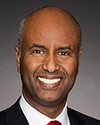
R.J. Simpson  Premier of the Northwest Territories, Government of Northwest Territories
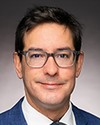
John Main  Premier of Nunavut, Government of Nunavut

Rob Oliphant Liberal Don Valley West, ON

Thank you, Mr. Chair.

Thank you, premiers, for being here. It's a privilege for us to have you here.

I'm not going to get too much into roads. I've driven on most of them. Give me a good gravel road over a bad paved road any day, like the shale on the Dempster Highway. If you want to drive with me sometime, anyone is welcome, but there's only room for one passenger because the back seat is full of spare tires. That's what you do, and you just assume your windshield will never be the same.

When most Canadians look at a map of Canada, they look at the demographic centres and the population along the southern border, and our minds go there. When I look at the map of Canada, Arviat is in the centre. If you go from Pond Inlet at the top to Point Pelee in southern Ontario, and from St. John's, Newfoundland to Victoria, or Whitehorse, which is west of Victoria, you're in the centre of Canada, and it really is something we have to get into our southern Canadian minds.

I think right now with what is happening with the geopolitical world we're in and the threats to our sovereignty, which we are hearing daily, I would have worries on both sides and in the middle. Those are the threats with respect to Greenland's sovereignty, which then remind us of the vulnerability in Nunavut, but also critical minerals. We don't have the Premier of Yukon here, but we have challenges from Alaska into Yukon, and we have Chinese challenges in the middle with critical minerals and mining. Right now, the north is on Canadians' minds, so we're looking for more input on our foreign policy and how Canada engages in the world with your input.

With respect to that, part of our Arctic foreign policy, which came out of the strategic document from 2019, is to have a better relationship with both the territorial governments and the indigenous governments.

Are we doing better at engaging you on issues that matter to all of Canada, or can we do better? If so, how could we do better to get your full participation? We've had indigenous leaders here from the north as well, but now we have the territorial governments, so particularly, how can we structurally engage your governments in thoughtful discourse on the world stage?
3:50 p.m.

Premier of the Northwest Territories, Government of Northwest Territories

R.J. Simpson

Thank you for that.

When I think about how we, as a territory, can work with Canada to engage internationally, sometimes I'm at a loss because we're in a situation in which we don't have international exports. There are diamonds, but that's not something the territorial government controls. When I hear other jurisdictions talk about how they're working with other countries, going on trade missions...we're not there yet. We don't have highways, as was just discussed. That's the area where I find it difficult to talk about international relations, because we're still trying to get our foundation built in the north as part of Canada, let alone go out to other countries.

In terms of the engagement with the federal government, I will say that the current administration has been engaging heavily with us, and I feel like we are now being heard and listened to. We just met with Minister MacKinnon to talk about the Arctic infrastructure fund and what that should look like, so these things are being listened to at this point. Some more formalization around that relationship might be appreciated, but we're off to a great start, I would say.

January 29th, 2026 / 3:55 p.m.

Premier of Nunavut, Government of Nunavut

John Main

I would echo those comments in terms of recent approaches to engaging with the Nunavut government. It's encouraging. My understanding is there's been a bit of a change in tone and, like you mentioned, there's more focus, at the moment, on the Arctic.

In terms of that inclusive approach to democracy, which is named in the Arctic foreign policy, and involving Inuit voices, it's very much in line with what we, as a public government, espouse: We want to make sure that Inuit organizations within Nunavut are given the proper space and recognition. We really view Inuit organizations as our partners in pretty much everything we do.

The only thing I want to add is that I keep on hearing that the Arctic is “having a moment”, and my concern is that the moment will pass. What we really need is sustained engagement and investment. You can't undo decades of underinvestment with a moment; you need to counter that with a sustained, well-planned-out plan to build up the north as it should be.

Rob Oliphant Liberal Don Valley West, ON

Can I ask about the Arctic Council? It is our premier platform that we use. We have suspended the membership of Russia because of its aggression in Ukraine. We have six permanent partners, which are indigenous groups. Is there a way for Canada to engage? The presidency right now, the chair is with the Kingdom of Denmark. It has, really, given it to Greenland to operate as the chair. Is there a way we can involve the territorial governments in the Arctic Council in more meaningful ways than we have in the past?

The Chair Liberal Ahmed Hussen

Give a brief response, please, because we're running out of time.

3:55 p.m.

Premier of the Northwest Territories, Government of Northwest Territories

R.J. Simpson

I haven't been involved in the Arctic Council. I haven't gone to any meetings. It could just be that I'm in my second year and the opportunity hasn't arisen yet, so I can't speak too much about that here.

3:55 p.m.

Premier of Nunavut, Government of Nunavut

John Main

I would just simply state that we're open to considering ways to engage with the Arctic Council. I'm fairly new to the role of premier, so I can't speak much in terms of past engagements.

The Chair Liberal Ahmed Hussen

Thank you very much.

Mr. Brunelle‑Duceppe, you have the floor for six minutes.

Alexis Brunelle-Duceppe Bloc Lac-Saint-Jean, QC

Thank you, Mr. Chair.

I'd like to thank the witnesses for being here today.

It's important for us to have you here, Mr. Simpson and Mr. Main.

There is one topic that has come up often since we started this study. It's one thing to invest in the Canadian Arctic to strengthen the military presence and national security, but we mustn't lose sight of the fact that the investments that need to be made in communities are even more important.

I want to get your perspective. How essential is strengthening your communities in your territories in the context of the new investments that the federal government wants to make or is promising to make?

3:55 p.m.

Premier of the Northwest Territories, Government of Northwest Territories

R.J. Simpson

Yes, I think it's extremely important. We have national security, which I see as the hard security. Then we have human security, which I think is often equated to sovereignty.

To me, sovereignty is seeing strong, vibrant communities. No one will ever question whether the Strait of Georgia between Vancouver Island and the mainland is international waters. It's built up and there are communities and people there. It's important that we do that, but in the territories we have a long way to go. There's a lot of trauma in the territories, a lot of poverty, underinvestment in basic infrastructure and an inability for residents to access basic health care. That's really what we focus on: creating economic opportunities, so infrastructure investment is very necessary, and complementary to that is the investment in the human security aspects.

3:55 p.m.

Premier of Nunavut, Government of Nunavut

John Main

I would echo those comments. Thank you for asking that question.

If you visit a Nunavut community, you will see with your own eyes issues around drinking water and basic infrastructure, like roads, marine infrastructure, power generation, schools and health facilities. We have a long list of infrastructure priorities that are needed to bring Nunavummiut up to a standard that's on par with southern Canada.

Alexis Brunelle-Duceppe Bloc Lac-Saint-Jean, QC

That's one of my fears. There's a lot of talk about the international geopolitical situation, and it's becoming an excuse to put the cart before the horse, as we say, that is, to focus on large projects that are the subject of political debate, when at the same time, communities and populations have other needs that are more pressing. I want to make this point because there haven't been many major infrastructure projects in the Arctic since the 1950s, 1960s or 1970. There has been a complete lack of interest from the federal government for a long time.

Mr. Simpson, you just said a little earlier that you don't know whether the government will continue to take an interest in the Arctic. Why has the federal government completely disengaged from the Arctic? What can we learn from this lack of interest in the Arctic so that this doesn't happen again?

4 p.m.

Premier of the Northwest Territories, Government of Northwest Territories

R.J. Simpson

I can't speak for the federal government, but I think the fact that we have one MP in the Northwest Territories, and only one MP in each of the territories, probably has a lot to do with it.

You're correct. There was investment in the fifties, sixties and seventies, and there were even plans in the seventies to do big, large-scale investments, but those have fallen off. I would also say part of the reason is that it is an expensive jurisdiction to do business in. If the government wants to build something or if businesses want to go in and do something, it costs more, and there's always a more attractive place to put those investment dollars. With that attitude, though, we wind up where we are: where there's not even an opportunity to generate wealth and prosperity in the territory.

4 p.m.

Premier of Nunavut, Government of Nunavut

John Main

To build on those comments, I think what's really needed and what is, in some ways, the most difficult aspect to it is that you're not going to be able to make changes overnight. If you make big investments in roads, ports, energy generation or transmission, it will take a long time for those investments to pay off and to be built.

I'm a politician. I think we can sometimes take the short-term view in terms of the next four years and what's needed. That's what I was trying to get at earlier. We need more than a moment; we need decades. We need the team Canada approach, and we need that team Canada approach to apply to the Arctic. It needs to be as non-partisan as possible. That would be my preference: seeing that sustained focus and investment in the north, which is a huge part of our Canadian identity.

Alexis Brunelle-Duceppe Bloc Lac-Saint-Jean, QC

Obviously, I like to hear talk of sovereignty, because I'm a member of the Bloc Québécois. We would be excellent allies if Quebec ever became sovereign, but that's another matter.

In terms of the most important investment priorities, do you have any concrete examples of projects that you think should be prioritized? Do you think the federal government listens when you propose projects that you think should be prioritized for funding?

4 p.m.

Liberal

The Chair Liberal Ahmed Hussen

Give a brief response, again because we're just over the time.

4 p.m.

Premier of the Northwest Territories, Government of Northwest Territories

R.J. Simpson

I'll speak to one project, because it is almost there, which is the Mackenzie Valley Highway. That's the highway that would connect from Wrigley all the way up to the Arctic Ocean and to Inuvik. That would serve to lower costs for the residents in that region, who I think face the highest costs in Canada. It would connect families, connect communities and open up resource exploration and development opportunities. In terms of things that can get you the most bang for your buck the most quickly, I would say look at the Mackenzie Valley Highway.

Thank you.

4 p.m.

Liberal

The Chair Liberal Ahmed Hussen

Thank you very much.

We'll go next to MP Lori Idlout.

Thank you for joining us today. You have five minutes.

Lori Idlout NDP Nunavut, NU

[Member spoke in Inuktitut and provided the following text:]

Qujannamiik Iksivautali.

Qujannamiirumavunga Katimajiralaat Ammalu Qaigasi.

[Member provided the following translation:]

Thank you Chair.

Thank you to the committee and to the witnesses.

[English]

First of all, thank you so much for including me in this important committee today with the witnesses.

Welcome to both of you. I think it's wonderful to see that you're sharing such common issues between the NWT and Nunavut and to hear you saying the same things I've been saying since I was elected in 2021. It means that what you've shared with us today in committee is not just something I've come up with by myself. It's pervasive and very important. We've heard, for example, that there was a time when investments were much higher. We saw these investments going to housing and to keeping the Arctic secure. I think we need to make it very clear that the Arctic has already been secured by Canada. We need to focus on keeping it, especially with climate change, the opening of the Northwest Passage and the potential that other countries will want to use the Northwest Passage. The purpose of foreign affairs....

When you think about it, why are we focusing on infrastructure projects in this study? I think from some of the examples we've heard from our constituents, our constituents basically live in third world conditions. We live in a first world country, and yet we have our constituents living in a third world state. I'm wondering if you could express a bit more strongly why you're pushing so hard for more infrastructure projects and basic needs.

That's for both of you, but perhaps you can start, John.

4:05 p.m.

Premier of Nunavut, Government of Nunavut

John Main

Thanks for that.

I had my cabinet colleagues here with me this week. At various points during the week, it struck me that a lot of what we're advocating for is the very basics. I mentioned them earlier. They're the very basics. As I answered earlier, gravel roads would be a huge leap ahead for us. An adequate modern drinking water infrastructure for all communities in Nunavut—there are 25—would be a huge leap ahead.

There's a reason we're pushing so strongly or making sure there's this awareness. My concern is that the Arctic could be looked at as a blank canvas, or could be looked at simply in terms of borders and defence. You made a very good point in your preamble, that the Arctic is already secured. There are already Inuit living in the Arctic, as there have been for thousands of years and will be into the future. We need to recognize those terrible conditions that exist in many of our communities. We need to recognize that those conditions can be changed and that we can catch more than one ptarmigan with one bullet in terms of defence interests, community interests, human security, economic interests and economic development.

4:05 p.m.

Premier of the Northwest Territories, Government of Northwest Territories

R.J. Simpson

I will say that we're pushing hard so that northerners can have the same opportunities as people in the rest of Canada. I think things like roads are taken for granted elsewhere. You can see in the highway and rail system from east to west the economic opportunities that has created. That's what we're looking for—economic opportunities and a standard of living on par with the rest of Canada.

I understand that we're rural and remote, and we're not going to have all the services you would find in a city, but as you mentioned, a lot of the services are substandard. We need to do better in Canada.

Thank you.

Lori Idlout NDP Nunavut, NU

More specifically to Premier Main, let's talk about a couple of examples of projects that the federal government had promised to invest in and that are not completed yet are the Arctic Bay marine infrastructure port and the Qikiqtarjuaq marine port.

I wonder if you could share with us how important the completion of those ports would be for Nunavut, and how Canada could show that it will defend the Arctic by investing in these projects and in airport infrastructure. I know that reliability in the north is quite reduced because of the lack of infrastructure for weather stations and for what pilots must rely on to be able to make sure they can continually land in all the 25 fly-in communities. I know how important it is to make sure we're getting those investments to increase that reliability in order to help reduce the costs of the fly-in communities that we're suffering in with the cost of living in the north.

The Chair Liberal Ahmed Hussen

Please give a quick response, if possible.

4:10 p.m.

Premier of Nunavut, Government of Nunavut

John Main

Thank you.

Briefly, in terms of aviation, thanks for highlighting that it is a key need. We have only a couple of our airports where the airstrips are paved. In terms of paved versus gravel, there's that issue. The maintenance of airstrips as well as lengthening them would benefit transport, as well as cost of living in some instances.

In terms of marine infrastructure, that's an area where we want to see more investment. We see it as dual use or multi-use in terms of benefiting defence interests and community interests, as well as the economic benefit from the fisheries.

The Chair Liberal Ahmed Hussen

Thank you.

We are going to the second round of questions, beginning with MP Aboultaif.

You have five minutes.