Evidence of meeting #2 for Foreign Affairs and International Development in the 45th Parliament, 1st session. (The original version is on Parliament’s site, as are the minutes.) The winning word was gangs.

A video is available from Parliament.

On the agenda

Members speaking

Before the committee

Richardson  Director General, Central America and Caribbean Bureau, Department of Foreign Affairs, Trade and Development
Myles  Executive Director, Haiti Division, Department of Foreign Affairs, Trade and Development

Alexis Brunelle-Duceppe Bloc Lac-Saint-Jean, QC

I understand that you can't tell us what will be in Ms. Anand's announcement today in New York, or even the reason she is there, but I know that there will be something on Haiti.

Without revealing what we'll be hearing this afternoon, will there be an answer to the question I just asked you about sending in Canadian soldiers?

11:30 a.m.

Director General, Central America and Caribbean Bureau, Department of Foreign Affairs, Trade and Development

Mark Richardson

To date, this is not something that has been discussed within the government. It's not something we've been asked by the Americans. Our efforts are focused on the resolution.

I can tell you that in the past, there was a request to deploy military personnel to Haiti. We held consultations on this suggestion with stakeholders, including the Haitian diaspora here and Haitians in Haiti. We then determined that our efforts had to focus on member contributions, support for Haiti and the possible solutions for the country in the multilateral forums.

Alexis Brunelle-Duceppe Bloc Lac-Saint-Jean, QC

You're talking about the diaspora, which is extremely large here, particularly in Quebec, but also in Ontario. There are many people of Haitian origin in Canada. That's why we have a very special relationship with Haiti.

I was already vice-chair of the Subcommittee on International Human Rights when we did a study on the human rights situation in Haiti in 2023. We saw that it was complicated, and that no one agreed on whether or not Canada needed to intervene or how to go about it. We heard a lot of conflicting testimony. That pretty much sums up the situation in the diaspora.

That said, one quote stuck with me. One of the witnesses told us, “It is essential for Canada’s approach to reflect its own values, its own vision of human rights, security and the world. It must not lag behind the United States in trying to solve a problem in Haiti.” One thing we should take away from the 2023 study, because it comes up often, is that Canada must resume the leadership it once had, especially on the Haiti issue.

Do you feel as though Canada is aligning itself directly with the United States' position or that it is actually developing its own foreign affairs position on Haiti?

11:30 a.m.

Director General, Central America and Caribbean Bureau, Department of Foreign Affairs, Trade and Development

Mark Richardson

I'll respond to this question in English.

Thank you to the member for sharing that quote and asking that question.

I think that in all things, we are guided by Canadian national interests. We look at this in terms of what we're doing in Haiti currently and, obviously, what will be considered for the future, as well as the situation in Haiti and the situation of the Haitian people.

We are thankful to the United States and, I would say, encouraged by the leadership position they have recently taken in proposing a hybrid approach to try to bring security and stability to Haiti right now. We are particularly encouraged that it involves a multilateral element. A UN support office has been proposed by the Americans.

I come back to the point that we're supporting this because we believe it is in the Haitian interest—this proposal has been supported by the Haitian government—and because we believe it will help us protect and advance Canadian interests as well.

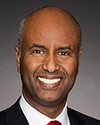
The Chair Liberal Ahmed Hussen

Unfortunately, your time is up, Mr. Brunelle‑Duceppe.

We will now proceed to the next round of questioning, starting with Mr. Majumdar.

You have five minutes. Welcome to the committee.

11:35 a.m.

Conservative

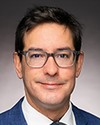
Shuv Majumdar Conservative Calgary Heritage, AB

Thank you, Chair.

Thank you, witnesses, for your testimony so far.

Canada has contributed more than $400 million to Haiti since 2022. As best as possible, knowing that gangs control 85% of Port-au-Prince, what safeguards are in place to make sure that aid is not being diverted to the gangs and their political backers?

11:35 a.m.

Director General, Central America and Caribbean Bureau, Department of Foreign Affairs, Trade and Development

Mark Richardson

Part of our work as we look at our international assistance to Haiti is to pick the right partners and make sure that they have robust mechanisms and controls in place to ensure that the funds the Canadian taxpayers are providing are, in fact, being dedicated to the ends that we envisaged for them. This is one of the reasons we tend to work with multiple large partners like the UNODC, the UN Office on Drugs and Crime, the OAS and other recognized partners.

For our own specific programs, where we give directly to Canadian or Haitian NGOs, we regularly have audits of their programs in order to ensure that the funds are spent as we have been told they will be.

11:35 a.m.

Conservative

Shuv Majumdar Conservative Calgary Heritage, AB

Thank you.

For the kind of capital that goes through the MSSM and other UN agencies, what safeguards are in place, that you are aware of, to ensure that aid diversion is not happening through UN agency aid distribution? If you could get granular, I'd appreciate it.

11:35 a.m.

Director General, Central America and Caribbean Bureau, Department of Foreign Affairs, Trade and Development

Mark Richardson

For that, I'll turn to my colleague, Ian Myles.

11:35 a.m.

Executive Director, Haiti Division, Department of Foreign Affairs, Trade and Development

Ian Myles

It's a good question. It's one that gets attention around the world in terms of safeguards within the UN system. There are billions of dollars that get provided through the UN in terms of international assistance, particularly on the humanitarian side.

One advantage of that is that we're not the only ones looking for accountability, ensuring that there are safeguards in place, both financial in terms of program value for money, as well as in questions of abuse of power and sexual exploitation and abuse. There are good safeguards in there. There are processes for investigation that can be done to verify facts when allegations are made. We have quite a high degree of confidence in those, because they're something that are not Haiti-specific. They're really from around the world.

11:35 a.m.

Conservative

Shuv Majumdar Conservative Calgary Heritage, AB

Thank you.

If I might drill a little deeper into this with the time I have with you, what new oversight or monitoring tools has Canada advanced since 2022 to make sure our taxpayer money is not repeating the same mistakes you just described?

11:35 a.m.

Executive Director, Haiti Division, Department of Foreign Affairs, Trade and Development

Ian Myles

We're all acutely aware that there have been lessons learned along the way in terms of how our aid is delivered. In that sense, I can say confidently that there have been no incidents in terms of misuse of Canadian resources, that I'm aware of, since 2022.

In terms of the security missions themselves, we're aware that there have been issues that have come up in the past. There have been additional mechanisms that Canada has pushed for, particularly in the area of sexual exploitation and abuse.

We've co-located a gender adviser with the force commander to advise the force commander on making a safe environment, first and foremost for the women who make up part of the MSSM who have come from other countries, but also on mechanisms to ensure safeguards against exploitation of Haitian citizens.

We also have a specialist deployed at the MSSM support office in Washington whose specialization is investigative resources for sexual exploitation and abuse. It's to ensure that the mechanisms are in place to respond quickly should any incidents occur, as well as to prevent incidents from happening.

The Chair Liberal Ahmed Hussen

Please ask a short question.

11:40 a.m.

Conservative

Shuv Majumdar Conservative Calgary Heritage, AB

With elections in two months, do you believe the conditions exist for a credible vote?

11:40 a.m.

Director General, Central America and Caribbean Bureau, Department of Foreign Affairs, Trade and Development

Mark Richardson

Just to clarify the question, are you referring to elections in Haiti?

11:40 a.m.

Conservative

Shuv Majumdar Conservative Calgary Heritage, AB

Yes. Am I wrong?

11:40 a.m.

Director General, Central America and Caribbean Bureau, Department of Foreign Affairs, Trade and Development

Mark Richardson

As I understand it, the transitional presidential council's mandate is set to end in February. At this point, there are a number of challenges and concerns that we face with the situation in Haiti. There does not actually seem to be a viable path forward in terms of having elections before that date. Therefore, to the best of my knowledge, no date has been set for the next election in Haiti.

The Chair Liberal Ahmed Hussen

Thank you, Mr. Richardson.

We'll now proceed to Madame Fortier.

Mona Fortier Liberal Ottawa—Vanier—Gloucester, ON

Thank you, Mr. Chair.

Thank you, Mr. Richardson, for being here today, despite the short notice we gave you. We are pleased today to be having this discussion on the situation in Haiti, which we very well understand is highly challenging.

I'd like to talk more about how we involve the Haitian diaspora here in Canada in any solutions, or how we work with the diaspora. I am privileged to have many members of the Haitian community in my riding, and I know there are many in Montreal as well. They want to make a difference because they're concerned about what's happening back home.

Do you have an idea of how the Haitian diaspora has been involved, since the beginning of the conflict, obviously, but also now?

11:40 a.m.

Director General, Central America and Caribbean Bureau, Department of Foreign Affairs, Trade and Development

Mark Richardson

Our strategy of collaboration with the diaspora includes regular discussions with organizations that help immigrants integrate, with Haitian churches, with international aid partners, with organizations that advocate for political dialogue and with Haitian student associations. This is in addition to the ministerial commitment.

For example, this afternoon, Minister Anand is meeting with her Haitian counterpart on the margins of the United Nations General Assembly, or UNGA, to discuss the crisis situation in her country and reiterate the importance of engaging in dialogue with all segments of society.

I also want to point out that Canada's ambassador to Haiti, André François Giroux, is in regular contact with representatives of the Haitian diaspora in Canada.

Mona Fortier Liberal Ottawa—Vanier—Gloucester, ON

Is there anything else we can do to continue that engagement in the near future?

We are well aware that the minister is going to give a speech and we can't discuss it.

To ensure progress, how can we continue to work with the Haitian diaspora, which is still putting so much pressure on the government, and even on Haiti?

As has been said, the situation is still very critical, verging on abhorrent.

Do you have any suggestions for us today?

11:40 a.m.

Director General, Central America and Caribbean Bureau, Department of Foreign Affairs, Trade and Development

Mark Richardson

Unfortunately, I can't give advice to the government, because that would be a political matter.

However, I can tell you what we have done so far and talk to you about our engagement. I can also give you some food for thought on the need to involve the diaspora in the thought process.

To date, we have engaged in discussions with the diaspora. The last one was conducted by Minister Joly in November 2024, before the election.

Right now, as you said, it would be a good idea for the department and officials to engage with the diaspora to talk about the UN resolution after it is adopted.

Mona Fortier Liberal Ottawa—Vanier—Gloucester, ON

Is there anything else you would like to report to the committee?

We may be able to make some recommendations. This is a good time to make suggestions to the committee about the situation.

11:45 a.m.

Director General, Central America and Caribbean Bureau, Department of Foreign Affairs, Trade and Development

Mark Richardson

Mr. Chair, I would like to ask my colleague Ian Myles to answer that question, because he worked for a long time in the archives of the Haiti file. He might have some comments on that.

11:45 a.m.

Executive Director, Haiti Division, Department of Foreign Affairs, Trade and Development

Ian Myles

Ms. Fortier, you are already helping us by showing interest in the situation in Haiti and asking the right questions.

This is an extremely complex situation for which there is no simple solution. In that regard, we welcome all existing discussions, including with the diaspora, to flesh out ideas, share our analyses and diagnoses, and identify potential solutions. It helps us a great deal in our work.