Evidence of meeting #20 for Foreign Affairs and International Development in the 45th Parliament, 1st session. (The original version is on Parliament’s site, as are the minutes.) The winning word was security.

A video is available from Parliament.

On the agenda

Members speaking

Before the committee

Anita Anand  Minister of Foreign Affairs
Brookfield  Director General, Sanctions and Strategic Export Controls , Department of Foreign Affairs, Trade and Development

The Hon. Anita Anand Liberal Anita Anand

Mr. Chair, it’s important that I be able to finish my response.

Alexis Brunelle-Duceppe Bloc Lac-Saint-Jean, QC

Mr. Chair, if the minister doesn’t answer the question directly, I can’t let her finish.

I’m sorry, but I’m not talking about the pillars and the government’s vision. I’m talking specifically about the clauses we’re discussing, the reason we’re here today.

How will those clauses impact supply chains with respect to forced labour?

The question is related to the clauses that amend the act.

The Hon. Anita Anand Liberal Anita Anand

The question is a bit different from the previous one, but I can answer it.

You’re right, the measures are limited. This means that we need to implement the necessary measures to respond to economic shocks. These controls could be used to secure supply chains or to respond to economic coercion.

The need for domestic safeguards against economic threats is therefore clear. That is why there’s a very limited, very isolated, but also very necessary provision. It’s important to continue building our economy, and I hope everyone is on the same page.

Alexis Brunelle-Duceppe Bloc Lac-Saint-Jean, QC

In that case, I’d like to ask a very easy question that doesn’t need a long answer.

From what I understand, these clauses have no impact on supply chains for products made using forced labour.

Is that correct?

The Hon. Anita Anand Liberal Anita Anand

As I said here last time, our government believes in human rights, in international law and in the rights of workers. That’s obvious.

Alexis Brunelle-Duceppe Bloc Lac-Saint-Jean, QC

It’s not a complicated question. Minister, since you’re here before the committee, please answer the questions. I’m asking them politely, and they are specific.

I understand that the answer is no. These clauses have no impact on supply chains for goods produced using forced labour.

The agreement you recently reached with China covers tens of thousands of electric vehicles. This is documented. I can send you the studies. The world's largest steel and aluminum producers have been encouraged by the Chinese government to set up operations in the Xinjiang region, where the workforce is from the Uyghur minority, which is subjected to forced labour. Logically, there’s forced labour in the supply chain for those vehicles. It’s no coincidence that a vehicle costs $35,000 or less, even including the transportation cost.

How do you respond to that?

Are we turning a blind eye as we let in these goods that you negotiated and that are produced by forced labour?

The Hon. Anita Anand Liberal Anita Anand

I want to be clear; forced labour is unacceptable.

It’s wrong to say that it’s a contract or an agreement. It’s clearly only the resolution of certain points of friction in the bilateral relationship between the two countries. This is not a free trade agreement between the two countries, and Canada will always assert that forced labour is unacceptable.

Alexis Brunelle-Duceppe Bloc Lac-Saint-Jean, QC

It’s unacceptable, but the supply chains contain components produced by forced labour. I'm not making up the figure of 49,000 Chinese electric vehicles.

I’ll move on to another question. If China launches a military action against Taiwan tomorrow, will this agreement on Canadian canola and Chinese electric vehicles hold?

If it’s too hypothetical, I’d remind you that, from the outset, it’s you who has been using the word “hypothetical” and imagining hypothetical situations that could occur.

The Hon. Anita Anand Liberal Anita Anand

I’d like to highlight two points.

First, I’ve always said that public safety and human rights are important principles for our foreign policy.

Second, it was not a bilateral agreement. It was the resolution of certain tensions and points of friction in the bilateral relationship between the two countries.

As I said, we’ll therefore continue to uphold the three pillars of our foreign policy—

Alexis Brunelle-Duceppe Bloc Lac-Saint-Jean, QC

The Chinese electric vehicles don’t exist, then.

Is that it?

The Hon. Anita Anand Liberal Anita Anand

—and we’ll continue to defend Canadian principles and values.

Thank you very much.

Alexis Brunelle-Duceppe Bloc Lac-Saint-Jean, QC

What we were sold doesn't exist, then. The agreement on canola is not a real agreement.

Do I understand correctly?

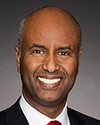
The Chair Liberal Ahmed Hussen

Unfortunately, Mr. Brunelle-Duceppe, we're out of time.

We'll go to the next round of questions, starting with MP Kramp-Neuman.

You have five minutes, please.

3:55 p.m.

Conservative

Shelby Kramp-Neuman Conservative Hastings—Lennox and Addington—Tyendinaga, ON

Thank you, Chair, and thank you, Minister, for being here today.

I'd like to focus most of my questions on division 27 of Bill C-15. As you're aware, it's designed to protect Canada's economic sovereignty or economic security.

Recently, in front of the Senate foreign affairs and international trade committee, Ms. Galadza stated, “'economic security' is a broad term. In this context, it includes Canada’s ability to manage foreign threats and shocks while guiding economic activity such as imports and exports to support national security objectives and foster growth.”

My first question is, are there any oversight mechanisms in place to assure...any concerns regarding potential overreach or misapplication of these new powers?

4 p.m.

Liberal

Anita Anand Liberal Oakville East, ON

This is a minor amendment to the Export and Import Permits Act. It's simply to ensure that the supply and distribution of the good in Canada or internationally are consistent with Canada's economic security interests. The power, if adopted, would be used only in limited circumstances and in circumstances after a risk-benefit analysis was undertaken upon careful and systematic consideration by my department.

I have my official here and he can speak to that.

Robert Brookfield Director General, Sanctions and Strategic Export Controls , Department of Foreign Affairs, Trade and Development

Just to elaborate briefly on the process, the idea would be, if this amendment passes, that there would be an ability to add a regulation that would add a particular product, described either by a harmonious system code or some other method, and then it would be illegal to export or import that item without a permit. That permit could be granted automatically, for example, as is present in the case for softwood lumber, or it could be granted on certain conditions, such as further to an agreement with other countries or in order to support Canada's defence and support our own industries.

4 p.m.

Conservative

Shelby Kramp-Neuman Conservative Hastings—Lennox and Addington—Tyendinaga, ON

How would this new authority differ from the Governor in Council's existing authorities under the act?

4 p.m.

Liberal

Anita Anand Liberal Oakville East, ON

This particular limited provision makes it explicit that there is an ability, in cases where the government needs to address economic security, to act. It's a new legal distinction. We believe that in this time of economic stress in the global economy, it is necessary to provide government with this additional tool.

4 p.m.

Conservative

Shelby Kramp-Neuman Conservative Hastings—Lennox and Addington—Tyendinaga, ON

Does the government have a hard definition of foreign threats and shocks?

The reason I ask is I'm curious if the Canadian government considers the Chinese government's documented interference in previous Canadian elections to be a foreign threat.

4 p.m.

Liberal

Anita Anand Liberal Oakville East, ON

The work of Madam Justice Hogue in the Hogue inquiry was extremely important for analyzing different types of concerns relating to foreign interference. We are responding to the recommendations in that report.

In every engagement that I have internationally, I speak of the importance of the public safety and security of the domestic situation in Canada and I will continue to do that. National security is already a rationale in terms of this particular limited amendment. We are simply asking to add the words “economic security”, which would then go through the regulatory process.

4 p.m.

Conservative

Shelby Kramp-Neuman Conservative Hastings—Lennox and Addington—Tyendinaga, ON

I have two more questions.

Does the domestic human rights record of foreign states factor into the consideration you just spoke of, and finally, would the dumping of steel into Canada by nations such as China constitute an economic threat?

4 p.m.

Liberal

Anita Anand Liberal Oakville East, ON

I want to reiterate that in my discussions with my counterparts, I always underline the importance of human rights, international law and domestic public safety and security. This is without exception.

In addition, I will say that we work with other countries, as many examples in our chairing of the G7 have shown, in order to show consistent positions on human rights and to show that those rights apply across the board.

Engagement with countries does not mean endorsement. We raise these issues, along with a host of other issues, because we take them seriously. We have to be able to be at the table and have the strength of our convictions to raise points of disagreement without destabilizing areas of co-operation.

4 p.m.

Liberal

The Chair Liberal Ahmed Hussen

Thank you very much.

Let's go to MP Steven Guilbeault.

You have five minutes.

The Hon. Steven Guilbeault Liberal Steven Guilbeault

Thank you very much, Mr. Chair.

Thank you, Minister, for being here.

I’d like to say hello to Mr. LaTorre, with whom I had the pleasure of working when he was our ambassador in Sweden.

At the beginning of your remarks, you said that the global system was being rewired, or rewritten in a way. The older people in the room may remember the famous book by Francis Fukuyama, titled The End of History and the Last Man. At that time, it was thought that liberal democracies were the pinnacle of global politics, but we can see that this is not the case at all. We are witnessing geopolitical events right now that many of us never thought we would see in our lifetime. This explains the importance for the Government of Canada, as a responsible government, to review certain laws and regulations, and to see where it needs to act or react.

I now have a few questions for you.

How do the proposed provisions—which I hope will be endorsed by the opposition—and these commitments align with our other international commitments, such as our free trade agreements?


The Hon. Anita Anand Liberal Anita Anand

Thank you for your question. Thank you also for acknowledging that the words of Francis Fukuyama are no longer true today. In some sections of his work, he reiterated the importance of multilateral institutions.

We now know that, indeed, multilateral institutions are very important, but our reality is different. That means we must respond to these environments, to the economy and to the international situation.

The current situation is very difficult. I see that several of my counterparts from other countries are responding by taking action. They’re working with each other within multilateral institutions.

The term “economic security” includes Canada’s ability to manage threats and shocks from abroad. We can be flexible and respond to the situation. I hope that everyone in the room and in the House can work together, as we did at the start of the pandemic. At that time, everyone said that our country needed something now.

Our country needs co-operation, not partisan politics. I appreciate your question, and I hope that we can work together for our country.