Evidence of meeting #23 for Foreign Affairs and International Development in the 45th Parliament, 1st session. (The original version is on Parliament’s site, as are the minutes.) The winning word was crisis.

A recording is available from Parliament.

On the agenda

Members speaking

Before the committee

Richardson  Director General, Central America and Caribbean Bureau, Department of Foreign Affairs, Trade and Development
Beaulieu  Director General, International Emergency and Travel Advice Bureau, Department of Foreign Affairs, Trade and Development
Carney  Director, International Humanitarian Assistance Division, Department of Foreign Affairs, Trade and Development
Excellency Rodrigo Malmierca Díaz  Ambassador, Embassy of the Republic of Cuba in Canada

H.E. Rodrigo Malmierca Diaz

The most difficult situation is with the oil products. They affect everything. If you don't have the energy, it's difficult for things to function.

In the contacts we have had with the Canadian government, with Global Affairs, we have explained to them what our priorities are, and they are in the energy sector and the food sector. Those are the situations in which, we believe, help would be most appreciated.

Alexis Brunelle-Duceppe Bloc Lac-Saint-Jean, QC

Can you tell the committee whether any segments of the population are more severely affected by the current humanitarian crisis? For example, are children, seniors or perhaps people living in areas farther from the major centres more affected?

H.E. Rodrigo Malmierca Diaz

We have been working for a long time on our security...life system to identify the vulnerable groups. Of course, children and women are among them. We already have projects, with the Canadian government, that are supporting them. In certain regions of the country, because of other situations—for instance, hurricane Melissa last year—we tried to give special attention to those vulnerable groups in those regions of the country. In this case, it was the eastern part of the country.

Alexis Brunelle-Duceppe Bloc Lac-Saint-Jean, QC

I've also heard that you need oil for power plants as well as jet fuel. That way, you could obtain more humanitarian assistance with jet fuel. Is this still the case?

H.E. Rodrigo Malmierca Diaz

Yes, it is very important for us to have the petroleum products in order to function. I'll give you an example. If a ship comes to Cuba with wheat, for instance, to produce bread, we will have to operate in the port. We will have to move the wheat to where we're going to produce the by-products. If we don't have the fuel to do so, it's going to create a situation.

I'm talking about real situations. We buy wheat in Canada, but these days we have trouble transporting the wheat from the port to the warehouses because the lack of ability to have fuel completely extends throughout the functioning of the economy.

You mentioned airplanes. Jet fuel is a different product, but we had to inform the international alliance that we didn't have the ability to service them or to refuel them in Cuba because we didn't have the product. We contracted the product, but it hasn't arrived.

When the Trump administration threatened everybody that it would apply sanctions if oil products were sold to Cuba, many contracts were undermined, and we didn't receive the products on time. We were obliged to tell this to the airlines, and the Canadian airlines, for instance, decided to stop their flights. It's a really difficult situation happening.

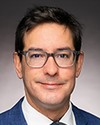
Alexis Brunelle-Duceppe Bloc Lac-Saint-Jean, QC

You said earlier that, in your opinion, Washington was violating international law. Could you please elaborate on this?

H.E. Rodrigo Malmierca Diaz

It's obvious. I don't see how you can justify not only the blockade—this one that we have suffered under for many years—but also these new measures that are openly against third parties. They're not only against Cuba. It's evident that they are not accomplishing these things through international law.

I have to say that, in his first mandate, President Trump applied 242 new measures to strengthen the blockade against Cuba. There was no reason for this. They want to destroy the Cuban revolution, but we are not going to surrender. We are going to continue fighting.

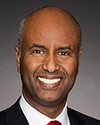
The Chair Liberal Ahmed Hussen

Next, we'll go to MP Aboultaif.

You have five minutes.

5:10 p.m.

Conservative

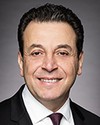
Ziad Aboultaif Conservative Edmonton Manning, AB

Thank you, Chair.

Your Excellency, welcome to the committee again.

You mentioned that there are discussions and negotiations going on with the United States over this crisis. Are you able to brief us on where the negotiation is going? Is it directly between Cuba and the U.S., or is there a third party involved? Is Canada involved in any of those diplomatic efforts? It would be great if you could brief us on that.

H.E. Rodrigo Malmierca Diaz

Thank you, honourable member.

I haven't said that there are negotiations happening. What I said, and I ratify it, is that Cuba is open and very willing to talk not only with the United States but also with any country. In doing that, you don't need to agree on everything. We have, for instance, with Canada, a political dialogue that is very respectful and very useful. We disagree on certain issues, but that doesn't close the door to having talks and negotiations.

We are able to negotiate, even with this administration that is being so aggressive against us. However, we are not going to negotiate under threats. We are not going to negotiate surrendering. We are an independent country, and we decide on our own issues. We can talk about any matter. We are not saying that we cannot talk about this or that. We can talk about everything, but with respect. I don't have any information about mediation in this situation between the United States and Cuba.

5:10 p.m.

Conservative

Ziad Aboultaif Conservative Edmonton Manning, AB

Ambassador, you saw this in 1962. It may be different circumstances, but you basically dealt with changes in the political landscape and the challenges that Cuba faced. Back then, diplomacy was the way to get out of this to make sure the crisis against the people could end.

How do you see the European Union, for example? It is not really going with sanctions against Cuba in this circumstance. How are other countries reacting to this? Are they offering any help to ease this situation?

H.E. Rodrigo Malmierca Diaz

I think you are very right when you say that the situation today is completely different from what it was in the last 50 years.

I don't know. There are symptoms of a kind of disorder, if I can call it that. The international order is being moved by a superpower.

I strongly believe that we have the right on this, from an international law perspective. I know certain countries have raised their voices in order to state this. Others are less active, but in private, we are receiving a lot of support. What is happening is really an unacceptable situation.

I understand that many friends of Cuba are trying to be discreet about their positions. They don't want to create more trouble with the U.S. than they already have.

5:15 p.m.

Conservative

Ziad Aboultaif Conservative Edmonton Manning, AB

I have one final question.

Eighty-four per cent of Cuban energy consumption depends on oil. That has been the case for a long time. We could say that the situation has been the same since the 1960s. Is that correct?

The Chair Liberal Ahmed Hussen

Give a brief response.

H.E. Rodrigo Malmierca Diaz

Yes.

It's not exactly the same. We are developing a renewal energy program in Cuba. We are trying to change the energy matrix to work more with, for instance, solar energy.

Last year, we generated more than 1,000 megawatts of electricity with solar energy. We plan to do so again this year.

It's true that to depend on the traditional sources is a problem for us, because we are not self-sufficient. We are also working in terms of using other alternative energy sources, such as biomass or wind, to try to generate electricity from these sources.

The Chair Liberal Ahmed Hussen

Thank you very much.

Next, we'll go to MP Vandenbeld.

You have five minutes.

Anita Vandenbeld Liberal Ottawa West—Nepean, ON

Thank you very much, Mr. Chair.

Ambassador, thank you for being here today.

I'd like to pick up on what you said about solar energy and self-sufficiency in terms of where Canadian aid might be best directed.

I was actually in Cuba in 1991 with a student group from my university during the beginning of the special period. I wonder how what's happening right now compares to the situation at that time and what lessons have been learned from it.

We heard earlier from our officials that Canada is working with women in Cuba on increasing yields in agriculture. You just spoke about clean energy and alternative energy.

Could you talk to us about what Canadian aid is needed in the long term? How could we assist in that regard?

H.E. Rodrigo Malmierca Diaz

Thank you, honourable member. You are very well informed.

It's true that we have co-operation with Canada in the energy area. There is an NGO working on this. There is a project in Holguín province, where they are helping women play an active role in these changes, trying to use more alternative energy and not depend so much on petroleum products.

I have to say that there are not only co-operation projects but that there are also Canadian enterprises interested in working in Cuba in this area of energy, and we are very open to doing so. Not only could they engage in trade in equipment to be installed in Cuba, but they could also invest in Cuba to create capacities to generate electricity or other sources of energy to help in the situation we have.

Anita Vandenbeld Liberal Ottawa West—Nepean, ON

Of course, right now, in the current crisis, it's not just the embargo and the executive order. It's also that the impact on flights, the impact on tourism, the impact on some of the economic development in opening up the economy that Cuba was working on create even more of a multiplier effect in the economic impact.

Can you tell us a little about the current situation in Cuba and what the international community might be able to do to alleviate the worst aspects of it?

H.E. Rodrigo Malmierca Diaz

I already explained that the objective of strengthening the blockade against Cuba and trying to stop any source of oil to Cuba is clearly to make a kind of humanitarian crisis. They have to use that politically in order to create a situation in which they can expect the population of Cuba to be so desperate that they are going to overcome the government, or something like that.

As I mentioned, this is not new. It is something they have been trying to do for many years now.

We need, then, to address all these problems in a different manner. We are applying a contingency plan that tries to give emphasis and attention to the most urgent needs of the population. We are giving the priority to, for instance, the water supply, which needs energy. We need to use the resources we have to guarantee the most important things, such as water, health, food and access to education. We are trying to organize things in such a way that we can survive these attacks, and we are, of course, looking for other solutions.

The Chair Liberal Ahmed Hussen

Thank you.

We'll go next to MP Brunelle-Duceppe. You have two and a half minutes.

Alexis Brunelle-Duceppe Bloc Lac-Saint-Jean, QC

Thank you, Mr. Chair.

I don't have much time. However, I'll still try to give you carte blanche, Ambassador. If you have anything to say that you haven't been able to share yet, now would be a good time to do so.

First, what message would you like to send to countries such as Canada about the urgent need to act now? That's what interests me most. How urgent is it to act now, and what message do you want to send to the international community, including countries such as Canada?

H.E. Rodrigo Malmierca Diaz

Thank you very much.

As I already said, we believe that we are acting according to international law.

The United States government is creating this situation. I have to say that we expect the international community to support the Cuban people, because we believe our cause is just. We only aim to exist in peace and to construct our society the way we want. We are not threatening anybody. We are not menacing anybody. We are not acting against anybody. We would like to have support in order to exist in peace and work for the benefit of our people. The history of Cuba has been very hard this last year because of the blockade.

There is a kind of madness around information about Cuba and this situation. We hear, “It's a failed country.” That's not true. If we have failed, why do they take so much interest in destroying us? Why were there 240 measures in the first term? Why declare us a menace to U.S. security? Why do they want to destroy us? Leave us alone. Let us try to work in peace to construct our future without interference.

The Chair Liberal Ahmed Hussen

Next, we'll go to MP Kronis.

You have five minutes.

5:25 p.m.

Conservative

Tamara Kronis Conservative Nanaimo—Ladysmith, BC

Thank you.

Ambassador, you made a comment about the current Canadian government having similar values to Cuban ones, and I want to give you an opportunity to elaborate on that.

If you look at the policy debates we're having in Canada about things like housing and social programs, do you see any philosophical parallels between Cuba's approach and the Liberal government's approach that might help the government as it defines its policy on humanitarian aid?