Evidence of meeting #29 for Foreign Affairs and International Development in the 45th Parliament, 1st session. (The original version is on Parliament’s site, as are the minutes.) The winning word was syrian.

A video is available from Parliament.

On the agenda

Members speaking

Before the committee

Bonsey  Senior Advisor for Syria, International Crisis Group
Ozsoy  Former Deputy Chair and Member of Parliament, People's Democratic Party of Turkey
Dureid  Co-Founder, The Syrian Women's Political Movement
Hussain Khan  Chief Executive Officer, Islamic Relief Canada
Al-Yassini  President-Founder, Syrian Canadian Congress
Anas Al-Kassem  Doctor and Vice-President, Union of Medical Relief Organizations-Canada

Alexis Brunelle-Duceppe Bloc Lac-Saint-Jean, QC

Thank you for your detailed answer. That was great.

I want to ask Mr. Khan and Mr. Al‑Kassem a couple of quick questions.

We talked about international aid and about how most western countries are cutting their budgets.

Do you think that current international aid budgets are sufficient? I mean not just Canada's, but also those of European countries and rich countries?

Are we doing a good job of meeting the needs of the Syrian people, Mr. Khan?

Mr. Al‑Kassem, perhaps you could answer the question from a medical or public health perspective.

You can go first, Mr. Khan.
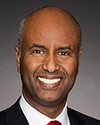
5:15 p.m.

Chief Executive Officer, Islamic Relief Canada

Tufail Hussain Khan

Frankly speaking, the reduction in ODA from countries across the world, especially USAID, which was by far the largest contributor of aid to the international development and humanitarian system, has been nothing short of devastating. We're seeing the effects on the ground in Syria, where 16.5 million people are dependent on humanitarian organizations like Islamic Relief. This is beyond organizations like Islamic Relief, who depend very much on voluntary income from the Muslim community.

As I mentioned earlier, over 90% of our income comes from the community. This level of need needs governmental and multinational support. It needs huge amounts of support for us to make the immediate and lasting change that is needed for the people of Syria. Otherwise, it seems like we're just applying plasters to this very difficult situation.

Alexis Brunelle-Duceppe Bloc Lac-Saint-Jean, QC

Thank you.

Mr. Al‑Kassem, what are your thoughts on that?

5:20 p.m.

Doctor and Vice-President, Union of Medical Relief Organizations-Canada

Dr. Anas Al-Kassem

Thank you very much, honourable member, for this question.

I agree that the pulling out of USAID has been a big blow. In addition to that, recently we have seen in our organization that a lot of funds have been directed toward Gaza and Yemen, and there's a lot of conflict going on in that area. We still receive funds from Canada and from European partners, but there have been more challenges to help other conflicts. Sudan is an example as well, and that impacted Syria big time. We are quite concerned about the shortage of funding for the humanitarian and development initiatives.

The Chair Liberal Ahmed Hussen

Thank you very much.

We go next to MP Ziad Aboultaif. You have five minutes.

5:20 p.m.

Conservative

Ziad Aboultaif Conservative Edmonton Manning, AB

Thanks, Chair. Thanks to the witnesses for appearing before the committee today, and welcome.

Mr. Al-Yassini, you are the president and founder of the Syrian Canadian Congress. You spoke about the ethnic and religious groups among the Syrian community in Canada. Do you believe that your congress represents all these communities?

5:20 p.m.

President-Founder, Syrian Canadian Congress

Ayman Al-Yassini

Probably not, no. I think it would be quite foolish to think that any group represents the entire Syrian community or the diaspora. The Syrian community, like other ethnic cultural communities in Canada, is diverse. They have different interpretations of the past and the present, let alone the future.

Do we represent the Syrian community as a whole? No. However, we do represent values—the values of good governance, a commitment to human rights and an inclusive society—and we also believe that Canada has a lot to share with Syria.

5:20 p.m.

Conservative

Ziad Aboultaif Conservative Edmonton Manning, AB

You spoke about very important Canadian values—human rights, democracy, inclusiveness. Also, Dr. Al-Kassem spoke about safe communities, safe minorities in Canada and inclusiveness. Do you believe that these ethnic and religious communities are safe in Syria now?

5:20 p.m.

President-Founder, Syrian Canadian Congress

Ayman Al-Yassini

These communities—and when I say “these communities”, I'm talking about cultural, ethnic and religious communities—are under pressure internally and externally. Internally, they are under pressure because of the legacy of authoritarianism. As a matter of fact, I will go even one step further and say that since Syria's independence, communalism has always been at the forefront in the relationships among communities.

They are under pressure on the regional front as well. Israel is not assisting this situation in any way. The Israeli attempts to galvanize the Druze community to secede from Syria is unfortunate. It is damaging Syria's potential for recovery and is also having an impact on regional stability.

Are they safe? No. Can we make them safe and safer? The answer is yes. That is a place for Canada to play a role.

5:20 p.m.

Conservative

Ziad Aboultaif Conservative Edmonton Manning, AB

International reports talk about government forces being involved in killing and attacking different minority groups in Syria in the last year or so. What would you tell the current government about that? If you are preaching for human rights, for democracy, for protection of these minorities, what would you tell the government about government forces being involved in killing its own citizens?

5:20 p.m.

President-Founder, Syrian Canadian Congress

Ayman Al-Yassini

I take exception to the comment that the government's forces are killing its citizens, which gives the impression that this is a deliberate government policy. I do not believe that this is a deliberate government policy. On the contrary, when the events took place in the Latakia region, the Syrian government sent intermediaries and tried to address the issue. Also, of course, in the Sweida region, there were attempts to reach reconciliation.

What we need to do is deal somehow with public safety and the security of communities through the optics of human rights, as you've rightly alluded to. Amnesty International, Human Rights Watch, Freedom House and other international think tanks, agencies and monitoring groups do talk about the civil strife. These incidents are well documented, but I would develop and strengthen civil society and the inclusive community, and we need to educate and inform all—

5:25 p.m.

Conservative

Ziad Aboultaif Conservative Edmonton Manning, AB

In Edmonton Manning, I have constituents from the Syrian communities—from the Kurds, from the Alawites, from the Druze, from them all. I met with them. They show me stories. I was listening to the killing of their people. I've seen pictures, videos, that are terrible, about how their families are being killed, tortured and displaced, and how women were raped in Syria.

What can you tell the government about that?

The Chair Liberal Ahmed Hussen

Give a very brief response, please.

5:25 p.m.

President-Founder, Syrian Canadian Congress

Ayman Al-Yassini

Put all the resources in place to prevent these killings, adopt an aggressive policy and work on the other issues at the same time, such as transitional justice, economic development and regional co-operation.

The Chair Liberal Ahmed Hussen

Thank you very much.

Finally, we go to MP Steven Guilbeault.

You have five minutes.

Steven Guilbeault Liberal Laurier—Sainte-Marie, QC

Thank you, Mr. Chair.

I am going to give my last minute to my colleague, Ms. Vandenbeld.

Mr. Khan, in your introduction you said that Canada had an important role to play in humanitarian assistance. Can you elaborate more specifically on what that role could be for Canada, please?

5:25 p.m.

Chief Executive Officer, Islamic Relief Canada

Tufail Hussain Khan

Canada has done great work to recalibrate its sanctions framework, taking a more targeted approach. We need to ensure that these changes have been communicated to the financial organizations and to people within our supply chain. This will help organizations like Islamic Relief work with agility and will allow us to get aid through to those most in need more quickly.

We've already mentioned that funding is needed. When we're looking at the numbers, we consider the destruction. I think Dr. Al-Kassem mentioned that the destruction in Syria is greater in terms of numbers, in terms of area, than in Gaza. We've never seen anything like Gaza. When you consider the huge need, we need governments to come forward and support and fund our long-term rehabilitation and sustainable development programs.

Canada has always been a respected humanitarian leader. It's going to take a country like Canada to show leadership on a global scale to inspire others to come forward and support the needs on the ground in Syria.

Those are the things that come to mind.

Steven Guilbeault Liberal Laurier—Sainte-Marie, QC

Can you help us understand or perhaps guide us in terms of support for early recovery and resilience, while maintaining a clear distinction from reconstruction efforts?

5:25 p.m.

Chief Executive Officer, Islamic Relief Canada

Tufail Hussain Khan

Health care is, of course, important to me. Dr. Al-Kassem has mentioned mental health support, which is urgently needed. Livelihood programs that allow people to come back and start some semblance of a livelihood and be able to stand on their own feet with dignity are important. So is shelter. Many people are still living in tents because hundreds of thousands of homes have been destroyed. These are the real, urgent, immediate needs that we need to address to help the Syrians stand on their own feet with dignity.

One thing I will say about the Syrians is that they are a very proud people, and they don't want to live on handouts. They want to be able to get out of this difficulty with dignity. Considering the huge need, they're not going to be able to do that without international assistance.

Steven Guilbeault Liberal Laurier—Sainte-Marie, QC

Mr. Al-Kassem, how can we strengthen Canada's coordination efforts with like-minded countries in terms of humanitarian help, more specifically in the medical sector, to ensure efficiency and maximize benefit and perhaps ensure that there are no gaps?

5:30 p.m.

Doctor and Vice-President, Union of Medical Relief Organizations-Canada

Dr. Anas Al-Kassem

We have some established health care organizations that have expertise in working in war zones and working post-conflict as well. In reaching out to these organizations, not necessarily to work with the government directly, we want to benefit the people of Syria.

As Mr. Aboultaif has said, there have been some issues with handling an uprising here or there, such as in Sweida. We have to admit that, but at the same time, we need to target the people of Syria, the vulnerable women, the children of Syria. We have the ability to reach out to these credible organizations and work through them until we feel very comfortable working directly with the new Syrian government.

Anita Vandenbeld Liberal Ottawa West—Nepean, ON

Mr. Chair, I think there's a little bit of time left.

The Chair Liberal Ahmed Hussen

Yes.

Anita Vandenbeld Liberal Ottawa West—Nepean, ON

Thank you.

There's been some discussion amongst members, so I do hope there's unanimous consent to have Minister Anand come to talk about the estimates. I believe there is a motion in both official languages that's being distributed. I will just read the motion now.

I move that the committee agree to a one-meeting study of the main estimates and invite the Minister of Foreign Affairs, the deputy minister of foreign affairs and relevant officials from Global Affairs Canada.

The Chair Liberal Ahmed Hussen

Thank you for presenting the motion.

Do colleagues support the motion?

(Motion agreed to)