Thank you very much for your hospitality in letting me join you today.
Dr. Al-Kassem, when was your last trip to Syria?

Evidence of meeting #29 for Foreign Affairs and International Development in the 45th Parliament, 1st session. (The original version is on Parliament’s site, as are the minutes.) The winning word was syrian.
A video is available from Parliament.
Conservative

Tamara Kronis Conservative Nanaimo—Ladysmith, BC
Thank you very much for your hospitality in letting me join you today.
Dr. Al-Kassem, when was your last trip to Syria?
Doctor and Vice-President, Union of Medical Relief Organizations-Canada
After what we call the liberation of Syria, I visited Syria four times. The last time was in February, just more than a month ago.
Conservative
Tamara Kronis Conservative Nanaimo—Ladysmith, BC
You've been there quite a lot. I'm quite taken by the fact that a mental hospital has been opened in the north. When you think about the kind of PTSD that comes out of war and the conditions that Syrians have been living under, and that Syrian Canadians have also lived under and the worry that people have about their relatives back home, can you tell us a bit more about that and the innovative things it's doing to treat PTSD from the circumstances that people have lived through?
Doctor and Vice-President, Union of Medical Relief Organizations-Canada
Thank you very much for the question.
We have been focusing in our organization on primary health care and psychosocial support and mental health. More than two million children in Syria are suffering from severe mental health illnesses according to the UN. We took this initiative because we found that in northern Syria there had been no single hospital for admissions. Therefore, we go to people's tents and try to support the children and vulnerable populations with psychosocial supports. A lot of them need admissions and ongoing medications and care in the hospital.
We started this hospital about four years ago, and we have admitted thousands of children. A lot of them are out of the hospital now and back in their villages and cities in Syria.
Conservative
Tamara Kronis Conservative Nanaimo—Ladysmith, BC
It's always amazing how resilient children are, even in war, but how widespread is PTSD among civilians?
Doctor and Vice-President, Union of Medical Relief Organizations-Canada
It is huge. You'll be surprised, honourable member, that I was a victim of PTSD, both after coming back from Gaza and from Syria, and I needed psychosocial support in Canada.
If a physician goes to Syria for a week or two, or a Canadian nurse or a foreigner, they might need some treatment. Imagine children and women. I remember that I was in a hospital there, and it was safe and everything was fine, but the children were constantly hearing bombs and could not sleep. It is widespread, and I think it's way underestimated. Canada has pioneered expertise in mental health, and I think we can deploy a lot of help—not only funding but also a lot of expertise from our great mental health specialists in Canada—to treat thousands of vulnerable people in Syria.
Conservative
Tamara Kronis Conservative Nanaimo—Ladysmith, BC
What kinds of treatments are available in the hospital that you've described in northern Syria, the mental hospital you started?
Doctor and Vice-President, Union of Medical Relief Organizations-Canada
We started providing them with medications. During the war, it was only counselling. We did not have a lot of the drugs that were badly needed for depression, anxiety, PTSD and so forth. Now we have the ability to provide electric shocks in some cases for deep depression and anxiety, and all of these kinds of methods to treat deep depression. We have educated and trained nurses in mental health and psychosocial support.
In Syria, unfortunately, there is a big lack, dating even from before the war, in a psychiatry as a specialty. That was an issue. We were lucky to have a lot of Canadian psychiatrists volunteering online through telemedicine to treat thousands of patients that way through this hospital.
Conservative
Tamara Kronis Conservative Nanaimo—Ladysmith, BC
You commented near the end of your remarks about how important the next decade will be, within the Syrian context, to see whether Syria will truly be able to separate itself from the proxy wars that have really destroyed it, the wars waged by the likes of Iran and Russia, and the alternative.
What are the consequences in your mind of not treating the PTSD that is so pervasive in post-war areas like Syria?
Doctor and Vice-President, Union of Medical Relief Organizations-Canada
This is a very important question. For lot of workers, including my colleagues, nurses and doctors in Syria, to be functioning and to go back to the health care sector and be quite effective, we need to treat them.
We always underestimated the health care workers who are impacted by PTSD. Every time I go there, I figure out that we need to focus on the workers first, before focusing on the patients. I think a national program focusing on all health care workers—talking in this case about my specialty—would be very valuable in bringing them back to work and to be more effective. Otherwise, we're going to be missing a lot of health care workers in Syria.
Conservative
Tamara Kronis Conservative Nanaimo—Ladysmith, BC
You also made reference in your remarks to this work really being meaningful, in that you're getting to work with mostly women and children and really seeing the impact of the Assad regime and its violations of international humanitarian law. Is there any joint work being done with the demographics that you're working with, to be able to also help pull evidence together and assist international investigators in doing the work that needs to be done there?
Doctor and Vice-President, Union of Medical Relief Organizations-Canada
We have been working with some groups, such as Muzna's group in Syria—one of the witnesses earlier—a lot of the women's organizations and health care organizations and human rights organizations in Syria and internationally to heal all of these wounds. There has been some success, but I think it needs a lot of funds and work going forward.
Conservative
Liberal
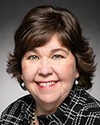
Anita Vandenbeld Liberal Ottawa West—Nepean, ON
Thank you very much, and I appreciate all of the witnesses.
I want to talk a little bit about the number of people who are returning, which was just touched on very briefly. As we've seen in other places, when you see large numbers of people returning, it can put pressure not just on the food and infrastructure but also on social relations. I wonder if you could tell us a little about both the pressures that are coming from the returns and the opportunities they result in.
Doctor and Vice-President, Union of Medical Relief Organizations-Canada
Is that for me or Mr. Al-Yassini?
Liberal
Anita Vandenbeld Liberal Ottawa West—Nepean, ON
I will give each of you a little bit of time to answer that, maybe starting online with Mr. Khan, and then we'll go to the room.
Chief Executive Officer, Islamic Relief Canada
We've seen serious challenges because people are returning to destroyed villages and cities, roads, hospitals, clinics and water projects. Unfortunately, the people who are returning are dependent on aid agencies like Islamic Relief and the burden is ever increasing.
We now have a long-term development plan, which is to rebuild everything I've just mentioned: roads, clinics, hospitals and schools. It's a very large and ambitious plan. The challenge we face, of course, is that there is a dearth of funding available for long-term development plans. Syria is no longer in the headlines and over 90% of our income comes from the community, the most generous faith-based community in Canada, the Muslim community.
However, they're not hearing anything about Syria anymore, so we're struggling to raise funds for these very important long-term development projects. We need the Canadian government to continue supporting those efforts, because right now, without the support of GAC and the Canadian government, we would struggle to deliver these very important projects, which help not just returning refugees but also the wider population inside Syria.
Doctor and Vice-President, Union of Medical Relief Organizations-Canada
I can add to this as well.
We have probably about 1.5 million refugees internally displaced in Syria, despite the end of the war. I have been to the Turkish border and I have seen thousands of tents. The people have been living there for 10 or 13 years. I imagine a lot of them were born there. The child doesn't know anything apart from a tent.
When I asked some of the people and leaders in these kinds of camps, they told me that they needed three things. They need to rebuild their houses and the villages. They need trusted health care. They need education. Nobody's going to go back to their villages to build a house if there is no health care and no education.
That's an excellent question. If we can help by building the education and health care in these villages and towns—not just building their towns, bridges and so forth—then a lot of them will come back to their villages.
President-Founder, Syrian Canadian Congress
This is the situation as it is now: We have an increase in poverty in Syria. There is a rise in the cost of living. There are many challenges to government services. The government is incapable of providing electricity and some basic services to the society at large.
In addition to that, we have the influx of internally displaced refugees trying to return to their places of birth or where they came from. That is adding tremendous pressure on government services and the economy as a whole. Plus, there are the returnees from Turkey and Europe. Fortunately, there are discussions going on between the Syrian government and the European community—Germany in particular—to coordinate the return of Syrian refugees.
There is a need to mention that some of the European countries—Germany, for example—seem to perceive the situation of Syrian refugees as a problem that they need to address by encouraging Syrian refugees to return. However, the issue is not that simple. The return of Syrian refugees from Germany to Syria needs to be voluntary. It needs to be coordinated with the Syrian government and matched with building a reasonable infrastructure to absorb the returnees.
Liberal
Anita Vandenbeld Liberal Ottawa West—Nepean, ON
Thank you.
I would say that in Canada we're benefiting tremendously from the contributions of Syrian refugees.
I'd like to quickly go back to Mr. Khan.
We think about women in these kinds of crisis situations as victims and beneficiaries of aid. What have you seen in terms of women as active participants in the solutions and the rebuilding?
Chief Executive Officer, Islamic Relief Canada
One project that I've already mentioned is the GAC project, through which we are supporting 130,000 women and children. Key to designing that program was the involvement of women in Syria.
It's a very important principle for us to ensure that beneficiaries are involved in the design of any program. They have been very much active participants in the designing of many of our programs. Many of our programs are centred on the needs of the most vulnerable in society. We have needs criteria wherever we work. At the top of those needs criteria are female-headed households, for example. We will always ensure that they are involved.
Liberal
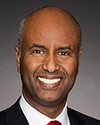
The Chair Liberal Ahmed Hussen
Thank you very much.
We next go to MP Brunelle-Duceppe.
You have six minutes.
Bloc
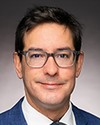
Alexis Brunelle-Duceppe Bloc Lac-Saint-Jean, QC
Thank you, Mr. Chair.
Mr. Al‑Yassini, you represent the Syrian Canadian community in Canada.
Can you tell us how hopeful and confident the Syrian diaspora in Canada is in the democratic transition process in Syria right now?
President-Founder, Syrian Canadian Congress
The Syrian diaspora in Canada is a reflection of Syrian society at large. There are divergent views among the communities. Some of these views are driven by ethnic or religious affiliation, and there are other factors such as political affiliation of these individuals or their families.
On the whole, the Syrian community in Canada is encouraged by the change. They see and they realize that the Assad regime was an abusive totalitarian government. The victims of the Assad regime included minorities. This is in contrast to the perception—or the misperception—that the Assad regime had protected minorities.
The Syrian community is encouraged. They would like to see changes, but they are somewhat impatient with the rate of change that is taking place. It is a difficult task for any government—and I'm not justifying one policy or another—particularly a government that came into existence as a result of opposition and military activities, to become a civilian government ruling a complex society.
On the level of the presidency—and this is my reading of the situation—the cabinet has good intentions, but the mentality of authoritarianism and sectarianism seem to have filtered down throughout society, and that is being reflected on the level of government decisions. For example, in the government of Damascus, some decisions were taken recently that antagonized the Christian community and other communities, such as the government mishandling of the protests in Latakia. That is another challenge.
In brief, there's a need to take it issue by issue and to look at the situation as it evolves. The Syrian community as a whole, or the vast majority, I believe, are supportive of the changes, but they would like to see more happening.