Evidence of meeting #43 for Foreign Affairs and International Development in the 45th Parliament, 1st session. (The original version is on Parliament’s site, as are the minutes.) The winning word was defence.

A video is available from Parliament.

On the agenda

Members speaking

Before the committee

Cronin  Director General, North America Bureau, Department of Foreign Affairs, Trade and Development
Mondy  Director General, North America Trade Policy Bureau, Department of Foreign Affairs, Trade and Development
Larose  Director General, International Security Policy and Strategic Affairs Bureau, Department of Foreign Affairs, Trade and Development
Andrea Charron  Director, Centre for Defence and Security Studies, University of Manitoba, As an Individual
Meredith Lilly  Full Professor, Simon Reisman Chair in International Economic Policy, Carleton University, As an Individual
Tronnes  Executive Director, Center for North American Prosperity and Security, As an Individual

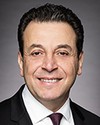
The Chair Liberal Ahmed Hussen

Give a brief response, please. We are over time.

12:35 p.m.

Full Professor, Simon Reisman Chair in International Economic Policy, Carleton University, As an Individual

Dr. Meredith Lilly

All Canadians benefit from the tax revenues of the oil sands through federal equalization payments.

The Chair Liberal Ahmed Hussen

Thank you.

Next, we go MP Aboultaif.

You have five minutes.

12:35 p.m.

Conservative

Ziad Aboultaif Conservative Edmonton Manning, AB

Thank you, Chair.

I thank both of you, and the one online, for coming to the committee.

Dr. Lilly, concessions by the Prime Minister were made during negotiation with the U.S., such as scrapping the digital services tax on U.S. tech companies, eliminating some earlier countertariffs on U.S. goods, agreeing to share the net toll revenue from the Gordie Howe International Bridge with the U.S., reintroducing American liquor into provincial stores and accepting a reduction but not elimination of the tariff on steel and aluminum.

All of these concessions were made while the negotiation was going on. Now the negotiation has stopped. What happened to these concessions?

12:35 p.m.

Full Professor, Simon Reisman Chair in International Economic Policy, Carleton University, As an Individual

Dr. Meredith Lilly

The digital services tax was repealed, not formally, but is no longer applied, prior to this last round of negotiations. Similarly, the suspension of mandatory payments for foreign streamers under the Online Streaming Act was suspended prior to this round of negotiations, but my expectation, not knowing exactly what was discussed, is that they were likely folded into those discussions.

A series of other items have been on the USTR's bilateral list of irritants with Canada since the first Trump administration. The same list of irritants existed under the Biden administration. These are things like the allocation of dairy TRQs and the treatment of U.S. alcohol on Canadian shelves. The United States considers these to be irritants; Canada considers them to be leverage.

This is a difference of opinion between the two sides, but the list of irritants remains unresolved until we reach a formal agreement.

12:40 p.m.

Conservative

Ziad Aboultaif Conservative Edmonton Manning, AB

These concessions did not do much to enhance reaching an agreement. Is that correct?

12:40 p.m.

Full Professor, Simon Reisman Chair in International Economic Policy, Carleton University, As an Individual

Dr. Meredith Lilly

I don't know the answer, because I wasn't present in negotiations. While I think I have a fairly good sense of the series of concessions and the series of outcomes, I can't say what impact any one item had, because I wasn't inside the room.

12:40 p.m.

Conservative

Ziad Aboultaif Conservative Edmonton Manning, AB

From what we have—or from what we gather, at least—there's not enough information to tell us whether the U.S. has made any concessions on their side toward any of the Canadian demands during this negotiation. Then we had the countertariff, but we still don't understand what happened with the countertariff or how productive the measure is.

Do you understand the process with the countertariff? Do you understand where this can lead and how logical that was?

12:40 p.m.

Full Professor, Simon Reisman Chair in International Economic Policy, Carleton University, As an Individual

Dr. Meredith Lilly

For the first part of your question, it's my expectation that the United States will concede very little in these negotiations and that it is likely to concede only some tariff treatment.

The position of Canada is that these are illegal and unjustified tariffs. Essentially, they expect to get a series of concessions from Canada in exchange for nothing but tariff relief. Every time we have failed to reach an end to negotiation, they have amplified the impact by adding more tariffs, so I do not think that the United States will concede a lot of items in the negotiation.

12:40 p.m.

Conservative

Ziad Aboultaif Conservative Edmonton Manning, AB

Countertariffs should generate some revenue. Is that correct?

12:40 p.m.

Full Professor, Simon Reisman Chair in International Economic Policy, Carleton University, As an Individual

Dr. Meredith Lilly

Whose countertariffs...?

12:40 p.m.

Conservative

Ziad Aboultaif Conservative Edmonton Manning, AB

Our countertariffs should generate some revenue for Canada. Is that correct?

12:40 p.m.

Full Professor, Simon Reisman Chair in International Economic Policy, Carleton University, As an Individual

Dr. Meredith Lilly

Canada's countertariffs will generate revenue, and the government will determine what to do with those revenues.

12:40 p.m.

Conservative

Ziad Aboultaif Conservative Edmonton Manning, AB

Do we know how much? Is there any information that you have?

12:40 p.m.

Full Professor, Simon Reisman Chair in International Economic Policy, Carleton University, As an Individual

Dr. Meredith Lilly

I don't have that information.

12:40 p.m.

Conservative

Ziad Aboultaif Conservative Edmonton Manning, AB

Okay.

This question is for Ms. Tronnes.

You co-authored a paper called “The Grand Bargain”. It seems from what you said that the U.S. prefers to negotiate issue by issue rather than by negotiating a whole package. What do we do in Canada? How do we counter this? Do we agree to that, or is it something we don't like to entertain?

12:40 p.m.

Executive Director, Center for North American Prosperity and Security, As an Individual

Jamie Tronnes

To the government's credit, they have been trying, and Prime Minister Carney has said that Canada should negotiate a broad, comprehensive economic security package as part of the negotiations with the United States.

The issue is that Donald Trump really likes to get in there, as Christopher Hernandez-Roy from CSIS said, and poke Swiss cheese holes in all of his agreements and make little exceptions for things. This is exactly what we saw them try to do with the negotiations. This unfortunate willingness for many hands to get in there and start dealing with the negotiations at hand is likely what led to the ultimate failure of the negotiations, at least with some of the manoeuvring on the United States side, from what I understand in talking to people behind the scenes.

The Chair Liberal Ahmed Hussen

Thank you very much.

Next we go to MP Mona Fortier. You have five minutes.

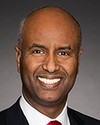
Mona Fortier Liberal Ottawa—Vanier—Gloucester, ON

Thank you, Mr. Chair.

Thank you very much to the witnesses for being with us today. I read their bios, and the experience and expertise they bring to our study is really something. My thanks to them for being here.

Ms. Lilly, in your opening remarks, you talked about the whole issue of re-engaging the U.S. I'd like to discuss that with the other witnesses as well. What are the winning conditions for that?

Given your experience, are there specific things that would help in terms of resuming that dialogue in the coming weeks or months—not years? Hopefully, it'll be sooner rather than later.

12:45 p.m.

Full Professor, Simon Reisman Chair in International Economic Policy, Carleton University, As an Individual

Dr. Meredith Lilly

What would be the winning condition for Canada is your greatest interest. I will be honest. I think it's going to be very difficult, and winning isn't going to look like a great victory. I do not expect any celebrations at the end of reaching this agreement.

Having said this, I've worked on several large trade negotiations, and even when they have by and large been very positive, there were always items that we were pretty unhappy about at the end. In this case, I think the way it has been constructed is that Canada will be gaining relief from rules that we deem to be unjustified and illegal, those tariffs.

The winning conditions are going to look difficult. Ultimately, we're looking to ensure that we don't have greater losses in the manufacturing sector and that we can ideally develop some kind of continental approach to certain issues, particularly the challenge of China and Chinese overcapacity. I think the conditions right now will be very difficult for that. Two years ago, we were in a much better place to have a continental approach, and our auto industry in particular requires a continental approach for all three countries in order to succeed moving into the 21st century.

I would like to see us turn the page and develop some kind of more stable relationship that could allow those more positive conversations to take place.

Mona Fortier Liberal Ottawa—Vanier—Gloucester, ON

I see you nodding, Ms. Tronnes. Would you like to comment?

12:45 p.m.

Executive Director, Center for North American Prosperity and Security, As an Individual

Jamie Tronnes

I would agree with what Meredith said.

I would add that there's an opportunity for us to discuss things of mutual importance to both countries, such as border security. The U.S. has still maintained—and by the U.S., I mean the president—that we have an issue with fentanyl crossing the border. There are numbers to prove that this is maybe not quite the case; however, we need to listen when they tell us that there's an issue with the border.

We also need to respond by showing up when we're asked on defence and on issues of mutual security and by sharing more information as well about what it is that Canada is going to do to protect our country in conjunction with the United States. I know we're in a moment right now when things seem very difficult in terms of sharing information with the U.S. I would say that we need to continue to share that information, to work collaboratively, to remember that Donald Trump is not America and that this too shall pass.

Mona Fortier Liberal Ottawa—Vanier—Gloucester, ON

Ms. Charron, would you like to answer the question?

Prof. Andrea Charron

I would agree with my colleagues for the most part. I think the message from successive U.S. administrations has been, “Canada, we need you to do more in terms of continental defence.”

I look at it from a military perspective through the NORAD lens, but the conversations about, for example, replacing the north warning system go back at least 15 years. My big concern is that, while we have lots and lots of projects in the pipeline, it's still a long delay. There are all sorts of issues, such as security clearances, which are going to be a brake on seeing these capabilities come to fruition on a timely basis.

Mona Fortier Liberal Ottawa—Vanier—Gloucester, ON

Thank you.

There are 10 seconds left, so I will end it there.