Evidence of meeting #44 for Foreign Affairs and International Development in the 45th Parliament, 1st session. (The original version is on Parliament’s site, as are the minutes.) The winning word was united.

A recording is available from Parliament.

On the agenda

Members speaking

Before the committee

Burke  Chief Executive Officer, Canadian American Business Council
Volpe  President, Automotive Parts Manufacturers' Association
Hyder  President and CEO, Business Council of Canada
Cloutier-Roy  Deputy Director, Observatoire sur les États-Unis, Raoul-Dandurand Chair, Université du Québec à Montréal, As an Individual

Shuv Majumdar Conservative Calgary Heritage, AB

Is your members' certainty greater or less now than it was a year ago?

4:50 p.m.

President and CEO, Business Council of Canada

Goldy Hyder

They continue to have more uncertainty than they would like.

4:50 p.m.

Conservative

Shuv Majumdar Conservative Calgary Heritage, AB

Then by your own test, sir, the review has failed so far.

Have any of your members deferred, cancelled or redirected investment to the United States because of that uncertainty?

4:50 p.m.

President and CEO, Business Council of Canada

Goldy Hyder

I can't speak to whether that was their motivation, but they continue to invest where there is more certainty, wherever that is in the world.

4:50 p.m.

Conservative

Shuv Majumdar Conservative Calgary Heritage, AB

Something we hear from our constituents and from businesses across Canada today is that because of a lack of certainty around when a negotiation will be taking place or when tariffs might be lifted, companies across this country that are directly affected by these tariffs or that are down the value chain from them are now looking at mass layoffs and relocating their business to the United States. Surely you are hearing as well about that type of effect from this period of uncertainty.

4:50 p.m.

President and CEO, Business Council of Canada

Goldy Hyder

I read what I read in the papers. What I've seen from businesses, however, is hesitancy in deploying capital.

We're reading about that not just here in Canada in but other places, as a result of simply not having the certainty that's needed to deploy the capital. I see a lot of share buybacks. I see the hesitancy in moving forward with large projects at this time.

4:50 p.m.

Conservative

Shuv Majumdar Conservative Calgary Heritage, AB

Let me just conclude with this, because I'm pretty short on time, I believe.

There is an important distinction between refusing unacceptable terms and refusing to negotiate. From the perspective of Canadian business, should the government now be actively seeking a return to formal negotiations with the United States?

4:50 p.m.

President and CEO, Business Council of Canada

Goldy Hyder

We think it's best that we have negotiations to bring a resolution to the review and renewal issue, and we're hoping that this will happen sooner rather than later.

4:50 p.m.

Conservative

Shuv Majumdar Conservative Calgary Heritage, AB

Thank you.

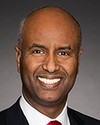
The Chair Liberal Ahmed Hussen

We go next to Ms. Fortier.

You have six minutes.

Mona Fortier Liberal Ottawa—Vanier—Gloucester, ON

Thank you, Mr. Chair.

Hello, everyone. Thank you so much for being here today.

I'm going to address my questions to Ms. Burke. Thank you for being with us.

I'm trying to identify what sources of leverage Canada possesses right now, to your understanding. Also, from your vantage point in Washington, how do American policy-makers currently view Canada?

4:50 p.m.

Chief Executive Officer, Canadian American Business Council

Beth Burke

I try not to think in terms of leverage or concessions. I think that leads us to a place of more escalation and tension. Instead, we think it's very helpful to be thinking about opportunities for collaboration and ways we can be stronger, both independently and together.

We have seen over and over that our businesses working together have made us both stronger and more globally competitive in a pretty challenging time on the larger global stage.

I don't mean to skirt around your question, but I think there are lots of different areas we could pursue—

Mona Fortier Liberal Ottawa—Vanier—Gloucester, ON

Then let's talk about those areas of co-operation or collaboration. If you have maybe two or three specific ideas, I would love to hear them.

4:55 p.m.

Chief Executive Officer, Canadian American Business Council

Beth Burke

Yes, absolutely, I think there are ways we can be working together more efficiently. I have touched on regulatory alignment or reducing red tape for businesses. That helps us streamline the operations that exist across North America.

I would also say that there's real potential for places of collaboration around critical minerals. That's something that's been a long-standing conversation between Canada and the United States. There's also a real opportunity to elaborate on what's working well. As I said, we have a lot of inputs that move across the border. Those relationships are very strong, so it's about finding ways to increase production and move goods back and forth across the border.

Then on your second question, could you just remind me of it before I...?

Mona Fortier Liberal Ottawa—Vanier—Gloucester, ON

I talked about leverage earlier. It's just to try to understand how American policy-makers currently view Canada from that standpoint of co-operation or otherwise that you were talking about.

4:55 p.m.

Chief Executive Officer, Canadian American Business Council

Beth Burke

I think it depends on which lawmaker you're talking to. There are different positions across Congress, just as there are here, but I would say that overall I engage on a regular basis with members who are quite eager to get this relationship to a more productive place. They definitely see the value of the partnership.

We've worked together on things like defence and security for a very long time. There are a lot of places in the relationship that are still working well, and we need to really be leaning into those parts of the relationship in this moment, as do a lot of the lawmakers.

Mona Fortier Liberal Ottawa—Vanier—Gloucester, ON

Thank you very much.

Now I will address my questions to Goldie Hyder.

You were talking about co-operation also. You mentioned three areas or three ideas. Is there anything else that you wanted to add on particular sectors that you know are being affected and that we should focus on at this time?

4:55 p.m.

President and CEO, Business Council of Canada

Goldy Hyder

It's quite clear that the government has introduced mechanisms to offset the financial impacts that companies and employees are facing as a result of that. Obviously, that's costing taxpayers, and it can't be for the long haul, I would suspect.

I think we all believe that a mutually beneficial deal is possible, and I'm very encouraged to hear Prime Minister Carney and, frankly, President Trump indicate in the course of the last several weeks that a mutually beneficial deal is possible. That suggests to me that there may be informal conversations happening at a higher level. Ultimately, that may be what it takes, and that could lead to a place to get to a negotiated settlement sooner rather than later, as I indicated.

Our view is that no deal is not an alternative, but that's not to suggest that a bad deal is a good idea either. We absolutely need a deal that works for both sides.


Mona Fortier Liberal Ottawa—Vanier—Gloucester, ON

What else are you hearing that you didn't get a chance to share during your opening remarks? With the leadership and the role that you have, do you want to share a recommendation on how we should treat the next steps?

4:55 p.m.

President and CEO, Business Council of Canada

Goldy Hyder

Thank you for that question. It's important that committee members know that the Canadian, American and Mexican business communities have been working together collaboratively, not just to make the case for the review and renewal of the agreement but to remind all of our administrations that, with all due respect, trade agreements are made for businesses. They're made so that we have rules and regulations and the ability to make investment decisions with some predictability and certainty as to how we can invest, what we can invest and what kinds of things we can do and not do, and also what happens in the event that there are disputes in that trading mechanism. We're lacking that today.

What we've asked of our governments is for a timely trilateral agreement that exempts all compliant goods from tariffs and allows us to move forward.

Mona Fortier Liberal Ottawa—Vanier—Gloucester, ON

On the ground, on the American side, is there anything you're being told that they believe we should be bringing forward and should be focusing on?

4:55 p.m.

President and CEO, Business Council of Canada

Goldy Hyder

I think business leaders in all three countries are saying that we should not settle for just settling. Let's find a path forward that actually improves our agreement, one that doesn't just address the irritants that we're having but one that, from a business perspective, looks at North America from the lens of how to compete with the rest of the world.

We're the richest continent. We have the best resources. We have the best talent. We have our trade agreement. Let's put more meat on the bone of competitiveness, for example. There's a full chapter.

Let me also use this moment to say that too many of us think about the USMCA as one thing about trade and tariffs. It has 34 chapters in it. It affects the way of life for Canadians. It impacts us at the border, and it impacts our security and our telecommunications. We have to think about this as more than just one thing.

5 p.m.

Liberal

Mona Fortier Liberal Ottawa—Vanier—Gloucester, ON

Thank you.

5 p.m.

Liberal

The Chair Liberal Ahmed Hussen

Thank you very much.

Mr. Brunelle‑Duceppe, you have the floor for six minutes.

Alexis Brunelle-Duceppe Bloc Lac-Saint-Jean, QC

Thank you, Mr. Chair.

I have a question for the three witnesses, who may answer it in turns.

Several experts tell us that, at present, if no agreement has yet been reached, it may be due more to electioneering or purely political motives on both sides. I would like to know what the witnesses personally think about this, but also what they are hearing from the members they represent within their associations.

Are we currently experiencing a tariff war that is driven purely by the desire to score political points, rather than by a genuine effort to build a different kind of economy?

We could start with Ms. Burke.