Thank you very much.
We'll go next to MP Majumdar.
You have five minutes.

Evidence of meeting #45 for Foreign Affairs and International Development in the 45th Parliament, 1st session. (The original version is on Parliament’s site, as are the minutes.) The winning word was businesses.
A video is available from Parliament.
Liberal
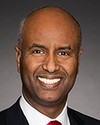
The Chair Liberal Ahmed Hussen
Thank you very much.
We'll go next to MP Majumdar.
You have five minutes.
Conservative

Shuv Majumdar Conservative Calgary Heritage, AB
Thank you, Chair.
Mr. Kelly, I'll start with you. You described how it's deeply insulting that your members have been kept outside of the support package by the government and how tariff remission is particularly weak. Can you give me a picture as to who your members actually are and a sense of what scale and profile these businesses have?
President and Chief Executive Officer, Canadian Federation of Independent Business
Thanks so much.
We have 103,000 small and medium-sized companies as members of CFIB. They range in all sizes. The common characteristic is that they're independently owned. The majority of our members have fewer than 50 employees, but they are cross-sectoral. There are businesses where we have a fairly good chunk in manufacturing and in primary agriculture. Our largest sector is retail.
I will add, just for a second, though, that the retail impact actually has not been insignificant. One of the tariff policies the U.S. imposed was the end of their de minimis that used to allow a Canadian company to send into the United States a good of a value of up to $800 that would be tariff- and tax-free. They've scrapped that altogether, and 30% of our members have had an impact from that policy alone. There have been fairly broad impacts across the board.
Just as another point, I would say that about half of my members import from the United States and 20% of my members export to the United States, but then, of course, a huge number of businesses have been affected by the indirect effects of the trade war with the United States, and that is the economic uncertainty that this has created.
Conservative
Shuv Majumdar Conservative Calgary Heritage, AB
It's like we've learned nothing from the last international emergency in terms of how to support the small businesses that are probably the most vulnerable to these types of big decisions that government makes.
President and Chief Executive Officer, Canadian Federation of Independent Business
I did want to pound my head on the table a few times. In fact, during COVID, I would say that it was better than what we're seeing in the response right now. Many of the programs have just been so poorly designed.
I understand the point of some of the government support programs, which is to try to encourage and help Canadian businesses pivot to new markets. For a lot of my members, it's the idea of saying, “Okay, you've been selling the odd truckload of goods into the United States”—which is a four-hour truck ride—“and now we want you to develop a new market in Italy and spend a bunch of money on that. We'll provide some government help along the way.” That's a pretty tall order. A lot of the work that can be done to diversify has been done.
Now, I think what we're worried about is the severing of long-standing relationships between Canadian and U.S. companies. I spoke to a Manitoba honey producer who said he sold honey into the U.S. to the same customer for 50 years, and now his honey is 50% more expensive. He's not eligible for the government support programs, either.
Conservative
Shuv Majumdar Conservative Calgary Heritage, AB
That's incredible.
Professor Tombe, I want to turn to you on this. We've been hearing, to your point earlier, that somehow we are in a trade war. You'd expect that if we were on a war footing, the federal government and the Liberals would have put in support for our people with extraordinary measures to get the job done.
I appreciate your saying that's not the right way to characterize it. The better way, Professor Tombe, is to think of this as a U.S. domestic policy that Canada is reacting to. That sounds like a more mature assessment than I think many people in the media, bureaucracy and even the front benches of the government have made, and irresponsibly so.
This domestic policy that the United States is pursuing, in my mind, comes in the wake of Beijing pursuing a policy that has de-industrialized much of the west, has provided cheaper labour, has created more refining choke points for critical minerals and the technologies of the future, and has led to the theft of our intellectual property and innovation. That seems to be an adjustment that the western world is making at large.
Let me ask you, in the brief time I have left, a question in the context of U.S. domestic policy decisions. Do you believe that Washington, as the Prime Minister has said, is trying to “break us so that they can own us”, or do you think that Washington is trying to lead a new set of economic arrangements for the world?
Professor of Economics, University of Calgary, As an Individual
I think neither.
It is, of course, hard to decipher what the underlying motivation is for any given choice taken by the U.S. federal government, as there are lots of competing explanations offered for tariffs. Some of them are related to, depending on the tweet one wants to look at, targeting countries to punish them for taking some decision or enacting some policy that the president may not like. Other times, the focus is on raising revenue, because they have an enormously irresponsible fiscal policy in the United States, or it's about revitalizing American manufacturing activity, particularly in response to the China shock.
There are lots of competing explanations offered for tariffs. I don't see them as targeted against Canada, because they're clearly not in the data. Tariffs are being increased on every country in the world and on their sales to the United States. Canada doesn't stand out as experiencing particularly high levels of tariffs.
The U.S. is just becoming less oriented towards trade in general. They want less of it. This, I think, is something that even crosses party lines. That's going to have negative implications for their economy and, therefore, those of other countries, like Canada, that trade a lot with them. It's not something where we're uniquely targeted.
Liberal
The Chair Liberal Ahmed Hussen
Thank you very much.
Next, we have MP Abdelhaq Sari.
You have five minutes.
Liberal

Abdelhaq Sari Liberal Bourassa, QC
Thank you very much, Mr. Chair.
No one here is claiming that tariffs come free of charge, of course. The real question we must ask ourselves concerns the price of inaction—what is known as the opportunity cost, the cost of doing nothing. This is truly very important. We do, after all, have two renowned professors with us.
Mr. Kelly, as you know, my speaking time is very limited, so I would ask you to give me very brief answers. On September 3, your federation published a statement indicating that a majority of small businesses support the decision to walk away from the negotiating table and impose counter-tariff measures. Your members agree with this in principle, do they not? Please answer with a yes or no.
President and Chief Executive Officer, Canadian Federation of Independent Business
They did. A majority of our members agreed with the decision to walk away—a majority that agreed that some countertariff measures are appropriate. I'll add to that only the point that for some, if your tariff impact is perhaps a small increase in the price of your snack food, then you may be all guns blazing to continue the trade fight. If your business, though, is on the line as a result of Canada's retaliatory tariffs, you might have a different reaction. There is a mix of views.
Liberal
Abdelhaq Sari Liberal Bourassa, QC
We're saying the same thing. So, we agree on the strategy. If I understand correctly, the debate centres on the implementation itself.
President and Chief Executive Officer, Canadian Federation of Independent Business
I think Canadians have decided, and our government has too, that retaliatory tariffs are important and a tool that needs to be used. The second point that I've been raising is that if we're going to use retaliatory tariffs, and if we're serious about supporting businesses until such time as the trade war ends, then we have to ensure that the programs and policies that we put in place are actually designed to help them. Cutting out small firms from accessing these programs is the part that I'm most critical of.
Liberal
Abdelhaq Sari Liberal Bourassa, QC
You are absolutely right. As for the adjustments you mention, we are in complete agreement. We are currently putting a strategy in place regarding implementation, and there are always adjustments to be made. If adjustments need to be made along the way, we agree that they really must be implemented and brought to the attention of the relevant department.
President and Chief Executive Officer, Canadian Federation of Independent Business
Indeed, and we've been lobbying for this for months. Unfortunately, a year and a half into the trade war, those changes have not been made.
Liberal
Abdelhaq Sari Liberal Bourassa, QC
Mr. Tombe, whether it's the gross cost or the net cost, that's really important to me. You mentioned a figure of $4 billion. Does that also take into account the discounts on agricultural inputs for producers, up until 2027? You also mentioned the $7.5 billion that will be provided as support. Are you taking these amounts into account, yes or no?
Professor of Economics, University of Calgary, As an Individual
Partially. It accounts for the costs for businesses that are passed through to Canadian consumers, and not all costs are. The $4 billion is the consumer cost and the business costs that can be passed through, but there are costs in addition to those.
Liberal
Abdelhaq Sari Liberal Bourassa, QC
That's excellent.
Please correct me if I'm wrong, Professor, but if I understand correctly, we're talking about a gross cost here. Canadians have heard figures of $4 billion mentioned on the podcast and in other media, but that isn't the actual bill to be paid, if I've understood correctly.
Professor of Economics, University of Calgary, As an Individual
That's right. It's too early at the moment to give you a more precise number on the larger costs, adding in not just the consumer costs but also costs for businesses that don't pass that through to Canadian consumers. It's larger than $4 billion.
President and Chief Executive Officer, Canadian Federation of Independent Business
I would add that of my members, only about a third are successful in fully passing on the costs of tariffs to their consumers. About 40% of our members have not been able to pass on much of those tariffs, and they're eating that right now. How long they can last in doing that is the important question.
Liberal
Abdelhaq Sari Liberal Bourassa, QC
Thank you.
I have a question for both of you. Can you name a single country that has secured better negotiating terms from the U.S. administration by refraining from retaliating?
President and Chief Executive Officer, Canadian Federation of Independent Business
I'm not here to suggest that there is some magic wand that one can wave to try to make this problem go away. I've joked in the media several times that the pope would lose his patience with the U.S. government right now. In fact, I think he did.
It is incredibly challenging to figure out the right solution. Right now, we have chosen to use an approach of countertariffs. If we're going to do that, then we need to make sure that the businesses that are feeling the direct and significant impacts of that are helped until such time as this policy changes.
October 21st, 2026 / 5:55 p.m.
Liberal
The Chair Liberal Ahmed Hussen
Thank you very much. You were right on time.
MP Brunelle-Duceppe, you have two and a half minutes.
Bloc

Alexis Brunelle-Duceppe Bloc Lac-Saint-Jean, QC
Thank you, Mr. Chair.
Mr. Kelly, I believe your organization does, after all, have a Quebec branch.
President and Chief Executive Officer, Canadian Federation of Independent Business
Yes.