Thank you very much.
We'll go next to MP Sari. You have six minutes.

Evidence of meeting #49 for Foreign Affairs and International Development in the 45th Parliament, 1st session. (The original version is on Parliament’s site, as are the minutes.) The winning word was europe.
A recording is available from Parliament.
Liberal
Liberal

Abdelhaq Sari Liberal Bourassa, QC
Thank you, Mr. Chair.
I would like to thank the witnesses for joining us today to shed light on this extremely important topic. It matters a great deal to each and every one of us, and especially to the public in general. I would really appreciate it if you could elaborate on a few points so that people can get a clearer picture.
You followed the summit closely. Is there a way to explain to the people keeping up with our work what concrete measures have been taken and what remains under negotiation? Could you take a minute to explain this to us?
Assistant Deputy Minister, Europe, Middle East and Arctic Branch, Department of Foreign Affairs, Trade and Development
I'd be happy to.
I'd say there's a dichotomy or dual component in the measures that were discussed at the summit. The conclusion of a number of initiatives was announced following the summit, including the digital trade agreement, which will come into force very soon, immediately after Parliament ratifies it.
We concluded negotiations with the European Investment Bank on a mechanism needed to support major investments, particularly in mining and critical minerals. This will have a direct impact on mining capacity and the development of certain mines, obviously because of the high level of investment required.
We also concluded an agreement that will give Canada access to what's known as the European High Performance Computing Joint Undertaking, a network of supercomputers much more powerful than Canada's. Researchers in need of high-performance computing will now literally be able to rent time on that supercomputer network to advance Canadian research much faster than is possible using only our infrastructure.
I'll give you a few examples of what the new digital trade agreement provides. First, it will extend certain protections to Canadian firms that want to do business with European firms without having to hand over ownership of their data or source code. The agreement extends more legal protections. For example, a Canadian IT company will be able to enter into contracts and share information digitally, as opposed to doing it the old way, and the contract will be recognized by both sides. That will have a direct effect. That's what has been agreed upon thus far.
I can also talk about negotiations that could have very real benefits for the future. For example, Canada is now starting negotiations to join Erasmus+, the European Union's flagship scholarship and student exchange program. The initiative would directly benefit young Canadians by giving them far more options and opportunities to gain international experience at costs comparable to those in Canada.
The list goes on. You may be familiar with Horizon Europe, a major advanced research program Canada has been participating in for the past year or two now. We are currently looking at deepening Canada's participation as part of the next phase of the program. I have to tell you that, so far, Canada has gotten more out of the program than it has put in from an investment standpoint.
All of this is having a very real impact on young people, researchers and entrepreneurs. Those are a few examples.
Liberal
Abdelhaq Sari Liberal Bourassa, QC
Those are fine examples.
Before I turn to AI, I want to ask you another question, quickly. I really appreciated what you said about protecting ownership of Canadian innovations so that ownership doesn't get handed over to other countries.
I do want to revisit the critical minerals issue, though. You gave us examples of the digital initiatives, but are there any specific projects you can talk about in the critical minerals sector?
Assistant Deputy Minister, Europe, Middle East and Arctic Branch, Department of Foreign Affairs, Trade and Development
There aren't any yet. What the agreement we negotiated does is allow the European Investment Bank to invest in those projects. That work has only just begun. The people at the bank are in the exploratory phase. They are reviewing existing mechanisms and measures that the government has put forward. They are looking for detailed information that will help them assess investment levels and expected returns. The ball is now in their court.
What we wanted to do was remove the barriers and pave the way for investors willing to make fairly significant investments in infrastructure and critical mineral mining projects. Obviously, the goal is to have reliable partners we can trust to make those investments and help build the industry so we can secure the supply of critical minerals our economies so desperately need.
Liberal
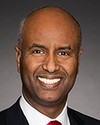
The Chair Liberal Ahmed Hussen
Thank you very much.
Now it's over to Mr. Brunelle‑Duceppe for six minutes.
Bloc
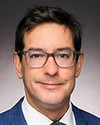
Alexis Brunelle-Duceppe Bloc Lac-Saint-Jean, QC
Thank you, Mr. Chair.
Welcome to the witnesses.
Mr. Lévêque, a major consideration when it comes to strengthening the relationship with the EU is the total lack of clarity around what associate membership means. Would you agree?
President von der Leyen used the term “associate member”. The Prime Minister used the same term during the Canada-EU summit, but it didn't appear in the joint statement. You're a senior official at the department, so you may have a bit more information than we do.
What does the term “associate member” mean? What does it involve?
Assistant Deputy Minister, Europe, Middle East and Arctic Branch, Department of Foreign Affairs, Trade and Development
That's an excellent question, one that's sparked a lot of speculation in the past few weeks.
The first thing I would say is that we are going to have to define the term ourselves. It's a new concept, so it will need to be defined. What do we want to do with that special status?
What's clear is that it refers to the desire to build a unique relationship between Canada and the EU, one primarily rooted in greater institutional engagement and political dialogue.
I'll give you an example. The European political community is a group of 46 countries that meet every six months. For the first time in its history, the group invited Canada. That was in April. We see it as a willingness to formalize the relationship and bring Canada to the table on a more regular basis, either annually or semi-annually.
Bloc
Alexis Brunelle-Duceppe Bloc Lac-Saint-Jean, QC
I realize you can take this in all sorts of directions, but my question is this: Is this more about political alignment? Does it mean participating in European institutions?
What it is is unclear. You're telling me about 46 countries, but I'm not asking you about Norway, Iceland or the U.K. I'm really talking about the EU and Canada's becoming a member, the keyword being “member”.
Basically, you don't know any more than we do.
Assistant Deputy Minister, Europe, Middle East and Arctic Branch, Department of Foreign Affairs, Trade and Development
Please don't put words in my mouth.
Bloc
Alexis Brunelle-Duceppe Bloc Lac-Saint-Jean, QC
No, it's a question.
Do you know what this means any more than we do? Personally, I don't know what it means.
Assistant Deputy Minister, Europe, Middle East and Arctic Branch, Department of Foreign Affairs, Trade and Development
The first thing I said was that it needs to be defined.
Assistant Deputy Minister, Europe, Middle East and Arctic Branch, Department of Foreign Affairs, Trade and Development
This doesn't exist. This isn't a concept that exists yet.
Assistant Deputy Minister, Europe, Middle East and Arctic Branch, Department of Foreign Affairs, Trade and Development
We will be defining what it means together. I gave you some examples of—
Bloc
Alexis Brunelle-Duceppe Bloc Lac-Saint-Jean, QC
I understand, and I'm not being at all confrontational with you.
I understand that it hasn't been defined and that both sides will have to do that work, because in the rest of the European Union—
Assistant Deputy Minister, Europe, Middle East and Arctic Branch, Department of Foreign Affairs, Trade and Development
There are underlying principles, and that's what I had started to explain. It's a closer association between political institutions to foster more frequent consultation and dialogue. That will obviously lead to more economic opportunities, people exchanges and agreements in the future.
Bloc
Alexis Brunelle-Duceppe Bloc Lac-Saint-Jean, QC
All right. Thank you.
It's also my understanding that if Canada doesn't reinstate carbon pricing, the rules in place in Europe will affect $2.8 billion worth of Canadian exports.
The problem is that Quebec has a carbon pricing system. It has a carbon market with California. From what I gather, Quebec is being penalized right now within Canada. Even though Quebec has a price on carbon, Canada does not and so Quebec's exports are being adversely affected.
How can we solve that problem, so that Quebec isn't penalized? Unlike the rest of Canada, Quebec is doing its part for the environment.
Assistant Deputy Minister, Europe, Middle East and Arctic Branch, Department of Foreign Affairs, Trade and Development
I'm not a scientist, and my department definitely isn't responsible for negotiations on the value of carbon. The Department of the Environment is in charge of that, so the people there could give you more information.
Bloc
Alexis Brunelle-Duceppe Bloc Lac-Saint-Jean, QC
You're responsible for trade and development with Europe, are you not?
Assistant Deputy Minister, Europe, Middle East and Arctic Branch, Department of Foreign Affairs, Trade and Development
Yes.
Bloc
Alexis Brunelle-Duceppe Bloc Lac-Saint-Jean, QC
You should know about the carbon pricing issue, then.
Assistant Deputy Minister, Europe, Middle East and Arctic Branch, Department of Foreign Affairs, Trade and Development
Yes, I do, but I don't have detailed information. What you're asking is very technical. What I was going to say is that—
Bloc
Alexis Brunelle-Duceppe Bloc Lac-Saint-Jean, QC
You work for the Department of Foreign Affairs, Trade and Development.