Thank you.
Thank you, Mr. Ambassador. I appreciate some of the speeches I heard you give while you were ambassador to Canada. I just wanted to share that with you in person.

Evidence of meeting #50 for Foreign Affairs and International Development in the 45th Parliament, 1st session. (The original version is on Parliament’s site, as are the minutes.) The winning word was united.
A recording is available from Parliament.
Liberal

Sameer Zuberi Liberal Pierrefonds—Dollard, QC
Thank you.
Thank you, Mr. Ambassador. I appreciate some of the speeches I heard you give while you were ambassador to Canada. I just wanted to share that with you in person.
November 16th, 2026 / 12:45 p.m.
Former Ambassador of the United States of America to Canada (Retired), As an Individual
Thank you.
Liberal
Sameer Zuberi Liberal Pierrefonds—Dollard, QC
I want to allow you a few more moments to answer or to fill in some of the answer you were giving to the last question about why you don't have a concern around Canada's current engagement with China.
Would you like to elaborate any further on that?
Former Ambassador of the United States of America to Canada (Retired), As an Individual
Obviously, I don't know the details of the discussion, but if I were Canada—just like if I were the U.K. or the EU or Japan or Korea or the countries in South America that are facing ongoing challenges with their trade relationships with the United States—and had the obligation to be able to support continued economic growth in Canada and to be able to continue to support the businesses and companies that are trying to grow in Canada in an economy that is global, then I couldn't afford to just write off the world's second-largest economy and say that we're going to build a wall and do nothing with them.
Liberal
Sameer Zuberi Liberal Pierrefonds—Dollard, QC
At the same time, I'm sure you're well aware that Canada is expanding trade relations with many other countries and not just China. We have Europe. We have many other countries that we're engaging with. I'm sure you're—
Former Ambassador of the United States of America to Canada (Retired), As an Individual
That's correct. I think that's wise, but I heard some of the testimony in the last panel on that.
I will point out that, again, I think Prime Minister Carney has articulated an important vision to diversify Canada's trade, but for all the structural reasons I mentioned in my opening statement—geography, interconnected supply chains, the close 100-year relationship with businesses and our integration with organized labour—the fact is that even after a couple of years of attempted diversification, more than 70% of Canada's exports still go to the United States. This is a long road. How far Canada will be able to get with diversification is an open question, but every bit of diversification....
I'm from the United States. From a purely United States perspective, it would be easy for me to say that I don't want there to be any diversification and I want Canada to export to only the United States, but I don't believe that. I think for Canada's strength, for Canada's health and ultimately for North America's strength and North America's health, some additional diversification is wise.
That's why Prime Minister Carney is doing the right thing on the current Asia trip. I think it's why he's done the right thing on his outreach to the EU. It has to be an “all of the above” strategy.
Former Ambassador of the United States of America to Canada (Retired), As an Individual
Again, I don't think you can exclude China from all of the above.
Liberal
Sameer Zuberi Liberal Pierrefonds—Dollard, QC
We have a bit more than a minute and a half, and I'd like to put two things to you. You opened up your statement with the necessity of what you did, which was to rebuild trust. In your answer, I'm wondering if you could share with us about the endeavour to rebuild trust into the future, which we know will be a process that will happen maybe not in the immediate term but in the mid-term.
The second idea is that most Americans are not into these tariffs, but at the same time, Republicans, in particular MAGA Republicans, are supportive of the tariffs. How do we navigate those two things? Most Americans aren't in favour. Then you have those who support President Trump, his base, who are supportive of the tariffs. How do we navigate that, in your opinion?
Former Ambassador of the United States of America to Canada (Retired), As an Individual
Let me do the second question first.
In the end, I think we're going to need a different administration. That's not a comment about Republican versus Democrat. I don't think most Republicans support the current state of the tariff policy. I think we're going to need a different administration.
I don't mean to overuse this word, but I think balance is everything. Some tariffs are easily supportable. I won't go into this, but, for example, when I was the U.S. ambassador to Canada, I supported softwood lumber tariffs and so did President Biden. There were reasons for them. Those are different from the across-the-board tariffs that are causing the disruption not only in Canada but globally.
With the change in administration, I think we get adjustments in tariff policy and trade policy. I think renegotiating or renewing CUSMA is a very important element of the U.S.-Canada relationship going forward. I think that addresses those issues.
I have spoken to the issue of what it will take to rebuild trust and rebuild this relationship. My comments here have received.... I'm not saying they've been overly controversial, but I've heard a little bit of push-back. I didn't think what I said was particularly controversial. I said, number one, that the United States is going to have to show a little bit of humility. I mentioned that in my opening statement. We're going to have to acknowledge and reacknowledge Canada's sovereignty, our respect for the country and our respect for the people of Canada.
I said, in fact, that with a different administration, I think we owe Canada an apology. The United States owes Canada an apology. As I said, that's not something I learned in ambassador school or from being an ambassador. Frankly, it's something I learned from my mother.
Liberal
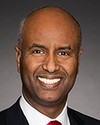
The Chair Liberal Ahmed Hussen
Thank you very much.
Finally, we go to MP Brunelle-Duceppe.
You have two and a half minutes.
Bloc

Alexis Brunelle-Duceppe Bloc Lac-Saint-Jean, QC
Thank you very much, Mr. Chair.
Mr. Cohen, you spoke about the softwood lumber dispute. This issue directly affects the region I have represented in the House of Commons for years. You and I both know that we win every time we take matters to the international trade tribunals. If you could just speak to someone back home about appointing a U.S. representative—
Former Ambassador of the United States of America to Canada (Retired), As an Individual
I'm sorry. I'm having trouble hearing the translation.
Former Ambassador of the United States of America to Canada (Retired), As an Individual
It's there in the background, but the French is talking over it.
Liberal
The Chair Liberal Ahmed Hussen
We'll have to suspend for a few minutes to sort this out. Thank you for your patience.
Bloc
Alexis Brunelle-Duceppe Bloc Lac-Saint-Jean, QC
I hope everything is working properly.
Mr. Cohen, you talked about the softwood lumber dispute. I represent a forestry region that is currently being hit hard by countervailing duties. I'm not talking about tariffs; I'm talking about countervailing duties.
As you know, we always win at international trade tribunals—once appointments are finally made to those tribunals. In the meantime, however, we are still suffering.
That brings me to my question: Do you think the Democrats, who historically have been more protectionist than the Republicans, and who have recently altered the landscape in Congress and the Senate, actually want to remove the tariffs imposed on Canada?
Former Ambassador of the United States of America to Canada (Retired), As an Individual
I think I got all of that.
There is a real will among Democrats to remove tariffs on Canada—at least, many tariffs on Canada—because of the lack of balance in their implementation. They were so extreme, relative to history, that it has caused a negative reaction.
There is an irony. As you pointed out, Democrats have tended to be more supportive of tariffs than Republicans, yet here we have a Republican administration implementing some of the highest and most extreme tariffs since Smoot-Hawley in the 1930s. They're so high and extreme—again, not only in Canada but also globally—that the Democrats are fairly united in the need to roll them back and limit the president's authority to impose tariffs, at least at these levels.
I've said this before, but I'll quickly say it again. I don't think Canadians should take a lot of comfort from the fact that the Democrats want to roll back tariffs. They can only do it through legislation. It's very hard to get legislation through. It's subject to veto, and there aren't enough votes to override the veto.
Former Ambassador of the United States of America to Canada (Retired), As an Individual
I still think negotiating a deal is the right way to go.
Liberal
The Chair Liberal Ahmed Hussen
Thank you very much, Mr. Cohen, for your appearance today.
Our next meeting will be on Wednesday, November 18.
I adjourn the meeting.