Thank you.
Now I will go to Dr. Sandra Rao for five minutes, please.

Evidence of meeting #9 for Health in the 45th Parliament, 1st session. (The original version is on Parliament’s site, as are the minutes.) The winning word was federal.
A video is available from Parliament.
Liberal
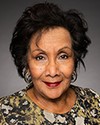
Sandra Rao Emergency Physician, As an Individual
Hello, Madam Chair.
My name is Dr. Sandra Rao, and I am a full-time emergency physician practising in a very ethnically diverse urban setting in the greater Toronto area. I also work in rural hospitals across Ontario. Today, I am here representing myself to provide testimony on the impact of population growth on acute care health care utilization.
In my practice, I see a wide variety of patients from different backgrounds—citizens who were born in Canada and first-generation immigrants who have been here for decades. I also see a substantial number of patients who are newcomers and have only come in the last few years, as well as international students and refugee claimants through the interim federal health program.
According to Statistics Canada, in 2023, the vast majority—around 97.6%—of Canada's population growth came from international migration, both permanent and temporary, and the remaining portion, 2.4%, came from natural increase.
In Ontario specifically, population growth since 2021 has been unprecedented, driven almost entirely by international migration. In 2023, at 3.1%, it had the highest growth of any single year since 1972, which more than doubled the average population growth of 1.3% over the last 50 years. However, our health care infrastructure, particularly acute care beds, emergency departments and family physician supply, has not expanded proportionately.
Though health care is still offered provincially, federal immigration policies impact our health care outcomes directly.
In Ontario, the number of acute care beds has decreased since COVID levels and remained stagnant. At my centre, our ED volumes have increased by at least 11% year over year since the pandemic.
Visits by refugee claimants have increased by almost 490% since 2021. The rate of admission among these ED visits has remained the same, thus the total number of admissions is still rising year over year.
According to the Financial Accountability Office, there were 35,540 funded hospital beds in Ontario in 2024-25. Based on the 2025 budget, there would be sufficient funding for 33,083 beds by 2027-28, resulting in a decrease from 220 beds per 100,000 Ontarians to 203 funded hospital beds per 100,000 Ontarians. This trend would not even meet the needs of an aging population, let alone accelerated immigration.
This is the same story across the country.
Population increases also impact the physician workforce. In a briefing regarding the Ontario Medical Association's negotiations with the Ministry of Health, unprecedented population increases were directly cited as a reason for lower than anticipated compensation for our physicians. As we see what is happening between the Quebec government and their physicians, provincial physician funding has a direct impact on physician attrition in the province.
In our centre, the bulk of increases in our ED volumes are accounted for by ambulatory low-acuity volumes, likely exacerbated by insufficient access to family doctors due to an existing crisis in primary care. According to the Canadian Institute for Health Information, family medicine physicians experienced slightly negative growth of 0.1% from 2022 to 2023. This then spills into ED wait times, referral to specialized clinics and worsened wait times for specialists.
Newcomers often also face challenges in accessing health care, including significant language barriers, lack of primary health care and low health literacy, all of which require additional resources and personnel to properly address. There are also differences in health care expectations. Many newcomers come from countries where there isn't an established primary care system, so they may expect to see specialists or obtain advanced imaging right away, not being aware that such a referral can take months. Thus, the inability to meet health care needs of an increasing population disproportionately affects newcomers. If immigration levels continue to be mismatched with provincial health care delivery, outcomes will suffer for all Canadians.
Liberal
The Chair Liberal Hedy Fry
Thank you very much.
I shall now go to the question and answer period. We begin with the Conservatives. It's a six-minute round, and the six minutes includes questions and answers.
I would like to begin with Mr. Mazier from the Conservatives, please.
Conservative

Dan Mazier Conservative Riding Mountain, MB
Thank you, Chair.
Thank you to the witnesses for being here in person today.
Dr. Rao, is population growth increasing demand on Canada's health care system?
Conservative
Dan Mazier Conservative Riding Mountain, MB
Dr. Rao, how are the immigration levels set by the federal government impacting Canada's health care system?
Emergency Physician, As an Individual
As I stated in my comments, the immigration levels are directly impacting particularly urban centres, especially where I work. They are directly increasing wait times and the number of visits per day, even though the number of physicians and nursing staff that we have in order to meet these demands is not increasing.
Conservative
Dan Mazier Conservative Riding Mountain, MB
Dr. Rao, the federal health minister recently said there's no alignment between immigration and the need for doctors. Should immigration levels be tied to health care capacity to ensure our system can adequately support both Canadians and newcomers?
Conservative
Dan Mazier Conservative Riding Mountain, MB
Dr. Rao, what portion of your current billings is for refugee claimants?
Conservative
Emergency Physician, As an Individual
I couldn't give you a number personally over the past decade, but it has certainly increased over the last two to three years since I have been in practice.
Conservative
Dan Mazier Conservative Riding Mountain, MB
Dr. Rao, last year there were over 1,000 Saudi Arabian citizens training in Canadian hospitals through the visa training program. Almost all visa trainees will never work a day in Canada after they complete their training because they will return to their home country.
Do you believe the Canadian health care system has become too dependent on the visa training program?
Emergency Physician, As an Individual
I believe there was an instance in 2016, I want to say, where there was a conflict between Saudi Arabia and the Canadian government where Saudis were being pulled from residency programs. That did cause a significant strain on our system at the time.
Conservative
Dan Mazier Conservative Riding Mountain, MB
Elaborate on that. How are we becoming too dependent on that program?
Emergency Physician, As an Individual
Hypothetically, if we were to lose Saudi trainees for any specified period of time, residency programs would fail to meet the needs provided by those programs in delivering care at their local teaching hospitals.
Conservative
Dan Mazier Conservative Riding Mountain, MB
Dr. Rao, the cost of the interim federal health program has skyrocketed from $66 million a year in 2017 to $800 million a year today. Doctors have reported that some of their colleagues are exploiting the federal program by billing inflated premiums for services provided to refugee claimants. According to the interim federal health program's benefit grid, which outlines the rates doctors can charge, many services have no maximum dollar amount.
Why do strict billing limits exist for Canadians under provincial plans but not for services billed under the federal program for refugee claimants?
Emergency Physician, As an Individual
Physicians are supposed to bill the program what we would generally bill the provincial government, and not more. However, the stringency with which that is being enforced is likely variable. I personally am not aware of anyone having their billings rejected from that program, but I would say that is probably related to the auditing process.
Conservative
Dan Mazier Conservative Riding Mountain, MB
We can go over the grid right here. There is nowhere that says there is a maximum dollar limit. If you go through other procedures, there are actually prescribed limits, but on these particular ones, there's no limit. The doctor can write in anything they want. Is that correct?
Emergency Physician, As an Individual
In theory, yes, and in theory, there's no maximum annual amount that a patient can bill the system. I am not aware of any maximum amount that a physician can bill per service rendered.
Conservative
Dan Mazier Conservative Riding Mountain, MB
Do you believe there needs to be stronger oversight and accountability for the interim federal health program?
Conservative
Dan Mazier Conservative Riding Mountain, MB
Should the federal government align the interim federal health program's billing caps with those of provincial health plans?