Evidence of meeting #9 for Health in the 45th Parliament, 1st session. (The original version is on Parliament’s site, as are the minutes.) The winning word was federal.

A video is available from Parliament.

On the agenda

Members speaking

Before the committee

Barati  Doctor, As an Individual
Grdisa  Chief Executive Officer, Canadian Nurses Association
Padmos  Executive Vice-President, American Canadian School of Medicine
Rao  Emergency Physician, As an Individual

12:25 p.m.

Conservative

Dan Mazier Conservative Riding Mountain, MB

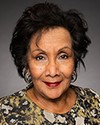
Dr. Rao, when an uninsured patient receives care in Canada but doesn't pay the bill, who ultimately covers that cost? Can you provide examples of how that typically plays out?

October 30th, 2025 / 12:25 p.m.

Emergency Physician, As an Individual

Sandra Rao

If a patient comes to the ER without any health insurance and they do not have any means to pay, the physician and the hospital do not get paid for those services.

12:25 p.m.

Conservative

Dan Mazier Conservative Riding Mountain, MB

Does that happen to you much?

12:25 p.m.

Emergency Physician, As an Individual

Sandra Rao

Not infrequently...once a month, let's say.

12:25 p.m.

Conservative

Dan Mazier Conservative Riding Mountain, MB

What would that be, typically? Would that be an hour of your time once a month?

12:25 p.m.

Emergency Physician, As an Individual

Sandra Rao

Approximately, yes. It has definitely happened to me and my colleagues that complex resuscitations do not get covered.

12:25 p.m.

Conservative

Dan Mazier Conservative Riding Mountain, MB

Is there any cost? When you get stiffed, how much would that be, approximately?

12:25 p.m.

Emergency Physician, As an Individual

Sandra Rao

It would be somewhere between $100 and $500.

12:25 p.m.

Conservative

Dan Mazier Conservative Riding Mountain, MB

Thank you very much.

The Chair Liberal Hedy Fry

We go to the second questioner, and that's for the Liberals, Mr. Eyolfson.

Doug Eyolfson Liberal Winnipeg West, MB

Thank you, Madam Chair.

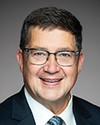
Dr. Padmos, I'd like to thank you for the point...I think I was making this point in other meetings. When I was staff at a teaching hospital in the early 2000s, we had many residents from Saudi Arabia. I want to confirm that these are residents who are not taking up spots from Canadian residents who would have applied. When I was there, these residents—all of the training expenses and salaries—were paid for by their sponsors. As well, there was a payment to the funds of the medical school to help it run its operations. Is that still the case?

12:30 p.m.

Executive Vice-President, American Canadian School of Medicine

Andrew Padmos

Yes, that's still the case. The Saudi positions are offered by universities through the Saudi cultural bureau here in Ottawa. The University of Ottawa will tell the Saudi bureau, “Next year we have positions for two in general surgery, maybe one in ophthalmology, maybe none in anaesthesiology this year.” The Saudis then find suitable candidates, often very highly qualified candidates, to take those positions. However, the majority of the Saudis are here not in entry-level, first-year positions because they now have medical facilities in Saudi Arabia, with Canadian-trained faculty who are teaching them in the early years of their specialty training. We're now getting a preponderance of trainees coming in at the fourth-, fifth- and sixth-year level, at which point they're not only not a block; they're actually a benefit to Canada because we have a highly trained physician who's working with Canadian patients, and at no cost to the system.

Doug Eyolfson Liberal Winnipeg West, MB

Thank you.

Dr. Rao, you mentioned that our system may be relying a little too heavily on these visa trainees. Would that be helped if the provincial governments were to fund more training positions?

12:30 p.m.

Emergency Physician, As an Individual

Sandra Rao

I believe it would. I believe that the provincial government would need to fund more residency positions for CMGs, but also, there have to be more resources at every level. You would also need more staff physicians in order to provide the training to these trainees.

Doug Eyolfson Liberal Winnipeg West, MB

You would recommend that the province also fund those. Is that correct?

12:30 p.m.

Emergency Physician, As an Individual

Sandra Rao

That's correct.

Doug Eyolfson Liberal Winnipeg West, MB

I want to clarify again because I want to see the federal government doing more on these things, but it's difficult when we have provincial governments that keep insisting that we just write the cheques, with no influence. Would you be in favour of directed, targeted federal funding to help assist with these programs?

12:30 p.m.

Emergency Physician, As an Individual

Sandra Rao

I think that would be helpful, yes.

Doug Eyolfson Liberal Winnipeg West, MB

Now, you may have different billing tracking systems from what we have in Manitoba. You're fee-for-service, I understand. Is that correct?

12:30 p.m.

Emergency Physician, As an Individual

Sandra Rao

It's a complicated system, but it's a blended AFA, an alternative funding plan, along with a heavily skewed fee-for-service system.

Doug Eyolfson Liberal Winnipeg West, MB

I know in Manitoba we have a system where they were basically paid by the hour. If you go in, is it basically that you are paid by the hour when you go to emergency, or does what you're reimbursed depend on what happened during the shift?

12:30 p.m.

Emergency Physician, As an Individual

Sandra Rao

We get paid a stipend to show up for that particular shift. Then we are allocated a certain number of points for seeing a certain number of patients. The number of points depends on time of day and complexity. We're also paid shadow billings of around 37% for the amount that we bill the ministry.

Doug Eyolfson Liberal Winnipeg West, MB

Thank you.

Dr. Padmos, we talked about how we need more medical schools. I would be the first to agree. I started medical school in 1989, and I was watching in horror as many provinces, my own included in Manitoba, said that we had to get health care costs under control. They said that medical providers were among the greatest drivers of health care costs and, therefore, to get health care costs under control, they needed fewer providers and said they should cut the number of medical school spots. That was the actual rationale stated by provinces in the 1980s.

I think the provinces are starting to get around this and have started to reverse this. Do you agree that the provinces need to be kicking in more for this to fund more medical schools, more medical training positions and more residencies?

12:30 p.m.

Executive Vice-President, American Canadian School of Medicine

Andrew Padmos

Yes, I do.

Recall that in 1964, I believe, the federal government set aside what I believe was $500 million that was used to fund new medical schools at McMaster, Sherbrooke and Calgary, and I'm not sure of the fourth school, but there was a big tranche of federal money that went in. I wish it had been around when I was working with Toronto Metropolitan University, because it didn't....

The issue is that Canada should have somewhere in the neighbourhood of 40 medical schools if it wanted to be self-sustaining. However, we have always depended on the immigration of foreign-trained people, and now Canadians who go abroad to study, in order to fill up our needs for medical care, and we're still short.

By the way, physicians are only one part of the problem. You know we're short of nurses and almost everything else as well, so there needs to be a concerted, coordinated effort in this regard.

Doug Eyolfson Liberal Winnipeg West, MB

Thank you.