Evidence of meeting #20 for Procedure and House Affairs in the 45th Parliament, 1st session. (The original version is on Parliament’s site, as are the minutes.) The winning word was elections.

A recording is available from Parliament.

On the agenda

Members speaking

Before the committee

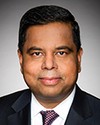
Gary Anandasangaree  Minister of Public Safety
Rogers  Director, Canadian Security Intelligence Service
Boudreau  Deputy Commissioner, Federal Policing, Royal Canadian Mounted Police
Geddes  Deputy Minister, Department of Public Safety and Emergency Preparedness
Perrault  Chief Electoral Officer, Office of the Chief Electoral Officer

Gary Anandasangaree Liberal Scarborough—Guildwood—Rouge Park, ON

When the act was developed, we looked at a number of different options, particularly from Five Eyes and G7 partners, some of which have had a similar act for many decades. In fact, Canada is somewhat at the later stage of development of these acts. We learnt a fair bit from that. At the implementation stage, there are three elements to it, the first being the appointment of the commissioner. We are at the end of that process. Last week we had started consulting with the opposition and parties in both the House and the Senate. I formally tabled the name of the proposed commissioner on Monday. We look forward to a vote on this matter in both Houses.

This is coupled by the second element, the consultation of our draft regulations, and we've received a fair amount of feedback on a range of issues, particularly on the monetary penalties. We are looking into finalizing that over the next several weeks.

The third element is establishing and making sure that we have a functional data collection ability. Again, that work is happening. On the administrative side, it's finding the office, making sure it has the requirements for the renovation that's required. All of that is happening in parallel. We're hoping in early spring that we will be able to have both the office as well as the registry fully operational.


Jonathan Wilkinson Liberal North Vancouver—Capilano, BC

Obviously, the role of the commissioner is going to be an important one, given how important foreign interference is. Maybe you can just speak to Mr. Boegman's background and why he was the right choice.

Gary Anandasangaree Liberal Scarborough—Guildwood—Rouge Park, ON

Mr. Wilkinson, with your being from British Columbia, as well as Mr. Van Popta, I think you would appreciate the calibre of Mr. Boegman. He has served as chief electoral officer in British Columbia. I believe on top of that he has been involved with a number of issues around foreign interference in British Columbia, which in the past has had some challenges. He has conducted three general elections and 12 by-elections. Previously he served in other roles within Elections British Columbia. He is fully bilingual, someone who, by all accounts, is unimpeachable and who is of high integrity. We wanted to make sure that the individual who is named as commissioner will have the confidence of Canadians, will have the administrative ability to establish a new registry and the functionalities of this commission, and will be another additional and important safeguard to our democracy.

Jonathan Wilkinson Liberal North Vancouver—Capilano, BC

Thank you.

As I understand it—and you can correct me if I'm wrong—the commissioner's office is to be housed within Public Safety but is to operate independently from the department and the minister. Can you tell me a bit about how that will work and also why that model was chosen?

Gary Anandasangaree Liberal Scarborough—Guildwood—Rouge Park, ON

We have a number of different agencies. We have the portfolio agencies—CSIS, CBSA, RCMP and so on—that are independent agencies.

Then we have what I would consider to be the smaller focused agencies: the Parole Board of Canada and the Office of the Correctional Investigator. We're adding the commissioner to that slate of commissions. They act fully independently of Public Safety, although the reporting will happen through Public Safety and through me as minister. They're independent in all ways, in every manner.

On the funding of it, again, they seek funding authorities independently. We support them on an administrative basis. We have a number of models where it has worked exceptionally well. My role as minister, with Deputy Minister Geddes, would be to support them without directing them in any way.

Jonathan Wilkinson Liberal North Vancouver—Capilano, BC

The commissioner and the act are one piece of the efforts to counter foreign influence, but maybe you can just talk to me about how it fits in the broader context, because obviously there are a number of other pieces there.

Gary Anandasangaree Liberal Scarborough—Guildwood—Rouge Park, ON

Absolutely. There are a number of pieces as part of the election cycle, as you're aware. During elections, we have our portfolio leaders, as well as PCO, that meet regularly and report on a weekly basis to Canadians. We've seen that over the last election cycle.

We also have the ongoing work of CSIS particularly. Director Rogers will be more than glad to outline the ongoing work they do along with the RCMP.

The Chair Liberal Chris Bittle

Thank you so much.

We'll now turn to Madame Normandin.

Ms. Normandin, you have the floor for six minutes.

Christine Normandin Bloc Saint-Jean, QC

Thank you.

Thank you to the witnesses, especially to those who are here twice this week.

Minister, I would like you to tell me about the issues of artificial intelligence and digital sovereignty. Earlier this week, we talked about metadata analysis in the context of foreign interference. I imagine there's a pretty phenomenal amount of data to be analyzed to detect outside threats. I'd like you to tell me where the data is stored. Is it stored on servers exclusively in Canada?

It's a two-part question. I imagine that, with so much data, you may have no choice but to use artificial intelligence-based systems to analyze and cross-reference the data. If so, what AI systems are being used? Do they already exist? Is there an in-house system being used that is private?

Gary Anandasangaree Liberal Scarborough—Guildwood—Rouge Park, ON

Thank you for the questions.

I'm going to ask Dan Rogers to answer that. I know that he has a fair bit of experience and is in the process of implementing a number of processes right now.

11:20 a.m.

Director, Canadian Security Intelligence Service

Daniel Rogers

Thank you for the questions.

I'll start by talking about the majority of the data protected by the Canadian Security Intelligence Service.

We're very much using systems that are in Canada, within our facilities, very guarded and very secure, and with access controls to make sure it's limited to those who need to conduct investigations in order to access that data, which accounts for both privacy and security concerns.

With respect to artificial intelligence, you're absolutely right: It's something that CSIS has to adopt. It's something that we are currently adopting. We have to do that in order to keep pace with our competitors and the overall environment in order to keep Canadians safe.

We are doing that in accordance with some of the direction already set out for the federal public service, which includes a number of provisions in some of those policies issued by Treasury Board, and which we've also adopted, including making sure that humans are in the loop, making sure that we have a gradual, responsible process for the rollout of AI and making sure that we're looking at the processes within our AI systems to make sure they're responsibly tested and validated before they're put into production use.

We're still at a stage where all of the decision-making within CSIS is overseen by humans. We're not in a zone where we're at risk of that for now, but we're continuing to implement.

Christine Normandin Bloc Saint-Jean, QC

Good.

I'd like to pursue that a little bit. I'm thinking of some of the tools we use, as parliamentarians, on a daily basis. We use Outlook, which we know is run by the United States and that the databases are potentially outside Canada. For example, the United States is allowed access under the USA Patriot Act and the Cloud Act.

I would like to hear what you have to say about that. Is there even a sovereign cloud in Canada? The last I heard, Minister Solomon was asked about it and said there wasn't one. When we use cloud computing here, it's clear that we are potentially vulnerable because of the role of the United States, but perhaps other states as well.

11:25 a.m.

Director, Canadian Security Intelligence Service

Daniel Rogers

Thank you for the question.

I'm happy to answer, but I also want to say that senior officials at Treasury Board and Shared Services Canada would be in a better position to answer the question about the government's plans.

I would say that data sovereignty continues to be a concern for us when it comes to vulnerabilities that foreign states could take advantage of. It is certainly more secure and better to have data controlled within a Canadian legal context.

That said, when data is held outside of a Canadian context, there are still measures that can be put in place to keep that data secure, including things like encryption, where encryption keys are held in Canada, access controls, auditing and logging to make sure that, when that data is accessed, we are aware of that access. There are technical measures that can be put in place.

For government data, as I mentioned earlier, Treasury Board and Shared Services Canada are better able to answer that. Specifically for CSIS in a classified environment, with us, with Department of Defence, CSE and other high security environments like the RCMP, we have special systems with special provisions to make sure that our most sensitive data is kept secure and in Canada.

Christine Normandin Bloc Saint-Jean, QC

I have a question for you, Minister.

One of the problems we are aware of is the issue of commercial interference. In the past, China has tried to acquire major Canadian companies. There was also the issue of critical minerals in the north.

I would like to hear your comments on the criteria that limit Chinese purchases of Canadian companies. As we know, these purchases are made not by private Chinese companies but by the Chinese government.

Are decisions based on criteria such as the size of the acquisition, the percentage of Chinese ownership or the sectors of activity?

Why does it take so long for a decision to be made? That is often a problem. It takes time before an acquisition can be blocked based on national security.

Gary Anandasangaree Liberal Scarborough—Guildwood—Rouge Park, ON

Thank you. That's a very important question.

The Investment Canada Act has a proscription in terms of foreign investment in Canada. It is a robust process. The first piece of it is undertaken by Industry Canada and the Minister of Industry. Then it comes to Public Safety for review and comment. If there are concerns, oftentimes we will seek additional time for us to undertake a thorough review. It doesn't always mean that it's a rejection of the proposal; oftentimes there are mitigation measures that are in place.

It has been working fairly effectively. I recognize the frustrations in terms of time but, when we do make a negative decision, we have to be absolutely certain. We take the time to do our due diligence in a very concrete way.

I know that Director Rogers as well as the RCMP along with Public Safety are very much intricately involved in this process.

The Chair Liberal Chris Bittle

I'll cut you off there. We're well over.

We'll turn back to Mr. Cooper for five minutes, please.

Michael Cooper Conservative St. Albert—Sturgeon River, AB

Thank you, Mr. Chair.

Minister, moments ago you set down another stake in the ground, so to speak, in what is a moving goalpost with respect to getting the foreign influence registry up and running. You say that it will be up and running in early spring, but I'll remind you of the timeline.

Nearly two years ago, when the legislation to establish such a registry was before Parliament, your predecessor, Dominic LeBlanc, promised that the registry would be up and running before the federal election. That didn't happen. Then your government promised that it would be up and running by June 2025. That didn't happen either. Then you, Minister, promised that it would be up and running by December 2025. That didn't happen. It's now February 2026, and you've set down another timeline, another date.

Given the record of making commitments that it would be up and running three times with three different dates and each time you missed the deadline, why should we have confidence that it's going happen now?

Gary Anandasangaree Liberal Scarborough—Guildwood—Rouge Park, ON

I share the frustration that you have with the delays involved in getting to this point. What I can assure this committee is that all the requisite work has been done, it is essentially complete. With respect to the three elements I talked about, the first one being the appointment of the commissioner, we have canvassed with your party, with the Bloc, along with recognized groups in the Senate. We have tabled a formal request, and we will have a vote on that in the near future.

11:30 a.m.

Conservative

Michael Cooper Conservative St. Albert—Sturgeon River, AB

Minister, I'm going to ask you to be a little clearer. When you say early spring, what does that mean? What is early spring?

Gary Anandasangaree Liberal Scarborough—Guildwood—Rouge Park, ON

If I may, I advised you on the first piece, and the second piece is the regulations—

11:30 a.m.

Conservative

Michael Cooper Conservative St. Albert—Sturgeon River, AB

No, I'm asking you for the latest timeline. You've given months, so what is the month? Is it April? Is it May?

Gary Anandasangaree Liberal Scarborough—Guildwood—Rouge Park, ON

I'm not going to give you an exact month, Mr. Cooper—

11:30 a.m.

Conservative

Michael Cooper Conservative St. Albert—Sturgeon River, AB

Okay.

Gary Anandasangaree Liberal Scarborough—Guildwood—Rouge Park, ON

—but I will say the work has been done. The first piece is the commissioner. The second element is the regulations, which are ready to be finalized.

11:30 a.m.

Conservative

Michael Cooper Conservative St. Albert—Sturgeon River, AB

With the greatest respect, your government has dragged its feet.

I'll remind you that, for years, your government opposed and obstructed the creation of a foreign influence registry.

Just before the 2021 election, then Conservative MP Kenny Chiu introduced a private member's bill to establish a foreign influence registry. As a result of his advocacy for a registry, MP Chiu was drowned by a sea of Beijing-directed disinformation, costing him his seat. This disinformation was amplified by the Liberal Party in Steveston—Richmond East. Only after Madam Justice Hogue's damning report did your government finally put forward legislation to establish such a registry, which the national security establishment has been calling for for years.

After opposing and obstructing a registry, isn't it the case that the new strategy is one of endless delay by your government? If it was such a priority, it would surely be up and running now.