Thank you so much.
We're four for four here. All the witnesses have been under the time. The chair appreciates it.
First, we go to Mr. Van Popta from the Conservative Party.
You have six minutes, please.

Evidence of meeting #5 for Procedure and House Affairs in the 45th Parliament, 1st session. (The original version is on Parliament’s site, as are the minutes.) The winning word was elections.
A video is available from Parliament.
Liberal

The Chair Liberal Chris Bittle
Thank you so much.
We're four for four here. All the witnesses have been under the time. The chair appreciates it.
First, we go to Mr. Van Popta from the Conservative Party.
You have six minutes, please.
Conservative
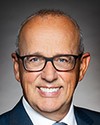
Tako Van Popta Conservative Langley Township—Fraser Heights, BC
Thank you, Mr. Chair.
Thank you, Mr. Sauvé and Dr. Turnbull, for being here.
Dr. Turnbull, in a recent publication, you said this about the Leader of the Opposition and the recent by-election in Battle River—Crowfoot:
Mr. Poilievre has called these actions [of the longest ballot committee] a “scam” and a “blatant abuse” of electoral democracy. He’s right.
You agreed with him.
The Longest Ballot Committee’s ballot-hijacking has no democratic value, serves no public purpose, and stands no chance of setting up a serious conversation about electoral reform.
You say in that article, as you were saying today, that even though you might be disturbed by their actions, you don't think it should compel us to change the rules.
Now, I might be convinced by that if the actions of the longest ballot committee were leading to an intelligent conversation about electoral reform, but they're not. We heard Mr. Szuchewycz earlier today acknowledge here that what they were doing was a political prank. He was even proud that at least one candidate got zero votes. These people are not serious. It is not leading to a serious conversation.
Why wouldn't we counter this belligerence and obstinacy and political prank-making?
Professor, Faculty of Management, Dalhousie University, As an Individual
I totally agree with everything you just said. The only concern I have is the extent to which any legislative response could make life more difficult for independent candidates who are serious.
Say, for example, we said that we're going to require more signatures, as a way of really testing whether or not the candidacy is serious. For someone who's running with a political party, who has that network of support, it's going to be easy to meet the threshold if it is higher, but for a truly independent candidate who is serious, who wants to run to be the representative of the riding—and that's important—I don't want that person to have to pay an extra price because of the longest ballot committee. That's my only concern.
Conservative
Tako Van Popta Conservative Langley Township—Fraser Heights, BC
Good. Well, thank you for that.
One of the proposed legislative changes is exactly about requiring 100 unique signatures. In other words, one person couldn't sign 200 nomination forms. You know, getting 100 signatures is not that difficult, really, for a serious candidate, somebody who's well connected to their community. You have 10 friends who have 10 more friends, and you get your 100 signatures.
We heard Mr. Szuchewycz saying that they gamed the system. He was accused of having a blank form and getting it signed. He said that it wasn't blank at all; it had the words “all candidates” at the top. It might as well have been blank. People are gaming the system, and I think it's time for us to reform the system by making that one small change.
What do you think about that?
Professor, Faculty of Management, Dalhousie University, As an Individual
I listened with interest to the exchange between your previous witness and Mr. Cooper. That was fascinating.
There would be no value in having someone sign a form with no candidate's name on it. There would be equally no value in having someone sign a form with all candidates' names on it. I wasn't there, but I can't imagine that Elections Canada would find that acceptable. What are you supporting, then?
This case in particular really brought to my attention this idea that people are signing multiple forms. If somebody is doing that in good faith.... If I know two people who are running for office in the same riding, and I sign both of their forms, if I'm doing that not as part of some grand scam but because I believe in the viability of the candidacy of these two people, I don't think that in that case democracy is suffering for that. I'm just saying, “Yes, these are two serious people.” If there's a coordinated effort, however, to make sure that the same 100 signatures are standing up whomever, and they don't even know who they are, yes, I can see the point of trying to make a rule about that.
Conservative
Tako Van Popta Conservative Langley Township—Fraser Heights, BC
Sure, but where do we find the balance? That was a question that Ms. Normandin asked witnesses in the previous panel. Where do we find the balance between somebody legitimately wanting to sign two candidates' forms and somebody gaming the system by signing hundreds, or even dozens?
Professor, Faculty of Management, Dalhousie University, As an Individual
Realistically, there might not be a perfect balance there because, when you think about it, if you're going to create a rule that creates a restraint on someone else's right—for example, if you make a rule that you can only sign one form—then yes, technically, you're making a restriction on voters. Are there that many voters who are signing more than one form? Probably not. I don't think that's a major problem, so to the extent that it's restricting the range of motion of the voter, it's probably not too heavy a restriction for most people. In fact, most people—
Conservative
Tako Van Popta Conservative Langley Township—Fraser Heights, BC
So it's a reasonable restriction on people's rights to participate in the electoral system.
Professor, Faculty of Management, Dalhousie University, As an Individual
I think you could make that argument.
Conservative
Tako Van Popta Conservative Langley Township—Fraser Heights, BC
Just quickly, I didn't have a chance to ask Mr. Szuchewycz any questions, but I'm really puzzled about his statements that we're in a conflict of interest to make the rules. In British Columbia, in my riding, we've had referendums three times on changing the electoral system. It was not politicians who were making the rules. It was a citizens' assembly, just like the previous witness said we should have, and yet, every time, it was rejected. People generally appreciate the first-past-the-post system we have, and ultimately it was the people who made that decision.
Could you comment on that?
Liberal
Professor, Faculty of Management, Dalhousie University, As an Individual
I think one of the reasons is that people value local representation. I've seen some evidence to suggest that when you think about larger, multi-member ridings, there's some concern about that.
I'm being really brief, because I know there's no time.
Liberal
The Chair Liberal Chris Bittle
Thank you so much.
We're moving on to Ms. Kayabaga for six minutes, please.
Liberal

Arielle Kayabaga Liberal London West, ON
Thank you, Chair.
I would also like to extend my gratitude to our witnesses today.
Dr. Turnbull, in your opening comments, you did mention.... The spirit behind the long ballots is that the citizens who participated in this felt that politicians have a conflict of interest, and in your comments you sort of agreed. What would you suggest as an alternative to how changes in electoral reform are done?
Professor, Faculty of Management, Dalhousie University, As an Individual
I can understand the argument that there is a conflict for the politician who's voting on rules that then help them or don't help them get elected. We can look throughout history at some examples of how certain political parties have tended to be disadvantaged by the system we have. I think there is evidence to suggest that the NDP, throughout history, has not.... Sometimes they've done really well. In 2011, they did really well, but some other times, the party's votes have been distributed more thinly across the country, as opposed to being concentrated in a single province like the Bloc Québécois in Quebec, for example. The Bloc Québécois, being regionally concentrated, tends to do a little better in the first-past-the-post system than the NDP would.
However, if we start talking about what you use as opposed to the House of Commons and who else should make this decision, it's much easier to think about that in theory than it is to think about it in practice. In theory, we assemble 50 really smart people and get them really jazzed up about electoral systems, and we put them in some kind of cone of silence where they have no conflict of interest of their own and it is not going to be penetrated by political parties—none of this is really possible—and they spit out the right electoral system. Then what? There's no accountability for those people.
Liberal
Arielle Kayabaga Liberal London West, ON
Is that with the assumption that most Canadians are partisan and have a political leaning?
Professor, Faculty of Management, Dalhousie University, As an Individual
I don't think most Canadians are. Not many people are members of political parties. I think we see a lot of promiscuity, frankly, in terms of what people do with their ballots. People jump all over the place all the time in terms of who they vote for. I wouldn't say we're terribly.... We're certainly not like the U.S., where people put it on their sleeve that they're a Republican or a Democrat. We've never had that kind of reality or culture here.
Liberal
Arielle Kayabaga Liberal London West, ON
I'm just trying to understand something. We're in 2025. Most democratic reforms have been done through this place, and Canadians have voted for folks who have made these changes, so why the change now? Why is there a conflict now that wasn't there before?
Professor, Faculty of Management, Dalhousie University, As an Individual
In some ways, I think if you really pushed on the concept of conflict of interest, it would become problematic, because one could make the argument that politicians are almost always in a conflict of interest. Anything you decide could affect you somehow, so if you push it too hard.... As a concept, it's interesting to think about people who are players in the game making the rules of the game. That's fair enough, and we can think about that. There are going to be political reasons why some parties will say, “We're never going to change the electoral system, because we like the one we have. It works for us.” That's real, but you're also accountable for the decisions you make. You have to face the public, whereas members of a citizens' assembly wouldn't in the same way.
Liberal
Arielle Kayabaga Liberal London West, ON
I want to get your thoughts on disinformation on public platforms, such as social media platforms. What do you think is the role of government in regulating AI systems, for example, around disinformation without also falling into the territory of censorship and partisanship?
Professor, Faculty of Management, Dalhousie University, As an Individual
It's very difficult to think about how to put it in motion and how to operationalize a government role. The most important thing is that citizens need to be able to practise civic self-defence on their own. There needs to be a lot of.... What government can do is civic literacy, really give a role for people to become.... I know education is a provincial jurisdiction, but it's really important that people are able to tell truth from falsehood on their own.
Liberal
Arielle Kayabaga Liberal London West, ON
Do you think that right now the level of education available to the Canadian public is enough for people to understand what is and what isn't disinformation on social media platforms?
Professor, Faculty of Management, Dalhousie University, As an Individual
I'm not sure about that. I think people are becoming more discerning. Unfortunately, we're getting to a point where sometimes we don't know if we can believe anything and we have to double- and triple-check everything, and maybe that's the world we're in. It's really helpful for organizations that are non-partisan, like Elections Canada, to help citizens develop that sense of needing to double- and triple-check to make sure, especially at election time, but it's hard to do.
Also, for example, when we're talking about foreign interference, a lot of the time we're not talking about messages that are going across the board to all Canadians that we can see in broad daylight. We're talking about messaging targeted at a small part of the population that doesn't go through the filter of CBC or CTV, like Professor Loewen was talking about, and those sorts of things can be harder to detect. I do think that the role of SITE during the campaign, for example, was performed very well.
We're not lost. We're doing some things right.
Liberal
Arielle Kayabaga Liberal London West, ON
Well, maybe she could just say something about political financing as well, and how that ties—