Thank you, Mr. Brunelle‑Duceppe.
I would like to invite Mr. Zuberi to take the floor for five minutes, please.

Evidence of meeting #11 for Subcommittee on International Human Rights in the 45th Parliament, 1st session. (The original version is on Parliament’s site, as are the minutes.) The winning word was support.
A video is available from Parliament.
Liberal

The Chair Liberal Fayçal El-Khoury
Thank you, Mr. Brunelle‑Duceppe.
I would like to invite Mr. Zuberi to take the floor for five minutes, please.
February 9th, 2026 / 4:40 p.m.
Liberal
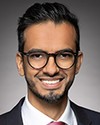
Sameer Zuberi Liberal Pierrefonds—Dollard, QC
Thank you, Mr. Chair.
Thank you to all the witnesses who joined us today.
I'd like to start off with Ms. Wittes.
You made a really important remark in your opening that was essentially around coalition building and how it's important to include women. Many might not actually understand why that is. Would you just elaborate a bit, for the benefit of all watching? Why is that the case?
President, National Democratic Institute
That's a very important question.
Those of us who work in international development, human development, democracy, and peace and security have done extensive work, as academics and policy-makers, documenting the impact of full inclusion of women in the economy, in politics and in society.
We know, for example, that peace agreements that are forged when women have a seat at the table last longer and survive challenges better than peace agreements that are negotiated exclusively by men. We know that if you're doing microlending, if you lend to women heads of households, you will get better human development outcomes than if you are lending only to male heads of households. We know that for every year of education a girl gets, there will be positive benefits for her family into the next generation.
We also know a lot more now about what it takes to really enable the full inclusion of women in politics. NDI, for example, did a controlled trial in southern Africa of different approaches to encouraging women's participation in politics. It was supporting women alone or supporting women and also working with their male counterparts in political parties. We found that we were more impactful in getting women involved in politics, running for office and getting elected when we worked with the men as well.
Our men, politics and power program is a scientifically backed intervention. That's just one example of the kinds of outcomes we can get.
Liberal
Sameer Zuberi Liberal Pierrefonds—Dollard, QC
We have about two and a half minutes left. In that time, I just want to open up the floor to those who have some pithy remarks around how middle powers, including Canada, navigate this moment, with America's perturbations and all the challenges in the United States.
We see Minneapolis. We see what's happening on the international stage with Greenland. How do we engage other middle powers in order to promote the respect of people at the end of the day, through democracies and the rules-based order? I just want to open that up.
Executive Director, Programs, Parliamentary Centre
Thank you very much. It's a very pertinent question.
I have a couple of points on this.
The first one is that, for a long time, our work was done within the realm of official development assistance. I don't know if this framework is relevant to the realities of the day anymore. Democracies are a minority. We have to reach out and support one another.
My second point is on areas to work together in. Of course, there are many, but I will mention the importance of youth—youth anywhere around the world, but also youth in democracies. There's a well-documented trend, including here in Canada: Young people are disillusioned with traditional institutions and decision-making processes. This is a big danger for the future of democracy, really.
I'm very pleased to say that with the support of our European partners, we started a project last week. It's a Canada-EU forum on the future of democracy in order to understand what young people think and to have an honest conversation with them on what it takes to re-engage them in reimagining and participating in democracy.
I think youth are a very important investment in the future these days, across democracies.
Liberal
Sameer Zuberi Liberal Pierrefonds—Dollard, QC
I also want to ask you something, Mr. Daliran.
You suggested that the Security Council could intervene with respect to Iran. Given that Russia is on the Security Council, which might be a challenge, how do you see international organizations helping to support the people of Iran?
Founder, Iranian Canadian Cultural Society of Vancouver Island
Starting that process brings back hope to people in Iran and across the globe.
I have first-hand recollections, communications and very up-to-date information. Iranians inside Iran and outside in the world have all come to the point where there isn't any solution other than military intervention. As I said, the only things they have are their voices, their pens and their fists. There is nothing else left. If we allow this opportunity to pass, when this Islamic regime is at its weakest point....
On the other side, the United States and Canada—despite some disagreements on the economy—share the fundamental value of human rights. If we come together and start the process, even if it's blocked by the Russians, we'll still show the world that we are standing up for human rights. We are not closing our eyes. We are not ignoring it. We are not selecting public, international outreach only in the specific settings we are interested in. This is a complete violation of the rights that every human being is born with.
Liberal
The Chair Liberal Fayçal El-Khoury
Thank you.
Now I'd like to invite Mr. Majumdar to take the floor for five minutes.
Conservative

Shuv Majumdar Conservative Calgary Heritage, AB
Thank you, Mr. Chair.
Dr. Wittes, thank you. Many people have had a chance to provide various perspectives, but we're really grateful for your testimony on human rights and democracy. It's obviously an interesting time to be discussing this.
I'm a student and product of institutes, and I'm grateful for the work I was able to undertake with colleagues across the world, in Asia and the Middle East. I've had moments to think a bit about the origin of the institute. Originally, it was to confront the Soviet communists, and successfully so. In the work the institutes have done—not just the two party-based ones but also the Center for International Private Enterprise and the International Solidarity Movement. The transition from a post-Soviet world to a democratic world wasn't just a success. It was a raging success for a period of time, until the hangover came home to roost.
In the last 20 years or so, we've seen democracy and human rights emerge as an industry. With it come the ideologies of transnational progressivism and neo-conservative adventurism—which I was a part of and which I have learned from. We have a world today in which the communist party that is the most threatening is the Chinese Communist Party, which is informed by technological and data advantages. They've woven the state capitalist model into a market that was originally built for market-based models.
Dr. Wittes, I don't mean to put you on the spot, but I'm curious. This is an opportunity to learn from the last decades and to say, “Okay, in the rubble of what we're dealing with now, all our international institutions are apocalyptically afire.”
What does it mean to reorient the work around the actual promotion of democracy, the nation-state, individual rights and the classical liberal ideas that underpinned the consensus before the new consensus emerged?
President, National Democratic Institute
I am not sure that the work of my institute or the other three institutes that were created under the umbrella of the National Endowment for Democracy.... I don't think we've changed our models, our principles or our projects. Every society in which democracy emerges is going to build a democracy that represents its own views and values. It will come to its own compromises on issues of social contention. That's true in every functioning democracy. We work across parties. We don't dictate agendas. We do polling and focus groups, and we say to political parties, “Hey, here's what your people say they want from you.” That's what we're there to do.
I can't speak to the work of other organizations with other agendas, but that's how the NED family works. That's the first point.
The second point is that, yes, the Chinese Communist Party presents a grave threat to human freedom in China and around the world. We see the impact in this hemisphere. We see it, as I said, in almost every country where we work. These autocratic adversaries may not all be motivated by ideology as they go around the world, undermining democracy; they may be doing it simply because undermining democratic accountability and undermining governments that are accountable to their people gives them more room. It's that self-interest, I think.
While the geopolitical context may no longer be a grand battle of ideologies, the consequences of these autocratic states behaving in the way they behave are the same for individuals, human development and human freedom. I would say that no matter what geopolitical competition may be going on, citizens in any given country want to vote. As Madeleine Albright, my mentor, always used to say, they want to vote and they want to eat. They want a democracy that delivers for them.
Yes, we need to worry about these autocratic assaults. We also need to make sure that democratic institutions are delivering what citizens want from them.
Conservative
Shuv Majumdar Conservative Calgary Heritage, AB
I appreciate your response.
I have about 30 seconds left. I'll turn the question now to Mr. Yonke.
Could you provide a couple of case studies, even just in name now, that would allow us to bring new models of democratic development to the empowerment of the people?
Political and Strategic Affairs Adviser, As an Individual
I'll be brief. Looking ahead to where we are going to have to build in Ukraine, eventually, the kinetic activity in Ukraine will cease. There will be elections. There will need to be supports for political parties, Parliament, the rule of law and civil society. It's one thing to be there and support them during the kinetic activities, as Canada, NATO partners and the EU have done, but we need to be there for the entire rebuilding.
I will also say this. I think we've all heard some very impactful testimony today, and I think we need to consider whether Canada can be ready for a rapid deployment when the most horrific regimes fall. Horrific regimes will fall, and we need to be ready to act. It's not something whereby we can simply wait for the next budget cycle or budget update in order to be able to act. We would have to be able to do something quickly and move ahead.
Thank you.
Liberal
The Chair Liberal Fayçal El-Khoury
Thank you, Mr. Majumdar.
Mr. Brunelle‑Duceppe now has the floor for five minutes.
Bloc
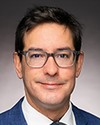
Alexis Brunelle-Duceppe Bloc Lac-Saint-Jean, QC
Thank you, Mr. Chair.
I would like to pick up on that, but in a different way.
Mr. Jonen and Mr. Yonke, are you presently observing or sensing a disengagement by democracies from the human rights situation in authoritarian regimes around the world?
Political and Strategic Affairs Adviser, As an Individual
Our democracy is disengaging when it comes to authoritarian regimes. Fighting authoritarian regimes requires support. It is mentally, physically and financially draining. It takes all the resources that an organization will have to do it, and it is consistently going against a very hard and direct wall. The rules are constantly changing around you. Is it a depleting fight? It can be, and then you finally get some slow gains going forward.
Look at the belt and road initiative. There was a debt cycle for countries. It was very oppressive, but offering training about how to go in with your eyes wide open, what to look for in agreements and how countries can do developments on their own.... It was one small thing to do. Go from there, looking at how authoritarian regimes can influence media and influence information in the direct space. Finding small wins coming through can make a difference from there.
Founding Member, Demos Kratos
If I can add something, yes, democracy is disengaging from human rights. They are very selective ones.
In places like Belarus, we see political prisoners being released because of democracies engaging in a selective way. We see that today, in Venezuela, political prisoners are being released, even though some of them are going back to prison. However, in places where minerals are being contested and competed for, the human rights agenda is not mentioned in a diplomatic conversation, so it's very selective.
Bloc
Alexis Brunelle-Duceppe Bloc Lac-Saint-Jean, QC
Ms. Coffman Wittes, you spoke earlier about the U.S. Agency for International Development.
Currently, there is worldwide debate about funding for international development. This naturally affects NGOs and human rights organizations, because that is also part of their mandate. International development is a sizable envelope, after all.
We see that Japan has eliminated almost all of its funding. Some European countries have made deep cuts to their budgets.
Canada, for its part, just announced that it will be cutting $2.5 billion over the next three years. In terms of international development funding, Canada will therefore find itself below what it was under the Harper government. On top of that, a new vision of international development directly links trade to international development. That is the Canadian government's new vision.
Isn't this approach cause for concern? Shouldn't we be putting more money into international development instead, to help people understand that it will have an impact even here, in their own country, their own community, their own municipality?
President, National Democratic Institute
Thank you.
As Mr. Majumdar mentioned, NDI is part of a family of organizations. We're affiliated loosely with the Democratic Party. We have counterparts affiliated with the Republican Party, with the labour movement and with the U.S. Chamber of Commerce. I think that it reflects a political coalition of labour and business, along with political parties, demonstrating the value of democracy around the world for the health of our own society.
I would never suggest that the funding for this work should come only from governments. However, I do want to associate myself with Ivo's comments that the funding governments provide for democracy support is pennies for the impact as compared to global health, economic development or, yes, trade. If you're talking about bang for buck, in crude terms, democracy support is some of the most effective assistance money you can spend, and it does not cost billions of dollars.
Bloc
Alexis Brunelle-Duceppe Bloc Lac-Saint-Jean, QC
I see that I still have some time.
Mr. Balinov, can international exchanges with different parliamentarians really influence our counterparts from regimes that are not necessarily democratic? Do they really have an influence? Does it lead to action, in your opinion? In short, should we keep these channels of communication open?
Executive Director, Programs, Parliamentary Centre
Very quickly, it does. In fact, we have witnessed from our work—and I think it has been going on since the beginning of the 1990s internationally—that there are conversations and exchanges possible at the parliamentary level, which are not necessarily always possible at the executive level. Parliamentarians do find common ground.
I mentioned the international network of Women Legislators in Defence, Security and Peace. I witnessed a meeting of members from countries who have profound disagreements at the political level. The members of the network found common ground within minutes and shared examples with each other on how they managed to advance, in their own parliament, women's roles in security and defence. That's how powerful it can be, and it costs very little.
Liberal
The Chair Liberal Fayçal El-Khoury
Thank you.
Now I would like to invite Madam Vandenbeld to take the floor for five minutes, please.