Thank you.
Mr. Sharifi, you also said that these networks are fragmented and underfunded. What would you see as something that the international community could do?

Evidence of meeting #17 for Subcommittee on International Human Rights in the 45th Parliament, 1st session. (The original version is on Parliament’s site, as are the minutes.) The winning word was women.
A recording is available from Parliament.
Liberal

Anita Vandenbeld Liberal Ottawa West—Nepean, ON
Thank you.
Mr. Sharifi, you also said that these networks are fragmented and underfunded. What would you see as something that the international community could do?
President, ArtLords, As an Individual
Honourable member, thank you for this question.
I look at it in two ways.
First, with the current ecosystem and the limited resources, I think Canada has the moral courage and it has to take that step. Canada should not be that conservative with its values, principles and morals. This is the time for Canada to lead.
I'm talking about this because the people who first lost everything were the human rights defenders in Afghanistan, Nepal, Sri Lanka and Kenya, the places where we work right now. These are the good people of those countries. These are the cream of society, honourable member. As you know, these people stand up to their governments. They wanted to work for ArtLords, Equitas or the Government of Canada, and the moment the funding cuts came in, the first people who lost jobs were not people sitting in Montreal or B.C or Ottawa. The people in Nairobi, Kabul and Tunis lost their jobs. It's very important that we have a place, a system, a mechanism, that can sustain the supports for those people. These supports are not for millions of dollars.
The second thing is compliance versus impact. We are a national organization with donors. Especially, the Government of Canada is stressing compliance. It's very important, but for a small organization in Nepal or Sri Lanka, it's very difficult to get those resources, the funding and those applications. I think we have to find a way. The system is broken right now. This is the time for all of us to rethink a dignified way of seeing and respecting all those human rights defenders in all those places, and Canada can do that.
Liberal
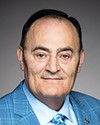
The Chair Liberal Fayçal El-Khoury
Thank you.
Thank you, Madame Vandenbeld.
I now invite Mr. Brunelle‑Duceppe to take the floor for seven minutes.
Bloc
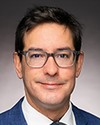
Alexis Brunelle-Duceppe Bloc Lac-Saint-Jean, QC
Thank you, Mr. Chair.
I would like to thank all the witnesses for taking part in this important study. We are truly grateful. We have a superb panel of witnesses today, with Ms. McCarthy and Mr. Ducos.
Ms. McCarthy, you said that Canada needs to reclaim the leadership it once held. In fact, what I understand from your remarks is that Canada previously had this leadership and now has an opportunity to reclaim it when it comes to defending human rights defenders.
Over the past year, several highly objective observers have been monitoring the new government's policies. Some observers see significant setbacks. Take, for example, the cuts to the much-discussed budget allocation for international development, which is often used, among other things, to support human rights organizations. The cuts amount to some $2.5 billion, which is somewhat in line with the trend among our allies, such as USAID, Europe and Japan, which has nearly eliminated its budget allocation for international development. Canada is following this trend.
Mr. Carney has travelled abroad extensively, including for bilateral meetings, but has never set foot in Africa for a bilateral meeting. That has not happened.
On top of that, the famed feminist policy has been abandoned. I don’t want to be pessimistic. You are on the committee—we've been following Canada's actions over the past year—and we're a long way from the 0.7% target set by the UN; we even fall short of the OECD average for international development funding.
What is your opinion of the new government’s vision over the past year?
Executive Director, Equitas
Thank you for the question.
Actually, that's a good question for this committee, in a truly international context. These questions are generally arising all over the world. What is currently happening? What does the future hold for protecting human rights and strengthening democratic space and democratic participation?
The setbacks observed in various countries regarding respect for international law are drawing attention. Canada is currently very well positioned to play a role, alongside others, in reflecting on what needs to change at the United Nations and in its decision-making process.
We are here to reflect with all of you and examine, beyond any political positions we may hold, how Canada can humbly play this role to ensure that human rights and these frameworks continue to be upheld.
I think my colleague Mr. Ducos could speak in very concrete terms about the reality that, in our view, human rights organizations and defenders are facing—and the reasons why they are facing it.
In 10 years, looking back, we will see what Canada has done, how it has literally supported those defending rights in their communities and through networks with other countries, as we heard earlier. This rallying of forces is important right now.
Senior Manager, Impact and Accountability, Equitas
What we’re hearing from our partners and human rights defenders in the various communities we work in is that budget cuts are hurting local organizations—for example, in Kenya, Tanzania, and Sri Lanka—but these people are adapting their work. They aren’t shutting down yet, but they’re adjusting their approach. Strategies are shifting. Perhaps the number of people approached within the community is altered.
I am talking about very concrete experiences and concrete findings we gathered just two months ago in Kenya. Despite the lack of concrete resources, human rights defenders continue to carry out important work in their respective contexts. What must be emphasized above all is that the changes they are bringing about are of great importance in the local context, whether in terms of women’s right to inheritance and access to property titles, or their political or civic participation in community-level decision-making spaces.
This is where, at minimal cost, we can have a profound impact that will subsequently extend to broader civic or democratic spheres. In my opinion, the community level is where we truly achieve concrete, promising results.
Just like other countries, Canada should continue to support initiatives in this vein, which mobilize people and help maintain this last line of defence for democracy at the local level.
Bloc
Alexis Brunelle-Duceppe Bloc Lac-Saint-Jean, QC
I had the opportunity to go on a mission to Kenya, where I met with human rights organizations. What they accomplish with the limited resources they have is beyond impressive. If they can do so much with so little, imagine what they could achieve if they had more. That's the idea.
Mr. Bah, you spoke about funding, your current situation, and your needs. We thank you for your testimony.
Ms. Habibyar, we would also like to hear from you.
I would still like to focus on funding. You are here and you've spoken about it. I would like to know to what extent increased funding would make a difference.
In your opinion, how many people are rallying behind this call for increased funding? What difference would this increase make?
Human Rights Advocate, Resilient Societies
Thank you for the question.
In the current context, my answers will revolve around four key areas, primarily regarding funding and the role Canada can play in funding international co-operation missions.
First, Canada can create and strengthen funds for professional programs, for example. Paid internships for human rights defenders in exile come to mind. I experienced this first-hand when I had the opportunity to work for Equitas last year as a communications assistant, as part of the international human rights training program. I myself benefited from such internships in 2023. It's a concrete example.
Grants could also be awarded to these exiled individuals. They could then take advantage of programs offered by organizations specializing in human rights, such as Equitas, Amnesty International and many others, which they can approach to secure internships. That is my first proposal.
The other proposal is to accelerate knowledge and skills acquisition. I arrived here in 2023 and submitted my master’s thesis in legal and political sciences, but I still haven’t received a response. The goal is to create a certification pathway for human rights-related professions in the community or public policy sectors. Doing so would allow us to apply the experience we’ve gained at the national or Canadian level on the ground. The key message is that we are not starting from scratch; we are adapting our systems and our experience to the Canadian context.
Liberal
The Chair Liberal Fayçal El-Khoury
Thank you.
We're about a minute over, but you can continue your answer later.
I invite Mr. Zuberi to take the floor for five minutes.
Liberal
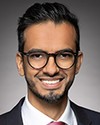
Sameer Zuberi Liberal Pierrefonds—Dollard, QC
Thank you, Mr. Chair.
I thank all the witnesses for being here.
I'll start with Equitas.
I know that you do education and you support civil society. Can you speak a bit more about how you build capacity through education in terms of your work?
Executive Director, Equitas
Absolutely. In fact, there are thousands of individuals from over 150 countries in the world who have gone through programming over the past four decades. That participation in several weeks of training with others and learning from others has not just a ripple effect, but a profound effect when they go back home to their communities.
I could speak of some very specific examples. Gerardo can speak a bit more about the concrete data and the number of people who are touched directly.
Essentially, we have defenders who have talked about the knowledge they gained from others that then goes back and multiplies not just for dozens of young people but hundreds, who then understand their rights more and are able to claim them and then to secure decisions that have been made in their favour in their respective communities.
We have as well, for example, other defenders who have talked about how they've transformed work practices not only in their own organizations but in coalitions of organizations, so they're much more inclusive. They're thinking about human rights from different perspectives. For example, they look at disabled people who are struggling for their rights but understanding it with perhaps a gender lens, depending on where the person sits economically. This has widened the impact of their ability to mobilize people and—most important—decision-makers.
There is also the huge impact of the ability of defenders going through the type of programming that's very participatory and anchored in their knowledge, the knowledge of others and the instruments themselves, as well as in their capacity to discuss with decision-makers in their own countries, no matter the context. In some of the most hostile and the most difficult contexts, we did research on human rights defenders and educators in conflict areas. We can share the results of that, but it confirmed the importance and the effect that in the midst of conflict, when people are looking for food and security, they are also looking to secure their rights, which can be very effective in terms of securing that safety around them.
Liberal
Sameer Zuberi Liberal Pierrefonds—Dollard, QC
How has the funding reduction or the uncertainty around funding in your environment impacted civil society organizations globally? How would you characterize that?
This is for Monsieur Ducos, please, or Ms. McCarthy.
Senior Manager, Impact and Accountability, Equitas
The cuts or the reduction in financing to support human rights education programs has an impact on how many people can participate in our training. For example, in Canada, we normally receive around 100 participants each year. Last year, we did the 43rd session of the international human rights training program. Given the restrictions in funding, we had to reduce the number of participants a bit. This has a counter ripple effect when they get back to their communities.
In other contexts—for example, in East Africa and West Africa—the reduction in funding will stifle the capacity to give bursaries to the defenders to implement local actions in their communities. For example, they may not be able to organize a community forum or an initiative to mobilize community members to engage in meaningful ways, with not only the defenders but also the duty bearers, to bring to the forefront the more relevant issues that affect them. This creates a vacuum, specifically for women and other marginalized groups in different communities, when they don't have the necessary resources to implement these kinds of initiatives.
These initiatives don't cost much. With very limited funding of $1,500, it's amazing what a small community can do in terms of engagement, but cutting $1,500 has an impact. It creates a void.
Executive Director, Equitas
For the organizations we're talking about—and many are being represented—the cuts did not stop their working capacity; it is limited, but their determination continues. We saw this throughout the year, when there were huge cuts by not only the U.S. but also other donor countries. It had huge impacts on their abilities, but it didn't stop the work.
Why, then, can't Canada reverse the trend or create a new trend to make sure it lends the proper support in this critical moment, instead of following a trend that, unfortunately, has dire impacts on the democratic fabric of these communities?
Liberal
The Chair Liberal Fayçal El-Khoury
Thank you, Mr. Zuberi.
I now invite Madame Kronis to take the floor for five minutes, please.
Conservative

Tamara Kronis Conservative Nanaimo—Ladysmith, BC
Thank you, Mr. Chair.
I thank all the witnesses for sharing their experiences with us.
Ms. Hassan, you focused your efforts on women's rights in the Middle East and North Africa. Could you share with us the state of those rights in these regions. What are the biggest barriers that women are still facing? Are there likely to be any easy wins or advances that will benefit us?
Head of the Board, Nazra for Feminist Studies, As an Individual
The situation for women in the Middle East is a complicated issue, and it's multi-layered. If we look at the countries that have some stability—and the definition of stability is also complicated in this region—we can see how some of the laws and regulations have been advanced, but without mechanisms to implement them. We can see now that we have a progressive law for combatting violence against women in Tunisia, for example. It is written, but it's not implemented on the ground, based on different things. There are also attacks on women human rights defenders in countries like Tunisia and on the one who created this law in Tunisia while she was a parliamentarian.
We have a system of countries that mainly have wars and conflicts, and we can see how sexual violence, rape and gang rape have not only increased but also been weapons of war, as in what's happening in Sudan. What's happening in Sudan is one of the most outrageous things happening to women without, of course, local mechanisms. The international system is failing the Sudanese women big time.
We can also see other countries that have had some opening, such as the gulf countries. They did some of the opening in certain things, but the holistic approach is still not implemented.
We can see that the economic participation of women is one of the main barriers for women in legal systems, especially in private life and in combatting violence against women. However, we can see some advancement in the public sphere. Some countries, like Egypt, now have more female judges, but at the same time, we still don't have some of the laws and regulations that protect women. How to bring women's issues to the status of not being more tokenism than full empowerment is a hard thing. With regard to the conflict, actual violence, rape and gang rape are the most outrageous things that women from this region have been facing.
Conservative
Tamara Kronis Conservative Nanaimo—Ladysmith, BC
I'm wondering how the 2011 revolution in Egypt galvanized you and inspired you to think about what would be possible in terms of change.
Head of the Board, Nazra for Feminist Studies, As an Individual
What has been happening in Egypt—and I'm so proud that I was part of this process for years.... I think, in Egypt especially, women's movements and feminist movements have capitalized on these changes in different things. We have been facing outrageous attacks personally and on the level of the women human rights defenders. There is also the spread of gang rape and sexual violence, in addition to other restrictions. However, at the same time, we have been working deeply on changing the constitution, having new laws to combat and criminalize sexual harassment, having women judges in Egypt, and having more women in the police and other things. Because of that, I think these intersectional and transnational movements and groups are giving space for each other to share experiences and to see how some generations have been trying to open spaces so that others can build on them, on intergenerational and open-minded processes.
Liberal
The Chair Liberal Fayçal El-Khoury
Thank you, Ms. Kronis.
I invite Mr. Brunelle‑Duceppe to take the floor for five minutes.
Bloc
Alexis Brunelle-Duceppe Bloc Lac-Saint-Jean, QC
Thank you, Mr. Chair.
Ms. Habibyar, I had the opportunity to be part of a small all-party committee that managed to smuggle out former Afghan women MPs and their families and to obtain documents for them. It was a long-term effort. For a year, we worked in secret and managed to bring over women who had been involved in public life in Afghanistan. There's probably no worse nightmare for a Taliban than a female member of Parliament in Afghanistan.
What is different about being a human rights defender when you are a woman? Maybe people aren't aware of this difference, but I think you're in a good position to tell the committee about it.
Human Rights Advocate, Resilient Societies
Being a woman rights defender in Afghanistan is extremely dangerous. Women protesters face having blazing guns in their faces, but they still stand and fight for their rights and the rights of the younger generations, who are the younger girls in Afghanistan.
We have to be honest. I agree with Odette that funding has caused a reduction in the scope of many organizations. To be very honest, when the cuts come and support is reduced, it's those people on the ground who suffer, as Omaid mentioned. Right now, civil society and human rights defenders in Afghanistan do not have the right support. They are dying, and civil society is literally dying in Afghanistan. It's important that we support them. There are different mechanisms and ways to do that.
There is so much talk about cuts to development aid by the U.S., but I think it's time we start thinking about a world without American aid. If Canada takes leadership and talks about middle powers in defence and economics or trade, why doesn't it do it to protect civil spaces and civic spaces? It has done so. I mentioned in my remarks that Canada, Germany, the Netherlands and Australia were the four countries that started the prosecution of the Taliban under the violation of CEDAW, the UN convention, at the court of international law. It's important that such coalitions are built for the protection of civic spaces so that the real defenders are protected and their rights are supported.
Women human rights defenders face different dangers and isolation. There are social challenges. There's a fear of stigma. They are called foreign agents and morally deviant. They are threatened and harassed, and it's not only them, but their families as well. Also, economically, they have lost all means of earning an income.
At the end of the day, you have to make a choice to support your family and provide income. If you don't support them, they will suffer greatly.
Bloc
Alexis Brunelle-Duceppe Bloc Lac-Saint-Jean, QC
Thank you.
Ms. Hassan, do you want to add anything to that answer? Are women who defend human rights treated differently from men?
Head of the Board, Nazra for Feminist Studies, As an Individual
Yes, there are multiple differences on different levels. One is how women have been treated by society because of the state's repression. It's really different from how men are treated.
I was prosecuted in Egypt as part of the foreign funding case, and I got one of the charges against me dropped. None of the others, men or other women, got that.
I support women having “irresponsible liberty”. There is something about morals such that they affect women human rights defenders more than men.
Also, there is an effect on their personal life that is different for women than it is for men, because within the system, people can respect men taking outrageous actions more than women.
Bloc
Alexis Brunelle-Duceppe Bloc Lac-Saint-Jean, QC
You said that you received a different sentence than men. Can you give us a concrete example?