Thank you, Mr. Zuberi.
I now invite Mr. Majumdar to take the floor for two minutes, please.

Evidence of meeting #18 for Subcommittee on International Human Rights in the 45th Parliament, 1st session. (The original version is on Parliament’s site, as are the minutes.) The winning word was china.
A recording is available from Parliament.
Liberal
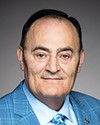
The Chair Liberal Fayçal El-Khoury
Thank you, Mr. Zuberi.
I now invite Mr. Majumdar to take the floor for two minutes, please.
Conservative

Shuv Majumdar Conservative Calgary Heritage, AB
Two minutes doesn't provide enough time, so I'll ask witnesses to provide a submission in writing to respond to my comment.
The transnational repression hearing is something that I've led here for three sessions. It is a mixture of how authoritarians impose their rule across borders in repression. The word “repression” is particularly important to me because it defines in its nature the differentiation between victim and oppressor.
In the democratic world, we have a conflation of these ideas, which has created moral confusion and come at the cost of moral clarity. Tolerance as an idea and our desire to be inclusive have created a world in which everything is included, including the things that are outside of the laws of our country, our sovereignty and the freedoms our people have been promised.
In that context, in the western world at large, when one party wins an election, it's called populism. When another party wins an election, it's called democracy. We have various models of moral equivalency that make it even harder for us to identify an oppressor and an authoritarian when they are imposing their will on the lives of our people, whether they're from Niagara, Halifax, Toronto, Ottawa, Calgary or anywhere else.
It is a growing and disturbing problem that requires strength, fortitude and a total awareness of what has been promised in terms of what our liberties in this country should be. In that sense, the test of moral clarity in our country, as our democracy is as vibrant as it is, is perhaps one of the biggest ones. I think of countries and peoples on the front lines of this—which include the Taiwanese, the Baltic nations and much of the Jewish world—who have had to deal with concepts of transnational repression robustly.
In that vein, I would invite all witnesses to provide some written thoughts and submissions for the benefit of this committee and of this study, which we are just about to close, on how Canada and the western world can confront transnational repression.
Thank you very much.
Liberal
The Chair Liberal Fayçal El-Khoury
Thank you.
If any of the witnesses would like to give any comments, you can write either to the chair or to the clerk please.
Mr. Brunelle-Duceppe.

Alexis Brunelle-Duceppe Bloc Lac-Saint-Jean, QC
Thank you, Mr. Chair.
Mr. Juneau, you produced a very important study. Therefore, you have recommendations for us.
Are any of these recommendations urgent or could any be implemented quickly?
We would be grateful if you could share them with us, in order of priority.
Full Professor, Public and International Affairs, University of Ottawa, As an Individual
There are several of them. Transparency is first on the list.
In short, transparency is not the only tool to better counter transnational repression, but it is an essential one. In general, it's significantly underutilized in the national security space.
We tend to think of transparency in abstract terms. It's important in a democracy, yes, but it's also a national security tool to combat economic espionage, foreign interference and transnational repression.
Transparency is a tool to communicate with victims, whether they are diaspora groups or other groups. As was mentioned, it would provide them with better information on how to defend themselves. In addition, as was mentioned too briefly, transparency is an element of trust between people and governments. When that trust is too low, threat information is not reported. However, a relationship of trust helps create essential communication channels so that information goes not only from the government to the victims, but also from the victims to the government.
More broadly, while not the only factor, greater transparency helps build a more resilient society. This is essential if we want to better counter not only transnational repression, but also, again, many of the threats that Canada faces today.
Bloc
Alexis Brunelle-Duceppe Bloc Lac-Saint-Jean, QC
Thank you.
I want to thank all the witnesses. It was a high-flying panel. Honestly, I think that we were spoiled today. I absolutely want to thank them for participating in this extremely important study. I think our analysts have something to sink their teeth into when they draft the report.
I sincerely thank all those who have travelled here today to join us. We are very pleased to have welcomed you to the committee.
Have a good day.
Liberal
The Chair Liberal Fayçal El-Khoury
Thank you, Mr. Brunelle‑Duceppe.
Thank you to all the witnesses for their testimony today on the global impact of transnational repression.
On behalf of myself, all members of the subcommittee and all people working here—the staff and interpreters—we'd like to thank you for your presence and ideas and for your good answers to our questions. If you have anything to add, please do not hesitate to write either to me or to the clerk.
We'll suspend the meeting for five minutes.
[Proceedings continue in camera]