Evidence of meeting #30 for Justice and Human Rights in the 45th Parliament, 1st session. (The original version is on Parliament’s site, as are the minutes.) The winning word was majority.

A recording is available from Parliament.

On the agenda

Members speaking

Before the committee

Sean Fraser  Minister of Justice and Attorney General of Canada

Sean Fraser Liberal Central Nova, NS

I think it's possible, but to the extent that you think that leaves a space for abuse in the future, that's the kind of thing for which it would be appropriate to propose suggestions to the minister responsible for the legislation. However, it would be essential that we expect that the information that could be discoverable under part 1 of the bill, through the process I discussed with Mr. Baber, actually exists among the service providers who hold the information on networks that are being used to traffic and elicit criminal behaviour.

11:50 a.m.

Conservative

Andrew Lawton Conservative Elgin—St. Thomas—London South, ON

The indiscriminate retention of data—

Anju Dhillon Liberal Dorval—Lachine—LaSalle, QC

I'm sorry. I have a point of order, Chair.

That is not part of the minister's mandate.

11:50 a.m.

Conservative

Andrew Lawton Conservative Elgin—St. Thomas—London South, ON

May I make a submission on this, Mr. Chair?

The minister himself touted this very bill in his opening statements, so for his colleague to try to bail him out because he doesn't like the questions, potentially, I think is entirely inappropriate.

11:50 a.m.

Conservative

Roman Baber Conservative York Centre, ON

Also, his ministry—

The Chair Liberal James Maloney

Mr. Baber, this isn't just random speaking when you feel the urge, but thank you.

Mr. Lawton, go ahead.

11:50 a.m.

Conservative

Andrew Lawton Conservative Elgin—St. Thomas—London South, ON

What we're talking about here is not only the indiscriminate retention of the data that all Canadians hold...but also forcing companies to build back doors into it. Can you guarantee that encrypted communications will be protected?

Sean Fraser Liberal Central Nova, NS

As Minister Anandasangaree has discussed in public, the bill is not designed to give access to encrypted materials. It's designed to provide the information about which account is using a network and the subscriber information—again, with the authority of a court—that could be disclosed as part of an ongoing criminal investigation.

I don't share your concern, but conversations are obviously ongoing between parliamentarians and private sector entities who've raised similar issues. I would encourage you and others to continue that conversation with the public safety minister.

The Chair Liberal James Maloney

Thank you, Mr. Lawton.

Thank you, Minister.

Ms. Begum, I go over to you for five minutes.

Doly Begum Liberal Scarborough Southwest, ON

Thank you very much, Chair.

Good morning, colleagues. It's great to be part of the justice committee. It's my first time joining.

Thank you very much, Minister, for being here. One thing I hear in my community is an increasing concern about deepfakes and, specifically, deepfake sexual imagery and online exploitation. In fact, I've heard from constituents who speak about online violence. I know you spoke a bit about Bill C-16 already. How is Bill C-16 helping modernize Canada's laws to address these evolving harms?

Sean Fraser Liberal Central Nova, NS

Thank you very much.

Before I begin, let me, for the first time on the record, congratulate you on joining the House of Commons. It's a remarkable achievement, and we're thrilled to have you as a colleague in the House.

Maybe before I deal with the specific legislation, I'll just say that the world evolves, and, as the world evolves, crime evolves. Increasingly you are seeing new tools deployed to commit criminal acts or morally culpable acts that our criminal law has not yet caught up to. The example you mentioned, AI deepfakes, presents perhaps the most obvious example in the Canadian legal landscape.

In my home province, just in the last month or two, we've seen a judge draw specific attention, when rendering their decision, to the fact that the behaviour, while morally reprehensible, did not constitute a criminal act, because the use of AI to create a deepfake did not constitute an “intimate image” as defined by the Criminal Code. When you see very clear injustice playing out in terms of a person's likeness being used without their consent to create an image in an intimate scenario, obviously it demands action. Bill C-16 fills this gap, and it does so by scoping in intimate images that would be considered illicit for the purpose of the Criminal Code but for the use of artificial intelligence.

There are other examples in the bill as well. The modernization of criminal harassment is a good example. We increasingly see harassment being carried out with electronic devices—with the ability to track a person by using GPS built into their phone, for example, among other things—along with a shift to the nature of the standard that's actually deployed to ensure that it can be more easily prosecuted.

I think we should be mindful that life in Canada and crime in Canada are not static. As the world changes, so too we must change; otherwise, we'll be left behind.

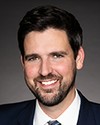
Doly Begum Liberal Scarborough Southwest, ON

Thank you very much. I think this is welcome news to a lot of folks, especially because online violence has increased as well and, as you spoke about, evolved into different types of violence.

Minister, many survivors and advocacy organizations have called for and welcomed the trauma-informed approach reflected in Bill C-16 as well. Could you speak about the legislation and how it would improve supports and protections for victims, specifically?

Sean Fraser Liberal Central Nova, NS

Certainly. Supports and protections are part of it, but the rules and outcomes are important as well.

When I think about some of the supports and protections that we want to put in place, the changes that we're making to the Victims Bill of Rights are among the first things that come to mind: making sure a person understands that, if they need a testimonial aid to participate in the trial, they should be entitled to one; making sure a person proactively receives information about what to expect in the process, knowing that there is a space for their voice through victims impact statements, through statements that they or their family can make at parole hearings, and through other information they should be receiving throughout the course of the trial. We can make the process better supported and, often, that's informed by those who have experience in dealing with cases involving trauma.

Separate from that, we should recognize that there are rules in place. You drew attention to one that was insufficient to deal with a very traumatic experience, and we need to change it so that we can catch up to the modern understanding of what can be a trauma-related experience.

I should take this opportunity as well to mention that, of all the many different crimes that exist in the world, sexual crimes hold a particular status when it comes to the trauma that impacts a victim when their bodily integrity has been violated. By ensuring that we move forward, not just by redefining “sexual crimes” in Canada but also by addressing challenges related to delays that have been leading to the routine throwing out of far too many cases—nearly 10,000 that were reported publicly—we know that we can deliver a better sense of justice.

It just never felt like justice, to me, to talk to someone who had been through a sexual assault and to hear them say that they never got their conclusion in court and, in some instances, were forced to live in the same community as the assailant. That doesn't feel like justice, and we can improve upon that.

The Chair Liberal James Maloney

Thank you, Ms. Begum. That's the end of your time.

We'll suspend for a couple of minutes, then we'll start with the second hour.

The Chair Liberal James Maloney

I'd like to call the meeting back to order, please.

Welcome.

This is the second hour of our study of the main estimates for 2026-27 of the Department of Justice. We still have the Minister of Justice and Attorney General of Canada present, along with the department officials. Thank you for staying.

We will have an opening statement from the minister, if he wishes, followed by questions from the members of the committee.

We need to reserve a few minutes at the end to vote on the 12 items under the Department of Justice. Please remember that we have 12 items to vote on in the end.

Minister, I don't know if you have any further opening remarks. Perhaps we'll jump right into questions.

Sean Fraser Liberal Central Nova, NS

I know Mr. Lawton is very excited to hear me talk about the details of the main estimates for 10 minutes.

No, Mr. Chair, I'm fine. We can go right back to questions.

The Chair Liberal James Maloney

I was prepared to give you extra time, actually.

A voice

Oh, oh!

Sean Fraser Liberal Central Nova, NS

Okay, in that case....

The Chair Liberal James Maloney

We'll jump right into questions, then.

We will start with Mr. Baber for six minutes.

12:05 p.m.

Conservative

Roman Baber Conservative York Centre, ON

Attorney General, your government and you yourself often talk about the need to combat anti-Semitism.

I represent one of the most Jewish ridings in the country. Since the passage of Bill C-9 in the House of Commons, there have been at least five shootings at Toronto synagogues. Shootings at a place of worship are already illegal, but we don't have an absence-of-law problem; unfortunately, we have a law enforcement problem.

Would you agree with me that when the Prime Minister is on the campaign trail and falsely alleges that Israel is committing genocide, he fuels hatred against Canada's Jews?

Sean Fraser Liberal Central Nova, NS

I don't think it's appropriate to suggest that any one political actor is responsible for anti-Semitism or is fomenting anti-Semitism in this country. I would forcefully disagree that the Prime Minister is among any Canadians who would be on a list of those seeking to do so.

My own view is that it is a complex but very important social issue. Everyone, regardless of which god you pray to, deserves to have the opportunity to practise their faith freely in this country. The answer to your question is no.

We don't want to dismiss the extraordinary importance of anti-Semitism and the need to do more, both in advancing new laws and by increasing the ability of law enforcement to do the work that they've been tasked with for years.

12:05 p.m.

Conservative

Roman Baber Conservative York Centre, ON

Minister, we don't need Bill C-9 to agree that incitement to violence is criminal conduct. The word “intifada” literally translates as “violent revolt”. It's not peaceful resistance. When someone chants for “intifada” in North York or yells that an intifada revolution is the only solution and, in other words, incites violence, should that not be an arrestable offence?

Sean Fraser Liberal Central Nova, NS

The details of any given set of facts are going to be important when you're making a legal analysis.

In those acute instances, I think it's also important that we leave it to law enforcement and prosecutors to investigate and to prosecute. I don't think it's helpful for a sitting politician—the Attorney General in particular—to be suggesting what outcome may flow from a given set of facts on the ground.

12:10 p.m.

Conservative

Roman Baber Conservative York Centre, ON

Attorney General, we engage in the application of facts in law and we engage in these questions every day of the week, and that's what's happening in my riding in north Toronto, so I'd like to take exception to what you're saying.

The chant for intifada has been deemed criminal in the United Kingdom, in Germany and in many gulf states. I think it's outrageous that while we all agree that the definition of intifada is not peaceful resistance but violent resistance, somehow the justice minister has difficulty saying that incitement to violence, even though it cites that word, should not be an arrestable offence.

I'll give you another chance.