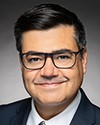
Evidence of meeting #4 for Natural Resources in the 45th Parliament, 1st session. (The original version is on Parliament’s site, as are the minutes.) The winning word was mining.

A recording is available from Parliament.

On the agenda

Members speaking

Before the committee

Cataford  Chief Executive Officer, Champion Iron
Mullally  Head of External Relations and Social Performance, Newmont Canada, Newmont Corporation
Ulansky  President and CEO, Cantex Mine Development Corp.
Singh  President and Chief Executive Officer, Western Copper and Gold

The Chair Liberal Terry Duguid

Good morning, colleagues. I'm calling this meeting to order.

Happy Thursday. It's a short week this week, so I hope you get back to your communities safe and sound, today or tomorrow, to reconnect.

Welcome to meeting 4 of the Standing Committee on Natural Resources. I would like to acknowledge that we are meeting on the unceded territory of the Algonquin Anishinabe nation.

Welcome to new member Dean Allison.

It's great to see you back, Mr. Allison, and it's good to see Mr. Rowe and others back as well.

Today's meeting is taking place in a hybrid format, pursuant to the Standing Orders. Members are attending in person in the room and remotely using the Zoom application. I would ask that all in-person participants consult the guidelines written on the cards on the table. These measures are in place to help prevent audio and feedback incidents and to protect the health and safety of all participants, especially our amazing interpreters. You will also notice a QR code on the card, which links to a short awareness video.

I have just a few comments for the benefit of witnesses and members. Please wait until I recognize you by name before speaking. For those participating by video conference, click on the microphone icon to activate your mic and please mute yourself when you are not speaking. We have one person on Zoom today. At the bottom of your screen, you can select the appropriate channel for interpretation—floor, English or French. For those in the room, you can use the earpiece and select the desired channel.

This is a reminder that all comments should be addressed through the chair. For members in the room, if you wish to speak, please raise your hand. For members on Zoom, please use the “raise hand” function. The clerk and I will manage the speaking order as best we can. We appreciate your patience and understanding. Particularly for our Zoom friends, do put your hand up when you would like to address us. The clerk will give me an elbow, because sometimes we're not looking at the screen.

Colleagues, we have a bit of business that we have to do. We have to do it in public. You will recall that we had discussed travel on this important critical minerals study, to get down to the front and see what's happening on the ground. We had agreement at the last meeting, but given that the break week coming up has really come upon us, we don't have the appropriate approvals. The proposal is to put that off to the following break week, which is Remembrance week. Of course, Remembrance Day is November 11. The rest of the week we will be in our communities or elsewhere.

I understand that we will need a motion after some discussion to refer this back to the clerk to work out the logistics. I know that they will be open to our feedback.

To our witnesses, we will have to ask for your patience for now. We will get to you very shortly. You can see how the sausage is made, as they say.

Monsieur Simard.

Mario Simard Bloc Jonquière, QC

I'm sorry to interrupt, Mr. Chair.

I'm very pleased with the work you're doing, but I think we should have this discussion in our second hour.

I would like to hear the witnesses now. In fact, I think you'll find consensus on this, so let's not waste too much time.

If you don't mind, I move that we proceed immediately to the witnesses' remarks.

The Chair Liberal Terry Duguid

We can if it's the pleasure of the committee. I think we could have dealt with this, but if it's the will of the committee, so be it.

11:05 a.m.

Conservative

Corey Tochor Conservative Saskatoon—University, SK

Yes. I would agree with Mario's opposition on this full-heartedly. The Conservatives support it.

The Chair Liberal Terry Duguid

Colleagues, the liaison committee meets at 1:30. We wanted to give them some notice, some opportunity, and this is a rather simple matter.

Mario Simard Bloc Jonquière, QC

I understand.

Can we be quick about it?

I think we can all agree that time has flown by too quickly. We wanted this trip to be considered, but it should be held during a break week since that's simpler for everyone.

I think you'll find consensus to put the trip off until the next break week.

If everyone agrees, we could settle this very quickly.

The Chair Liberal Terry Duguid

Okay.

Mr. Guay, you have the floor.

Claude Guay Liberal LaSalle—Émard—Verdun, QC

I agree, as long as we're not travelling on Remembrance Day.

The Chair Liberal Terry Duguid

Okay.

11:05 a.m.

Conservative

Richard Martel Conservative Chicoutimi—Le Fjord, QC

Pardon me.

You just mentioned Remembrance Day. Obviously, we can't travel on that day. We'll be pretty busy.

The Chair Liberal Terry Duguid

No, that's correct.

Colleagues, I'm feeling that the will of the room is that we refer this to the clerk, that it be put back to the following break week and that we will be taking input from you, from your whips and from all of those who are involved, to put together a proper travel budget. We want this trip to be successful.

Monsieur Guay, you move that this be forwarded to the clerk—

Claude Guay Liberal LaSalle—Émard—Verdun, QC

I do.

The Chair Liberal Terry Duguid

—and that the parties can....

Claude Guay Liberal LaSalle—Émard—Verdun, QC

—and that we consider the next non-sitting week.

11:10 a.m.

Conservative

Richard Martel Conservative Chicoutimi—Le Fjord, QC

Pardon me.

The House sits the following week.

Right?

Mario Simard Bloc Jonquière, QC

It would be during the next break week, so in November.

11:10 a.m.

Conservative

Richard Martel Conservative Chicoutimi—Le Fjord, QC

Perfect. Thank you.

The Chair Liberal Terry Duguid

I think the clerk has determined the will of the room.

Pursuant to Standing Order 108(2) and the motion adopted on Thursday, September 18, the committee resumes it's study of development of critical minerals in Canada.

We welcome our witnesses.

Thank you for joining us, everyone.

We have David Cataford, chief executive officer of Champion Iron.

We have John Mullally, head of external relations and social performance, Newmont Corporation.

Also with us is Chad Ulansky, president and CEO of Cantex Mine Development Corporation.

On Zoom, we have Sandeep Singh, president and chief executive officer of Western Copper and Gold.

You will each have five minutes or less for your opening remarks.

We'll start with you, Mr. Cataford. You have the floor.

David Cataford Chief Executive Officer, Champion Iron

Mr. Chair, committee members, thank you for inviting me.

Let me take you to the border of Quebec and Labrador, home to one of Canada's most developed mining regions, the Labrador Trough. This region holds some of the purest iron ore in the world, now recognized on Canada's critical mineral list for its strategic role in decarbonizing the steel industry.

Thanks to hydroelectric power, we produce a high‑purity iron‑ore concentrate and our carbon footprint is one of the lowest in the world.

With up to 80 billion tonnes of resources, the trough has tremendous long-term potential, with current operations and projects that could progress rapidly, such as our Kami project.

Despite these advantages, a gap has developed between Canada's share of the global iron ore market and that of other producing countries, such as Australia. While Australia's resources are lower in quality, it has heavily invested in it's iron ore sector, generating $20 billion annually in taxes and royalties over the past decade.

We believe Canada must act now to unleash the full potential of its high‑purity iron‑ore industry.

Given the quality level of this scarce resource, it is our duty to develop and promote this sector intelligently.

This industry could thrive for generations. However, the greatest challenge we face is the deployment of new mining projects.

Champion's story is a case in point. In 2014, we founded the company with a vision of developing high-purity iron ore projects in the Labrador Trough. We were a small team of three. We restarted operations at the Bloom Lake mine site in 2018. Since then, we've doubled our production. We did it during a global pandemic on time and on budget. Today we are more than 1,300 employees, and we are still growing responsibly and sustainably.

This growth was made possible through creative partnerships. Examples include federal investments in the Port of Sept-Îles in 2014, and Quebec's acquisition of the Pointe-Noire assets in which we're also financial partners.

We are proud to have the Government of Quebec as one of our main shareholders and to have generated some of the biggest returns for Quebec taxpayers.

Since 2018, we have invested close to $2 billion in our project in the Labrador Trough and paid close to a billion dollars in taxes and royalties to the governments of Quebec and Canada.

Our host communities of Fermont and Labrador West have long played a central role in the Canadian mining sector. The people in these communities have acquired decades of expertise in the iron industry. These communities have contributed significantly to local and national economic development.

Our partnerships with indigenous communities are strong and based on mutual respect and trust.

Today we stand before a unique opportunity to fully unlock the Labrador Trough's potential. To seize it, we must establish a critical minerals corridor, which requires strategic investments in infrastructure in the region. Three major infrastructure projects need to be developed in the trough. A new transmission line needs to be built between Churchill Falls and Labrador West. This is essential for the Kami project to proceed and to foster development in the community. Investments in the Société ferroviaire et portuaire de Pointe-Noire are required to continue growing the Port of Sept-Îles, the second-largest port in Canada largely due to high-grade iron ore. We had the opportunity to complete the rail loop in the Labrador Trough, which would allow continuous train circulation and significantly boost capacity and efficiency.

These infrastructure investments will enable our Kami project, which represents a $4-billion investment to create more than 600 quality jobs in the region. We recently formed a partnership with Nippon Steel and Sojitz for the development of the Kami project.

This partnership with Japanese world leaders of the steel industry speaks to the exceptional quality of the resources found in the Labrador Trough and the region's proven capacity to sustainably develop high‑purity iron‑ore mining projects on a large scale.

As we're advancing Kami toward a final investment decision, our vision remains to develop a nation-building project. Kami supports the decarbonization of the global steel industry. It is backed by strategic partners and led by Champion Iron, a company with a proven track record, having delivered multi-billion dollar projects on time and on budget. It has the potential to generate benefits for decades to come for our partners, communities and governments, and could be ready for rapid implementation following a final investment decision.

In a time of economic uncertainty, investing in infrastructure supporting high-purity iron ore projects in the Labrador Trough is key to diversifying markets, increasing exports and creating wealth at home.

Once again, thank you for inviting me to take part in your study.

The Chair Liberal Terry Duguid

Thank you, Mr. Cataford. You're right on time, and it's appreciated by the committee.

Our next witness is John Mullally.

John Mullally Head of External Relations and Social Performance, Newmont Canada, Newmont Corporation

Thank you, Mr. Chair.

Good afternoon, honourable members.

My name is John Mullally. I'm the head of external relations and social performance for Newmont in Canada. It's an honour to present to you today.

Canada, like the world, finds itself in a watershed moment. Global economic uncertainties and geopolitical tensions are reshaping how nations think about resource security and supply chains. Gold prices are at record highs, driven by central bank buying, and copper faces mounting strain as demand for electrification and storage outpaces new discoveries. These dynamics create an extraordinary opportunity for Canada and, in this case, particularly northwestern British Columbia. Newmont believes this region is a world-class mining district. We are committed to shaping its future, in partnership with indigenous nations, government and industry.

For those less familiar with Newmont, we've operated for over 100 years with a long-term perspective in an industry prone to short-term cycles. Our strategy is simple: to be the world's best gold company while diversifying into copper, the key commodity of the next supercycle. That strategy is already taking shape here in Canada. In 2023, our acquisition of Newcrest added the Brucejack and Red Chris mines to our Canadian portfolio. We also hold 50% of Galore Creek, Canada's largest undeveloped copper deposit, in partnership with Teck Resources. Together, these assets position us in a region that holds most of Canada's copper resources, along with significant gold, silver and critical minerals essential to batteries, steelmaking and semiconductors.

What makes the region unique is not only its geology, but its people. The Tahltan and Nisga'a nations bring stewardship of the land, business acumen and vision. Our partnership with the Tahltan Nation at Red Chris is proof of shared decision-making and what that governance can deliver. Red Chris is one of Canada's largest copper mines, with about $600 million in annual supplier spend. More than $100 million of that is with the Tahltan Nation Development Corporation.

Together, we are advancing a technically complex block cave that could extend the mine's life by at least 13 years and increase Canada's copper output by more than 15%. This project is advancing under a consent-based decision-making process between the Tahltan Nation and the Province of B.C. The decision is expected to take place in early 2026. It represents the model of participation and the partnership we believe in that should guide Canada's mining future.

Newmont's commitment to Canada remains steadfast, but unlocking the region's true potential requires targeted action that I would highlight in four key areas.

The first is infrastructure and investment. There are good examples in northwestern British Columbia, such as the Dease Lake Airport, the Port of Stewart, which was recently acquired by the Nisga'a and Tahltan and financed by Newmont, and Highway 37 upgrades, in which National Resources Canada invested $70 million through the critical minerals infrastructure fund. However, much more is needed. Federal investments in roads and transmission upgrades are essential to meet future power demand. The proposed north coast transmission line would unlock critical mineral potential, with indigenous leadership right at the centre.

The second is governance and working with our indigenous partners. We've seen that shared decision-making works. Our experience at Red Chris shows that these frameworks, when indigenous nations are resourced properly to participate meaningfully in permitting and governance.... Federal support for these types of agreements will ensure that indigenous leaders are front and centre in building long-term prosperity in the region. Specifically, we recommend that the federal government join the Province of British Columbia and the Tahltan Nation in what they're referring to as their “foundation agreement”.

The third is talent and training. A strong pipeline of skilled workers is critical. We need to work with indigenous nations, governments and institutions to expand trades and mining-specific training. Hub-and-spoke training centres of excellence in the northwest would help ensure that local communities, especially indigenous youth, are positioned to take on the high-skilled jobs this industry demands.

The final area is federal tax policy. The clean technology manufacturing investment tax credit must recognize copper's critical role. Lowering the critical mineral content threshold from 90% to 50% and including brownfield expansions would make the program directly applicable to copper-gold projects in northwestern British Columbia, thus unlocking significant investment, which would also level the playing field with competing jurisdictions.

In northwestern British Columbia, Canada has a chance to responsibly unlock critical minerals and many operations that are already producing minerals at this time to attract additional incremental investment worth many billions of dollars in investment opportunities, advance reconciliation and protect communities and culture.

This is more than an economic opportunity; it is proof that responsible development, indigenous participation, and environmental stewardship can coexist and thrive. Newmont is committed to being a catalyst for that transformation.

Thank you once again for the opportunity to present today.

The Chair Liberal Terry Duguid

Thank you, Mr. Mullally.

Now we'll move on to you, Mr. Ulansky.

Chad Ulansky President and CEO, Cantex Mine Development Corp.

Thank you to the committee for the invitation to present today.

I'm the president and CEO of Cantex Mine Development Corp. We're a junior exploration company with a project in central Yukon where we've discovered mineralization that is rich in the critical metals zinc and germanium.

The perspective that I bring today is that of a junior explorer. The market capitalizations of junior explorers are relatively insignificant compared to those of the majors. We find nearly all the mines in Canada. As such, we're the foundation of the mining industry.

As I'm sure you're aware, mining is one of the pillars of our economy. It's ranked third at the moment, and it produces about $160 billion per year towards our GDP. Due to a number of coinciding global events—society's green transition, geopolitical tensions with China, armed conflicts around the world and the strained economic relationship with our neighbour to the south—mining in Canada has found itself back in focus. Many are looking to mining to increase its activities to generate more jobs, more tax revenue, and more direct and indirect economic opportunities. A growing number of people, both here and abroad, are realizing that Canada has a wealth of critical metals that could be a reliable, friendly source that operates at the highest environmental, social and governmental standards. This is the situation we find ourselves in: with broad domestic support for advancing critical metal projects and with international allies eager for our resources. However, I feel that there is a very real chance that we will miss this opportunity.

While there are numerous factors that put this opportunity in jeopardy, there are several that I believe could be alleviated through the actions of government. These fall into four broad categories.

First is financing and investment. From a junior perspective, we have small market capitalizations, typically in the tens of millions of dollars, and we do not have producing assets. As such, we are reliant on capital markets to fund our work. These capital markets have not been reliable, and there is often a shortage of capital available for the exploration and development of our projects. In fact, capital investment in mining was lower in 2024 than it was twelve years earlier, in 2012. That's in spite of 33% inflation over that period.

I believe that the government should continue to incentivize investment through the continuation of the critical mineral exploration tax credit. Its been a fantastic program. However, I believe that the government can do more. I would like to see some of our pension funds domestically invest more back into Canada.

The second item is regulations and permitting. At the outset, I'd like to say that I'm in favour of responsible mining. I live in Canada; my family lives here. I have a strong, vested interest in ensuring that we uphold the strongest environmental regulations. However, the ever-lengthening time required to obtain the permits necessary to do everything from low-level exploration right through to mine development is a real hindrance to our industry. Commodity prices are cyclical. Investment has a short-term focus, and the geopolitical environment is rapidly changing. We can't spend 10 years or longer waiting for permits to put projects into production. The credibility of the Canadian mining sector is tarnished due to the glacial pace of our permitting system.

Third, on the first nations front, I'm concerned about the, at times, strained relationship with the first nations. Although there are shining examples of first nations taking a lead role in mining—the Tahltan and Osoyoos first nations in British Columbia and the Cree of northern Quebec—there are many first nations that have yet to benefit and to become involved. With the continued recognition of first nations' right to free, prior and informed consent, both government and industry need to ensure that we have an open and trustworthy relationship with first nations and are able to offer them a real interest in having resources developed in their traditional territories.

Finally, there's infrastructure. Most of Canada is undeveloped; it's uninhabited. Our resources are much more likely to be found in a place with no infrastructure than next to civilization. As such, we need the government's assistance in connecting these deposits to infrastructure, both power and roads. Without infrastructure, they can't be developed.

In summary, I'd like to reiterate my belief in the potential for mining critical metals in Canada. We've a rich, ever-expanding endowment due to the hard work of a skilled workforce from coast to coast to coast. Our nation has turned to us to become a stronger pillar of our economy in these difficult times.

Equally, our allies around the world are turning to us to see whether we can supply the strategic critical metals they've historically sourced from such countries as Russia and China, who are now withholding these metals for competitive and military gain. However, as mentioned, there are a number of challenges. I believe the Government of Canada can continue to expand its leadership in overcoming these obstacles and making the most of this generational opportunity for the benefit of the Canadian mine industry and all Canadians.

The Chair Liberal Terry Duguid

Thank you, Mr. Ulansky.

We'll now go to Mr. Singh on Zoom.

Mr. Singh, you have five minutes.

Sandeep Singh President and Chief Executive Officer, Western Copper and Gold

Thank you, Mr. Chair. Hopefully, you can hear me. If you can't, please let me know. I apologize for what appears to be a disco light above my head but I assure you is not.

Thank you again, Mr. Chair, and thank you to the members of the committee for the invitation to appear today.

I'm Sandeep Singh, president and CEO of Western Copper and Gold. I've spent my entire career in mining. I will start by saying that I am genuinely encouraged by what I'm seeing at the moment. The conversations we're having around mining have shifted. I think we're recognizing as a society its vital role in Canada's future. I'll also mention that the government has taken important steps with the critical minerals infrastructure fund in particular and the Major Projects Office that has just started off. I'm pleased to see that government at all levels, including this committee, is continuing to reconfirm that commitment.

I look forward to sharing our experience regarding the Casino Project in the Yukon—Canada’s largest critical minerals project in terms of annual revenue.

Casino is a great example of how critical minerals development can serve multiple national priorities: provide substantial economic benefits, strengthen domestic supply chains, justify infrastructure investments and bolster Arctic sovereignty.

We are in a global race for critical minerals. I regret to say that the west is behind. Countries are investing enormous sums in securing supply. The one thing Canada has that money cannot buy, unless we allow it, is that we have the mineral endowment itself. We have the resources the world needs and we have the talent required to extract them sustainably. The question isn't whether we can compete: It's whether we can execute and whether we can move fast enough to capitalize on our innate advantages and rise up to the moment.

Our project, the Casino project in the Yukon, demonstrates what's possible when geology, partnerships and policy align. The economic impact of our project is profound. Over its phase one, 27-year mine life, Casino would contribute nearly $61 billion to Canada's GDP, including $51 billion directly in the Yukon, and deliver $19 billion in tax and royalty revenues based on a conservative consensus on long-term commodity prices. As a result, the project has attracted multiple equity investments from Rio Tinto and Mitsubishi Materials, world-class copper groups based in allied G7 countries.

The mineral contribution is equally significant. Casino holds just over five billion pounds of copper reserves, the third largest in North America. At 241 million pounds annually, Casino alone could increase Canada's national copper production by more than 15%. For molybdenum, Casino holds the largest reserve in North America, with the potential to increase Canada's output fivefold. The significant gold content, of over 10 million ounces in reserves, makes the project incredibly resilient for future cyclical downturns in critical minerals. This is a generational mine once permitted and built.

The Yukon and Canada's north have demonstrated exceptional geological potential—the Yukon has 27 out of 34 metals on the critical minerals list in 2025—and yet the region remains vastly underexplored compared with southern jurisdictions. The primary reason is lack of infrastructure. The solution is dual-use infrastructure that serves both industry and communities. In our case, Casino requires 130 megawatts of power to become that generational mine. Yukon's isolated grid relies on rental diesel generators to keep up with the current demand and cannot support this additional load, obviously. Our plan is to produce power at site using LNG, which is our base case in the current environment, but the proposed B.C.-Yukon grid connect—already supported with $40 million in federal CMIF funding, I should mention—would enable Casino to run on clean hydroelectric power while transforming energy access in the region.

I am pleased to relay and suggest that the B.C.-Yukon grid connect has the support of the B.C. and Yukon governments as well as first nations on both sides, and that the proposal appears to be on the short list of projects being considered by the Major Projects Office, at least based on news reports. We believe our project and the grid connect are symbiotic, as without projects like ours as offtakers, it is difficult to justify the infrastructure investment that helps all Yukoners and bolsters Arctic security.

Critical minerals development only succeeds in partnership with indigenous communities.

At Casino, we’ve prioritized relationships with affected Yukon first nations. We’ve signed co-operation agreements, conducted collaborative environmental and traditional knowledge studies, and provided millions in funding to support their participation in the assessment process.

Major projects in the north face complex tripartite assessment processes involving federal, territorial and indigenous decision-makers. Success requires proactive federal coordination to prevent delays from departmental silos, timely Crown consultation with first nations, a clear focus on assessment mandates and adequate resourcing for both assessment bodies and indigenous participation.

Projects like Casino, major by any standard, not just northern standards, would benefit from robust federal coordination mechanisms that ensure appropriate attention and drive accountability across departments.

Mr. Chair, members of the committee, I want to say that Canada's critical minerals opportunity is real.

Casino represents the type of critical minerals project that Canada needs—one that brings infrastructure north, strengthens supply chains and drives sustained northern prosperity.

Thank you.