Your time is up.
Evidence of meeting #17 for Official Languages in the 45th Parliament, 1st session. (The original version is on Parliament’s site, as are the minutes.) The winning word was languages.
A recording is available from Parliament.

Evidence of meeting #17 for Official Languages in the 45th Parliament, 1st session. (The original version is on Parliament’s site, as are the minutes.) The winning word was languages.
A recording is available from Parliament.
Liberal

The Chair Liberal Yvan Baker
Thank you, Ms. Chenette.
I now give the floor to Mr. Beaulieu, who has six minutes.
Bloc

Mario Beaulieu Bloc La Pointe-de-l'Île, QC
Thank you.
At a time when French is more threatened than ever in Quebec—it's the only francophone state in the anglophone sea of Canada and America—in your report, you said you were concerned about Quebec's anglophones.
Why do you systematically favour anglophones in Quebec?
Commissioner of Official Languages, Office of the Commissioner of Official Languages
I don't systematically favour anglophones in Quebec. I have always favoured both official language minority communities and—
Bloc
Mario Beaulieu Bloc La Pointe-de-l'Île, QC
That amounts to the same thing. As you say, “minority” is defined according to the province. In Quebec, then, that means anglophones.
Commissioner of Official Languages, Office of the Commissioner of Official Languages
The Official Languages Act deals with both official language minority communities. Of course, in Quebec, it's the English-speaking communities that are the minority. In our study on that community, we found that its members wanted to fully participate in the development of Quebec, and that the majority spoke French.
What's important is that it's possible to want to defend—
Bloc
Mario Beaulieu Bloc La Pointe-de-l'Île, QC
The vast majority of young francophones—I think it's 69.8% according to Statistics Canada—speak more English than young anglophones speak French. That percentage is even higher in Montreal. Bilingualism is declining across Canada, except in Quebec, where it's increasing by a lot. For that reason, I don't think the English-speaking communities are that….
Do you agree that French is in decline across Canada, even in Quebec?
Commissioner of Official Languages, Office of the Commissioner of Official Languages
I said it before; I completely agree with you.
Bloc
Mario Beaulieu Bloc La Pointe-de-l'Île, QC
Okay.
However, under the new act that was created by Bill C‑13, the federal government is responsible for protecting French as well. A whole series of sections have also been passed.
Does that change anything? I ask this question because, in your remarks, you keep coming back to the concept of “official language minority”.
Commissioner of Official Languages, Office of the Commissioner of Official Languages
That's the asymmetrical nature of Bill C‑13.
On the one hand, it's said that the purpose of the Official Languages Act is to protect and promote French. On the other hand, the existence of two official language minority communities continues to be recognized.
To also answer the question you asked last time, if I look at the government's current initiatives to implement this aspect of the act, I don't see any programs, any initiatives, but—
Commissioner of Official Languages, Office of the Commissioner of Official Languages
However, that's the kind of initiative that should be discussed between the provinces and the federal government.
Bloc
Mario Beaulieu Bloc La Pointe-de-l'Île, QC
Lawyers who work with francophones outside Quebec believe that the government is violating its own legislation, since under a number of sections of the act, it has to promote French in Quebec as well. However, nothing is being done, and that attitude seems to be very difficult to change.
You systematically intervene. For example, you took action against Quebec's Bill 96.
The government also imposes limits. There are twice as many students in English-speaking CEGEPs as there are anglophones. However, the opposite is true everywhere else in Canada. There are far fewer post-secondary institutions than the declining democratic weight of francophones. You still took action against that.
Commissioner of Official Languages, Office of the Commissioner of Official Languages
No, we didn't take action against Bill 96.
Bloc
Mario Beaulieu Bloc La Pointe-de-l'Île, QC
However, there's a cap for CEGEPs. I'll find it for you.
Let's come back to language obligations.
We talked about the Prime Minister, who doesn't speak much French. There have already been remarks about the Governor General of Canada, who still doesn't speak French.
For 55 years, all the official language commissioners have been issuing the same complaints. It can't be said that progress is really being made. Francophones are increasingly being assimilated.
Do you think it's time for commissioners to speak up more and be more assertive to try to change things?
Commissioner of Official Languages, Office of the Commissioner of Official Languages
The Official Languages Act determines what the commissioners can and cannot do. That's why you're going to have some of those regulations before you in the coming months and weeks; they're going to be instrumental in the implementation of Bill C‑13. I'm thinking in particular of those that relate to part VII, which specifically concerns communities and the promotion and protection of French.
Bloc
Mario Beaulieu Bloc La Pointe-de-l'Île, QC
From what we've seen in the Treasury Board report, it isn't going to make much of a difference. In fact, the same anglophone lobby groups are always consulted when it comes to Quebec.
Going back—
Bloc
Mario Beaulieu Bloc La Pointe-de-l'Île, QC
Okay.
Language obligations were discussed at a recent meeting with officials from the Department of Canadian Heritage. It was noted that those obligations had to be more rigorous, as you yourself noted.
However, we're being told again and again that 95% of bilingual positions are held by people who are functionally bilingual, but that's based on self-assessment.
Is that good enough, in your opinion?
Liberal
Commissioner of Official Languages, Office of the Commissioner of Official Languages
According to the Public Service Commission of Canada, people have to reach certain levels, which are CBC or BBB, and I'm deferring to the commission in terms of the levels that have been set.
Liberal
The Chair Liberal Yvan Baker
Thank you, Mr. Beaulieu.
Members, we are now beginning the second round of questions.
Mr. Dalton, you have five minutes.
December 11th, 2025 / 11:25 a.m.
Conservative
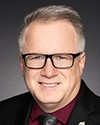
Marc Dalton Conservative Pitt Meadows—Maple Ridge, BC
Thank you very much, Mr. Théberge, for all the years you have spent as Commissioner of Official Languages. I also want to thank you for your work. It's a very important contribution.
You said that the promotion of both official languages has to start at the top. The highest-ranking person is the Prime Minister. That means he has to set an example.
He just replaced Steven Guilbeault, the former minister of Canadian identity and culture, who was responsible for official languages, with Marc Miller. What I find interesting is that when Mr. Miller accepted this position that's very important for us, his first comment was that he was fed up with debates on the decline of French in Canada. In fact, he didn't want to hear about it anymore.
Do you think there has been a decline in the use of French in Canada?
Commissioner of Official Languages, Office of the Commissioner of Official Languages
As I said earlier, if we look to Statistics Canada's figures on the first official language learned, it's clear that this decline has existed in Canada and Quebec since 1970. I think we have to realize that this decline exists and that we have to talk about it. There's a francophone immigration policy that is trying to address this decline. However, the government still has to adopt a fairly ambitious strategy because if we really want to reach the 6.1% target for francophone immigration outside Quebec, there's still a long way to go. Currently, the target is 9% per year. The government is never going to get there.
