Evidence of meeting #17 for Official Languages in the 45th Parliament, 1st session. (The original version is on Parliament’s site, as are the minutes.) The winning word was languages.

A recording is available from Parliament.

On the agenda

Members speaking

Before the committee

Théberge  Commissioner of Official Languages, Office of the Commissioner of Official Languages

11:30 a.m.

Conservative

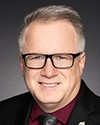
Marc Dalton Conservative Pitt Meadows—Maple Ridge, BC

As you know, I don't have a lot of time.

It seems that you don't exactly agree with him, then: There's a decline and action has to be taken.

There's something interesting here. The fact is that the Prime Minister has entrusted this person with what we see as a great responsibility. A number of Liberal members speak fluent French. I know that Marc Miller speaks French, but appointing such a person to this position shows the attitude of the Liberals and the Prime Minister. There are other examples. There's talk about the number of courses he took in French. I know he speaks French, but he could improve it, just as I could.

In July, he took two French courses. In August, he took one, but in September, it was a matter of hiring someone else to teach him French. For several months now, there hasn't been anyone to give him French courses. However, I don't know if another person has been hired in recent weeks.

That said, there's a noticeable lack of effort. According to Radio-Canada, only 17% of its speeches are in French, which is less than what the other prime ministers were doing.

What message does that send to francophone communities, for example?

The Chair Liberal Yvan Baker

You have 30 seconds.

11:30 a.m.

Commissioner of Official Languages, Office of the Commissioner of Official Languages

Raymond Théberge

I'm going to repeat myself once more. What's important is ensuring that our leaders can communicate in both official languages and take the necessary steps to be able to do so.

That also applies to institutions that support the Prime Minister to ensure that he's able to properly communicate with Canadians in the official language of their choice.

The Chair Liberal Yvan Baker

I now give the floor to Ms. Mingarelli for five minutes.

Giovanna Mingarelli Liberal Prescott—Russell—Cumberland, ON

Thank you, Mr. Chair.

Thank you to the witnesses for being here today.

My first question is about overall compliance with language obligations.

Taking into account your entire mandate, how would you assess the Government of Canada's overall compliance with its obligations to communicate in both official languages?

11:35 a.m.

Commissioner of Official Languages, Office of the Commissioner of Official Languages

Raymond Théberge

It's hard to give the government a grade. As a former professor, I could do so. I think it's important to note that there have been significant changes over the last 18 years. First, the Official Languages Act has been modernized. I think that's a major element. The government is now at the implementation stage, which will show how serious it is.

There was also the official languages action plan, which was there to support official language minority communities. Progress has still been made.

Last year, the government also made it so that supervisors must now reach the CBC level in regions designated bilingual for language of work purposes. That's an important element, too.

However, there are still challenges in terms of compliance. We receive a significant number of complaints every year. There's still a lot of work to be done, particularly when it comes to raising awareness. In 2025, it's surprising that people are still asking us if they have to comply. It's an obligation, and it has been for 50 years. There's still a huge amount of work to be done.

We haven't yet managed to have a truly bilingual public service that operates in both official languages. Of course, there has been progress. As Commissioner, I always have to judge the progress, the small steps. There are home runs, but I'm usually hitting singles. We're hitting singles. We don't have many home runs when it comes to official languages. I think there has been progress, but it's always very slow and time-consuming.

Giovanna Mingarelli Liberal Prescott—Russell—Cumberland, ON

You had identified certain issues during the pandemic. Outside of that abnormal period, do you find that federal institutions are generally fulfilling their obligations?

11:35 a.m.

Commissioner of Official Languages, Office of the Commissioner of Official Languages

Raymond Théberge

Generally speaking, yes, but some nuance is needed, given that there are still a lot of difficulties with achieving compliance, particularly when it comes to language of work, and communications and services to the public. The number of complaints isn't decreasing. It goes down one year, and I tell myself to see whether the trend continues, but immediately afterward, there's an increase in complaints. This year, we're still heading toward a significant number of complaints. There has been an improvement, but there's still room for improvement.

Giovanna Mingarelli Liberal Prescott—Russell—Cumberland, ON

Does the Official Languages Act impose specific skill-related obligations on members, ministers and the Prime Minister, or is it more of an institutional or political agreement?

December 11th, 2025 / 11:35 a.m.

Commissioner of Official Languages, Office of the Commissioner of Official Languages

Raymond Théberge

The act doesn't impose bilingualism on individuals.

Giovanna Mingarelli Liberal Prescott—Russell—Cumberland, ON

Okay.

Finally, is there a clear legal framework that governs the bilingualism of public office holders?

11:35 a.m.

Commissioner of Official Languages, Office of the Commissioner of Official Languages

Giovanna Mingarelli Liberal Prescott—Russell—Cumberland, ON

Not at all?

11:35 a.m.

Commissioner of Official Languages, Office of the Commissioner of Official Languages

Raymond Théberge

No. That has more to do with the institutions.

Giovanna Mingarelli Liberal Prescott—Russell—Cumberland, ON

Thank you.

I'm done.

The Chair Liberal Yvan Baker

Thank you, Ms. Mingarelli.

I now give the floor to Mr. Beaulieu for two and a half minutes.

Mario Beaulieu Bloc La Pointe-de-l'Île, QC

Thank you.

When we talked about language obligations and the requirement for senior officials to know French, one of the issues that was raised was the fact that unilingual anglophones are hired on the condition that they take a French course. Sometimes they take a course for a while, and they forget what they learned because there isn't any follow-up. We've considered that as a potential hiring criterion.

That wasn't passed, but I'd like to hear your thoughts on that.

11:35 a.m.

Commissioner of Official Languages, Office of the Commissioner of Official Languages

Raymond Théberge

Personally, I would fully support that hiring criterion.

There's currently a section in the act that specifies that anyone at the deputy minister or associate deputy minister level who isn't bilingual has to become bilingual. I don't really understand how it's possible to ensure compliance on that front. We have always maintained that bilingualism is essential for all those types of positions.

Mario Beaulieu Bloc La Pointe-de-l'Île, QC

Right now, the current government is really obstructing this. Even here in committee, we were unable to get that proposal adopted.

Can we not see that there is a lack of political will for senior officials to be truly bilingual, to be proficient in French?

11:40 a.m.

Commissioner of Official Languages, Office of the Commissioner of Official Languages

Raymond Théberge

I would like to add a nuance.

Most deputy ministers come from the ranks of assistant deputy ministers. Assistant deputy ministers are usually bilingual. Now, we have to look at the extent to which both official languages are used at work. It's one thing to say that you've reached the required level. By the way, there is no self-assessment. You have to pass exams at the School of Public Service.

At the same time, you can reach a satisfactory level but never use your second language. We know very well that French is always at stake, not English. It is extremely important, to go back to what I was saying earlier, that the message be very forceful.

Is it resistance or is it a matter of the culture that has always been in place?

The Chair Liberal Yvan Baker

Mr. Beaulieu, you have 10 seconds left.

Mario Beaulieu Bloc La Pointe-de-l'Île, QC

I'm happy to hear you say that French is always at stake, because the reports always talk only about bilingualism. It's hard for readers who aren't used to it to understand that.

Thank you.

The Chair Liberal Yvan Baker

Thank you, Mr. Beaulieu.

I now give the floor to Mr. Godin for five minutes.

11:40 a.m.

Conservative

Joël Godin Conservative Portneuf—Jacques-Cartier, QC

Thank you, Mr. Chair.

Commissioner, I heard my Liberal Party colleagues trying to make us swallow the idea that it is not an obligation for an MP, minister or prime minister to be bilingual. That's true, but just because it's not mandatory doesn't mean the Prime Minister shouldn't lead by example. It's a moral obligation.

Do you think the Prime Minister is taking the necessary steps to promote both official languages equitably?

11:40 a.m.

Commissioner of Official Languages, Office of the Commissioner of Official Languages

Raymond Théberge

Speaking of which, Canada wants to host the Sommet de la Francophonie in 2028. The Prime Minister has made gestures toward the francophonie.

Given our current socio-economic and socio-political context, we need to have a say and assert ourselves when it comes to official languages. Obviously, there is a whole set of priorities other than official languages. We have to work very hard to make sure we have a say.

I also think that, while people are not subject to a law, that could be a criterion—