Thank you.
After you were appointed Minister responsible for Official Languages, you made some comments on the debate about the French language, saying that it had become too politicized.
Could you clarify your comments please?

Evidence of meeting #18 for Official Languages in the 45th Parliament, 1st session. (The original version is on Parliament’s site, as are the minutes.) The winning word was languages.
A recording is available from Parliament.
Liberal

Giovanna Mingarelli Liberal Prescott—Russell—Cumberland, ON
Thank you.
After you were appointed Minister responsible for Official Languages, you made some comments on the debate about the French language, saying that it had become too politicized.
Could you clarify your comments please?
Liberal

Marc Miller Liberal Ville-Marie—Le Sud-Ouest—Île-des-Soeurs, QC
I have noticed that—and I think this is the reality—among politicians who care about French, who speak French, who are francophones and francophiles, there is sometimes a competition to see who can best defend French. I think we can all agree that we will all defend the French language. In my case, I will do so until the end of my life. I was raised in this language and my education was entirely in French, except for law. I believe I have proven myself, but in reality, whenever someone speaks out about the reality of this politicization, they are accused of all kinds of wrongdoing.
This is unfortunate, because we fundamentally care about French precisely because it is part of our national identity.
Liberal
Giovanna Mingarelli Liberal Prescott—Russell—Cumberland, ON
Thank you very much.
Just before the Christmas break, we were discussing the importance of celebrating both official languages and all the efforts our colleagues are making to learn both official languages. So, I think that's very important too.
Are you concerned about the future of French?
Liberal
Marc Miller Liberal Ville-Marie—Le Sud-Ouest—Île-des-Soeurs, QC
Immensely. We are in North America, after all. English is used everywhere. The way English can creep into French usage, into everyone's daily lives, can be insidious. Obviously, Quebec is not immune to this, and I would say that francophone minority communities are even less so. It is difficult in these communities to spend one's entire life, or rather one's days, in French. We must therefore be extremely vigilant. I believe that the federal government has an immensely important role to play in ensuring that French continues to thrive in Quebec and outside Quebec.
Liberal
Giovanna Mingarelli Liberal Prescott—Russell—Cumberland, ON
Thank you very much, Minister.
That concludes my remarks, Mr. Chair.
Liberal

The Chair Liberal Yvan Baker
Okay. Thank you, Ms. Mingarelli.
I now give the floor to Mr. Beaulieu for six minutes.
Bloc

Mario Beaulieu Bloc La Pointe-de-l'Île, QC
Thank you, Mr. Chair.
Minister, at the beginning of your term, you said you were tired of the debate on the decline of French, which is overly politicized. You said that, as a Quebecker, you were tired of this debate, which is generally about identity and electioneering.
How do you think people who defend French felt about that?
February 3rd, 2026 / 3:50 p.m.
Liberal
Marc Miller Liberal Ville-Marie—Le Sud-Ouest—Île-des-Soeurs, QC
Mr. Beaulieu, with all due respect, I think you are proving my point.
The reality is that French is under threat. I will defend the French language until the end of my days, as I have said many times before. I believe that people who care deeply about this beautiful official language can come together to work toward improving it in Canada and Quebec. The federal government has a role to play. It is not a role that should be abdicated to another level of government.
Bloc
Mario Beaulieu Bloc La Pointe-de-l'Île, QC
Many people look at this and consider that French is more threatened than ever in Quebec, and these are not necessarily people…. This is not a more identity-based point of view than that of those who have been saying for years that everything is fine and that there is no problem.
Liberal
Marc Miller Liberal Ville-Marie—Le Sud-Ouest—Île-des-Soeurs, QC
I'm not saying everything is fine. I'm definitely not saying everything is fine.
Bloc
Mario Beaulieu Bloc La Pointe-de-l'Île, QC
You said, partly in response to your critics, that you were part of a government that recognized the decline of French across Canada, including in Quebec—you just reaffirmed that—and that amended the Official Languages Act accordingly.
What has your government done? It has had this contact since 2020, and the new law came into force in 2023. Under the Official Languages Act, what has the government done for French in Quebec?
Liberal
Marc Miller Liberal Ville-Marie—Le Sud-Ouest—Île-des-Soeurs, QC
First of all, we imposed more obligations on the use of French. The 2023-28 Action Plan for Official Languages includes an unprecedented $4 billion investment. Mr. Godin mentioned that earlier. I think that's significant. As you know, in my previous role I was the Minister of Immigration. I more than doubled the number of francophone immigrants in communities outside Quebec. That's a big deal. The federal government hasn't always been very supportive. That changed 10 years ago. There's been a lot of investment and an extensive overhaul of the Official Languages Act.
These are very important measures that were put in place under our last government.
Bloc
Mario Beaulieu Bloc La Pointe-de-l'Île, QC
From the start, the Official Languages Act has focused exclusively on protecting English in Quebec. That made no sense, because at the time, Quebeckers were emerging from a period of francophone institutional underfunding, among other things. The OLA maintained the historical privileges of anglophones.
You talked about $4.1 billion—I think you were mistaken and meant to say $4.1 million—but nothing has changed. I analyzed the Action Plan for Official Languages and it contains nothing new for French in Quebec. Most of all the positions go to anglophone lobby groups or the anglophone education system. A very small portion has always gone to French-language instruction in the anglophone education system. However, it's quite minimal overall. The percentages haven't increased. There's nothing new for French in Quebec.
What might that represent in the context of the Official Languages Act? More could be done.
Liberal
Marc Miller Liberal Ville-Marie—Le Sud-Ouest—Île-des-Soeurs, QC
You spoke about the fact that anglophone communities have privileges, but anglophones in Quebec have constitutional rights. These are not privileges. I understand that they might be perceived that way, but that's not at all the case.
I have a duty to represent official language minority communities whether they're anglophone or francophone, and I think I can do both at the same time. To answer your question directly, I think you're going to tell me that this misses the point. However, $150 million in funding for CBC/Radio-Canada and $150 million in funding for Telefilm Canada are not insignificant. Second-language education in Quebec receives $30 million in funding as well.
Bloc
Mario Beaulieu Bloc La Pointe-de-l'Île, QC
Once again, you're stepping outside the context of the Official Languages Act. That's what you always do.
Liberal
Marc Miller Liberal Ville-Marie—Le Sud-Ouest—Île-des-Soeurs, QC
I think we need to look at the big picture, Mr. Beaulieu.
Bloc
Mario Beaulieu Bloc La Pointe-de-l'Île, QC
We see the millions of dollars handed over every year to anglophone lobby groups who label everyone who stands up for French as xenophobes or identitarians, as you have. On the francophone side, not a penny is being spent in Quebec to help francophone organizations. That's what's really unfair.
Moreover, the language rights of anglophones have always been respected. What I mean is that anglophone elementary and secondary schools were over-funded in the beginning. That situation has been corrected. Some may argue that this is still the case, but since 1973, a change has occurred and funding has been more evenly distributed. Anglophone CEGEPs receive twice as much funding as anglophone demographics would warrant. In universities, the rate is three or four times as much. That's what I mean. Anglophone institutions are much more heavily funded.
In the rest of Canada, francophone universities are underfunded in relation to the demographic weight of anglophones. Representatives of francophone colleges who came to testify on the education continuum told us that they didn't have enough schools or that existing schools were dilapidated, among other things. There really is a double standard. In my opinion, the modernized Official Languages Act reflects a number of positions asymmetrically favourable to French in Quebec, yet nothing has changed.
Liberal
The Chair Liberal Yvan Baker
Mr. Beaulieu, I'm sorry, but your time is up.
Minister, I would appreciate a brief response.
Liberal
Marc Miller Liberal Ville-Marie—Le Sud-Ouest—Île-des-Soeurs, QC
I understand that there are no questions, but this is still a discussion, Mr. Chair.
I would note that it might be useful for you, Mr. Beaulieu, to have a breakdown of the amounts paid to francophone organizations specifically, such as—
Bloc
Liberal
Marc Miller Liberal Ville-Marie—Le Sud-Ouest—Île-des-Soeurs, QC
No. There's the fund dedicated to Quebec's anglophone communities for French-language learning, amounting to $6.8 million. There is also support for teaching French as a second language in Quebec. It's significant, at $32 million. In my previous role, I allocated more than $800 million for French-language learning for newcomers. We don't know what happened to that money, but it was specifically for French-language learning, under the Canada-Quebec Agreement on Minority-Language Education.
Liberal
The Chair Liberal Yvan Baker
We have to finish the discussion. We're well over time. I allowed a little more time for the minister to answer, but that's it.
We'll move on to the next member, who is Mr. Dalton.
Mr. Dalton, you have five minutes.
Conservative
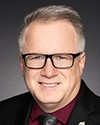
Marc Dalton Conservative Pitt Meadows—Maple Ridge, BC
Good afternoon, minister, and congratulations on your appointment.
Some of my questions require a very brief answer. You can answer them with yes or no. After that, I will have a number of questions to ask.
Raymond Théberge, the former commissioner of official languages, explained that the federal language regime imposes obligations on federal institutions, not on individuals. It is therefore the institutions that must ensure that their official communications, including the Prime Minister's speeches, are accessible in both official languages. As a result, the commissioner stated that the people around the Prime Minister must ensure that he communicates more effectively with Canadians in both official languages.
To your knowledge, has the Prime Minister's Office taken any steps in this direction? Yes or no?
Liberal
Marc Miller Liberal Ville-Marie—Le Sud-Ouest—Île-des-Soeurs, QC
I believe so, especially since many francophone Quebeckers work in his office.
Conservative
Marc Dalton Conservative Pitt Meadows—Maple Ridge, BC
Okay, I'll continue.
Despite the legislative framework, the Commissioner of Official Languages believes that it remains desirable for the Prime Minister to embody this symbol of Canadian identity and linguistic equality in the course of his daily duties.
Do you agree with the commissioner's statement?