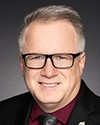
Evidence of meeting #20 for Official Languages in the 45th Parliament, 1st session. (The original version is on Parliament’s site, as are the minutes.) The winning word was burke.

A recording is available from Parliament.

On the agenda

Members speaking

Before the committee

Burke  Lawyer, As an Individual

The Chair Liberal Yvan Baker

I call this meeting to order.

Welcome to the 20th meeting of the Standing Committee on Official Languages.

I would like to inform colleagues, the media and others that taking photos and recording are not permitted while the meeting is in progress.

Pursuant to the order of reference of January 26, 2026, we are meeting today to study the certificate of nomination of Kelly Burke to the position of Commissioner of Official Languages.

I would now like to welcome Ms. Burke.

Ms. Burke, you will have five minutes for your opening remarks. Afterwards, we will proceed with a question and answer period with the committee members.

Colleagues, before I move on to Ms. Burke's presentation, I would just like to tell you that I want to set aside about 10 minutes at the end of our meeting to discuss how we're going to go about this study.

Ms. Burke, the floor is yours for five minutes.

Kelly Burke Lawyer, As an Individual

Thank you, Mr. Chair.

Good afternoon.

Good afternoon, members of the House of Commons Standing Committee on Official Languages.

Thank you for inviting me to testify before you today.

It is an honour and a privilege to be able to present to you my background, my motivations and the vision I wish to put in service of Canada as Commissioner of Official Languages.

The coming into force of the modernized Official Languages Act in June marked a pivotal moment in our country's linguistic history.

This ambitious reform requires strong leadership, a detailed understanding of the issues and a proven ability to work collaboratively with federal institutions, provincial and territorial governments, as well as language communities across the country.

As commissioner, it is important to champion a modern, confident and inclusive bilingualism that strengthens our democracy, empowers every community and ensures Canada's linguistic future thrives for generations. I am ready to take on this responsibility with rigour, determination and a strong sense of duty.

The mission of the Commissioner of Official Languages is essential to ensure the vitality of our linguistic communities in an officially bilingual Canada. Its purpose is to ensure respect for English and French, to protect and strengthen the place of French in Canada and to support the development and vitality of communities.

I'm no stranger to these goals. They have been central to my identity, my career and my commitments for over 25 years.

I was born and raised in a large family deeply rooted in both cultures covered by the Official Languages Act. From generation to generation, my parents, grandparents and great-grandparents—francophone, anglophone and bilingual—passed on a sincere appreciation for both official languages to me.

Long before the act was passed in 1969, my parents deliberately chose to enrol me in French-language schools. I continued my education there from kindergarten to the end of high school in Cornwall, Ontario. This early exposure to the official languages has shaped my intimate understanding of Canadian bilingualism on a daily basis.

This understanding quickly translated into meaningful engagement. Early in my career, I taught French to hundreds of students in immersion schools in several regions of Ontario. On the ground, I observed the fundamental importance of access to quality education in French, both for francophones and for those learning French as a second language.

There was nothing more rewarding for me, as a teacher, than to observe the pride, hope and tremendous gratitude expressed, mostly by anglophone parents whose children were enrolled in my classroom, who were learning to speak French and acquiring the knowledge and skills that would enable them to fully participate in a bilingual Canadian society.

Then, as a lawyer, as assistant deputy minister at the Ministry of Francophone Affairs and as French Language Services Commissioner, I contributed directly to the advancement of language rights in collaboration with anglophone and francophone partners across the country.

These positions enabled me to navigate the country's various language regimes and see to what extent their harmonious co‑existence depends on sustained, structured intergovernmental collaboration focused on concrete results.

They have also enabled me to develop a deep understanding of the challenges faced by minority-language communities as well as the institutional levers required to address them effectively. I am committed to working in partnership with anglophone and francophone communities, governments and institutional actors to strengthen linguistic vitality across the country.

Like you, I'm convinced that our official languages are at the heart of the Canadian identity, our cultural and economic sovereignty, and the national unity we're responsible for preserving.

The rigorous implementation of the modernized Official Languages Act is essential to ensuring the sustainability of this language regime that's like no other in the world.

I aspire to champion a bilingual Canada, where substantive equality between our official languages is fully realized.

I hope I can count on your support and receive the honour of this nomination. If this responsibility is entrusted to me, I will take it up with integrity and commitment, as well as a deep pride in serving Canada and its two official languages.

Thank you.

The Chair Liberal Yvan Baker

Thank you very much, Ms. Burke.

We will now go to several rounds of questions with the members.

Mr. Godin, you have the floor for six minutes.

3:35 p.m.

Conservative

Joël Godin Conservative Portneuf—Jacques-Cartier, QC

Thank you, Mr. Chair.

Thank you for being with us, Ms. Burke.

You know, when appointing someone to a commissioner position, it's important to know what they're made of and what they've done in the past. It's often said that the past is an indication of the future.

First, I'd like you to tell me about your experience over the past five years.

What did you do? I don't want to hear your entire résumé. I want to know what your schedule has been for the past five years.

3:35 p.m.

Lawyer, As an Individual

Kelly Burke

For the past five years, I was first the French Language Services Commissioner of Ontario. As you know, it was during a fairly significant transition, that is to say when the government decided to shut down the French Language Services Commissioner's office after he became an independent officer in the Legislative Assembly.

During that time, I got things back on track and built a great team, which succeeded in fulfilling its mandate as prescribed by the French Language Services Act, that is to say improving services in the province.

Afterwards, I worked at Western University, where I held a senior management position. During my tenure, I also completed intensive studies in mediation. I already had experience in mediation, but I wanted to know more about the concepts. I think that experience will serve me very well, given the commissioner's new mediation powers.

3:40 p.m.

Conservative

Joël Godin Conservative Portneuf—Jacques-Cartier, QC

We'll come back to those new powers for the commissioner that are provided for in the new act.

Ms. Burke, I'd like you to be more specific, because there's an elephant in the room. We know that you stepped down from your position as French Language Services Commissioner. You had lost a bit of autonomy, independence, because the Ontario government had taken different measures, different directions.

How did you step down? What happened? In my opinion, based on my reading of it, you stormed out.

I'm giving you the opportunity to explain to us what happened.

3:40 p.m.

Lawyer, As an Individual

Kelly Burke

As commissioner, I held my position for three years. During that time, I was able to produce and table three reports before the Assembly—

3:40 p.m.

Conservative

Joël Godin Conservative Portneuf—Jacques-Cartier, QC

I'd rather hear you talk about the end of your term.

3:40 p.m.

Lawyer, As an Individual

Kelly Burke

...three annual reports. I was very pleased with those reports. First of all, I had achieved integration—

3:40 p.m.

Conservative

Joël Godin Conservative Portneuf—Jacques-Cartier, QC

Ms. Burke, I'm sorry to interrupt.

I'll be more specific.

How did your term end? What happened? No one knows how the story ended, and you were a key actor there.

Can you tell us what happened? What did you do? What did you not do?

I just want to hear how your story ended as French Language Services Commissioner.

3:40 p.m.

Lawyer, As an Individual

Kelly Burke

The story ended with me finishing my term. I managed to significantly improve French-language services in the province during the pandemic. The time came when I decided that I had accomplished what I needed to accomplish in my term.

3:40 p.m.

Conservative

Joël Godin Conservative Portneuf—Jacques-Cartier, QC

You said that you had come to the end of your term. When you were appointed, was there an end date set out in your agreement?

3:40 p.m.

Lawyer, As an Individual

3:40 p.m.

Conservative

Joël Godin Conservative Portneuf—Jacques-Cartier, QC

So it wasn't the end of the term.

3:40 p.m.

Lawyer, As an Individual

Kelly Burke

It was a decision I made. I stepped down after I successfully integrated the position into the Office of the Ombudsman.

3:40 p.m.

Conservative

Joël Godin Conservative Portneuf—Jacques-Cartier, QC

I understand, Ms. Burke. You decided to step down.

3:40 p.m.

Lawyer, As an Individual

Kelly Burke

The overall circumstances allowed me to leave with my head held high, knowing, of course, that I had fulfilled the mandate.

3:40 p.m.

Conservative

Joël Godin Conservative Portneuf—Jacques-Cartier, QC

Is it safe to say that you stepped down? Did the people in place ask you to quit your job?

3:40 p.m.

Lawyer, As an Individual

Kelly Burke

I won't go into the details. I think I will close the answer by saying that I'm satisfied I did a good job of fulfilling the mandate by remaining very faithful to the French Language Services Act of the province of Ontario.

3:40 p.m.

Conservative

Joël Godin Conservative Portneuf—Jacques-Cartier, QC

You know, Ms. Burke, when we're in a hiring process, we have to know the background of the person in front of us to find out whether they are the best candidate for the position.

You seem to be dodging the question by not saying whether your departure was a voluntary resignation or a planned departure, whether you were pushed out by the organization or whether there was a change in structure.

I only seek the truth.

Can you tell us the truth?

3:40 p.m.

Lawyer, As an Individual

Kelly Burke

The truth is that I left with the record of having done very well in the position while remaining very faithful to the French Language Services Act.

3:40 p.m.

Conservative

Joël Godin Conservative Portneuf—Jacques-Cartier, QC

Ms. Burke, can I confirm that you stepped down or were you forced to step down?

3:40 p.m.

Lawyer, As an Individual

Kelly Burke

We made the decision together, and I had fulfilled the mandate as prescribed.

3:40 p.m.

Conservative

Joël Godin Conservative Portneuf—Jacques-Cartier, QC

Would I get the same version if I spoke to the other side?

3:40 p.m.

Lawyer, As an Individual

Kelly Burke

I think so, yes.

3:40 p.m.

Conservative

Joël Godin Conservative Portneuf—Jacques-Cartier, QC

Okay.

How much time do I have left, Mr. Chair?

The Chair Liberal Yvan Baker

You have 20 seconds left.

3:40 p.m.

Conservative

Joël Godin Conservative Portneuf—Jacques-Cartier, QC

Ms. Burke, I want to thank you. It's important to know where you've come from so we can know where you can take us. Thank you for answering the questions and taking part in this exercise.

I hope to come back and ask you more questions.

The Chair Liberal Yvan Baker

Thank you, Mr. Godin.

I will now give the floor to Mr. Deschênes-Thériault for six minutes.

Guillaume Deschênes-Thériault Liberal Madawaska—Restigouche, NB

Thank you, Ms. Burke, for being with us today.

My first question is very simple. What is your vision for the Office of the Commissioner of Official Languages, in a context where the modernized version of the Official Languages Act requires more rigour and accountability?

3:45 p.m.

Lawyer, As an Individual

Kelly Burke

Thank you for the question.

It's essential to have a very well equipped office. What I see is an office that already has a very solid structure in place. I plan to make it more dynamic. Especially given the new version of the act, I'd like to see a very innovative office that provides several opportunities to expand the scope of the commissioner's powers. It's important to be forward-looking as well. I really like to take an office in a certain state and turn it into an office that's very well equipped to face the challenges of the future.

Guillaume Deschênes-Thériault Liberal Madawaska—Restigouche, NB

What do you think you will bring to official languages at the federal level? In other words, why are you the person we need to be Commissioner of Official Languages right now?

3:45 p.m.

Lawyer, As an Individual

Kelly Burke

I bring the legal side. The perspective I bring as a lawyer has served me very well in my capacity as assistant deputy minister at the Ministry of Francophone Affairs and as French language services commissioner.

I believe the modernized version of the act requires a very specific perspective on justice and on how to interpret the act. The commissioner's new powers are based on fundamental principles in the act and a broad and liberal interpretation. The act applies at all times. Substantive equality is now rooted in the act, so I bring a legal perspective to bring those parts of the act to life.

Guillaume Deschênes-Thériault Liberal Madawaska—Restigouche, NB

As you mentioned, the modernized act provides the commissioner with increased powers. You will be the first commissioner to serve under the new regulations that have been proposed.

How would you like to operationalize those regulations and new powers?

You're arriving at what I would call a pivotal moment in the history of official languages. I'd like to hear your thoughts on that.

3:45 p.m.

Lawyer, As an Individual

Kelly Burke

Which regulation in particular are you referring to?

Guillaume Deschênes-Thériault Liberal Madawaska—Restigouche, NB

I'm talking about the administrative monetary penalties regulations.

3:45 p.m.

Lawyer, As an Individual

Kelly Burke

Administrative monetary penalties apply in limited circumstances. It's a power of last resort. I think there are opportunities to reach agreements and find solutions without necessarily having to impose penalties. At the end of the day, if imposing them is justified, they will obviously be imposed at the ideal time.

The penalties are still limited by the regulations. I can see that the process is fairly cumbersome. The scope of the regulations may eventually expand, but for now, I think we'll be able to work with these robust regulations to reflect the requirements of the act.

Guillaume Deschênes-Thériault Liberal Madawaska—Restigouche, NB

We know that official language minority communities across the country face many challenges.

If your appointment were approved by Parliament, what would be the first issue you would want to look at?

3:45 p.m.

Lawyer, As an Individual

Kelly Burke

The first issue I want to look at is compliance in general. We know there are still systemic issues with compliance. That's reflected in the commissioner's annual reports. I think the priority is to address the causes of non-compliance.

You recently welcomed Professor Tellier, who talked about how to resolve systemic issues. In my opinion, it starts with a study of the root causes of non-compliance. The priority will really be compliance, including how to achieve it and what the causes and repercussions of non-compliance are.

Guillaume Deschênes-Thériault Liberal Madawaska—Restigouche, NB

We have regularly heard about the decline in the demographic weight of francophone communities across the country and the decline of French. This is a major challenge.

How do you understand the reality of the decline of French across Canada?

The Chair Liberal Yvan Baker

You have 40 seconds.

3:50 p.m.

Lawyer, As an Individual

Kelly Burke

It's concerning. In the 2021 census, I noted a decline not only in Canada in general, but also in Quebec. That's something that needs to be addressed.

I'm still a bit optimistic about the bilingualism rate, which has remained at 18%, although that percentage can also be improved.

The decline is often attributed to communities that lack resources and services and don't have the means to live and thrive in their language. That's where I see opportunities, especially under part VII of the act, which sets out positive measures to increase the protection and promotion of French in communities, as well as opportunities for someone to learn a second language over the course of their life.

The Chair Liberal Yvan Baker

Thank you, Mr. Deschênes-Thériault.

Mr. Beaulieu, you have the floor for six minutes.

Mario Beaulieu Bloc La Pointe-de-l'Île, QC

Good afternoon.

The Official Languages Act, which was modernized by Bill C‑13, includes new asymmetrical provisions in favour of the French language in Quebec.

Could you tell me more about that?

3:50 p.m.

Lawyer, As an Individual

Kelly Burke

Thank you for the question.

Without necessarily mentioning all the different things in the new version of the act, I can say that, first, there's explicit recognition of the decline of French in Quebec.

Second, there are new language obligations for private businesses. The implementation of the provisions on private businesses will be a good opportunity to further increase the francophone presence in Quebec.

Third, the Commissioner of Official Languages has increased powers in Quebec.

Fourth, federal institutions must assess the impacts of their decisions on French in Quebec.

Those are four examples. If I'm granted this position, throughout my work in the office, and thanks to the expertise there, we'll be able to develop more answers to your questions on this subject.

Mario Beaulieu Bloc La Pointe-de-l'Île, QC

The new version of the act reads as follows:

2 The purpose of this Act is to (a) ensure respect for English and French as the official languages of Canada and ensure equality of status and equal rights and privileges as to their use…; (b) support the development of English and French linguistic minority communities in order to protect them while taking into account the fact that they have different needs; (b.1) advance the equality of status and use of the English and French languages within Canadian society, taking into account the fact that French is in a minority situation in Canada and North America…and that there is a diversity of provincial and territorial language regimes that contribute to the advancement, including Quebec's Charter of the French language…; (b.2) advance the existence of a majority-French society in a Quebec where the future of French is assured;…

I won't list all the positive measures, but the act mentions “the necessity of protecting and promoting the French language in each province and territory, taking into account that French is in a minority situation”.

We in the Bloc Québécois, as well as Liberal ministers, have often said that there's a need to protect French not only outside Quebec, but also in Quebec.

What positive measures do you think should be taken for French in Quebec?

3:50 p.m.

Lawyer, As an Individual

Kelly Burke

While the positive measures in the act offer a number of possibilities, those are just examples.

To give you a more in-depth answer, I would really like to move into the environment with the expertise to properly identify positive measures.

That said, positive measures are essential to promoting the vitality of the francophone community not only in Quebec, but also across the country. These measures will create opportunities and provide better oversight by the commissioner, who will be able to determine whether these measures meet the needs of the community they serve.

Mario Beaulieu Bloc La Pointe-de-l'Île, QC

To date, this new aspect of the Official Languages Act hasn't had an impact. There have been no new positive measures for French in Quebec, and there has been no consultation with groups promoting the defence of French in Quebec.

What are your thoughts on that?

3:55 p.m.

Lawyer, As an Individual

Kelly Burke

This may be an opportunity to remedy that, given that the regulations related to part VII of the Official Languages Act, which contains the positive measures, are currently being approved and will eventually come into force. Right now, there's an opportunity to hold those consultations.

Mario Beaulieu Bloc La Pointe-de-l'Île, QC

The regulations are very vague. We have seen the new regulations, so that's not what's going to change the trend regarding French in Quebec.

Lawyers who have appeared before the committee even said that the government is currently in violation of its own act. In fact, it held consultations without any participation from francophones in Quebec, or in a very marginal way. I was even the one who encouraged certain groups to go. That's a bad start.

When witnesses, such as the Minister responsible for Official Languages or the President of the Treasury Board, come here, they do a lot of bobbing and weaving.

Are you going to try to ensure that the act is truly respected in that regard?

The Chair Liberal Yvan Baker

Ms. Burke, you have just 15 seconds left. I would ask you to give us a brief answer, please.

3:55 p.m.

Lawyer, As an Individual

Kelly Burke

In all respects, the Commissioner of Official Languages will obviously be responsible for ensuring that the laws and regulations are followed properly.

The commissioner's role is obviously to prevent the regulations and the act from losing their meaning. It's essential to see progress, and these laws and regulations have to be properly enforced.

The commissioner is truly part of the action.

The Chair Liberal Yvan Baker

Thank you, Mr. Beaulieu.

Mr. Dalton, you have the floor for five minutes.

3:55 p.m.

Conservative

Marc Dalton Conservative Pitt Meadows—Maple Ridge, BC

Good afternoon, Ms. Burke.

It's a pleasure to see you today.

Can you explain the challenges you faced as the French language services commissioner of Ontario?

What did you do to overcome those major challenges?

3:55 p.m.

Lawyer, As an Individual

Kelly Burke

Are you talking about my position as French language services commissioner?

3:55 p.m.

Conservative

Marc Dalton Conservative Pitt Meadows—Maple Ridge, BC

Yes.

3:55 p.m.

Lawyer, As an Individual

Kelly Burke

The biggest challenges are obviously determining how departments can meet their obligations under the French Language Services Act. One of my main tasks was to find solutions with the departments.

There were four broad categories of possibilities.

First was a matter of will. Did I need to persuade the departments to find solutions to issues of non-compliance? Was the will there? Either the will was there or it wasn't. When it wasn't there, it was a challenge.

Second was a matter of power. This was the biggest category of the challenge. Did the government have the power to do things? Did the departments have the tools to actively deliver the service? This aspect of the challenge was partly about supporting departments in finding ways to deliver the service in the province in general.

Third was a matter of duty. It was often difficult to know whether people recognized their duty to comply with the act's requirements. The duty could be moral or legal. The French Language Services Act was often limited in terms of duty, but there would be a duty under the act. I insisted on an equivalency standard, but it wasn't necessarily reflected in black and white in the act. As a result, the duty was hard to find.

Fourth was a matter of expertise. How could departments journey forth toward solutions? The commissioner often had to support them in finding solutions and provide expertise on service delivery.

4 p.m.

Conservative

Marc Dalton Conservative Pitt Meadows—Maple Ridge, BC

Do national regulations and laws have a big impact on the situation in Ontario?

When you were the French language services commissioner, how did you deal with those regulations and laws?

4 p.m.

Lawyer, As an Individual

Kelly Burke

Ontario plays an essential role in the heart of the Canadian francophonie. Outside of Quebec, it's the province with the biggest francophone population.

Ontario has a very influential voice. When I was the French language services commissioner, I worked with my colleagues in other provinces and territories, particularly the language commissioners in the Northwest Territories, Nunavut and New Brunswick, to ensure that Ontario's voice could be influential. I often shared best practices.

4 p.m.

Conservative

Marc Dalton Conservative Pitt Meadows—Maple Ridge, BC

I'm a member of Parliament from western Canada. We have seen major changes in recent decades. The francophone community used to be more agricultural. It's now increasingly urban, like the rest of the population. I'm sure it's the same thing in Ontario.

How do you view the situation of Ontario's francophone community and the use of French?

4 p.m.

Liberal

The Chair Liberal Yvan Baker

You have 40 seconds left.

4 p.m.

Lawyer, As an Individual

Kelly Burke

In Ontario, the use of French continues to progress. When I was commissioner, I saw progress, especially in terms of French immersion programs. Ontario has a rich francophonie. There are banking, media and educational institutions. Ontarian francophones have a significant presence not only in Ontario, but also across the country and internationally.

I was assistant deputy minister when an application was submitted to join the Organisation internationale de la Francophonie, or OIF. We conveyed the wealth of francophonie in the province of Ontario. International bodies were surprised to learn that French was strong in Ontario. We like to share that story. It was shared as part of the commemoration of the 400 years of French in the province of Ontario.

I can tell you that Ontario plays an essential and important role in the country's francophone ecosystem.

4 p.m.

Conservative

Marc Dalton Conservative Pitt Meadows—Maple Ridge, BC

Thank you very much.

4 p.m.

Liberal

The Chair Liberal Yvan Baker

Thank you.

Mr. Housefather, you have the floor for five minutes.

4 p.m.

Liberal

Anthony Housefather Liberal Mount Royal, QC

Thank you very much, Mr. Chair.

Thank you, Mr. Burke, for being with us today.

At this table, there are people who represent all the communities targeted by the Official Languages Act. There are francophones from outside Quebec; francophones from Quebec; the chair, who is an anglophone from outside Quebec; and myself, as an anglophone from Quebec. I imagine we'll all be asking questions about our respective communities.

Historically, over the last two decades, the commissioner has alternated between a francophone from outside Quebec and an anglophone from Quebec. This time, we won't have an English-speaking Quebecker; we'll have an English-speaking person or

A francophile from outside Quebec.

How are you going to deal with the concerns the English-speaking community in Quebec is feeling about that?

Do you acknowledge that you're as committed to addressing the concerns of English-speaking Quebeckers as you are to those of francophones outside Quebec and in Quebec? Will you be meeting with the English-speaking groups in Quebec as quickly as possible to establish that relationship?

4:05 p.m.

Lawyer, As an Individual

Kelly Burke

I'll start by saying I am a francophone but also an anglophone from Ontario, and I have had the benefit of living right on the Quebec border in Ontario, where practising both languages was welcome. I continue to very much recognize the minority communities both in the province of Quebec and in Ontario.

As someone who has worked in this field for a very long time, I think most of the achievements are gained by keeping a very close alliance and relationship going with communities across the country, particularly including the anglophone community in Quebec.

Quebec is at the heart of the richness of our language in this country, both from a francophone perspective, with the largest francophone population in the country, and from an anglophone perspective. The largest minority-language community in Canada is the anglophone community in Quebec.

I very much look forward to learning more about the community. I have come with an Ontario anglophone perspective but also an anglophone and francophone perspective that I'm very much looking forward to sharing. I'm also looking forward to learning as I meet constituents in your area.

Anthony Housefather Liberal Mount Royal, QC

Thank you so much.

I want to move to minority-language rights in education in section 23 of the Canadian Charter of Rights and Freedoms.

As I'm sure you know, Quebec adopted Bill 40, which essentially would have abolished school boards. The English-speaking community fought that in court, and both the Superior Court of Québec and the Quebec Court of Appeal have determined that, indeed, Quebec's law 40 was a violation of section 23 of the Canadian Charter of Rights and Freedoms.

Quebec has now asked for leave to appeal that to the Supreme Court. Our last official languages commissioner, Raymond Théberge, sharply criticized the Quebec government for its plan to dismantle English school boards. He said, “You have to fight for the schools you have, the school boards that you have,” at a conference on English education in Quebec in 2024. He went on to state that his office would help in the court fight against the plan to scrap school boards. He said, “Yes, it will end up in front of the Supreme Court of Canada and we will be there to defend Section 23 every time,” referring to section 23 of the Canadian Charter of Rights and Freedoms.

Could you please reassure English-speaking Quebeckers that you share this desire to defend their school boards and other institutions, including section 23, before the Supreme Court? This will affect, of course, not only English school boards in Quebec but other provinces potentially seeking to dismantle minority-language school boards.

4:05 p.m.

Lawyer, As an Individual

Kelly Burke

As a former educator, I can say that education is critical both for the minority community in Quebec and elsewhere across the country.

It is a very legal question that is going before the courts. I'll be very interested in learning more about it. I do recognize the section 23 charter rights are extended right across the country, and I do believe we have to uphold those rights.

With the benefit of a little more time in the position and fully developing my own position on the point, I'd be happy to come back and contribute further to the conversation.

The Chair Liberal Yvan Baker

You have 25 seconds.

Anthony Housefather Liberal Mount Royal, QC

I want to wish you luck. Thank you so much for being here before us; I really appreciate it.

4:05 p.m.

Lawyer, As an Individual

Kelly Burke

It's my pleasure.

The Chair Liberal Yvan Baker

Thank you, Mr. Housefather.

Mr. Beaulieu, you have the floor for two and a half minutes.

Mario Beaulieu Bloc La Pointe-de-l'Île, QC

Thank you.

I'll quickly say that in Quebec, CEGEPs and universities are one of the problems. The Quebec government has tried to limit the damage a bit, and one of the great advances that have been made is with respect to the children of Bill 101, namely the fact that immigrant children attend French schools.

Almost half of allophones who attended French-language schools go on to attend English-language CEGEPs. The government has always given anglophone CEGEPs twice as much funding in proportion to the demographic weight of anglophones. Universities receive almost three times as much, and the federal government is overfunding CEGEPs even more.

Do you intend to get involved in this debate, or will you let Quebec manage the issue of post-secondary education?

4:05 p.m.

Lawyer, As an Individual

Kelly Burke

Again, I think that's a question I'll have to think about. How the commissioner's office will make comments and engage in the dialogue will be determined over time.

To answer the question about education, I would say that it goes back to what I mentioned in my previous answers. Education is essential to ensuring the sustainability of Canada's official languages, whether in English or in French. I'm always interested in a debate on education, and I look forward to contributing to the discussion.

Mario Beaulieu Bloc La Pointe-de-l'Île, QC

We talked about positive measures.

A number of francophone stakeholders outside Quebec also believe that some recently tabled regulations may reduce the scope of the obligations set out in Bill C‑13.

Do you have the same concern?

What role can you play, without encroaching on the federal government's regulatory authority?

The Chair Liberal Yvan Baker

Ms. Burke, there's 20 seconds left, so please give a very short answer.

4:10 p.m.

Lawyer, As an Individual

Kelly Burke

As I mentioned before, the commissioner's role is, of course, to ensure that the implementation of the regulations isn't devoid of substance. It is essential to maintain consistency in how they are applied.

I see some opportunities to make public the interpretation I'm going to give to the regulations implementing Part VII of the act, or to make public how the person in that position would interpret those regulations. We can investigate the implementation of positive measures, we can make recommendations to the government, and the annual reports will also help raise awareness of the concrete effects of regulations on communities. I believe there are possibilities there.

Mario Beaulieu Bloc La Pointe-de-l'Île, QC

Thank you.

The Chair Liberal Yvan Baker

Colleagues, I'm normally a little stricter on speaking time, but because we have Ms. Burke with us, and this is an important topic, I'm being a little more flexible.

I now give the floor to Mr. Deschamps for five minutes.

4:10 p.m.

Conservative

Jim Belanger Conservative Sudbury East—Manitoulin—Nickel Belt, ON

Thank you, Mr. Chair.

Good afternoon, Ms. Burke. Thank you for being with us today.

What is your perception of bilingualism, and what would be your top priority as Commissioner of Official Languages?

4:10 p.m.

Lawyer, As an Individual

Kelly Burke

Bilingualism is at the heart of Canadian identity. As I mentioned in my earlier remarks, it's one of the four pillars of Canadian identity. It is therefore essential that we preserve this richness across the country. To do that, we need to return to the issue of priorities, namely, truly understanding the communities and their frustrations with the situation they face across the country.

I bring an Ontario perspective, as I've already mentioned. I want to listen and be present to learn more about the vulnerabilities within official language minority communities. In Quebec, as we discussed earlier, questions of identity and belonging come up, and increasingly we're also talking about socio-economic imbalance. The same issues apply to francophone official language minority communities in other regions of the country.

So the priority is really to translate the realities of official language minority communities into recommendations that will produce concrete results, to improve the circumstances of official language minority communities. I think it's important to emphasize concrete, sustained actions on the part of the government, which must introduce mechanisms through funding, programs or other measures that will allow these communities to flourish. One of the biggest priorities, therefore, is tied to the communities themselves.

4:10 p.m.

Conservative

Jim Belanger Conservative Sudbury East—Manitoulin—Nickel Belt, ON

Thank you.

I noticed from your remarks that, like me, you grew up in a completely bilingual environment. You also said that you did your schooling in French, both in elementary and secondary school.

I assume you then chose to pursue your post-secondary studies in English. Why?

4:10 p.m.

Lawyer, As an Individual

Kelly Burke

I didn't complete all of my post-secondary studies in English.

My bachelor of arts and science from the French studies department at Queen's University was the first step toward my training in education, in order to teach French across the province in immersion programs. I then pursued my studies in law at the University of Ottawa in the French common law program. After that, I went on to practise law in Toronto. That work was mainly in English, but the practice required me to use my French language skills, especially in terms of continuing education in order to be a lawyer at the Ministry of the Attorney General.

So I continued to work and study in French after high school.

4:15 p.m.

Conservative

Jim Belanger Conservative Sudbury East—Manitoulin—Nickel Belt, ON

That ties in nicely with my next question.

In the greater Sudbury area and in my riding of Sudbury East—Manitoulin—Nickel Belt, there are at least three francophone or bilingual post-secondary institutions: Laurentian University, the University of Sudbury and Collège Boréal.

Post-secondary education in a francophone minority context is an essential link in the continuum of education in French.

What structural changes do you suggest to support these institutions?

The Chair Liberal Yvan Baker

There are 30 seconds left.

4:15 p.m.

Lawyer, As an Individual

Kelly Burke

Post-secondary institutions are very important to me. When I was an assistant deputy minister and commissioner in Toronto, I had the opportunity to influence the leadership of French‑language post‑secondary institutions, and I contributed significantly to the establishment of the Université de l'Ontario français.

At the University of Sudbury and Laurentian University, I launched an investigation when I was the French language services commissioner to assess the merits of the decisions that brought an end to French-language programs. Thanks to that investigation, we were able to identify potential solutions and make recommendations. Those recommendations were put forward to protect French-language programs at Laurentian University.

My vision for these institutions is that they survive and be able to flourish further. In my previous roles, I strongly influenced members of their leadership and helped ensure the survival of these institutions.

The Chair Liberal Yvan Baker

Thank you.

Thank you, Mr. Bélanger.

I will now turn the floor over to Mr. Villeneuve for five minutes.

Louis Villeneuve Liberal Brome—Missisquoi, QC

Thank you very much.

Good afternoon, Ms. Burke. Welcome. I took the time to read about your background. You have quite an impressive CV, to say the least.

I'll start with this question.

What do you think are the most pressing issues for francophone minority communities?

4:15 p.m.

Lawyer, As an Individual

Kelly Burke

I believe the most pressing issues at the moment are related to the digital universe.

What I'm seeing more and more is that the digital world provides platforms every day, and that the content is mainly in English. What I notice is that the digital universe is heavily oriented toward English. When you use these platforms, you realize there is very little French.

A priority for the commissioner, upon taking office, would be to launch a kind of assessment to learn more about the scope of the situation. I believe that official language minority communities will increasingly have to face this major challenge of the anglicization of the digital world, which is accessed every day, seven days a week. That worries me.

Louis Villeneuve Liberal Brome—Missisquoi, QC

Thank you.

I'm going to continue on this topic because your response resonated with me a bit. I quite agree with you. We're in an English-speaking sea. Throughout the Americas—aside from Latin America—the major platforms are American. Young people are really exposed to that.

How do you think a Commissioner of Official Languages of Canada can counter a phenomenon like that?

4:20 p.m.

Lawyer, As an Individual

Kelly Burke

That would have to be assessed over time. Very broadly, I think we need to assess how these platforms affect the substantive equality the Official Languages Act seeks to achieve.

As you know, the act determines what the commissioner can do. They can launch investigations and do all kinds of things, but at the end of the day, they have to determine how the digital world affects the efforts we put in place to achieve the objective of the act, which is substantive equality. That needs to be studied more and more.

At this point, I don't have all the answers, unfortunately, but I hope to be able to help solve the problem in the coming months.

Louis Villeneuve Liberal Brome—Missisquoi, QC

Thank you.

I didn't expect you to give me all the solutions, but I'm putting myself in your shoes. It's a big challenge.

We have about a minute and a half left.

Lastly, how do you see yourself as an independent officer of Parliament, especially when there can be political polarization about both official languages?

4:20 p.m.

Lawyer, As an Individual

Kelly Burke

First, the essential role of an officer of Parliament is to maintain independence. I was able to do that when I was French Language Services Commissioner. You have to exercise your powers impartially while being very pragmatic. Confidentiality is also very important.

Independence does not mean isolation. I see opportunities here to interact despite the policy affecting the environment in which we work. However, the commissioner must be able to take a step back, clearly communicate their expectations in a very objective manner and maintain very constructive relations with parliamentarians and the general public. That requires sound, impartial and timely investigations. I believe that all of this together enables the commissioner, as an officer of Parliament, to carry out their duties without interfering in the politics of the day.

The commissioner must not be influenced by the media cycle and must maintain a distance in order to establish credibility in their role as an officer of Parliament.

Louis Villeneuve Liberal Brome—Missisquoi, QC

Amazingly enough, we're right on time.

4:20 p.m.

Lawyer, As an Individual

Kelly Burke

It was planned.

Louis Villeneuve Liberal Brome—Missisquoi, QC

I think my time is up.

Thank you, Ms. Burke.

The Chair Liberal Yvan Baker

Yes, your time is up.

It was very precise.

Thank you, Ms. Burke and Mr. Villeneuve.

We should all follow your example.

We'll move on to the third round of questions. However, before we continue, I want to tell you that I had a discussion with the vice-chairs. I will reserve 15 minutes at the end of the meeting for an in camera discussion. I am telling you this so that you can plan your speaking time.

I will now turn the floor over to Mr. Gill for five minutes.

4:20 p.m.

Conservative

Dalwinder Gill Conservative Calgary McKnight, AB

Thank you, Mr. Chair.

Thank you, Madame Burke, for being here today. I know you have been nominated to become the Commissioner of Official Languages.

How do you define the success for the Commissioner of Official Languages at the end of a mandate?

4:20 p.m.

Lawyer, As an Individual

Kelly Burke

Success as a commissioner requires that you gain credibility, and gaining credibility means that you support communities in finding some concrete solutions to some very complex questions.

At the end of a mandate, I would hope to have achieved gaining credibility in all communities across the country as someone who delivers results, does so in a very fair and impartial way, and assists Canada in becoming even more bilingual than it is.

I view that as a great accomplishment and success in a role that I know will be demanding, but every effort that is put into ensuring that we protect our identity will be well worth it.

4:20 p.m.

Conservative

Dalwinder Gill Conservative Calgary McKnight, AB

Thank you.

French is declining in many parts of Canada.

How do you see the future of bilingualism in this context, and what practical role can the commissioner play to help reverse this decline?

4:25 p.m.

Lawyer, As an Individual

Kelly Burke

Yes, there is a decline, but I am very hopeful that we can remedy the decline. The way I see it is that we all have a role to play. We all have a collective responsibility to ensure that the decline is curbed so that we can renew and restore the demographic weight as it was, going back to 1971. I think that is where we are all heading, at least in a vision that we will solidify our francophonie and our bilingualism across the country.

I think bilingualism is more important today than at any other point in our history, to be frank. A number of geopolitical forces at play require Canada to be separate and distinct. I believe our bilingualism does that.

How can the commissioner help? Of course, it's to exercise all the powers the commissioner has under the new statute. I think they are welcome powers. It's incumbent upon the commissioner to make sure that we employ best practices so that they can be administered in a way that is consistent with the act, which is to ensure compliance, not to punish.

I see us entering a phase of opportunity. We've built on a very strong base from the earlier commissioners over decades. I believe the commissioner can now play a key role in ensuring that we can strengthen our bilingualism even more so, going forward. I think key sectors are critical to identify. The act spells out education, health, culture, justice, immigration and employment. I think we can contribute to all these areas to ensure that our bilingualism becomes even more strengthened than it is today.

4:25 p.m.

Conservative

Dalwinder Gill Conservative Calgary McKnight, AB

Thank you.

Some legal experts have said that certain powers of the commissioner risk becoming symbolic rather than corrective. How would you ensure that your interventions would lead to real change within institutions?

4:25 p.m.

Lawyer, As an Individual

Kelly Burke

They're far from symbolic—I would start with that—and even more so with the new statute. I think we are entering a phase of a legal space where official languages will continue to grow but under a very legally oriented approach. It's an approach that I'm used to. It's one that I put in place in my role as both assistant deputy minister in Ontario and commissioner. It's very much persuaded people across the province to exercise their rights in French, and of course across Canada it would be in the English language as well.

The legal perspective will be very helpful. I think the new powers afforded to the commissioner will enable us to achieve some outcomes. Working closely with everyone in this space will certainly generate some positive outcomes.

The Chair Liberal Yvan Baker

Mr. Gill, your time has concluded.

4:25 p.m.

Conservative

Dalwinder Gill Conservative Calgary McKnight, AB

Thank you.

The Chair Liberal Yvan Baker

I will now give the floor to Ms. Mingarelli for five minutes.

Giovanna Mingarelli Liberal Prescott—Russell—Cumberland, ON

Thank you, Mr. Chair.

Good afternoon, Ms. Burke. Thank you very much for being here today.

I am the member for Prescott—Russell—Cumberland, an Ontario riding that is heavily francophone.

Here's my first question.

Since you've worked closely with Ontario's francophone communities, how would you describe their current reality?

4:25 p.m.

Lawyer, As an Individual

Kelly Burke

The reality of Ontario francophones is strengthened by the fact that we have significant structures in the province to protect French. That said, French must always be a priority. I've made that point to the Ontario government at every opportunity. I pointed out that there were a number of priorities and that French was one of many.

The fate of official language minority communities in Ontario depends on a government deciding whether or not it remains a priority. I insisted that it should. The communities, along with the commissioner and the Ministry of Francophone Affairs, must make concrete efforts on a daily basis to strengthen the position of francophones in the province of Ontario.

As I mentioned, francophones are a huge asset to Ontario. The francophone community also makes a huge contribution. We need to better highlight and protect what we've accomplished. We in Ontario must never give up. I encourage every francophone in the province of Ontario to keep standing tall.

I am very motivated by the fact that two communities have been designated under the French Language Services Act in recent years. I was very proactively involved in the Markham area, and I celebrated the designation of Sarnia, where I taught for a few years early in my career.

I would encourage the francophone community to propose other places that should be designated under the act. That will further strengthen French in the province.

Giovanna Mingarelli Liberal Prescott—Russell—Cumberland, ON

Thank you.

My second question will be in English. Given your history working with the Franco-Ontarian community in your previous role, but also the fact that you lived in Ontario as a francophone and anglophone, how did you and how will you continue to build trust between the Franco-Ontarian and the Anglo-Ontarian communities?

4:30 p.m.

Lawyer, As an Individual

Kelly Burke

I can say that trust is earned. The way that I have always brought the anglophone and francophone communities together is through trusting relationships—education as well. I mentioned earlier the commemoration of the 400 years of francophone presence in the province of Ontario. That was a year-long commemoration that I led at the Ministry of Francophone Affairs. The bridges that I had to build between the communities to ensure that both anglophone and francophone communities were involved in this exercise was critical. We had mostly anglophone communities who were very instrumental in ensuring that the celebration went off without a hitch. Penetanguishene has a very bilingual community, as you know, but also a very anglophone side of that community was instrumental, along with the francophone community, to make sure that commemoration was a success.

The critical piece for me, when I worked in my roles, was to engage anglophones right across government. Ontario works in an anglophone environment at the government level. My role was to ensure that my colleagues across the Ontario government fully understood the importance of the French language in the province of Ontario. For many it was a revelation. Many had no idea. What is incumbent upon someone in this role, and in every role of leadership, is to continue to educate the communities about the francophone community and the contributions that it has made; and incite the anglophone community to become excited about that. They were in the 400th commemoration of the francophone presence in Ontario.

Building bridges, education and advertising the gains that we make in fighting for rights are also very important.

Giovanna Mingarelli Liberal Prescott—Russell—Cumberland, ON

Thank you.

The Chair Liberal Yvan Baker

Thank you. Your time is up.

Mr. Beaulieu, you have the floor for two and a half minutes.

Mario Beaulieu Bloc La Pointe-de-l'Île, QC

I'll be quick, because I have very little time.

Commissioner, I sent you questions in advance. Earlier, I asked you the first question about asymmetrical measures, but you didn't name me any specific ones.

Have you studied my questions? Have you seen them?

4:30 p.m.

Lawyer, As an Individual

Kelly Burke

Which question in particular are you referring to?

Mario Beaulieu Bloc La Pointe-de-l'Île, QC

I'm talking about the one on asymmetrical measures in favour of French in—

4:30 p.m.

Lawyer, As an Individual

Kelly Burke

I mentioned four. There were some real gems in there.

I did receive your questions, but, as I told you, I would like to have a chance to study them properly.

Mario Beaulieu Bloc La Pointe-de-l'Île, QC

Okay. You want to study them in more depth.

I'll ask you another question.

Can you describe the decline of French in Canada and Quebec since the Official Languages Act was introduced, according to the various language indicators?

In fact, target one.

4:35 p.m.

Lawyer, As an Individual

Kelly Burke

There's a language indicator that comes to mind right away. I did a little research on it, since you sent me your questions, which I appreciate. By that I mean the demographic weight of francophones based on the first official language spoken.

There has, in fact, been a decline in Quebec and across Canada since 1971. Between 2016 and 2021 alone, there was a 1.5% decline. That's significant. In Canada, there was a decline of 0.8%, according to the 2021 census.

Mario Beaulieu Bloc La Pointe-de-l'Île, QC

Is that based on the main language used at home?

4:35 p.m.

Lawyer, As an Individual

Kelly Burke

No, it's the criterion of the first official language spoken, the mother tongue.

Mario Beaulieu Bloc La Pointe-de-l'Île, QC

The first official language spoken is an indicator that somewhat inflates the figures. If we look at the main language used at home, there has been an even more considerable decline, as you say. In Canada as a whole, outside Quebec, the proportion of people who mainly use French at home has gone from 4.3% to 2.1%. In Ontario, the decline is even a little more pronounced. Therefore, I don't think we can say that we're headed in the right direction. We really need to get things moving.

What do you intend to do to encourage the government to act? It really requires a change of course.

You said that we should take measures that have a remedial effect and restore the demographic weight of francophones.

What would you be willing to do to encourage the government to move in that direction?

The Chair Liberal Yvan Baker

Mr. Beaulieu, I'm sorry, but your time is up.

I gave you a bit of leeway, but we have to move on now. You can come back to it later.

Mr. Godin, you have the floor for five minutes.

4:35 p.m.

Conservative

Joël Godin Conservative Portneuf—Jacques-Cartier, QC

Thank you, Mr. Chair.

Ms. Burke, let's put this in context again. As I see it, you are doing an interview to become the Commissioner of Official Languages.

Here's my first question. Was there a confidentiality agreement when you left your job?

4:35 p.m.

Lawyer, As an Individual

Kelly Burke

I'm not at liberty to disclose all the details. What I can tell you is that we were satisfied and that I had met the requirements of the position.

4:35 p.m.

Conservative

Joël Godin Conservative Portneuf—Jacques-Cartier, QC

I understand, Ms. Burke, but, with all due respect, I find the cloud hanging over your departure unfortunate. It would have been so simple to tell us that there is a confidentiality agreement, that you resigned or that you were asked to resign. That said, I respect your answer and I'll move on to my next question.

Are you familiar with the new version of the Official Languages Act, which received royal assent in June 2023?

4:35 p.m.

Lawyer, As an Individual

4:35 p.m.

Conservative

Joël Godin Conservative Portneuf—Jacques-Cartier, QC

Okay.

Before going any further on the act, I'm going to continue my questions while treating this as a hiring process.

Have you ever been involved, as an activist, contributor or employee, regardless of status, in any political party?

4:35 p.m.

Lawyer, As an Individual

Kelly Burke

No, never.

4:35 p.m.

Conservative

Joël Godin Conservative Portneuf—Jacques-Cartier, QC

Okay.

Are there things we should know and that you would like to tell us so that there are no surprises after your appointment and we are not disappointed?

4:35 p.m.

Lawyer, As an Individual

4:35 p.m.

Conservative

Joël Godin Conservative Portneuf—Jacques-Cartier, QC

Okay, I'm reassured.

I'll go back to official languages. When we were studying Bill C‑13's project to modernize the Official Languages Act, one of the problems we raised, along with other committee members, was that it was hard to impose measures on the federal government and all departments to respect, protect and promote both official languages. In addition, it was proposed that the government as a whole, including the Privy Council and all departments, should impose an obligation of result to improve the use of the most vulnerable official language of the two, French.

Since you say you are familiar with the act, who in the federal government do you think should be responsible for enforcing it and imposing an obligation of result?

I hope the Liberals have put it in the act, because it's one of the major problems that have been raised.

4:40 p.m.

Lawyer, As an Individual

Kelly Burke

Based on my reading of the act, I see that there is a shared responsibility between the Treasury Board office and Canadian Heritage.

4:40 p.m.

Conservative

Joël Godin Conservative Portneuf—Jacques-Cartier, QC

You read it very carefully.

4:40 p.m.

Lawyer, As an Individual

Kelly Burke

It is often hard to distinguish between who takes the lead and who follows. I think that's one of the things I noted. We will have to clarify who does what, who is accountable and where the record is that will enable either Canadian Heritage or Treasury Board to properly inform the public about the progress that has been made since the act was implemented.

4:40 p.m.

Conservative

Joël Godin Conservative Portneuf—Jacques-Cartier, QC

If you become commissioner, how will you be able to apply the necessary pressure? We understand that you don't have the power to impose anything, but you do have the power to suggest things. When there is a majority, I think the government can listen to reason.

How are you going to go about convincing the government to assign responsibility either to Treasury Board or to Canadian Heritage? Right now, no one is taking the lead, and it's all in limbo. How could you take action as commissioner?

The Chair Liberal Yvan Baker

You have one minute left, Mr. Godin.

4:40 p.m.

Lawyer, As an Individual

Kelly Burke

I could point out the fact that the lack of clarity on the issue leads to ambiguity and potentially infringes on rights. That was the argument I put forward in Ontario as well, that we have to determine who does what and how they do it. That is what I intend to do, if ever I am given the position of commissioner. We must point out the consequences of not sufficiently describing who is responsible for what and how to achieve results.

4:40 p.m.

Conservative

Joël Godin Conservative Portneuf—Jacques-Cartier, QC

Lastly, you spoke to my colleague from Prescott—Russell—Cumberland about your responsibilities in Ontario. Now you're going to become the Commissioner of Official Languages of Canada. How are you going to be able to switch hats? You were in one small province. I'm not saying that to insult Ontario, which is the most populous province, but it is small compared to the country of Canada. How are you going to be able to switch hats?

The Chair Liberal Yvan Baker

Ms. Burke, the time is almost up, so I would really ask you to give a quick answer.

4:40 p.m.

Lawyer, As an Individual

Kelly Burke

It's not switching hats, on the contrary. In my role in Ontario, I also co-chaired the Ministerial Conference on the Canadian Francophonie. That means that I had to understand the language regimes across the country and learn more about them. I've had the great fortune and opportunity to work with colleagues across the country. Therefore, I don't think the transition will be at all difficult.

The Chair Liberal Yvan Baker

Thank you, Mr. Godin.

I will now give the floor to Ms. Chenette for five minutes.

Madeleine Chenette Liberal Thérèse-De Blainville, QC

Thank you, Mr. Chair.

Ms. Burke, it's a pleasure to meet you and hear your comments. There are so many questions that come to mind, but I'll ask you the first one.

We've talked a lot about history and what's happened in the past. I'm going to look to the future, because we have to build Canada strong with our two official languages and our two communities.

What changes in our geopolitical and Canadian environment do you think will impact our ability to strengthen our two official languages? Are there levers or are there barriers?

4:40 p.m.

Lawyer, As an Individual

Kelly Burke

That's an interesting question. I don't have the exact answer.

However, I can tell you that, in this environment that is stirring things up not only in Canada, but everywhere else, I feel it is essential is to have respect between the provinces, respect for our official languages and respect for the differences that exist across the country and that enrich us. Not only do official languages offer us cultural and identity opportunities, but they also set us apart from others economically, personally and professionally. As long as we can find mutual respect across the country through our official languages, we may be able to address the biggest issues around us, especially geopolitical ones.

Madeleine Chenette Liberal Thérèse-De Blainville, QC

We know there are a lot of economic development opportunities to come, from eastern to western Canada, with all the provinces and territories, to strengthen our economy and attract foreign investment. There are plenty of opportunities for us to grow our francophone community in Canada, and there may also be risks in that regard.

To increase accountability among communities and build respect, that respect has to come from both sides, meaning the francophone and anglophone communities. However, francophone minority communities also have to exercise their leadership. I've seen an evolution in that sense over the last few years.

What can you do, in your role, to ensure this francophone leadership is even stronger across the country?

4:45 p.m.

Lawyer, As an Individual

Kelly Burke

First, we have to encourage people to assert their language rights and insist that services be provided in French, so francophones can assume a substantial role.

That said, francophone immigration is increasingly one of Canada's main priorities for the future. We need to have the tools to properly integrate newcomers. We have to ensure that not only they integrate well at school and work, but that they can also live and develop as a community.

I see opportunities in that area. Francophones must do more to highlight the major contributions they've already made and the ones to come. Francophones have a lot to contribute across the country, but they often need motivation to do so.

That means we have to get together and discuss the relevance of our approach to enable francophones to feel that there is an identity, a belonging and a future they can identify with.

As I said, I don't have all the answers, but it's something to think about, and I can work with you on the big challenges ahead.

Madeleine Chenette Liberal Thérèse-De Blainville, QC

Trust is earned, but it's easy to lose. As others have mentioned, it's important for a commissioner to continue influencing the government into doing what it needs to do.

Based on your leadership style, what leads you to believe you can be influential and indispensable? Also, how will you ensure your teams are also influential and indispensable?

The Chair Liberal Yvan Baker

Ms. Burke, you have 25 seconds left to answer.

4:45 p.m.

Lawyer, As an Individual

Kelly Burke

I've always had influence in the teams I've led, because I'm also a member of the team. People usually respect the office, but it's more than that. Knowledge is what will enable us to influence the system. The office must always rely on knowledge; the expertise must be there. So we have to protect this office at all costs and ensure that everyone who works there can take training to increase their knowledge in this area.

The time is right to develop that expertise, because it's brand new. The new version of the Official Languages Act will offer many opportunities to be creative in developing best practices that can be applied across the country. For instance, the new powers we've been granted could lead to a better compliance with the act.

The Chair Liberal Yvan Baker

Thank you, Ms. Burke. Ms. Chenette's time has expired, so I have to stop you there.

We will now begin the fourth round of questions.

Mr. Bélanger, you have the floor for five minutes.

4:45 p.m.

Conservative

Jim Belanger Conservative Sudbury East—Manitoulin—Nickel Belt, ON

Good morning, and thank you.

I'll come back to a topic that I'm very interested in, which is post-secondary education.

It is said that in order to promote francophone culture, people have to live in French. Post-secondary institutions in my region play an important role in the vitality of francophone minority communities. According to Statistics Canada, a person is more likely to work in French when they attend post-secondary education in French.

What do we need to do to increase access to post-secondary education in French and establish a true continuum of education in French?

4:45 p.m.

Lawyer, As an Individual

Kelly Burke

It's important to encourage young people to study in French and to attend post-secondary education in French. For that, we need to show them the benefits of French-language education. It would allow them to work in French and English, for example. I think we have to do more to persuade them, use real-world examples to show them that those who can work in both official languages have better job opportunities, particularly in French.

There's also the question of funding. Obviously, the survival of post-secondary institutions, or any institution for that matter, depends on funding. We must keep convincing governments to fund education institutions to ensure French-language programs survive.

You gave the example of Laurentian University. Senior management's approach to the problem was based on financial issues. The first thing they did was cut French programs. We must do everything we can to stop that from happening.

That means the government must offer funding. In fact, the government must recognize the major benefits of a francophone and anglophone population for Canadian society. We need to put a lot of focus on that.

4:50 p.m.

Conservative

Jim Belanger Conservative Sudbury East—Manitoulin—Nickel Belt, ON

Okay, thank you.

You raised the question of funding. I spoke to some education institutions in my area about this, and they said funding is not always guaranteed. That's why they're looking for permanent funding to consolidate and grow their offer. If I understood them correctly, they only know what funding they'll get for two or three years down the road. After that, they don't know.

What can we do to fix this issue, so they can plan for the long term?

4:50 p.m.

Lawyer, As an Individual

Kelly Burke

The issue might require a more detailed study on budgets within the provincial government.

What I understand, however, is that sustained funding would help secure the financial stability of francophone and anglophone post-secondary institutions. Anglophone institutions are also undergoing major cuts at the moment, which leads to financial challenges.

4:50 p.m.

Conservative

Jim Belanger Conservative Sudbury East—Manitoulin—Nickel Belt, ON

Regarding French in Ontario, based on your work with the Government of Ontario, you said that the province has the largest number of francophones outside Quebec and that Ontario is rich in its francophonie. I'm a bit jealous of New Brunswick, since it's the only officially bilingual province.

What can we do to have the province of Ontario be recognized as officially bilingual? Is that possible?

The Chair Liberal Yvan Baker

You have 40 seconds left.

4:50 p.m.

Lawyer, As an Individual

Kelly Burke

That issue is closely linked to the Canadian Constitution. As you know, bilingualism in New Brunswick is a constitutional right.

What would it take for Ontario to be recognized as officially bilingual? I don't know. That said, let's put aside the question of official bilingualism in Ontario. What we're really aiming for is equality within the province's language regime. That was one of my main focus as French Language Services Commissioner: equality, immediately. It has served me very well.

I'll give you a tangible example. Before I intervened in the matter, Amber alerts and emergency alerts in Ontario were in English only. I argued that this needed to change, because there was already a lack of French-language services offered, especially during the pandemic. Services weren't offered in both languages in Ontario, despite the fact that it's not an officially bilingual province.

What I realized—and I do this all the time now—is that I could ask the deputy minister concerned if he recognized that there was a problem. He said:

“Kelly, we have to do better.”

Sometimes it takes—

The Chair Liberal Yvan Baker

The time is well up now.

4:50 p.m.

Lawyer, As an Individual

Kelly Burke

Okay.

Sometimes, it takes a voice and a conviction that go beyond the issue of official bilingualism. A comparable service offer can sometimes be enough. It depends on who you work with.

The Chair Liberal Yvan Baker

Thank you.

Mr. Deschênes‑Thériault, you have the floor for five minutes.

Guillaume Deschênes-Thériault Liberal Madawaska—Restigouche, NB

Thank you, Mr. Chair.

During earlier exchanges, you talked about compliance issues and how you'll promote compliance with the obligations under the act. However, we know that some organizations find it a little more difficult to comply. We see in the commissioner's annual reports that some organizations receive the same number of complaints year after year.

What will your approach be with these organizations for which compliance is sometimes a bit more difficult? In other words, can we expect a commissioner with some bite?

4:55 p.m.

Lawyer, As an Individual

Kelly Burke

I've had bite before. I hope to have some in the future as well.

You're right. Based on the outgoing commissioner's annual report, 22% of complaints are related to language of work, and 66% are related to service delivery and communication.

What I'm focusing on is the causes, and there are many: lack of planning, leadership, resistance, linguistic insecurity, lack of resources, oversight. What is really needed is a change in culture within federal institutions. The federal government needs to be accountable. Language rights must be integrated into governance systems. I think the new version of the Official Languages Act will allow us to make progress in that regard.

Official languages must be at the heart of priorities, all of the government's priorities, at all times. However, the government needs to have the necessary tools. What I'm seeing more and more is that the motivation is there, but there are no tools. That's where the commissioner can play a significant role and introduce opportunities so that there are tools available to ensure better compliance. That's what I did in Ontario.

Guillaume Deschênes-Thériault Liberal Madawaska—Restigouche, NB

I come back to the institutions that can be more challenging in terms of compliance.

You're going to have expanded powers, such as order-making and sanctioning powers, so you'll have access to various tools. How do you intend to use these new tools to ensure institutions that have had a harder time complying in recent years can improve?

4:55 p.m.

Lawyer, As an Individual

Kelly Burke

Regarding the new tools, the exercise of powers is done gradually. There are things that can be done right from the start, when the complaint is filed, and even if there is no complaint, mechanisms that can be used, including education, that can lead to solutions. Compliance agreements can be negotiated. Findings and solutions that can come out of this negotiation are the result of good collaboration. The co‑operation between the parties involved is what really allowed me get results in Ontario.

Guillaume Deschênes-Thériault Liberal Madawaska—Restigouche, NB

The Office of the Commissioner of Official Languages publishes an annual report that provides an overview of the situation and highlights themes, but specific reports can also be commissioned to highlight certain issues. I'm thinking of research reports on francophone immigration, linguistic insecurity or the action plan for official languages.

Are there any research themes that interest you specifically, topics that you think would be worthwhile for the office of the commissioner to draft reports on to highlight specific issues?

4:55 p.m.

Lawyer, As an Individual

Kelly Burke

One specific issue I see is the digital universe. Studies could be done on that.

With respect to compliance in particular, there could be studies related to government communications. I'm thinking more and more about compliance in terms of how the government communicates with the general public. There's also the issue of press briefings. I think that was evident during the pandemic, as you saw in Ontario, but it was the same across the country. The level of communication in French and English was not comparable.

The Chair Liberal Yvan Baker

You have 40 seconds left, Mr. Deschênes‑Thériault.

Guillaume Deschênes-Thériault Liberal Madawaska—Restigouche, NB

This will be my last question for you, then.

Between your first day in the position and the last day of your mandate, what improvement would you like to make? Is there one thing in particular you'd like to see changed? What contribution would you like to make?

4:55 p.m.

Lawyer, As an Individual

Kelly Burke

Do you mean at the office or in Canada?

Guillaume Deschênes-Thériault Liberal Madawaska—Restigouche, NB

In Canada.

4:55 p.m.

Lawyer, As an Individual

Kelly Burke

I would like both Canada and the federal public service to be truly bilingual. That's a vision I have: real equality that allows for both official languages to be used in real-world situations across the country.

5 p.m.

Liberal

Guillaume Deschênes-Thériault Liberal Madawaska—Restigouche, NB

Thank you.

5 p.m.

Liberal

The Chair Liberal Yvan Baker

Thank you very much.

Mr. Beaulieu, you have the floor for two and a half minutes.

Mario Beaulieu Bloc La Pointe-de-l'Île, QC

Thank you, Mr. Chair.

Very quickly, I'll continue the interview.

Have you ever donated to a political party?

5 p.m.

Lawyer, As an Individual

Kelly Burke

No, never.

Mario Beaulieu Bloc La Pointe-de-l'Île, QC

Okay.

I'm going to ask you some questions and, as much as possible, I'd like a yes or no answer.

If we show you that no new measures have been adopted for French in Quebec, will you agree that the federal government violated its own act?

5 p.m.

Lawyer, As an Individual

Kelly Burke

It would be on a case-by-case basis. I'm going to have to—

Mario Beaulieu Bloc La Pointe-de-l'Île, QC

What if I show you that?

5 p.m.

Lawyer, As an Individual

Kelly Burke

Again, it's hard to say what the reaction would be. Obviously, positive measures must be put in place and followed across the country, including in Quebec.

Mario Beaulieu Bloc La Pointe-de-l'Île, QC

That's right. It's for French in Quebec.

5 p.m.

Lawyer, As an Individual

Kelly Burke

Yes, it's for French in Quebec.

Mario Beaulieu Bloc La Pointe-de-l'Île, QC

We can try to come back to this, because, to my knowledge, your office has already received a complaint in that regard, so you'll be able to rule on it.

I would also like to talk about the consultation process. Do you think the groups representing francophones in Quebec should also be consulted?

5 p.m.

Lawyer, As an Individual

Kelly Burke

Yes. Community groups are essential to promoting French in Quebec and across the country, as well as English across the country.

I think it's important…. Oh, that's right, you asked for yes or no answers.

Mario Beaulieu Bloc La Pointe-de-l'Île, QC

Those are two significant points you raise. We can come back to that and send you some data. That said, there have been no new measures for French in Quebec. I am not saying there aren't positive measures for French. There are a few for French teaching among anglophones, but that's always been the case. I'm talking about new measures for French in Quebec.

5 p.m.

Lawyer, As an Individual

Kelly Burke

I'd like to add that they're being developed, under the Official Languages Act, are they not?

Mario Beaulieu Bloc La Pointe-de-l'Île, QC

There was the 2023-28 action plan, but it didn't offer anything new, although the minister tried to convince me otherwise. I checked the public accounts, and there was absolutely nothing new. We're even checking the smaller donations of less than $100,000, but that wouldn't change anything. We can come back to that.

Do you agree that, if French continues to decline in Quebec, it'll be harmful to French in Canada as well?

5 p.m.

Liberal

The Chair Liberal Yvan Baker

Please answer quickly.

5 p.m.

Lawyer, As an Individual

Mario Beaulieu Bloc La Pointe-de-l'Île, QC

That's fine, thank you.

5 p.m.

Liberal

The Chair Liberal Yvan Baker

Thank you very much.

Thank you, Mr. Beaulieu.

Mr. Dalton will now have the floor for five minutes.

5 p.m.

Conservative

Marc Dalton Conservative Pitt Meadows—Maple Ridge, BC

Thank you.

As you've mentioned, the demographic weight of the francophone population, Quebec's population, has been declining with respect to the entire nation. Much of that has to do with immigration in large urban centres: Vancouver, Toronto, Calgary, Edmonton and elsewhere. French is spoken way down the list.

I just checked out ChatGPT as we were talking, and in the Vancouver area, English is spoken as the primary language by 66% of the population, followed by Mandarin, Punjabi, Cantonese, Tagalog, Korean, Spanish and Farsi. It says that only 0.03% of residents reported in the last census speaking French at home in the metro Vancouver area.

What does this mean for the French language and its importance for your position?

5 p.m.

Lawyer, As an Individual

Kelly Burke

I think the French language is critically important right across the country. My role, or the role of the commissioner, will be to ensure that services—government services, federal services—are available in all areas of the country where the law provides for them. I think bilingualism in every part is critical, while respecting that there are other languages. I think we can all agree on that. One of the critical things is that French and English are at the basis of our identity and have to be protected, both by the commissioner and by our governments.

5 p.m.

Conservative

Marc Dalton Conservative Pitt Meadows—Maple Ridge, BC

I'm not disagreeing with you at all.

You may repeat yourself, but once again, why should the French language be defended and promoted?

5 p.m.

Lawyer, As an Individual

Kelly Burke

Well, as I said, the French language is at the root of our identity, as is English. I think we need to protect not only for the purposes of today's generation, but for the future. I mentioned as well that it's at the heart of sovereignty, our economic and cultural sovereignty, and continues to play a critical role in national unity. I think we need to be respectful of our two languages across the country and the richness that contributes to us as Canadians.

5:05 p.m.

Conservative

Marc Dalton Conservative Pitt Meadows—Maple Ridge, BC

Thank you.

There is a concern that the current government is not as passionate about francophone Canada. For example, even the title for the minister of heritage and culture and official languages was changed to “Minister of Identity and Culture and Minister Responsible for Official Languages”. We feel that there's a trend by the Liberal government to de-emphasize our history and historical figures, us being in a “post-national state”.

As a Conservative MP, I recognize the importance of our history, including the place of the French language. The Prime Minister recently said in a speech he gave in Quebec City that Canada began after the English victory on the Plains of Abraham. I was a history teacher. That seems historically quite inaccurate. Even the word “Canadian” has its French origin.

Can you understand why many Quebeckers and French speakers outside of Quebec are concerned about the Liberal government's real commitment to the French language?

5:05 p.m.

Lawyer, As an Individual

Kelly Burke

Coming back to my role, if I'm appointed, it's critical for the person in the role to be impartial and to stay out of the political fray. At this point, what I would offer by way of response is that I think our Prime Minister, as well as all leaders occupying positions of authority and viewed as our high-ranking officials—

5:05 p.m.

Conservative

Marc Dalton Conservative Pitt Meadows—Maple Ridge, BC

If you don't mind, I'll interrupt you.

5:05 p.m.

Lawyer, As an Individual

Kelly Burke

Go ahead.

5:05 p.m.

Conservative

Marc Dalton Conservative Pitt Meadows—Maple Ridge, BC

We have only a couple of seconds. Thank you.

You were an immersion teacher for years. I too was a French as a second language teacher as well as a history teacher. I mentioned the percentages of people who speak French at home. That percentage is not very high in the greater Vancouver area, even though about 400,000 students have completed French immersion in British Columbia. So there is really a love for the French language.

How can we use that passion to encourage children to choose immersion programs and other programs? How can we use that to promote French?

The Chair Liberal Yvan Baker

Ms. Burke, your time is up, but I'll give you 15 seconds to answer.

5:05 p.m.

Lawyer, As an Individual

Kelly Burke

Young people must be encouraged to continue their studies in French beyond high school, at the post-secondary level. As I said in response to Mr. Bélanger's question, if we motivate those people to continue studying French beyond high school, at the post-secondary level, and offer them job opportunities, I think we'll see a difference among young people. We'll be able to motivate them more.

The Chair Liberal Yvan Baker

Thank you.

I will now give the floor to Mr. Villeneuve for five minutes.

Louis Villeneuve Liberal Brome—Missisquoi, QC

Ms. Burke, we'll see if our timing is as good as it was earlier. We're nearly done.

If you are appointed Commissioner of Official Languages, you will have new and stronger powers. You touched on that at the outset. The committee has just completed a study on the administrative penalties regulations. What we've heard from witnesses is that the process is far too long and that the notices of violation are too detailed. You touched on that earlier. I imagine you agree with that, because you've read it.

How do you think you can handle that? Do you have an opinion to share with us?

5:05 p.m.

Lawyer, As an Individual

Kelly Burke

The act and the regulations set out the path to follow. In order to navigate those waters, I think you have to determine the criteria that need to be in the notice of violation. The reason for the administrative monetary penalty must be justified in accordance with the criteria set out in the regulations. We need to make sure that the office is well equipped to handle that. We have to make sure that, if an administrative monetary penalty is considered, we have the evidence and we meet all the criteria that justify imposing the penalty.

Louis Villeneuve Liberal Brome—Missisquoi, QC

Earlier, we talked about the challenges facing the anglophone community in Quebec. I don't think the situation is the same everywhere in Quebec. I want to talk specifically about the Eastern Townships, where I'm from. In my riding, the population is about 20% anglophone, and they are mostly in the south, very close to the border. They have trouble getting certain services in their language.

As commissioner, how would you be able to establish a climate of trust in that community and address problems?

5:10 p.m.

Lawyer, As an Individual

Kelly Burke

First, I have always been there on the ground to determine where the problems were in order to determine how we could remedy them.

We have to work with a unique language regime in Quebec. We have to try to work with governments across the country, but with the Government of Quebec in particular, we have to ensure that, when the implementation of the federal act intersects with provincial legislation, we can find an environment, the right conditions, to ensure that the services you refer to are upheld.

Louis Villeneuve Liberal Brome—Missisquoi, QC

What are the most useful lessons you learned from your role as French Language Services Commissioner of Ontario?

5:10 p.m.

Lawyer, As an Individual

Kelly Burke

I think it's a question of the approach. What I found when I took office is that, for the most part, governments are willing to do the right thing. Those are the words I used regularly. Often, I would determine what was required under the act, based on my reading and my interpretation of the act. The challenge, which also exists at the federal level, is the ability and power to do so.

What I've often done in Ontario is start the conversation with people who wanted to find solutions but didn't necessarily have the ability to implement them in the work environment. I had to influence the government, through recommendations, to obtain additional resources. Ability is often related to resources, for instance. We need to have the necessary funding so that programs can offer services in French.

How to go about that wasn't necessarily obvious. As a result, I developed a language compass in the province to make tools available to all Ontario public service offices. That allowed for self-assessment to determine whether or not we met the requirements of the act.

Louis Villeneuve Liberal Brome—Missisquoi, QC

Do you think you'll be able to import that into your new role?

5:10 p.m.

Lawyer, As an Individual

Kelly Burke

It's possible. I did that right after the pandemic. I wanted to assess the linguistic health of each department. It was popular at the time.

Louis Villeneuve Liberal Brome—Missisquoi, QC

Thank you very much.

I think I've kept to my speaking time. If you wait five seconds, it will ring.

The Chair Liberal Yvan Baker

I'm really impressed. Thank you very much.

That concludes our conversation with Ms. Burke.

Ms. Burke, thank you for being with us today. This is a very important conversation. We could keep asking you questions for hours and hours, I'm sure. You've been here for almost two hours. We appreciate your time with us.

I will suspend the meeting before we continue in camera.

I'd like to thank the visitors, including the members of the Fédération des communautés francophones et acadienne du Canada, who were with us today. Unfortunately, I'm going to have to ask them to leave the room while we suspend.

Thank you.

[Proceedings continue in camera]