

Evidence of meeting #42 for Official Languages in the 45th Parliament, 1st session. (The original version is on Parliament’s site, as are the minutes.) The winning word was languages.

A recording is available from Parliament.

On the agenda

Members speaking

Before the committee

Sorensen  Chair of the Board of Directors, Air Canada
Rheault  Vice President, Government and Community Relations, Air Canada

The Chair Liberal Yvan Baker

Dear colleagues, welcome to meeting number 42 of the Standing Committee on Official Languages.

Pursuant to Standing Order 108(3)(f) and the motion adopted on April 21, we are meeting today to study the use of French in Air Canada communications.

Today's meeting is taking place in a hybrid format. Pursuant to the Standing Orders, members are attending in person in the room and remotely using the Zoom application.

Before I continue, I need to read a few words. I have to share them with you and remind you of a few things. I would like to ask all in-person participants to consult the guidelines written on the cards on the table. These measures are in place to help prevent audio and feedback incidents and to protect the health and safety of all participants, including the interpreters. You'll also notice a QR code on the card, which links to a short awareness video.

To ensure an orderly meeting, I would like to outline a few rules for witnesses and members.

First, before speaking, wait until I recognize you by name. If you are on the video conference, please click on the microphone icon to unmute yourself. When you are not speaking, your mic should be on mute.

Second, for interpretation for those on Zoom, you have the choice at the bottom of your screen of floor, English or French. For those in the room, you can use the earpiece and select the desired channel.

Third, I would like to remind the witnesses that committee members can ask their questions in French or English. If you need interpretation, please take a moment now to prepare your earpiece and select in advance the appropriate channel so that we can maximize the time for questions and answers. A reminder that all comments by members and witnesses should be addressed through the chair.

For members in the room, if you wish to speak, please raise your hand. For members on Zoom, please use the “raise hand” function.

The committee clerk and I will manage the speaking order as best we can, and we appreciate your patience and understanding in this regard.

I would now like to welcome the witnesses.

From Air Canada, we have Vagn Sorensen, chair of the board of directors, who is appearing by video conference; Marc Barbeau, executive vice-president, chief legal officer and corporate secretary; and David Rheault, vice-president, government and community relations.

Mr. Sorensen, you have five minutes for your opening remarks. We will then proceed to a question and answer period with committee members. The floor is yours.
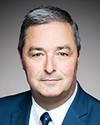
Vagn Sorensen Chair of the Board of Directors, Air Canada

Mr. Chair, members of the committee, thank you for inviting me to discuss the official languages priorities of the Air Canada board of directors.

Before I begin, I'd like to share that neither English nor French is my first language, but I'll do my best to address the committee in both languages.

I would like to take a moment here to reiterate our sincere condolences to the families and loved ones of the Jazz captain and first officer who tragically lost their lives in the accident on March 22.

Turning to the subject of our appearance today, I want to assure you that our board recognizes the importance of official languages to Canadians and to our customers, employees and partners across the country.

As chair, my role is to lead the board's work as it oversees senior management and sets Air Canada's overall priorities.

The Official Languages Act has applied to Air Canada for over 50 years now and is part of our identity. We are the only airline that is subject to this act. We are proud of our responsibilities to the public. They make us a better company. We believe that all carriers should be held to the same standard.

Air Canada has a detailed linguistic action plan. Our official languages branch is responsible for implementing it, supported by a committee made up of members from several branches.

These initiatives include the recruitment of bilingual employees, language training, management awareness training, employee support tools, and internal and external communications, as well as the monitoring of progress and complaints. The destination is clear: to better serve customers in the official language of their choice and to support employees in using their preferred language at work.

We have also achieved significant progress. Since 2022, we have hired more than 5,000 bilingual employees to serve our customers. Today, nearly 50% of our customer-facing employees are qualified as bilingual, and nearly 65% have abilities in both official languages. We have made language awareness training mandatory for our employees, and 97% of customer-facing employees have completed it. As a result, the number of complaints related to our services has decreased materially. The commissioner received 85 complaints related to Air Canada in 2024-25, out of 1,200 total complaints for all federal institutions.

We take these complaints very seriously, and our team reviews each one so we can continue to improve.

The implementation of our linguistic action plan is overseen by senior leadership, and quarterly reports are submitted to the board's governance committee. These updates enable us to track our progress and ensure that official languages remain a priority.

Our leadership team reflects this priority. All members of Air Canada's executive committee are fluent in French and English.

As a company, we also understand the importance of French and the connections it helps create. As Canada diversifies its markets, Air Canada is engaging with more francophone markets around the world. We connect Canada to five cities in France, Switzerland, Belgium and Morocco, and we want to open new routes, particularly to francophone Africa.

The board recently completed a rigorous internal and external process that led to the selection of our next president and CEO. We considered a number of criteria, including aviation experience and the ability to run a global company, to have a positive impact on corporate culture and to speak French. We are proud to have recruited Anko van der Werff, a highly qualified leader who will guide Air Canada to new heights and communicate in both official languages.

I will conclude by affirming our board's commitment to both official languages.

Thank you. I'm ready to answer your questions. However, I would note that I'm more comfortable answering in English.

The Chair Liberal Yvan Baker

Thank you, Mr. Sorensen.

We will now move on to questions from members.

Mr. Godin, you have the floor for six minutes.

Joël Godin Conservative Portneuf—Jacques-Cartier, QC

Thank you, Mr. Chair.

Thank you, Mr. Sorensen. Thank you for your efforts to speak French. It's impressive, and it's much better than your former president and CEO. I also want to thank you on behalf of the families of the two pilots, an anglophone and a francophone, who recently lost their lives.

I'll start with several quick questions.

How long have you been chair of the board?

4:40 p.m.

Chair of the Board of Directors, Air Canada

Vagn Sorensen

I've been the board chair since 2017, but I have served on the board since 2006.

4:40 p.m.

Conservative

Joël Godin Conservative Portneuf—Jacques-Cartier, QC

Were you the one who hired the former CEO, Mr. Rousseau?

4:40 p.m.

Chair of the Board of Directors, Air Canada

Vagn Sorensen

I hired the last two CEOs, yes.

4:40 p.m.

Conservative

Joël Godin Conservative Portneuf—Jacques-Cartier, QC

I have a personal question. Where do you live?

4:40 p.m.

Chair of the Board of Directors, Air Canada

Vagn Sorensen

I live in Denmark, in Europe.

4:40 p.m.

Conservative

Joël Godin Conservative Portneuf—Jacques-Cartier, QC

How many times a year do you come to Montreal, which is where Air Canada's head office is located?

4:40 p.m.

Chair of the Board of Directors, Air Canada

Vagn Sorensen

Very often, I would say. I'm probably in Canada six or seven times per year. Most of the time, it is Montreal that is my destination, because that's where we have our head office and where we have most of our board meetings.

4:40 p.m.

Conservative

Joël Godin Conservative Portneuf—Jacques-Cartier, QC

You said in your presentation that all board members speak French. Did I understand correctly?

4:40 p.m.

Chair of the Board of Directors, Air Canada

Vagn Sorensen

No. The translation there was not correct. I said that the entire executive committee speaks French fluently or speaks both languages fluently. In terms of the board, more than half of the members have some level of proficiency in French. Three are native French speakers.

4:40 p.m.

Conservative

Joël Godin Conservative Portneuf—Jacques-Cartier, QC

You said “some members”, but can you tell us how many board members speak French?

4:40 p.m.

Chair of the Board of Directors, Air Canada

Vagn Sorensen

There are seven who speak French to some level of proficiency. Three of them are native French speakers and are from Quebec, as a matter of fact. I think we have, all in all, 13 members on the board, so more than half speak French to some degree.

4:40 p.m.

Conservative

Joël Godin Conservative Portneuf—Jacques-Cartier, QC

Even so, you never hold your board meetings in French, do you?

4:40 p.m.

Chair of the Board of Directors, Air Canada

Vagn Sorensen

We hold our board meetings in English, which everybody speaks and understands, but we have translation available. Any member can ask to address the board or make a presentation in French or ask for material to be translated into French.

4:40 p.m.

Conservative

Joël Godin Conservative Portneuf—Jacques-Cartier, QC

This question may be a little biased: You know that you use our country's name in your company's trademark, right?

4:40 p.m.

Chair of the Board of Directors, Air Canada

Vagn Sorensen

Absolutely.

4:40 p.m.

Conservative

Joël Godin Conservative Portneuf—Jacques-Cartier, QC

You said that all airlines should have the same obligations. Are you aware that Air Canada has special status in Canada because of its official language obligations?

4:40 p.m.

Chair of the Board of Directors, Air Canada

Vagn Sorensen

Absolutely, I know that. We are, obviously, subject to the Official Languages Act. That's a thing we're very committed to and we're very proud of. It's part of who we are. It's part of our culture. Bilingualism is very important for us, and it's something we promote on an everyday basis.

4:40 p.m.

Conservative

Joël Godin Conservative Portneuf—Jacques-Cartier, QC

How did you react when, at a chamber of commerce event in Montreal, you heard your president and CEO say that he didn't need to speak French, despite Air Canada's obligation to communicate in both official languages on an equal basis? How did you react, and what actions did you take after that?

4:40 p.m.

Chair of the Board of Directors, Air Canada

Vagn Sorensen

I was very disappointed. I felt that he shouldn't have made those remarks, to which there was understandably a very negative reaction. I was disappointed, and so was the whole board. It led to a very rapid summons of the directors for a meeting.

4:45 p.m.

Conservative

Joël Godin Conservative Portneuf—Jacques-Cartier, QC

Thank you, Mr. Sorensen.

You were disappointed. I can understand that; we were very disappointed as well. Now, what have you, as chair of the board, done to remedy the situation?

4:45 p.m.

Chair of the Board of Directors, Air Canada

Vagn Sorensen

Obviously, we had a serious meeting with Mr. Rousseau, who at that meeting committed to improve his French and committed to undertake very intensive French training, which he did, but as we know today, unfortunately it did not lead to the desired result. I'm very happy to say that the next CEO of Air Canada will communicate in French.