That is correct.
Evidence of meeting #9 for Public Accounts in the 45th Parliament, 1st session. (The original version is on Parliament’s site, as are the minutes.) The winning word was pspc.
A video is available from Parliament.

Evidence of meeting #9 for Public Accounts in the 45th Parliament, 1st session. (The original version is on Parliament’s site, as are the minutes.) The winning word was pspc.
A video is available from Parliament.
Deputy Minister, Department of Public Works and Government Services
That is correct.
Liberal

Anthony Housefather Liberal Mount Royal, QC
Thank you.
To come back to defence, I want to ask Lieutenant-General Prévost, who hasn't had much of a chance to intervene today.... There have been a number of external reports dealing with DND contracts, compliance and conduct. I'm just wondering what DND has been doing to go through the reports and improve compliance and conduct. Can you talk also about what you're doing to monitor things as they go, as you take the recommendations and try to improve things?
Paul Prévost Chief, Professional Conduct and Culture, Department of National Defence
I take the question to be twofold here.
I think some of the questions were more about compliance with the procurement process, which I think DM Beck has answered already. On everything that's been going on, we obviously take the stewardship of public funds very seriously. As the ADM responsible for professional conduct and ethics in the department, accountability and integrity are things that are near to my heart.
If the question has to do with the work we've done in professional conduct and culture using McKinsey, Mr. Chair, if time allows, I'll set up a bit of context on why we leverage McKinsey for contracts.
I'm the chief of professional conduct and culture. My organization was stood up in spring 2021 in the wake of a series of serious allegations of sexual misconduct. The institution was stood up that summer, with only 11 people, and at the head was General Carignan, who is now our chief of the defence staff. She was the first leader of that organization for three years, with only 11 people to look at a crisis we had never seen before, a crisis of magnitude and a problem we didn't understand very well, though there had been various reports before.
Something we haven't discussed too much today is that sometimes we leverage outside contractors when we stand up an organization and don't have the expertise for the problem we're dealing with or the capacity to deal with it. With only 11 people, General Carignan had the mission to, one, stand up an organization—which has now grown to 400 people—to look at conduct and culture, but also the expertise, which we didn't have. We didn't have that expertise and couldn't find much on military culture among academic stakeholders.
This was the reason we turned to outside firms to help us out with this. McKinsey, as was mentioned many times, is part of an NMSO, a national master standing offer. We understood, from its previous work in proprietary benchmarking for the private and public sectors, that it was a good contractor to start our work.
Our first two contracts came during that summer. If you recall, at the time there was a lack of trust in the members in the chain of command and in the reporting mechanisms, so the first contract was to leverage McKinsey to understand this: What are the complaints mechanisms in the defence system, and how do they map out? It's quite a complex complaints system, from human rights and grievance complaints to workplace harassment prevention. There were 23 different complaints systems, so we needed to map this out. From the 11 people they had initially, with some coming from the outside, they didn't have that expertise, so McKinsey helped us out there.
The second contract was.... There had been 500 recommendations, from various reports, that related to culture. We didn't have the capacity to analyze those 500 recommendations. Which ones were chosen? They were from various authors: Justice Fish was one of them; Justice Arbour came later, but there was Justice Deschamps before. We used McKinsey to map out common themes in those recommendations and common and differing solutions from different authors.
This allowed us to present to the government, in 2023, our CIP, our comprehensive implementation plan, which is now the work plan that National Defence is following to change the culture. There are 206 recommendations, and Madame Arbour has 48 recommendations in there. We have now completed 50% of those recommendations, 70% by the end of this year. Madame Arbour's report will also be done by the end of the year, with Bill C-11 now being tabled in Parliament.
Overall, a lot of that work would not have been possible without the help of outside contractors. The reason McKinsey was leveraged is that it met the requirements and was available as one of the procurement tools we had at the time. We didn't have allies as well—
Conservative
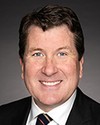
The Chair Conservative John Williamson
Thank you.
We are well over our time. I appreciate your understanding, Mr. Housefather. You're welcome to follow up on that individually.
I want to thank all of the witnesses for coming in. I'm going to adjourn this meeting so that we can go in camera. You're all excused. Thank you for coming as we continue our study on this important topic. Have a nice day.
This meeting is suspended.
[Proceedings continue in camera]