Evidence of meeting #11 for Public Safety and National Security in the 45th Parliament, 1st session. (The original version is on Parliament’s site, as are the minutes.) The winning word was border.

A video is available from Parliament.

On the agenda

Members speaking

Before the committee

McGuire  Director General, International and Border Policy, Department of Public Safety and Emergency Preparedness
Bush  Director General, Immigration and Asylum Policy Directorate, Canada Border Services Agency
Hamilton  Director General, Traveller, Commercial and Trade Policy Directorate, Canada Border Services Agency
Tettamanti  Senior Director, Maritime Security Force Development, Canadian Coast Guard
Lang  

12:20 p.m.

Director General, Traveller, Commercial and Trade Policy Directorate, Canada Border Services Agency

Graeme Hamilton

Mr. Chair, I would say that the specific measure is really designed to bring into balance the approach we currently have with respect to imported and exported goods obligations by private sector port operators that are partners in delivering services at a number of our commercial ports of entry and exit, marine ports being a key example. We had wonderful co-operation with the Port of Montreal through the crisis providing us facilities and access to goods so we could properly undertake our export examinations and recover vehicles destined for export that had been stolen primarily in southern Ontario.

That was done based on an informal agreement that wasn't backed up with the force of law. The amendments that are being brought forward would really provide a solid legal basis for that and provide clarity not only to the port owners, who have their own responsibilities with respect to their boards of directors, etc., but also to the CBSA so we can clearly have those authorities. If we need to get in to search goods for public safety or public security reasons, it's clearly articulated in the Customs Act that we do have the ability to do that not only in private ports of entry under section 6 of the Customs Act, but also in areas where goods are assembled before export. That's in warehouses or amongst transportation operators like rail yards, where we had a tremendous amount of success in finding and uncovering stolen vehicles before they were brought to the port of Montreal.

Doing those types of searches earlier in that export supply chain is actually much better for recovery and unburdens the transportation system from having to deal with that at ports of entry. They are already highly congested, and that could have negative knock-on commercial or economic impacts.
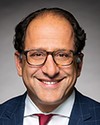

Ali Ehsassi Liberal Willowdale, ON

The reason I ask, as you can imagine, is that I'm really alarmed by the numbers and I think a lot of my constituents are alarmed by them.

Will this have an impact, hopefully, in lowering the number of car thefts in our country?

12:25 p.m.

Director General, Traveller, Commercial and Trade Policy Directorate, Canada Border Services Agency

Graeme Hamilton

Certainly we've already seen a significant reduction of overall car thefts, but the CBSA has seen year-over-year growth in terms of the number of cars that we've recovered.

The authorities that we're asking for as part of the bill are in practice today through an informal mechanism, so I wouldn't imagine significant new changes, but it will provide us with a legal basis so that if we need to continue to do this for a prolonged period of time, we'd have the legal basis to continue to do that.

Ali Ehsassi Liberal Willowdale, ON

Thank you for that.

I'm not quite sure who I'd have to ask about the in-Canada asylum system, but I think it would be Mr. Hamilton.

Mr. Hamilton, there are new caveats in this bill that make it more difficult to put in an asylum bid if someone is here for a lengthy period of time.

In your estimation, how impactful will these changes be?

Christopher Hamilton Senior Director, Asylum Policy, Performance and Governance Division, Department of Citizenship and Immigration

Asylum claims fluctuate for a number of reasons year over year, so it's very difficult to predict future claims. We do believe that they will be in the thousands.

I want to provide one important clarification as well. These changes don't prevent an asylum claim, but rather apply to the claims that are deemed ineligible to be referred to the Immigration and Refugee Board. In these cases, individuals will have access to a pre-removal risk assessment, which is a robust process that considers many of the same factors.

The Chair Liberal Jean-Yves Duclos

Thank you for those questions and answers.

Mrs. DeBellefeuille now has the floor for six minutes.

Claude DeBellefeuille Bloc Beauharnois—Salaberry—Soulanges—Huntingdon, QC

Thank you very much, Mr. Chair.

Mr. Hamilton, let's continue the conversation.

Last week, the Minister of Immigration, Refugees and Citizenship appeared before us. I had the opportunity to raise our concerns regarding Bill C‑12. I asked her what we could do to ensure that refugees who truly need protection are not sent back to their countries. The response I received, both from the minister and from officials, was that a risk assessment is always conducted before removal. According to the figures we have and according to refugee protection groups and organizations, at this point in time, only 6% of risk assessment requests are successful. With the tightening of rules proposed in Bill C‑12, my concern is that people who need protection will be sent back to their country.

The minister's entire response was based on the ability to conduct a pre-removal risk assessment. That does not seem an adequate response for all the refugee groups contacting us at the moment.

How do you respond to the criticism that this may not be the best response to ensure the protection of refugees who need it?

November 4th, 2025 / 12:25 p.m.

Senior Director, Asylum Policy, Performance and Governance Division, Department of Citizenship and Immigration

Christopher Hamilton

Thank you for the question.

The pre-removal risk assessment is a robust review process that considers several factors to ensure that Canada does not remove individuals to a country where they could be at risk of persecution, danger, torture, threats to their life or cruel and unusual punishment.

With respect to your question on why the rates are relatively lower for the current PRRA process, I think it's important to note that this process is pursued typically after someone has gone through an asylum claim at the Immigration and Refugee Board. It's likely that the process would be undertaken for people who are ineligible and are referred to the PRRA.

The strength of the PRRA process is there. They'll have the opportunity to present their claim and their fear of persecution, and the same factors will be considered. The process is robust, and it does ensure that there will be no refoulement, as we say.

Claude DeBellefeuille Bloc Beauharnois—Salaberry—Soulanges—Huntingdon, QC

Thank you.

I will now turn to the representative of the Coast Guard.

Essentially, Bill C‑12 allows for the integration of the Coast Guard into the military budget. I understand that you see this as an administrative merger rather than a military function. Your budget will fall under the Department of Defence, but no coast guard will have a military mission or mandate.

Have I understood correctly, Mr. Tettamanti?

12:30 p.m.

Senior Director, Maritime Security Force Development, Canadian Coast Guard

Ryan Tettamanti

Mr. Chair, I thank the member for her question.

There are two parts to this question.

Fundamentally, there is the shift of the Coast Guard from the Department of Fisheries and Oceans to National Defence. That was completed by an order in council in September, and that process has begun.

As for the mission, which we are talking about here today with Bill C-12, that shift will allow the Coast Guard basically to embark on an enhanced security mandate that will allow the Coast Guard to share information with our security partners.

Right now, we're able to share safety information. Think of a search and rescue mission; we have to share the location of a distressed vessel. In this case, with Bill C-12, we'll be able to share with our security partners the information we collect in our marine security operations centres.

Claude DeBellefeuille Bloc Beauharnois—Salaberry—Soulanges—Huntingdon, QC

I want to be sure I fully understand. So you now have new powers that allow you to exchange information with other agencies, which will enable you to communicate quickly if you find yourself somewhere in the ocean with people who have committed illegal acts. However, you would not be able to intercept them. Your duties are limited to exchanging information. Coast Guard officers will not be armed.

Aren't you concerned about putting your officers in situations of conflict in which they could be attacked if it's known that they can now exchange information? Are your members concerned about this change in mission for Coast Guard officers?

12:30 p.m.

Senior Director, Maritime Security Force Development, Canadian Coast Guard

Ryan Tettamanti

Mr. Chair, that's another very good question.

What I would say is that we are currently fulfilling that role with the Oceans Act as it is. We are currently supporting conservation protection at sea as they conduct their enforcement activities and their fishery patrols. We embark RCMP on board our vessels for the marine security enforcement teams, so we are already doing this. We already have these teams on board. Fundamentally, at any point where they need to conduct an enforcement action, they will do that. They will use our platforms essentially to launch their operations, usually in a small boat, a fast rescue craft.

Ultimately, this is business that we have been doing for years, and we are very comfortable with it.

Bill C-12 gives us an expanded mandate for security patrols and the sharing of information, most critically so that we can build maritime domain awareness in Canadian waters and share that with our partners.

Claude DeBellefeuille Bloc Beauharnois—Salaberry—Soulanges—Huntingdon, QC

How much time do I have left?

The Chair Liberal Jean-Yves Duclos

You have three seconds.

Claude DeBellefeuille Bloc Beauharnois—Salaberry—Soulanges—Huntingdon, QC

Thank you very much.

The Chair Liberal Jean-Yves Duclos

Thank you, Mrs. DeBellefeuille.

I will now turn the floor over to the member for five minutes.

12:30 p.m.

Conservative

Chak Au Conservative Richmond Centre—Marpole, BC

Thank you.

First of all, I want to thank you for your presence today and for sharing your information and your expertise. I also want to thank your frontline staff for doing the best they can to secure the safety of our borders.

In one of the previous meetings, I asked for information about a provincial breakdown on the interception of fentanyl at the border. Now I have the information. Thank you for that. It is shocking that British Columbia accounts for over 90% of all fentanyl seized in Canada.

Also, in a previous meeting I asked for the number of prosecutions that have happened in the last year. I still haven't received that number. Can you provide the statistics on how many of these seizures led to prosecutions? Do you have the number now?

12:35 p.m.

Director General, International and Border Policy, Department of Public Safety and Emergency Preparedness

Mike McGuire

I don't have the number on me and I don't think the CBSA would have it either. We can endeavour to get back to you on that.

12:35 p.m.

Conservative

Chak Au Conservative Richmond Centre—Marpole, BC

Okay. Thanks.

To follow up on that, do you agree that merely the seizures or the interception of those illegal drugs at the border is not enough to deter this problem or is not enough to address the crisis of fentanyl coming to our country or flooding our communities? Do you agree that just intercepting those illegal drugs is not enough?

12:35 p.m.

Director General, International and Border Policy, Department of Public Safety and Emergency Preparedness

Mike McGuire

Tackling the fentanyl crisis is a big priority right now for this government, as it is for other governments around the world.

There are a variety of ways we are doing it, including interception at the border, as you said, but also in trying to tackle other aspects of the fentanyl trade, including addressing money-laundering challenges. Some of the amendments that are in Bill C-12, for example, ensure that precursor chemicals can be quickly scheduled by the Minister of Health. The government is trying a number of ways to tackle the crisis, because it is not just about interceptions. Those are part of the solution, but there are a lot of other pieces to the solution as well.

12:35 p.m.

Conservative

Chak Au Conservative Richmond Centre—Marpole, BC

Do you agree that unless those interceptions lead to certain consequences for the traffickers, it is still not enough? If there are no consequences or deterrents for those traffickers, how good is this legislation?

12:35 p.m.

Director General, International and Border Policy, Department of Public Safety and Emergency Preparedness

Mike McGuire

I think you're right that prosecution is part of the solution as well, so we can endeavour to get back to you with some of the figures on that.

12:35 p.m.

Conservative

Chak Au Conservative Richmond Centre—Marpole, BC

Okay.

To follow up on that, do you agree that this bill fails to address the deliberate killing of Canadians by fentanyl traffickers?

12:35 p.m.

Director General, International and Border Policy, Department of Public Safety and Emergency Preparedness

Mike McGuire

This bill provides for a number of different provisions to help protect the border and also address the fentanyl crisis, including the provisions related to the scheduling of precursor chemicals, as we discussed earlier.

In addition to the border bill, Bill C-12, there's also the border plan, which provides additional investments and resources to the CBSA, the RCMP and other agencies to add new personnel and tools to be able to tackle the crisis. The government has announced, for example, an additional 1,000 RCMP officers and an additional 1,000 CBSA personnel who will also be contributing to tackling this problem.

12:35 p.m.

Conservative

Chak Au Conservative Richmond Centre—Marpole, BC

Do you agree that not strengthening deterrence for traffickers is a failure in the bill itself?