Okay, so that's a no.
Mr. Bilodeau, would you like to chime in, sir?

Evidence of meeting #23 for Transport, Infrastructure and Communities in the 45th Parliament, 1st session. (The original version is on Parliament’s site, as are the minutes.) The winning word was procurement.
A video is available from Parliament.
Liberal

Mike Kelloway Liberal Sydney—Glace Bay, NS
Okay, so that's a no.
Mr. Bilodeau, would you like to chime in, sir?
Senior Assistant Deputy Minister, National and Cybersecurity Branch, Department of Public Safety and Emergency Preparedness
The only thing I would add is that there is legislation before Parliament on protecting critical infrastructure and federally regulated infrastructure—for example, in transport—that would require operators to have certain protections in place. That's a piece of legislation that would help support the protection from a cyber perspective.
Liberal
Mike Kelloway Liberal Sydney—Glace Bay, NS
Thank you very much, both of you, for answering the question very succinctly for those in the room and those watching at home.
Minister, I want to go to you next.
Given that the CIB operates at arm's length, and reports to, I believe, the infrastructure minister, I wonder if you can confirm that public safety doesn't direct its lending decisions. I think this is important in the distinction of the division of powers between the provinces and the feds.
Liberal

Gary Anandasangaree Liberal Scarborough—Guildwood—Rouge Park, ON
It does not, but I want to offer, Mr. Kelloway, that we are quite involved with the Major Projects Office. I think it would be instructive for this committee to understand a bit more of that work.
I can ask Mr. Bilodeau to elaborate on what we're doing with the Major Projects Office.
Senior Assistant Deputy Minister, National and Cybersecurity Branch, Department of Public Safety and Emergency Preparedness
Thank you, Minister.
The Major Projects Office has a number of projects that it's considering or might consider in the future. Part of the legislation includes a national security review. We have been supporting, along with our partners at CSIS, the RCMP, the CSE and others, the conducting of reviews of some of the projects, providing advice on national security concerns and feeding that into the decision-making.
Liberal
Mike Kelloway Liberal Sydney—Glace Bay, NS
Thank you for another succinct answer.
Minister, I'll go back to you now. Do you think conflating provincial procurement decisions with national security authorities runs the risk of confusion about the scope of Canadian law?
Liberal
Gary Anandasangaree Liberal Scarborough—Guildwood—Rouge Park, ON
I would suggest that the federal government being involved in procurement decisions can cause a great deal of turbulence for our federation. The provinces have their own policies in place. They have their own systems in place. They are subject to regulation if their vessels are regulated by the federal government. However, with respect to a security review, this is not within any of the provincial or territorial mandates or processes.
Liberal
Mike Kelloway Liberal Sydney—Glace Bay, NS
Thank you.
I have less than a minute left. I'm going to take this time for one last question for you, Minister.
Would you agree that effective national security policy requires steady and evidence-based leadership granted in law, rather than reactionary decision-making?
Liberal
Gary Anandasangaree Liberal Scarborough—Guildwood—Rouge Park, ON
Absolutely, and we've learned a lot from the Investment Canada Act process in terms of how to undertake these decisions.
It's based on the available evidence, interviews and other research, and we have a robust system in place when it comes to federal investments that are subject to the Investment Canada Act.
Liberal
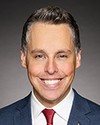
The Chair Liberal Peter Schiefke
Thank you, Mr. Kelloway.
Thank you, Minister. On behalf of all the members of this committee, I would like to thank you, as well as your officials, for your time today and your testimony on this very important study.
Colleagues, we're going to suspend for a couple of minutes as we set up for the next round of witnesses. The meeting is suspended to the call of the chair.
Liberal
The Chair Liberal Peter Schiefke
I call this meeting back to order.
Pursuant to Standing Order 108(2) and the motion adopted by the committee on Thursday, December 11, 2025, the committee is resuming its study of supporting, diversifying and modernizing Quebec's and Canada's ports.
I'd now like to welcome our witnesses for the second half of today's meeting.
From the Prince Rupert Port Authority, we have Ms. Katherine Bamford, vice-president, business development. Welcome.
We also have Kevin Moraes, director, government and external relations. Thank you, sir. Welcome.
From the Vancouver Fraser Port Authority, we have Mr. Peter Xotta, president and chief executive officer, joining us by video conference. Welcome to you, sir.
We're also joined by Eddy Métivier, the mayor of the City of Matane.
Welcome, Mr. Métivier.
We'll start with our....
Yes, sir.
Conservative
February 25th, 2026 / 5:30 p.m.
Conservative

Dan Albas Conservative Okanagan Lake West—South Kelowna, BC
Yes. I have a quick point of order, Mr. Chair.
Going back to the Minister of Public Safety's appearance, I will just note that Conservatives are very disappointed. Instead of continuing with another rotation, as is the habit of committees, there was a 45-minute appearance, which is not satisfactory for a minister when we've been seeking for over 160 days to have them here.
I want to make sure that this practice is stamped out. Obviously, there are other names that need to come forward. However, at this committee, when we have issues of national security, 45 minutes is simply not enough.
Liberal
The Chair Liberal Peter Schiefke
That's noted. Thank you very much, Mr. Albas.
The chair will be sure to ask for names for all the boxes on the sheet of questioners to make sure that, if we do have additional time, all members will be afforded that time. Thank you for raising that, sir.
We'll begin with our first opening remarks.
For that, I'll turn the floor over to you, Ms. Bamford. You have five minutes, please.
Katherine Bamford Vice-President, Business Development, Prince Rupert Port Authority
Thank you and good evening.
I would like to thank the committee for inviting us to speak about port diversification and modernization.
I'd like to acknowledge that the Port of Prince Rupert operates on the traditional land of the Sm'algya̱x-speaking Ts'msyen people.
Located in northern British Columbia, Prince Rupert is one of Canada's strategic trade gateways, anchoring the fastest shipping route to Asia-Pacific markets. The Prince Rupert Port Authority gets its mandate from the Canada Marine Act, which outlines that port authorities must be commercially oriented and manage strategic port assets in the national interest.
We take this mandate seriously, implementing development plans that have grown the Port of Prince Rupert from one single-use dry bulk terminal to a diverse commodity ecosystem and Canada's third-largest port by value of trade. The Port of Prince Rupert handles $60 billion of trade annually and provides access to Asia-Pacific markets for western Canadian resource sectors such as energy, agriculture, forestry, mining and petrochemicals. It also enables imports to Ontario and Quebec and supports the manufacturing and consumer sectors, including the auto industry.
Canada's reputation as a reliable trading partner depends on the fluidity, efficiency and reliability of its national supply chains. Canada's economic sovereignty depends on diversifying trade and ensuring greater supply chain resiliency. To achieve these goals and meet the needs of Canadian shippers, Canada needs to focus on three priorities: building more trade-enabling infrastructure, enhancing trade corridor capacity and providing an efficient regulatory environment so that investors can have confidence in timely decisions.
In Prince Rupert, our focus has been on these priorities.
In collaboration with port industry and indigenous partners, we are currently delivering a $3-billion development plan that will double trade volumes to 50 million tonnes over the next decade. Several projects will become operational in the next six to 18 months that will help position Canada as an energy superpower, improve supply chain resilience and enable speed to market for diverse exports.
Building on the success of the AltaGas and Pembina energy terminals, the $1.4-billion Ridley Island energy export facility, known as REEF, will be a common-user, multiliquid bulk terminal that will drastically increase trade capacity for Canadian energy exports such as propane and butane. Prior to the commissioning of energy terminals in Prince Rupert, Canadian propane was landlocked, and producers could only sell to oversaturated U.S. markets at discounted rates. Today, Canadian propane represents 14% of South Korea's total imports, 11% of Japan's total imports and 6% of China's total imports, and these numbers will grow when the REEF terminal is commissioned in the next 12 months.
The port is also growing the container ecosystem, anchored by the Fairview container terminal operated by Dubai Ports World. With 1.6 million containers of annual terminal capacity in place, our focus is now on building complementary container transload facilities. Instead of sending back empty containers to Asia, the $750-million CANXPORT project, operated by Ray-Mont Logistics, will fill 400,000 containers with Canadian exports, such as plastic resin from Dow's $10-billion Path2Zero project in Fort Saskatchewan, Alberta.
We are not stopping here. We plan to become a 100-million-tonne gateway by 2050, ensuring that Canada has two major west coast gateways, providing greater resiliency, efficiency and options for Canadian exporters.
As this committee considers recommendations to modernize Canadian ports, we invite you to help us execute the next phase of Prince Rupert's development. First, establish a consistent and efficient project regulatory process. A one-window review process can be implemented by enabling the Canada Marine Act to allow port authorities to coordinate and efficiently manage port development review processes with required federal regulators. Second, ensure federal investment is directed to expand corridor capacity and trade-enabling infrastructure. In Prince Rupert, land preparation for greenfield projects costs between $1 million and $2 million per acre. Previous investments through the national trade corridors fund helped us to prepare land and build infrastructure to host our current developments. Please consider these priorities in your deliberations.
We thank you for taking the time to hear our remarks, and we look forward to your questions.
Liberal
The Chair Liberal Peter Schiefke
Thank you very much, Ms. Bamford.
Next we'll go to Mr. Xotta.
Mr. Xotta, the floor is yours. You have five minutes for your opening remarks, sir.
Peter Xotta President and Chief Executive Officer, Vancouver Fraser Port Authority
Thank you very much, Mr. Chair. I want to say thank you for giving us the privilege of participating in the committee discussion today.
I also want to acknowledge that I am participating virtually from the traditional territories of the Musqueam, Squamish and Tsleil-Waututh peoples, and I extend my thanks to them.
These are extraordinary times for Canada, which have been discussed at length in the trade press. Trade rules have been upended, and Canadians are feeling anxious. I think I speak on behalf of all Canadians when I say thank you to the committee for your work, and thank you to government for rising to the occasion with a bold agenda to double Canadian exports to non-U.S. markets over the next 10 years. It's going to take a team Canada approach to make more stuff like metals and minerals, wood and energy products, agri-foods, machinery and equipment; to sell more stuff to customers who want and need what Canada makes, especially in the Indo-Pacific region, where 50% of global GDP will reside by 2040; and, importantly, to move more stuff via port authorities to where it needs to go reliably.
The good news is that the Port of Vancouver, Canada's largest port, is right at the nexus of this activity. Today, we handle 350 billion dollars' worth of Canada's trade every year, whether it's retail products from Ontario, Manitoba canola, Saskatchewan potash, Alberta oil, B.C. lumber or other products. You name it; there is a good chance we move it, and 80% of those products are already headed to non-U.S. markets.
Decades of investment—about 9 billion dollars' worth—has occurred in this corridor over the last 15 years or so. This has resulted in about a 75% increase in trade volume through the port of Vancouver to international markets. Interestingly, doubling that is about another 50% in the next 10 years.
The point is that we've done this before, and we can do it again. We need to fully unleash the power of Canada's ports as an engine of Canada's trade diversification strategy, and we're pleased to see this committee advancing a study of Canada's ports to inform and galvanize policy choices to help deliver the Government of Canada's bold trade agenda. We see, as do my colleagues from Prince Rupert, three big opportunities for Canada's ports.
First, we need to make permitting more efficient. As a country, we need to get nation-building, trade-enabling infrastructure projects across the finish line, such as our Roberts Bank Terminal 2 project, which will build new industrial land and expand container trade capacity by $100 billion each year. Dredging at Second Narrows in Burnaby, B.C., will let tankers leave from the Trans Mountain Westridge terminal, passing under the bridge at full capacity instead of 70%, as is the case today.
New levers, including through the Major Projects Office, will help. However, broader regulatory modernization, including permitting, is the biggest opportunity. In an ideal world, the MPO will lead us to make systemic changes to our regulatory frameworks, such as by expanding port authorities' permitting powers.
In Vancouver, for example, in recent years, we've permitted substantive projects, such as the Centerm expansion project and G3's new grain terminal. Each of those projects is worth about half a billion dollars.
We run through environmental assessment processes, including robust consultation with first nations, and critically, we deliver timely decisions—91% within our targets—which is pivotal to attracting investment. I say, empower port authorities to do more for Canada on permitting. We have the experience, the skills and the track record.
Second, we need to invest in port and rail infrastructure, including supporting roads, bridges and tunnels. Canada's export growth opportunities centre on the bulk sector—grain, potash, steel-making coal—and this hinges on rail capacity and reliability.
Over the past 15 years, as I mentioned, the Canadian government has helped invest in two major waves of rail-supporting infrastructure in this gateway, through the Asia-Pacific gateway and corridor and the national trade corridors fund. To double exports, we need to do more in this space.
We need to prioritize supply chain infrastructure investments and other capacity-building initiatives, including last mile infrastructure. We look forward to the government's swift launch of the new $5-billion trade diversification corridors fund, announced in budget 2025, and hope that projects supporting Canada's largest international trade gateway will be seriously considered for funding support.
It's not just about adding capacity; it's about making networks more efficient. We must work together to keep adopting new digital tools and tech to help supply chain partners optimize and share data to move products faster, more safely and more sustainably. We have had tremendous success with some of these initiatives, such as our active vessel traffic management program in Vancouver.
Third, we must address labour stability. Frequent labour disruptions are a blemish on our reputation as a trading partner. Acting on the recommendations of the Industrial Inquiry Commission on West Coast Ports is a must, and we need to act swiftly. Our global customers are watching. Performance is key.
Lastly, it goes without saying that to be successful, we must be bold, ambitious and nimble. Equally importantly, we must renew our commitment to doing things right to minimize environmental impacts and work closely with indigenous communities. On this, Canada is a leader, and the Port of Vancouver is a leader, having secured the consent of 27 nations to build the Roberts Bank Terminal 2 project, to name one example. Let's keep making how we do things our competitive advantage in this country.
In closing, I know Canada is ready to get to work, and so are we at the Port of Vancouver. Let's go. Let's fully unleash the power of our nation's ports. Let's show the world we're open for business and deliver for Canadians.
Thank you.
Liberal
The Chair Liberal Peter Schiefke
Thank you very much.
Mr. Métivier, you have five minutes for your remarks.
Thank you.
Eddy Métivier Mayor, Ville de Matane
Thank you, Mr. Chair.
My name is Eddy Métivier. I'm an engineer. I've worked in the industrial sector for nearly 30 years. I've been the mayor of Matane since 2021.
I would like to thank you, Mr. Chair, and the committee members for the opportunity to present our brief.
The City of Matane is located 400 kilometres east of Quebec City, on the south shore of the St. Lawrence River. It has a population of 14,316.
With its strong maritime tradition, our city has recently experienced significant economic growth in its industrial port area. As mayor, while I'm encouraged by this new economic boom, I'm also deeply concerned that it's being undermined by the dilapidated state of our seaport, which was built in the late 1960s by the Canadian government.
The challenge lies in the fact that the commercial wharf, built around 1967 by Transport Canada, is nearing the end of its useful life. That will be reached in 2033. That is soon. We're hoping that we won't have any marine incidents. That could be the case, for example, if a ship were to accidentally enter the seaport. The wharf deck is very shaky, and its bearing capacity is only 14 kilopascals, rather than the standard 50 kilopascals.
There are therefore currently lost opportunities in terms of transport due to the weak and precarious state of the deck. It's in very poor condition. The concrete has eroded and the reinforcing bars are exposed. The deck and piles are severely corroded due to the highly corrosive nature of the marine environment.
The dilapidated state of the port therefore poses a very serious risk to our economy. Our businesses, around 18 of which are located in our industrial park near the port, are closely linked. The port provides 1,140 direct and indirect jobs. Nearly one‑tenth of the jobs in Matane are linked to the seaport. In Quebec, the gross domestic product, or GDP, is $167 million per year, and tax revenues are $20.5 million.
We also serve major export flows. Over 311,000 tonnes of products are transshipped per year. Currently, we export nearly two‑thirds of these to Europe and Asia. In doing so, we are complying with the wishes of the Government of Canada.
Our port is an essential logistics link for the Bas‑Saint‑Laurent, Gaspésie and Côte‑Nord. It is now one of the ports managed by the Société portuaire du Bas‑Saint‑Laurent et de la Gaspésie.
The Port of Matane is a multi-purpose deepwater port. It is located in the heart of an industrial port zone, the only one in the Bas‑Saint‑Laurent recognized by Quebec's Ministère de l'Économie, de l'Innovation et de l'Énergie. It connects sea, road and rail. It has a Class 1 rail connection, which includes a rail ferry, owned by Canadian National. It's right next to our seaport.
I'm here before you today because I'm concerned that the Quebec government is delaying authorization for the Société portuaire du Bas‑Saint‑Laurent et de la Gaspésie to move forward with the project, despite the fact that the port's renovation is part of the Quebec government's 2025‑35 infrastructure plan, despite my political representations to ministers, and despite the funds provided by the Canadian government, which, incidentally, do not meet the actual needs for the sequential construction of two wharves, the development of storage areas and the upgrading of services.
The amount is underestimated, given the scope of the work. This is due to the extreme deterioration of the port and postpandemic inflation, because the funding was provided in 2020. The cost of the work has increased, there was a lack of vision, a lack of initial investment and a lack of maintenance of the port when it was owned by the Canadian government, which at the time wanted to divest itself of it. It's also an unrealistic amount in relation to climate change. For example, the harbour's breakwaters need to be raised due to rising water levels.
It would therefore have been a good practice for the Government of Canada to conduct a serious assessment of the port's repair and modernization needs, and to carry out the work in collaboration with Quebec before transferring it to our province. It could also have provided some capital investment to support the port's future maintenance.
Given the current context of the tariff war, we're asking the Canadian government to promote the diversification of our economy toward new markets outside the Americas.
Given that, in the current economic context, the Government of Quebec is delaying the authorization of sequential work on two wharves at the port, as mayor, I'm asking that the Canadian government sit down with Quebec to adjust its contribution to the Matane port project so that the province can give the green light to the Société portuaire du Bas‑Saint‑Laurent et de la Gaspésie regarding the two-stage port renovation project with two wharves.
In the context of a tariff war, a contribution to decarbonization is therefore an opportunity to be seized, for the benefit of Canada's collective prosperity.
Thank you.
Liberal
The Chair Liberal Peter Schiefke
Thank you, Mr. Mayor.
We'll begin the line of questioning with Mr. Albas.
Mr. Albas, the floor is yours. You have six minutes, sir.
Conservative
Dan Albas Conservative Okanagan Lake West—South Kelowna, BC
Thank you, Mr. Chair.
Thank you to all the witnesses here.
Mr. Chair, originally, Ellis Ross was hoping to come in as a member of Parliament from northern B.C., particularly because the Prince Rupert Port Authority is in his area. Unfortunately, there was a death in one of the first nations communities, and he can't be with us. His constituents are quite concerned, however, so he sent me a list of questions on their minds.
I'll go right to the port authority.
Can you confirm that the Prince Rupert Port Authority is responsible for discharging the Crown's duty to consult and accommodate first nations communities whose interests are affected by developments in the port of Prince Rupert, yes or no?
Kevin Moraes Director, Government and External Relations, Prince Rupert Port Authority
Yes, it is. The Prince Rupert Port Authority's jurisdictional boundaries include six indigenous communities. I—
Conservative
Dan Albas Conservative Okanagan Lake West—South Kelowna, BC
That's fine.
Are you aware that the honour of the Crown is a fundamental constitutional principle that requires governments and their agents—such as the Prince Rupert Port Authority—to act with honour, fairness and integrity in their dealings with indigenous people, yes or no?