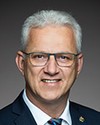
Evidence of meeting #23 for Transport, Infrastructure and Communities in the 45th Parliament, 1st session. (The original version is on Parliament’s site, as are the minutes.) The winning word was procurement.

A video is available from Parliament.

On the agenda

Members speaking

Before the committee

Gary Anandasangaree  Minister of Public Safety
Lloyd  Deputy Director, Canadian Security Intelligence Service
Bilodeau  Senior Assistant Deputy Minister, National and Cybersecurity Branch, Department of Public Safety and Emergency Preparedness
Bamford  Vice-President, Business Development, Prince Rupert Port Authority
Xotta  President and Chief Executive Officer, Vancouver Fraser Port Authority
Métivier  Mayor, Ville de Matane
Moraes  Director, Government and External Relations, Prince Rupert Port Authority

Will Greaves Liberal Victoria, BC

Thank you very much, Mr. Chair

Thank you to our witnesses.

It's delightful to have two west coast ports before the committee today. I'm absolutely thrilled.

My first question is for Mr. Xotta online.

Thank you for joining us, sir. I'm glad that one of us is in B.C. at the moment.

My question for you is, as the leader of Canada's largest port, can you give us a bit of a sketch of the scale of economic impact that the Vancouver Fraser Port Authority has for the surrounding region in southern British Columbia? You can be as broad or specific as you'd like, but it would be helpful if you could put in context the role that the port plays in the western Canadian economy and in the government's strategy of diversifying our trade exports.
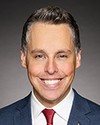

5:55 p.m.

President and Chief Executive Officer, Vancouver Fraser Port Authority

Peter Xotta

My prepared remarks referenced 350 billion dollars' worth of trade. Those are numbers that are difficult to digest in some cases, but fully 50% of the containers in and out of this country come through this one port. Seventy per cent of what we do, through the Port of Vancouver, is the bulk commodities that I mentioned: potash, agricultural products, coal, sulphur and others. This all generates about 110,000 jobs across the country, 50,000 of which are within the region around the Lower Mainland, providing employment at port facilities. There are also transportation, transloading and other activities that support ports.

Canada has a disproportionate dependence on a very few ports on the west coast—that is, the ports represented here today. It's why we are very passionate about the importance of making timely investments in the supply chain to allow us to continue to play that important role and restore what I believe is confidence in the Canadian supply chain in terms of being able to get our stuff to you, whoever you are, in whatever part of the world you're interested in shipping it to.

Will Greaves Liberal Victoria, BC

Thank you for that response.

In that context, we've seen reports recently about Canadian companies looking to American ports in order to meet their export needs.

Can you please elaborate, Mr. Xotta, on how the proposed Roberts Bank Terminal 2 expansion project will help increase our number of trading partners and increase the capacity of the Vancouver Fraser Port Authority to grow in the future?

5:55 p.m.

President and Chief Executive Officer, Vancouver Fraser Port Authority

Peter Xotta

The Roberts Bank Terminal 2 project has been contemplated for quite some time. It was part of a strategy developed very many years ago. It was, in part, intended to depressurize Burrard Inlet and create a place for Canada's trade to continue to grow outside the more populated parts of the region.

Roberts Bank Terminal 2 is really a manifestation and a further step in that strategy. It is a land mass of about 350 acres that would be created to host a container terminal—one part of the port's business—but the knock-on effect of that is to other parts of the port's jurisdiction. As I said, it would depressurize Burrard Inlet to allow other commodities to continue to grow.

The other investments that I mentioned—and my colleagues from Prince Rupert mentioned similar types of things—are about making sure that first and last mile performance.... Keep in mind, many of the networks approaching port facilities, not just on the west coast but all ports, were designed and implemented many years ago. Of course, there's been a lot of urban development around them. Continued investment is needed in the supply chain to make sure that for the economies created by new facilities, whether mining or agricultural facilities on the Prairies, those economies and transportation are realized when you get to port. Longer sidings, more sidings, a reduction in the impact of level road crossings and loading grain in the rain are examples of optimizations that are intended to allow us to remain competitive as a nation.

Again, on the west coast, Prince Rupert and Vancouver are key to making that happen and restoring confidence so that investments in productive capacity in other parts of the country are made with confidence that those commodities can be shipped to their final destination reliably and competitively.

6 p.m.

Liberal

Will Greaves Liberal Victoria, BC

Great. Thank you for the response.

In my remaining time, I have a question for Ms. Bamford and Mr. Moraes.

Thank you for being with us today.

As you're aware, budget 2025 included an announcement of a $5-billion trade diversification corridors fund. Can you please describe how this fund, once the budget implementation act is passed, will support the Prince Rupert Port Authority in your plans to expand your operations and remain a critical economic outpost on the B.C. coast and, in particular, for the northern part of our province?

6 p.m.

Vice-President, Business Development, Prince Rupert Port Authority

Katherine Bamford

We'll spend some time talking about the current fund and translate that into what the future fund could look like.

The national trade corridors fund has been an absolutely vital tool for the Port of Prince Rupert. NTCF funding was a catalyst for the CANXPORT project, which is the 400,000-TEU facility. It's also been vital for the Zanardi Bridge expansion, South Kaien Logistics Park and Trigon Pacific Terminals' berth two project, with roughly $225 million in funding.

These investments helped the Prince Rupert Port Authority to develop port land and common user infrastructure, which has enabled $3 billion in new infrastructure. This represents 7.5% of the overall investment and has significantly drawn other investment to the gateway.

We look forward to working with the Government of Canada when the new trade diversification corridors fund opens, to utilize federal investment in developing more land that will incentivize new private sector investment.

6 p.m.

Liberal

The Chair Liberal Peter Schiefke

Thank you very much, Mr. Greaves.

Thank you, Ms. Bamford.

Mr. Barsalou‑Duval, you have the floor for six minutes.

Xavier Barsalou-Duval Bloc Pierre-Boucher—Les Patriotes—Verchères, QC

Thank you, Mr. Chair.

Thank you to the witnesses for being with us today. Forgive me for focusing my remarks on the Port of Matane in particular, since it's a Quebec port that is represented today.

Mr. Mayor, earlier, you talked a bit about the problem you're experiencing in Matane, that is to say the fact that important work that needs to be done at the port has been passed on by the federal government. If I'm not mistaken, the envelope given by Ottawa at the time of the handover was $148.8 million for the ports of Matane, Rimouski, Gaspé and Gros‑Cacouna. So we're talking about four ports.

Just for Matane, what is the estimated cost of the work?

6 p.m.

Mayor, Ville de Matane

Eddy Métivier

When it was announced by Minister Chantal Rouleau in 2022, it was $81 million, which is clearly not enough to cover the costs. There is the current wharf 1, which is supposed to reach the end of its useful life in 2033, but wharf 2 would have to be built before repairing wharf 1. Otherwise, we'd have to shut down the economy of Matane and an entire region for at least three or four years while the work is done, which we can't do.

So, we need to build wharf 2 perpendicular to the current wharf 1. Once it's built, we'll be able to restore wharf 1. That will make it possible to have more storage space and to get additional tonnage. Right now, opportunities are being lost because the deck has deteriorated so much. We're going to go from 300,000 tonnes to 500,000 tonnes, or half a million tonnes a year, which is an asset. That's not to mention the additional jobs created. Opportunities are being lost right now because the current wharf is in very poor condition.

Xavier Barsalou-Duval Bloc Pierre-Boucher—Les Patriotes—Verchères, QC

What will happen if you don't get that funding?

Would that jeopardize continuing port activities?

6 p.m.

Mayor, Ville de Matane

Eddy Métivier

Yes, it would.

As I explained earlier, more than 1,144 direct and indirect jobs rely on the port. That's practically 10% of Matane's population, which is about 14,000. The end of useful life is coming in 2033, which is right around the corner. These are major projects, and they will take several years to complete. It's essential that this project be carried out. Otherwise, I wouldn't bet on Matane and its industries.

In addition, a German factory has just set up shop in Matane. It has 240 employees. Minister François‑Philippe Champagne travelled to Matane. Canada Economic Development for Quebec Regions, or CED, helped bring this factory to Matane, and it's a game changer for us. The wind energy sector is also present, with Marmen Énergie, which builds wind turbines. Quebec is looking to initiate wind power projects that will provide a capacity of more than 8,000 megawatts. There's also the start-up Les Habitations Mont‑Carleton, which will build highly prefabricated modular housing. We know there's a housing shortage. That business is going to be very dependent on the port to export those modules.

There are many other examples. Silica is also sent through the Port of Matane to the Port‑Daniel cement factory, rather than using 1,800 trucks. Nearly 80,000 tonnes of silica are leaving the port for Port‑Daniel and Belledune, New Brunswick, where they will be stored. So we're saving the roads and also reducing greenhouse gas emissions.

Xavier Barsalou-Duval Bloc Pierre-Boucher—Les Patriotes—Verchères, QC

It's clear that the port is essential, not only for Matane's economy, but for the entire region, because of the large-scale activities it supports. It has large-scale needs as well.

The Minister of Transport was here this week. He said it's important to optimize existing infrastructure because that often costs less than building new infrastructure.

Anyone can see that the wharf has been poorly maintained for years.

Do you feel that you were handed a poisoned chalice, in the sense that this wharf is nearing the end of its useful life?

Do you think that, had the necessary investments been made, this problem could have been prevented?

6:05 p.m.

Mayor, Ville de Matane

Eddy Métivier

That's why I'm asking Government of Canada representatives to come back to the table with people from the Government of Quebec and the Société portuaire du Bas‑Saint‑Laurent et de la Gaspésie. The port has indeed been neglected for far too many years. The existing wharf cannot be restored. The corrosion really is way too advanced. That's why we need to build a new wharf perpendicular to the existing wharf.

As you can imagine, there will be additional costs. Federal government officials should have started by sitting down with Government of Quebec officials to discuss the options and then proceeded to rehabilitate and modernize the existing wharf. It could then have been divested by paying a sum of money for its future maintenance, instead of allocating money for a port that's at the end of its life.

Rehabilitating a seaport is a major undertaking. The 2033 deadline will be here in no time. The most important thing to keep in mind is that two-thirds of the 311,000 tonnes of goods transshipped at the port of Matane are already leaving—

Xavier Barsalou-Duval Bloc Pierre-Boucher—Les Patriotes—Verchères, QC

Thank you. I'm sorry to interrupt.

I just wanted to add that I feel like folks were taken for a ride. The federal government offloaded responsibility for the port at minimal cost, and the entire community of Matane will suffer the consequences if the port ever has to shut down because necessary investments were not made.

6:05 p.m.

Mayor, Ville de Matane

Eddy Métivier

You're right.

Plus, that's only if nothing unfortunate ever happens at the port. If a ship ever collides with the wharf, which is very fragile, equipment will be destroyed and our jobs in Matane will be jeopardized.

The Chair Liberal Peter Schiefke

Thank you very much, Mr. Mayor.

Thank you, Mr. Barsalou‑Duval.

Next we'll go to Mr. Muys.

Mr. Muys, the floor is yours. You have five minutes, sir.

6:05 p.m.

Conservative

Dan Muys Conservative Flamborough—Glanbrook—Brant North, ON

Thank you.

In March 2023, this committee conducted a national study on large port infrastructure. In fact, we toured a number of ports across the country, including that of Prince Rupert. There were 12 recommendations from that report in terms of competitiveness, streamlining approvals and strengthening financial flexibility. The Government of Canada responded to that report in May 2023, indicating that port infrastructure was a priority.

That was three years ago, yet we're still hearing the same concerns. We heard them at the last meeting as well in terms of faster approvals, greater flexibility and removing the structural bottlenecks. As for the 12 recommendations, since the government has declared ports a priority, what tangible federal reforms have you seen implemented? That's for both the Prince Rupert and the Vancouver port authorities, since we're talking about a significant portion of our national trade.

6:05 p.m.

Vice-President, Business Development, Prince Rupert Port Authority

Katherine Bamford

As I mentioned, the national trade corridors fund has been absolutely critical to the success of the Port of Prince Rupert. The idea was that we could catalyze investment or draw investment by receiving $225 million in funding. With that investment, we are now enabling $3 billion in new infrastructure. This is a spectacular opportunity to take this forward into the next trade corridors diversification fund. That would be one example.

6:10 p.m.

Conservative

Dan Muys Conservative Flamborough—Glanbrook—Brant North, ON

Could I hear from the Vancouver port authority?

6:10 p.m.

President and Chief Executive Officer, Vancouver Fraser Port Authority

Peter Xotta

Sure. I will essentially echo what Katherine said. The national trade corridors fund and programs like it are critical from the perspective of delivery of infrastructure at tidewater and these supporting pieces of infrastructure.

In the context of what has happened, we're in the process of delivering an overpass in the city of Burnaby, adjacent to Vancouver. That overpass allows a significant increase in rail capacity because of the elimination of a level crossing, which has increased the capacity to North Vancouver, where there are several bulk terminals, by about 10%. These are projects that are not insignificant in terms of their scale. They take time to put in place. Part of the challenge, as we mentioned previously, is the planning and permitting for them.

We look forward to availing ourselves of some of the funding available under the new program in a targeted way to keep the momentum going. As I said previously, the Vancouver port authority and the Port of Vancouver have grown tremendously on the backs of some of these investments. What we're talking about in terms of doubling trade is entirely within reach. It's about getting busy and making it more streamlined in terms of execution.

6:10 p.m.

Conservative

Dan Muys Conservative Flamborough—Glanbrook—Brant North, ON

Okay, but I would ask this: Obviously, as both of you indicated in your opening statements, you've been doing significant work, and some of that is on you, but what specifically has been done from a federal perspective three years on from these recommendations?

Do you have the agility that you need from a governance perspective? Do you have the flexibility in terms of financial tools? We heard constantly that in this particular study, in the report, these things were insufficiently addressed in the failed ports bill, Bill C-33, which died on the Order Paper when the Prime Minister called an election.

You compete globally, and you've made reference to that. You're competing with U.S. west coast ports. You've said, “Let's go. Let's show up. Let's be open for business, and let's ensure that regulatory certainty.” However, what's been done in three years to actually make that happen?

What needs to be done so that this is not something that we're talking about three years from now and that is still not accomplished?

6:10 p.m.

President and Chief Executive Officer, Vancouver Fraser Port Authority

Peter Xotta

I'll start. I'm happy to have my colleagues contribute.

One of the main and most significant changes that I've seen, really since the current government took over, is the establishment of the Major Projects Office. We see that as both a pathway to improving, on several fronts, the issues we've identified and also a profound statement about Canada's recognition of some of the challenges associated with getting major projects done in this country.

We're looking forward to working with the Major Projects Office on both the specific projects that we have in mind, such as RBT2, and on guiding them on some of the broader issues that we mentioned earlier in our prepared remarks.

The Chair Liberal Peter Schiefke

Thank you very much, Mr. Xotta.

Thank you Mr. Muys.

Mr. Lauzon, you have the floor for five minutes.

Stéphane Lauzon Liberal Argenteuil—La Petite-Nation, QC

Thank you, Mr. Chair.

Thank you to the witnesses for being here.

I'm going to ask my questions in French, and I'm going to start with a question for everyone that ties in to the three testimonies we've heard today.

You've all identified a need for greater capacity and better maintenance. You've said existing facilities should be optimized and more facilities should be added. That's essentially how I would summarize the three testimonies I heard.

Today, you have the opportunity to tell this committee how capacity can be increased the right way while minimally impacting the environment. Tell us about the direct and indirect jobs this will create.

Tell us about the importance of the supply chain as well.

Ms. Bamford, please start by telling us about the fact that, in your region, you have a 58‑km corridor connecting to Asia, that it's important to enhance trade corridors and that 80% of exports aren't going to the United States.

Can you tell us a bit about that and give this committee an opportunity to fully understand the situation?

6:10 p.m.

Vice-President, Business Development, Prince Rupert Port Authority

Katherine Bamford

Thank you for the question.

I'm going to concentrate on regulatory barriers and the potential for permitting certainty, permitting changes and permitting consistency, as this will lift capacity through speed to market.

I'd like to say that there is a significant need for regulatory agility. Canada's current project review and permitting system for port lands involves excessive regulatory red tape due to overlapping and duplicated roles among federal departments. This has created a fragmented consultation process, redundant approvals and unpredictable timelines, which have put investment and trade diversification infrastructure at risk.

As the federal land manager mandated to enable Canadian trade, the Prince Rupert Port Authority acts as the sole federal entity responsible for ensuring the port's timely and sustainable development to meet our shared economic priorities. We need a modern framework that grants port authorities more autonomy to respond to rapid changes in changing supply chain needs.

The Prince Rupert Port Authority has put forward actionable recommendations to create a one-window, one-review process. This will create a more efficient and accountable federal administration process for port development. The recommendations will reduce regulatory duplication, ensure meaningful consultation and expedite the development of new infrastructure across Canadian ports. This one-project, one-review approach will eliminate jurisdictional duplication and set firm statutory timelines for reviews without compromising environmental standards, which is the key.

Thank you.