Thank you very much, Madam Chair.
Thank you, Dr. Brend.

Evidence of meeting #15 for Veterans Affairs in the 45th Parliament, 1st session. (The original version is on Parliament’s site, as are the minutes.) The winning word was veteran.
A video is available from Parliament.
Bloc

Marie-Hélène Gaudreau Bloc Laurentides—Labelle, QC
Thank you very much, Madam Chair.
Thank you, Dr. Brend.
Liberal

The Chair Liberal Marie-France Lalonde
Thank you very much.
Go ahead for five minutes, Mrs. Wagantall.
Conservative

Cathay Wagantall Conservative Yorkton—Melville, SK
Thank you again, Chair.
I can't let this one go. I appreciate what Mr. Plourde said in regard to the fact that we can't measure prevention. I understand the angle you're coming at that from, but at the same time, if we can't measure whether or not we're being successful at something, we have a problem.
I would think there are ways to determine if the actions we're taking, the recommendations we're responding to and the things we're doing are making a difference as to whether or not suicides are taking place. I know that's the endgame, but at the same time, would we not want to know and want veterans to know that there are certain markers for PTSD?
Apparently, from what we've learned here, there are 10 markers. There's something about the armed forces and serving in the roles that many of you do that you tend to come with some of those markers already. We all have them to some degree.
Would you not say there has to be a way for us to decide how to measure this? Otherwise, how does VAC ever change anything?
CD, Founder and Administrator, The Trail – Transition Housing Inc.
There are ways, and I think that for the moment, the way Le Sentier is looking at it is how many people we are meeting and how many people we can identify with suicidal ideation or with having a rough period and saying that, for these people, it's reasonable for us to think they will not go further down the road to suicide.
For us, it's reporting things. How many veterans or people identified as veterans committed suicide in a year? If we achieved a reduction, it's because we made a collective effort—somebody wasn't doing well, and he or she is still with us. That's the type of data we keep.
How do we publish it, and how is it gathered? Le Sentier is like a drop in the ocean for the country. When we come out—when Chloé and the team come out—and say this is how many people we met and this is how many are still with us, for us, that's a measure of success.
How can you measure that? At the end of the day, it's a national thing. “Oh, yes, we had a lot of suicides of people who were at the end of the road, and we thought they were veterans or we learned they were veterans.” It is then that we can make a bit of a correlation, but that is a difficult thing.
Conservative
Cathay Wagantall Conservative Yorkton—Melville, SK
True, I appreciate what you're saying, but at the same time, with the number of veterans we hear from who are parts of groups and are willing to come here to talk about what they've gone through and are very open in saying, “I'm here today only because of"...we don't seem to use that anecdotal proof to the extent that we should.
Mr. Dale, please go ahead.
Cst Aaron Dale
I do think it's measurable. I think it requires an in-depth analysis or a large-scale survey. We know who all the veterans are and we need to talk to every one of them in a large-scale analysis. The only other option is to dive into medical records, which is going to have its own complications. So I would suggest a large-scale analysis.
Conservative
Cathay Wagantall Conservative Yorkton—Melville, SK
You just said it's because we know who all the veterans are. We hear continually at this committee that we don't know who they are and we don't know where they are because it's up to them to come to us. That is what we hear, though I much prefer what you're saying.
Conservative
Cathay Wagantall Conservative Yorkton—Melville, SK
I hope not.
Stephen, would you like to comment on that? I have friends with the mefloquine issue. These veterans are so interconnected that they know how many are gone, from their tours and whatnot. Can you add anything? I know it's a different dynamic for you.
As an Individual
I think we know amongst ourselves, but with Veterans Affairs, I think you're right. It's designed so that the veterans approach...and in a lot of cases, it comes down to the work of Constable Dale and the program he's running to get the veteran identified. Maybe it should be the other way around, so that the bureaucracy is connecting with the vet and doing it that way as opposed to waiting until the vet comes to them, because in a lot of cases, as we've heard, the paperwork and bureaucracy just becomes too much, and it's easier just not to engage.
Liberal
Liberal

Zoe Royer Liberal Port Moody—Coquitlam, BC
Thank you.
I'll go back to my question about making sure that when you're on active duty, you have that access to family.
Mr. Plourde, would you like to answer that question?
CD, Founder and Administrator, The Trail – Transition Housing Inc.
During all my tours and the variations in technology, I got access to my family throughout my career. The challenge was not to have access to my family; it's what I was willing to tell them, because, for example, "Oh, I had a great day until one of my buddies blew up". Well, that's not something you actually talk about when have your five minutes on the Internet. So connecting, yes, but the local network of people that you have when you're deployed is at least as important because they go through it.
Coming back is like it is for any humanitarian workers, like those with Doctors without Borders, or for people who work in the mines in northern Canada. They are away for three weeks. They come back for a week, and they try to reinsert in the family routine. How do you talk about the things you did? No, they have their own life, so you're always in catch-up mode.
On operational deployments, or just with somebody from Quebec going to Wainwright for six weeks, they're coming back. School's done. Summer is up. By the time you catch up, you're gone again. So the challenge is not really about communication; it's how to empower the families to be able to talk and to give them the tools to actually name things. That then goes with family and couple relationships and everything that goes with that.
Liberal
Zoe Royer Liberal Port Moody—Coquitlam, BC
Yes, I got it. Thank you very much.
Constable Dale, in terms of the stigma that I know was very prevalent years ago, I know it's being talked about more so now, such as with the first responders to the Port Moody fire and the Coquitlam RCMP in my riding. These are things that there is much more acceptance of now. Is the stigma lessening?
Cst Aaron Dale
I'd say it's lessening slowly. We still don't see enough stories, though, of people who went off work because of stress and were able to come back, but I'd say the stigma is lessening.
I have a comment on your previous question, if you would like.
Cst Aaron Dale
I was deployed a week after my daughter was born. The global war on terrorism for the last 20 years placed a tremendous amount of strain on the military and Canada because we were fighting a war. That's the priority, but there are things you can do to make a family feel better.
When a family comes to a base, we need to do everything we can to get the spouse a job and make that spouse feel like they're a part of the community, as opposed to not being able to work because there are no jobs in a small town. We have to take care of the family. That will make life easier for the person deployed.
Accessibility and communication is great—the more the merrier—as is any kind of national support to show that family that their service is appreciated because service is a family affair. For a lot of the symptoms and issues a serving member has, the family is going to get the secondary part of those traumas.
Liberal
Zoe Royer Liberal Port Moody—Coquitlam, BC
We heard from a member opposite that we've been facing this since 2015, but I would argue that this has been occurring for decades. Some of the bureaucracy and some of the, perhaps, underinvestment and supports....
With budget 2025's commitment to break down red tape, reduce the bureaucracy, streamline processes and unprecedented investments, can you tell me what you would like to see happen first?
Maybe this is a question for Ms. Brend.
Assistant Professor, Université Laval, As an Individual
The first thing we need to do is listen to veterans, which I feel this committee is effectively doing. I think the answers have already been expressed by veterans. Take their priorities and put them into action.
What frightens me when I hear that we need to streamline and we need to invest is the “how”. I don't want Mr. La Salle to receive that letter faster, telling him that his safety is an accessory. I want him to receive a different letter altogether. I want how his situation is managed to be done, from the base, in a completely different manner.
What comes forward for me as a priority is that we have to review how our services are conceived and delivered to ensure that they're in line with the mission that they are supposed to be underneath. Then make the work of our veterans' communities to conceive of and deliver the services that are needed easier.
Liberal
The Chair Liberal Marie-France Lalonde
Thank you very much. I appreciate that.
This most likely will be close to our last round.
Mr. Richards, go ahead for five minutes.
Conservative
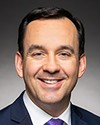
Blake Richards Conservative Airdrie—Cochrane, AB
I did have to step out of the room briefly, so I missed some of the conversation. I apologize in advance if I'm repeating anything that's been asked or anything along those lines.
I'd like to ask each of you the same question. I'll start with you, Mr. La Salle and we can work our way across the table.
I want to ask about sanctuary trauma. It's what you were referring to in your opening statement, Mr. La Salle—the fact that the very place you're going for help is the thing that's caused you the most stress and grief as you've tried to deal with your recovery. For veterans who end up suicidal, what role do you think sanctuary trauma has played in some cases? If we could improve the bureaucratic nightmare that dealing with the government is, would we save lives?
As an Individual
Absolutely. We go back to what Dr. Brend said about having that trauma-informed approach where we're treated as people and not as files, and about simplifying the bureaucracy.
For example, when connecting with Veterans Affairs for the case manager, you have to dial a 1-800 number, press a zillion buttons and then ask to speak to the case manager. Simplify the process and be in this century so you're able to send a proper email to a case manager, as opposed to doing an online platform. Things like that reduce the stress and create more of a human touch with the case manager, who wants to help us in a lot of cases, but is tied up in bureaucracy.
Conservative
Blake Richards Conservative Airdrie—Cochrane, AB
I appreciate that response.
I'll work our way across to Dr. Brend.
Assistant Professor, Université Laval, As an Individual
I would like to briefly address one of the myths we've struggled with when we've been implementing trauma-informed care in other types of structures. There's a fear that we're going to create a dependency, that if we give the services too freely, if we're too accessible, it will end up being overwhelmingly expensive for the system. We see that it's the opposite. Yes, there's a quick uptake at first, because people are saying, oh, this is great. But at the end of the day, most people want to be autonomous. They want to be in their lives doing their thing. They're not that interested in constantly needing to depend on a service.
I just wanted to say that there are a few myths at play that are really related to this. What happens when people are traumatized is that they try to defend against it, and so do systems. We have to work a little bit to break those down.
Conservative
Blake Richards Conservative Airdrie—Cochrane, AB
I appreciate that. It's a great contribution.
Madame Deraiche.