Thank you. That completes Mr. Tolmie's time for the first round.
We'll move to the Liberal government now and Mr. Fanjoy for six minutes.

Evidence of meeting #35 for Veterans Affairs in the 45th Parliament, 1st session. (The original version is on Parliament’s site, as are the minutes.) The winning word was pcvrs.
A recording is available from Parliament.
Conservative
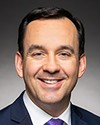
The Vice-Chair Conservative Blake Richards
Thank you. That completes Mr. Tolmie's time for the first round.
We'll move to the Liberal government now and Mr. Fanjoy for six minutes.
Liberal

Bruce Fanjoy Liberal Carleton, ON
Thank you.
Thank you, witnesses, for joining us today.
In particular, thank you to Master Corporal Forcier and Master Corporal Peddle, both for your service and for your advocacy post-service. Both are very important.
Madame Forcier, I'll begin with you. What systemic issues are you hearing about most often from veterans and their families when they try to access services?
As an Individual
I think there are several systemic issues. The biggest concerns for me, which I'm hearing about from other veterans, are this stronghold—they're mandated to be supported by Lifemark practitioners—the lack of transparency and the lack of an actual rehab plan that is supportive and empowering to the veteran. That becomes a huge bone of contention, because we have, by design, already turned ourselves off through the military, not realizing our injuries, not understanding...and being able to push through to focus on the mission. Now we're being put into a system that is forcing us into this rehab plan that looks good on paper but doesn't necessarily meet our needs and the transition out of the military.
Years of injuries and putting them aside are expected to be treated within a year or two. Being forced into vocational rehab and to get a new job, I'd say, becomes one of our biggest issues.
Liberal
Bruce Fanjoy Liberal Carleton, ON
What would a trauma-informed rehabilitation system look like for veterans? Where does the current PCVRS program fall short?
As an Individual
For me, veterans helping veterans creates trust, because we have the institutional trauma and the moral injuries. When they're trauma-informed in basic civilian care, that's one thing, but we're unique and very complex, so the trauma-informed.... Having it be led by veterans for veterans would, in my opinion, be a better strategy.
Liberal
Bruce Fanjoy Liberal Carleton, ON
If I may, I'd like to ask a question about your knee injury. If I understood you correctly, you said you're not eligible for a knee replacement because of your age. Have you been advised that a knee replacement would improve the condition of your mobility?
As an Individual
Basically, my knee, after four surgeries, has continued to deteriorate. My practitioner said the only thing left for me to do is to get a knee replacement, but that won't be available to me until I'm older and I basically can't walk.
Liberal
Bruce Fanjoy Liberal Carleton, ON
Thank you.
Master Corporal Peddle, what changes would you recommend to the rehabilitation model to make it more clinically sound, less bureaucratic and more effective for veterans?
As an Individual
The easiest fix that comes to mind for me is, instead of telling the veteran, “You will see these people,” and, “You will do these assessments,” you should be asking them, “Do you have health care in place where you are? Do you have mental health care? Do you have physiotherapy?” Most of us definitely do, because we try to find people who mesh well with us, or we have help in the RCMP and veteran community, because knowing our service, our injuries and all of that stuff, and how to do the paperwork is paramount for their administration.
I think we should be asked. We shouldn't be told. We've spent our entire careers following orders and being told what to do, so why, when we have agency back in our lives in retirement, are we not now being asked, “Are we good to go?”
If we do not have anything, because, of course, Newfoundland.... I know a lot of rural veterans. They might not. Maybe you could try to push your providers, but the onus should be on us to choose or at least be asked the question before we're told.
Liberal
Bruce Fanjoy Liberal Carleton, ON
Master Corporal Peddle, you mentioned rural veterans. Based on your experience with the online community of veterans, how is their experience with PCVRS different from the experience of those in larger urban centres?
As an Individual
Most of the veterans I deal with have a mental health injury or a moral injury, so mental health is what they're trying to pursue. Thanks to telehealth, there are tons of great online communities. Most OSI clinics have their staff running their own private practices. I have a trusted network that we vetted to make sure that everything was good before I suggested them to anyone.
The problem is that once these veterans make contact with these people, they establish a rapport and they start healing, and then if they get into vocational rehab, they're told, “No, you can't use them, because they're not Lifemark-approved.” It's a circle. It keeps coming back to the same issue.
Conservative
The Vice-Chair Conservative Blake Richards
Thank you.
I will now give to the floor to Ms. Gaudreau from the Bloc Québécois for six minutes.
Bloc

Marie-Hélène Gaudreau Bloc Laurentides—Labelle, QC
Thank you very much, Mr. Chair.
My questions are for Mr. Peddle.
Your brief was very interesting. We received briefs from academics and managers, but this one came directly from members of the public. It's an informal brief from veterans themselves.
I would like to benefit from your position to highlight the importance of the Reddit platform for the Canada House Clinics.
I am well aware that you devote a great deal of time as a volunteer responding to questions from veterans. You get emails and messages, and you hold monthly meetings with thousands of people.
Why are you doing this?
As an Individual
The answer is really simple. When I was in the military, I was in the support trades. I dealt with logistics. Being a Newfoundlander, I'm pretty charismatic and personable. I've always had an empathetic personality. In retirement, I was sort of lost for what to do. With my skill in policy from being a supervisor in the military, I just naturally acclimated to dealing with policy. I managed to somehow get myself through VAC. By helping more people, I acquired more information, more how-tos and all that stuff. I just wanted to give back.
My career ended before I wanted it to, even though it had to, and this is just my way of giving back to the country and to the people who continue to wear the uniform.
Bloc
Marie-Hélène Gaudreau Bloc Laurentides—Labelle, QC
Mr. Chair, I missed a little bit of the interpretation. So, I'll be more careful to ensure I have understood. It must be because I understand English a little bit.
Mr. Peddle, what do you hear the most often in discussions with CAF members and veterans across the country?
As an Individual
Financial ruin is what comes back most often. The income replacement benefit is a lifeline for veterans. Once you have it, you have that stability, as Natalie said, and then it's threatened almost constantly when you're going through a rehab program.... As I'm sure you can imagine, veterans have kids and houses. Just to have that threat there—that you can lose the only income you have when you're injured and can't work a regular job, which is why you're in the rehab program to begin with—is something that no one would tolerate, let alone like, but we're just expected to.
Once you start to retire, you start looking at this stuff. You're very focused on your career when you're serving, but when you're about to retire, you're just terrified. I try to mitigate that as much as possible, because I'm always there. You can DM me and email me whenever you need it. I'm kind of a dime-store therapist sometimes, but it's all I can do. I just have to try to get them ready for what's coming and get the proper teams in place to help shield them from the administration.
Bloc
Marie-Hélène Gaudreau Bloc Laurentides—Labelle, QC
This brings me to your brief, which refers to the fact that there is zero trust. You may be saving the lives of some veterans.
Is this lack of trust really connected to the program?
Is this what you are referring to above all else?
As an Individual
Absolutely. I don't think it's inherently the vocational rehab program itself. It's how it's administered and everything to do with PCVRS. We live in an age now when information is at your fingertips. You can look up this company. You can look up anything you want about it.
I won't speak further to that, but it doesn't take a lot for someone to get themselves into a negative headspace by researching the company. That's only adding more fuel to the fire.
Bloc
Marie-Hélène Gaudreau Bloc Laurentides—Labelle, QC
How did we get here?
I am extremely concerned, because the contract needs to be renegotiated. If we leave it as it is—
Conservative
The Vice-Chair Conservative Blake Richards
Ms. Gaudreau, I am sorry to interrupt you for a moment. There is no interpretation.
Bloc
Marie-Hélène Gaudreau Bloc Laurentides—Labelle, QC
I will continue to talk until the interpretation resumes.
Bloc
Marie-Hélène Gaudreau Bloc Laurentides—Labelle, QC
Mr. Peddle, there were many recommendations. I am someone who tries to stay optimistic.
Do you believe there are benefits to the program such as it is? You said that you were treated well after all.
Should we make a radical change so that, in the network, there are no more complaints and mistrust in relation to the program?