Thank you very much, Ms. Gaudreau.
Is there any further discussion?
I believe we can now proceed to a vote on Mr. Richards' motion.
(Motion agreed to: yeas 5; nays 4)

Evidence of meeting #5 for Veterans Affairs in the 45th Parliament, 1st session. (The original version is on Parliament’s site, as are the minutes.) The winning word was programs.
A recording is available from Parliament.
Liberal

The Chair Liberal Marie-France Lalonde
Thank you very much, Ms. Gaudreau.
Is there any further discussion?
I believe we can now proceed to a vote on Mr. Richards' motion.
(Motion agreed to: yeas 5; nays 4)
Liberal
The Chair Liberal Marie-France Lalonde
We'll continue the discussion with the witnesses.
Again, we apologize profusely for taking away valuable time from your testimony.
On that note, we will continue with the second round, which is a five-minute round.
You have 20 seconds, Mr. Richards—and I mean 20 seconds.
Conservative
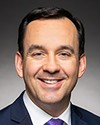
Blake Richards Conservative Airdrie—Cochrane, AB
Thank you.
I apologize to our witnesses that we lost time with you. I honestly believed that we would just go to a vote, that it was a no-brainer and we would pass it. Luckily, we got the result that was needed, but I apologize that it took away from your time. That was unfortunate.
Liberal
The Chair Liberal Marie-France Lalonde
Thank you very much, Mr. Richards.
Mrs. Hirtle, you have five minutes.
Liberal

Alana Hirtle Liberal Cumberland—Colchester, NS
Thank you, Madam Chair.
I apologize for the politicizing you just witnessed. Let's refocus.
Ms. Blackburn, I'd like to ask you some questions. I want to begin by thanking you for your dedication to Canada's veterans and your understanding of the importance of community service. It's clear that this is foundational to the Veterans Association Food Bank.
Can you share how you've achieved the successes you've seen in your work? Do you think being based in Alberta has made any unique contribution to that success?
Executive Director, Veterans Association Food Bank
The biggest thing I see in our success is that it's veterans helping veterans. That's what we established from day one. I truly believe it's about having a physical location where they can gather, talk and understand each other. As everybody on this panel has said, veterans have a unique way of discussing things among each other and a bond that we will never understand.
We started in Calgary. Then we branched out to Edmonton. We are in Grande Prairie and Lethbridge now. With the VHP through Infrastructure Canada, we now do western Canada in Manitoba, Saskatchewan and B.C. It's the same everywhere. We get phone calls all the time from people asking when we're going to open in their city. I don't think being based in Alberta has any more significance. I think this would be so beneficial to have in every city.
As with anybody, a lot of our veterans don't want to go to a food bank, so we've now stabilized it as a veterans association. We have our emergency funding program, we have the pet promise program, we have a thrift store and we have Thursday night dinners. It's a whole bunch of things. If one shoe doesn't fit, then you can try something else.
I think our success is mostly because veterans run most of it. All of our volunteers are veterans, and 90% of our workforce is veterans. I think giving people ownership in something is what makes us successful.
Liberal
Alana Hirtle Liberal Cumberland—Colchester, NS
You're saying that you're hearing demand in other areas. How would you go about scaling your programs to other provinces or across the country? Do you have any thoughts on that?
Executive Director, Veterans Association Food Bank
I'll use Calgary as our model. It's a very generous city when it comes to donations. We do a lot of events and a lot of fundraising. A lot of corporations now support us. To have this in every province, we would need to have a lot more government funding. As I said earlier, when Veterans Affairs calls us to help a veteran pay their rent or to help a veteran with gift cards for food or whatever and we get no funding from Veterans Affairs, it's just mind-boggling.
With the veterans homelessness program, our biggest fear—we just had a bunch of meetings with them in the last couple of weeks—is that it is only a four-year program. How well do we establish ourselves in other provinces and start building communities without having funding at the end? That's my greatest fear.
Liberal
Alana Hirtle Liberal Cumberland—Colchester, NS
You mentioned a school strike in Alberta. How is that impacting your ability to provide services?
Executive Director, Veterans Association Food Bank
I think the biggest thing is that kids in the schools are really gung-ho every year to have food drives for the food bank. We really focus a lot on educating our youth and younger kids. I think that's gone to the wayside a lot with the education system, with veterans not being able to go into schools and have their social teas with kids or have time to speak to them about what it is to be a veteran. That's the support we need.
Everybody rushes out on Remembrance Day, which is nice, to provide food and donations, but the truth is that our veterans served 365 days a year. They need support 365 days a year.
Liberal
Alana Hirtle Liberal Cumberland—Colchester, NS
I gather that you have family who served in the armed forces. My grandfather served in World War II. I lived with my grandparents as a child, so I understand that the whole family serves and not just the veteran.
In Nova Scotia, where I live, the space of service to veterans is being filled greatly by VETS Canada. They have a number of programs.
I'm going to run out of time here, so I'll cut down my preamble a bit.
I'm wondering about collaboration. Does your organization collaborate with other groups on best practices? I'm wondering how that's working for you or if it's working for you.
Executive Director, Veterans Association Food Bank
We do. We're in western Canada and VETS is in eastern Canada, but we still collaborate with each other if we have a veteran in need. If VETS Canada can't get to one in the east, we will certainly help. It's the same if there's a disconnect with somebody in the west; they help us.
We work with Homes For Heroes. We have referred some people to the Veterans Transition Network.
We do the day-to-day stuff. If we can keep people stable every day, that's what we do.
Liberal
The Chair Liberal Marie-France Lalonde
Thank you very much. I appreciate that.
Ms. Gaudreau, you have the floor for two and a half minutes.
Bloc

Marie-Hélène Gaudreau Bloc Laurentides—Labelle, QC
Thank you, Madam Chair.
Before I put my question to you, I would like to ask you something quickly. I think it would be helpful if you could provide us with the data and the results of the research you have so that we can add it to our report. It could be, for example, correlations between traumatic brain injury and suicide attempts, the effects of pet therapy or data supporting the fact that more than two thirds of veterans have suicidal thoughts. We don't need to hear about it orally; you can just send it to the right person.
I'll go back to my earlier question. Do you think that anyone who needs to make a decision about a program for veterans or to work with one of them should at least be given the context of what veterans have experienced, to be able to provide assistance and apply programs?
There's one minute left.
President and Chief Executive Officer, Atlas Institute for Veterans and Families
I'm happy to kick it off. I didn't get most of the question, Madame. I apologize.
When it comes to stats, you spoke to whether there is an increase in suicidality when you see PTSD and a TBI. There aren't concrete statistics, but we know that if folks struggling with mental health problems are in crisis and that crisis is significant, it will lead to suicidal ideation or suicide attempts.
Another question came up earlier about something that I wanted to highlight, which is the importance of housing, employment and a sense of purpose. We know suicide risk is highest in those first two years post-service, during that transition time. What can we do as a collective to ensure they're getting care upstream so that when they transition to post-service life, they have a sense of purpose, community, belonging and identity? When you lose that, you don't know what to do with your day and you don't know who you are as an individual, which can lead to mental health problems and a mental health crisis.
We have to move upstream. We have to think about what we can do during transition, because ultimately, humans are social creatures. We strive for social connections, and veterans are the same. They have that when they're deployed or when they're together with their colleagues or others. We need that sense of community.
I don't know, Gabrielle, if you want to speak to that.
Director, Research Partnerships and Government Affairs, Atlas Institute for Veterans and Families
Thank you, Fardous.
Thank you for the question.
The need for cultural competency training was spoken about quite eloquently when we talked about gatekeepers and people who are working with veterans. When we're talking about suicide in this study, we also have to talk about competency in understanding suicide and how to talk about it. That's a separate expertise. That interdisciplinary approach is necessary when we're looking to support and save many veterans, especially, as Fardous said, during the transition period when there is a high risk.
We don't have to reinvent the wheel. There is incredible training out there, but having a collaborative approach, cultural competency and suicide prevention training is necessary.
Liberal
Conservative

Cathay Wagantall Conservative Yorkton—Melville, SK
Thank you so much, Chair.
Mr. Thorne, I'm going to begin with you.
I've gone back and looked at some of your testimony in the past, from 2019 and 2022. You're now here today, and I thank you for the work that your very professional organization does and for the research and follow-up that you do that makes you very reputable.
Very briefly, I'm going to speak to what you said. In 2022, you said, “Reading the news that a Veterans Affairs case manager offered medically assisted dying unprompted to a veteran is deeply troubling, and it seems to run counter to the entire purpose of the department.” I think we've all come to that conclusion. Hopefully that ripple will somehow be healed within the veterans community. We know word travels, and that sense of unrest was very real.
You spoke about your organization and said, “First, [you provide] mental health services. Suicide is the worst possible outcome for veterans suffering from post-traumatic stress disorder.”
Second, you said, “we also know that PTSD is treatable.” You talked about how your evaluations showed a significant reduction in it, along with depression and suicide.
Third, you said, “due to military culture, veterans are...often reluctant to go get help.” Of course, the sooner they can get it, the better. When they seek help, you stressed that “our system [needs] to respond quickly with quality services.”
Fourth, you said, “Finally, with medical assistance in dying becoming available for mental health disorders...we must consider the issue of access, both for MAID and for veterans services.” You spoke of that in 2022, and it was to happen in 2023. It has been delayed, and more discussion is going on about it, thankfully. You continued, saying, “We cannot have a system that offers veterans medically assisted death faster than it offers them access to evidence-informed care that they rightly deserve because of their service to Canada.”
You have a very strong statement here, and I know it's because you know that you can treat PTSD. You do a wonderful job of assisting veterans to get past the point of looking at suicide as their way out.
You are a registered service provider to VAC. Is that correct?
Chief Executive Officer, Veterans Transition Network
Yes, we are. That's correct.
Conservative
Cathay Wagantall Conservative Yorkton—Melville, SK
You were in 2019 as well. At that time, you said, “we have seen the rate of approval for veterans who are eligible drop drastically...over the past three years.” That was in 2019.
In 2022, did that get better or worse, as far as the number getting assistance through VAC goes? Is everyone who's asking for your help and who can qualify for VAC assistance getting it?
Chief Executive Officer, Veterans Transition Network
We have unfortunately not seen that number improve. We still put a number of veterans through our programs who, as far as we can tell, would be eligible for funding from Veterans Affairs through our status as a service provider. However, we do not receive that funding because of the complexity and the time delays involved in the approval process.
One of the points I made in that testimony was that veterans often only reach out and ask for help when their symptoms and their suffering become quite severe. That's because of issues like stoicism, which we heard about earlier in today's testimony, and their resistance to seeking help. They have a strength-based culture because of the work they do. It means that, often, many reach out only when they are seriously struggling with symptoms.
We believe it's very important that they can quickly access those services, and for that reason, we do not turn them away if the Veterans Affairs funding will not be approved in time. The result, then, is that we have to use charitable donations to pay for those clients. Again, as far as we can tell, they could otherwise have been funded by Veterans Affairs.
Conservative
Cathay Wagantall Conservative Yorkton—Melville, SK
Could you explain to me, then, if they've applied for it and—
Chief Executive Officer, Veterans Transition Network
I'm sorry, but I didn't hear you there at first.
Conservative
Cathay Wagantall Conservative Yorkton—Melville, SK
I'm sorry.
They've applied for funding that it appears they should receive, but you say that it comes too late. Basically, if they get the support they need in advance of getting that funding, they no longer qualify to get funding. Is that correct?
Chief Executive Officer, Veterans Transition Network
In order for a client's participation to be funded in our program, they need to receive pre-authorization before the program begins.
Typically speaking, they're reaching out in a short period of time before we're able to get them on a program. The message we often hear is that there is not enough time for case managers to complete the process to basically green-light that funding.