Evidence of meeting #7 for Veterans Affairs in the 45th Parliament, 1st session. (The original version is on Parliament’s site, as are the minutes.) The winning word was strategy.

A video is available from Parliament.

On the agenda

Members speaking

Before the committee

Jill McKnight  Minister of Veterans Affairs
McDowell  Acting Deputy Minister, Department of Veterans Affairs
Harris  Senior Assistant Deputy Minister, Service Delivery, Department of Veterans Affairs
Freeman  Acting Assistant Deputy Minister, Strategic Policy, Planning and Performance Branch, Department of Veterans Affairs
Tessier  Assistant Deputy Minister, Chief Financial Officer and Corporate Services, Department of Veterans Affairs
Meunier  Assistant Deputy Minister, Commemoration and Public Affairs Branch, Department of Veterans Affairs

5:20 p.m.

Acting Deputy Minister, Department of Veterans Affairs

Christine McDowell

I'm going to turn that right over to Amy Meunier in the interest of time.

5:20 p.m.

Assistant Deputy Minister, Commemoration and Public Affairs Branch, Department of Veterans Affairs

Amy Meunier

Thank you very much.

You are correct. We have a team that actually resides in France, taking care of the Vimy monument as well as Beaumont-Hamel. They are actively working with all of our partners in France, as well as other countries, to build quite a series of activities that will take place in and around that time.

We're also looking to include a companion piece here in Canada, so that more Canadians can participate in those activities. We will come back as more of the details are refined.

5:20 p.m.

Conservative

Blake Richards Conservative Airdrie—Cochrane, AB

I guess I would just say that I know there are partners like the Vimy Foundation and others that are really wanting to know far in advance so they can be a part of these things as well. I'll just put that in your ear.

To go back to the issue we were talking about earlier, Mr. Harris, let me try to succinctly summarize it. Essentially, what these providers like the Veterans Transition Network and others are finding is that VAC won't process the applications in time. They get the client into their programs, but then VAC won't process retroactively, so they end up stuck in this spot where they're paying through charitable money for things that the client should have been eligible for through VAC.

That's obviously a problem. I've had them report as much as a 60% decrease in terms of the rate of funding approvals. It's pretty significant. As a result, that requires a lot of charitable donations to be used. There has to be something we can do to fix that. Can you comment on that at all?

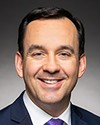
5:20 p.m.

Senior Assistant Deputy Minister, Service Delivery, Department of Veterans Affairs

Steven Harris

Madam Chair, the quick comment I'd offer is that there is a pre-approval process for people who want to go and participate in a program, be it the Veterans Transition Network or any number of other programs that help to support individuals.

We want to make sure that happens as quickly as possible—

5:20 p.m.

Conservative

Blake Richards Conservative Airdrie—Cochrane, AB

If I can just interrupt you on that, obviously we're not talking about a small-time organization here. This is a pretty major organization. If they can't figure out how to make this work, there has to be an issue. Is there something we can do to fix it?

5:20 p.m.

Senior Assistant Deputy Minister, Service Delivery, Department of Veterans Affairs

Steven Harris

I think it's about timing and intake to make sure we get veterans who want to attend those kinds of programs—who will benefit from those kinds of programs—in quickly for the approvals that are required, so that places like the Veterans Transition Network aren't put in a position where they feel as though a veteran needs that immediate help and yet it's not in time for approval.

You're quite right. We can't approve retroactively. We need to do the pre-authorizations. We need to make sure, as part of a veteran's rehabilitation program, of their well-being plan, that those kinds of things are included earlier, so that we can approve them earlier and make sure that places like Veterans Transition Network and many others can do their good work on their side.

5:20 p.m.

Conservative

Blake Richards Conservative Airdrie—Cochrane, AB

Yes, and it is many, isn't it? That's the thing. There's obviously something we need to do in that process. I appreciate that you're providing a suggestion, but it sure seems to me from the things I'm hearing that there needs to be something done to streamline this. I really hope you'll take that back and give that some consideration. Maybe next time we can have a further conversation about it.

The Chair Liberal Marie-France Lalonde

Thank you, Mr. Richards.

For three minutes, we have Mrs. Hirtle.

Alana Hirtle Liberal Cumberland—Colchester, NS

Thank you, Madam Chair.

I think this question is for Mr. Harris, but any of you can jump in.

At committee recently, we heard from the veterans ombud, who, when asked by one of our colleagues who Canada should be looking to internationally as an example of leadership in working with and supporting veterans and their families, replied that in fact Canada is the leader that others often come to.

I'm hoping that you can elaborate on what this means. How does Canada compare to international counterparts, either in the services offered or the range of services, or in the depth of benefits that veterans and their families have access to here in Canada?

5:20 p.m.

Senior Assistant Deputy Minister, Service Delivery, Department of Veterans Affairs

Steven Harris

Madam Chair, straight comparisons are very difficult, because different considerations exist in different countries. An example would be the United States veterans association, which provides all health care because they do not have a health care network in the U.S.

We compare very favourably with organizations in many international settings that deliver services to veterans. We use groups like the Five Eyes to speak regularly about benefits and services that are available and experiences people have in other areas. I think Canadian veterans' benefits compare very favourably with those across the world. All of my colleagues speak regularly with our international counterparts to try to share and learn how we can get better at providing benefits for veterans as well.

Alana Hirtle Liberal Cumberland—Colchester, NS

It is certainly something to be proud of, though.

I still have one minute. Quickly, the committee noted in its recent report on the transition from military to civilian life that the proportion of veterans experiencing difficulties during the transition went from 30% to 40% in the last decade. What measures are planned to support the transition of veterans who are medically released?

5:25 p.m.

Senior Assistant Deputy Minister, Service Delivery, Department of Veterans Affairs

Steven Harris

We support medically released veterans in many ways. We have a direct ability to help support veterans who are transitioning from the Canadian Armed Forces to Veterans Affairs and have benefits and services in place in time for their departure.

In other instances, people leave the Canadian Armed Forces and may have difficulty with the transition. That could be because of a mental health issue or a physical health issue. It could be because of an issue of belonging and a sense of purpose. That can come later as well. In any of those cases, veterans can come back to Veterans Affairs Canada for assistance at any time. It doesn't have to be during the release process, although we want to make sure through transition interviews and others that we can immediately identify any challenges they're facing. If they develop challenges after they're released from the Canadian Armed Forces, they can still come to us. We have lots of programs we can help them with as well.

Alana Hirtle Liberal Cumberland—Colchester, NS

Thank you.

The Chair Liberal Marie-France Lalonde

Thank you very much, Mr. Harris.

Madame Gaudreau.

Marie-Hélène Gaudreau Bloc Laurentides—Labelle, QC

Thank you very much, Madam Chair.

I'd like to remind everyone that a lot of people are watching our proceedings.

Why do men and women veterans have to wait when we know that a systemic approach is not a good idea for them?

I hope people in the sector will realize this. It means having new, adaptable ways of doing things.

I'd like to give you the opportunity to explain how you're going to get back on track and why wait times are from a year to a year and a half. I don't want to hear you say you're doing what you can.

Why do they have to wait? What are you missing?

5:25 p.m.

Senior Assistant Deputy Minister, Service Delivery, Department of Veterans Affairs

Steven Harris

I thank the member for the question.

I can explain a few things. It's important to understand that the process can be complicated. It can take time to gather the necessary documents, like medical or military service documents.

The number of cases where wait times were more than a year has gone down significantly in the last two to three years. Making sure decisions are rendered faster has been a focus of the department. I can tell you the wait times in service delivery have gone down by 50% in the last couple of years. We're not there yet, but we're making progress.

Marie-Hélène Gaudreau Bloc Laurentides—Labelle, QC

That means that when you come back, it'll be even better.

Do you listen closely to what's said during the committee's proceedings? Do you read the committee's reports?

5:25 p.m.

Senior Assistant Deputy Minister, Service Delivery, Department of Veterans Affairs

Steven Harris

I always read the committee's reports, and I always listen closely to what is being said in the committee's meetings. We follow the committee's proceedings closely and pay a lot of attention to the committee's recommendations.

Marie-Hélène Gaudreau Bloc Laurentides—Labelle, QC

Excellent.

We'll try and make sure everyone shows leadership to help our men and women veterans.

Thank you.

The Chair Liberal Marie-France Lalonde

Thank you very much, Ms. Gaudreau.

I'd like to thank the witnesses for joining us today.

I'd also like to take a moment to acknowledge some of our guests in the room.

We have many guests with us. I cannot assume they are veterans, but I think they are. To all of our veterans who were with us during today's committee, thank you for your service to Canada. I really want to make sure that we say thank you to all of you.

Some hon. members

Hear, hear!

The Chair Liberal Marie-France Lalonde

Before we adjourn, I have one housekeeping note. On the topic of the suicide prevention study, a study budget was prepared by the clerk last week and distributed to all of our members on the committee. I need to seek the committee's approval to adopt this budget.

Is it the will of the committee to adopt the budget for the study on suicide prevention among veterans?

Some hon. members

Agreed.

The Chair Liberal Marie-France Lalonde

Thank you very much.

Is it the will of the committee to adjourn the meeting?

Some hon. members

Agreed.