House of Commons Hansard #156 of the 44th Parliament, 1st session. (The original version is on Parliament's site.) The word of the day was review.

Topics

line drawing of robot

This summary is computer-generated. Usually it’s accurate, but every now and then it’ll contain inaccuracies or total fabrications.

Statements by Members

Question Period

The Conservatives assert Canada is broken, highlighting a cost of living crisis with record inflation, high housing costs, and the carbon tax's impact on food and heating. They criticize the bail system, public services, health care, and government waste at the Infrastructure Bank. Condolences for a tragic daycare crash were also offered, demanding Prime Ministerial responsibility.
The Liberals prioritize major health care investments of $198 billion to improve access to family doctors, mental health, and uphold the Canada Health Act. They highlight support for seniors, low-income renters, and dental care for children, contrasting with Conservative calls for cuts. The government also defends its climate action incentive, bail reform, and commitment to protect French.
The Bloc criticizes the government's inadequate health care offer, demanding increased fund transfers to provinces. They condemn Liberal disinformation concerning the French language and Bill C-13, while also demanding a Prime Ministerial apology.
The NDP criticize the Prime Minister for failing to defend public health care and long-term care, specifically regarding for-profit privatization. They also highlight expensive housing and demand action on anti-scab legislation to protect workers' rights.
The Greens criticize the government's delay in delivering promised actions on the housing crisis.

Technical Difficulties with Interpretation Services Conservative MPs raise a question of privilege regarding the lack of interpretation services at their caucus meeting, arguing it impeded their parliamentary functions and breached francophone members' privileges. 1100 words.

Health Care Members debate the federal government's $198 billion health care funding offer, including $48 billion in new spending, aimed at improving access to family health care, supporting workers, and modernizing the system. Liberals defend the plan, while Conservatives call the system "broken" after eight years and deem the funding insufficient. The Bloc Québécois views it as an "ultimatum" that underfunds provinces. The NDP criticizes the offer as a "band-aid solution" that fails to prevent privatization. 4300 words, 30 minutes.

Petitions

National Security Review of Investments Modernization Act Second reading of Bill C-34. The bill amends the Investment Canada Act to strengthen national security reviews of foreign investments by increasing ministerial powers and penalties. Liberals state it protects Canada from hostile actors and ensures economic security. Opposition criticizes the high 'net benefit' review threshold and past government failures, advocating for a zero-dollar threshold for state-owned enterprises from hostile regimes, and broader asset review. 14800 words, 2 hours.

Canada National Parks Act Report stage of Bill C-248. The bill seeks to amend the Canada National Parks Act to establish the Ojibway National Urban Park of Canada in Windsor, Ontario. NDP MP Brian Masse, the bill's sponsor, highlights the park's importance for protecting endangered species and Carolinian forests, and for reconciliation with Caldwell First Nation. While the bill has cross-party support, the Liberal government expresses concern that it bypasses existing Parks Canada processes for consultation and park establishment. Bill C-248 8500 words, 1 hour.

Adjournment Debates

Fossil fuel subsidies Laurel Collins questions why the Liberal government continues to subsidize the fossil fuel industry despite declaring a climate emergency. Élisabeth Brière defends the government's climate action plan, emphasizing investments in emissions reduction and carbon capture technology. Collins argues for a windfall profits tax on oil and gas companies. Brière reiterates the commitment to reducing emissions.
Canada mental health transfer Mike Morrice asks if the $4.5 billion mental health transfer promised in the 2021 election will be in the 2023 budget. Élisabeth Brière says the government is keeping its commitment by increasing the Canada health transfer, which includes mental health, and providing $25 billion over 10 years under long-term integrated bilateral agreements.
Inuit Elders Health Care Lori Idlout raises concerns about Inuit elders being forced to leave Nunavut for care, emphasizing cultural and mental health impacts. Vance Badawey cites funding for Nunavut health care and programs aimed at community-based care, and says they are working to improve culturally relevant healthcare.
Was this summary helpful and accurate?

HousingOral Questions

2:25 p.m.

Carleton Ontario

Conservative

Pierre Poilievre ConservativeLeader of the Opposition

Mr. Speaker, what the Prime Minister has done is double the rent to $2,200 a month as an average in the 10 biggest cities. He has doubled the home heating bills right across the country, and he has doubled the average mortgage payment to well over $3,000 a month. No wonder nine out of 10 young people who do not own a home believe they never will.

This is after eight years of inflationary policies that have driven up the cost of housing and driven up interest rates to pay for it. Why will the Prime Minister not admit that these things are broken after eight years of his leadership so that we can fix them?

HousingOral Questions

2:25 p.m.

Papineau Québec

Liberal

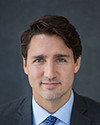
Justin Trudeau LiberalPrime Minister

Mr. Speaker, over the past eight years we have stepped up on investing in housing. We have invested in low-income rentals, and we have made sure that seniors have extra supports so they can retire with dignity. The previous Conservative government consistently nickelled and dimed seniors and veterans and refused to support young families. These are the kinds of things we have been working on, and yes, there is more to do. This is why we were so surprised that the Conservative Party stood against extra supports for low-income renters and supporting families to send their kids to dentists when they could not afford it.

These are things we will continue to do.

Public Services and ProcurementOral Questions

2:25 p.m.

Carleton Ontario

Conservative

Pierre Poilievre ConservativeLeader of the Opposition

Mr. Speaker, the Prime Minister said he was drawing the line to ban anyone from pointing out that things are broken after eight years of his leadership. His own Parliamentary Budget Officer has crossed the line, saying, “there is a system that is broken” and “anybody who has recently applied for a passport, Employment Insurance, Old Age Security and the list goes on” probably realizes very well that the “level of service Canadians are getting is not what one would expect from a world-class public service.” There is “room for enhanced leadership”.

Will the Prime Minister call to the carpet this rogue parliamentary officer for saying that things are broken?

Public Services and ProcurementOral Questions

2:25 p.m.

Papineau Québec

Liberal

Justin Trudeau LiberalPrime Minister

Mr. Speaker, through a very difficult pandemic, yes, there have been challenges for service delivery. That is why this government has been stepping up. One area we are stepping up in is recognizing that our universal public health care system needs more support. That is why we are moving forward with investments worth $198 billion in additional money to support provinces and territories in delivering better health care for Canadians.

Whether it is with more access to family doctors, better mental health supports, better support for frontline health workers or better data and information to underpin our system, we are there to invest as Conservatives continue to push cuts.

HealthOral Questions

2:25 p.m.

Bloc

Yves-François Blanchet Bloc Beloeil—Chambly, QC

Mr. Speaker, far be it from me to stick my nose in other people's business, but media reports suggest all is not well in the Liberal caucus. The Prime Minister is adding to an already long list of major problems.

Quebec and the provinces calculated they need $300 billion in new money for health care. The government ponied up $46 billion over 10 years, which nobody thinks is nearly enough.

Let us start at the beginning. Will the Prime Minister admit that this is not $200 billion in new money, it is actually $46 billion?

HealthOral Questions

2:30 p.m.

Papineau Québec

Liberal

Justin Trudeau LiberalPrime Minister

Mr. Speaker, over the next 10 years, the federal government will invest an additional $198 billion in health care systems across the country, and that includes $46 billion in new money for the provinces and territories. The purpose of this money is to provide access to family doctors, provide access to better mental health services, especially for our youth, ensure that frontline health workers get appropriate support, and create better data and information systems for Canadians.

HealthOral Questions

2:30 p.m.

Bloc

Yves-François Blanchet Bloc Beloeil—Chambly, QC

Mr. Speaker, this is progress. He is no longer pretending it is $20 billion a year; it is $4.6 billion a year. The provinces were asking for $28 billion. This is a far cry from what is needed to care for people. This requires a proper assessment of what it takes to care for people.

Now we see that the government is indexing underfunding. It is publicly announcing that a problem that is real today is going to be just as real for the next 10 years.

Can the Prime Minister admit that this money is not enough and commit to improving his offer?

HealthOral Questions

2:30 p.m.

Papineau Québec

Liberal

Justin Trudeau LiberalPrime Minister

Mr. Speaker, while my hon. colleague talks about what the provinces want, we are focused on what Canadians need.

Canadians need more family doctors. They need more mental health help. Canadians need to see that frontline workers in hospitals and other facilities are better paid and supported. Canadians need to know where their medical records are and they need better information to understand the system they rely on.

That is what we are doing in partnership with the provinces. We are going to improve health care systems for tomorrow.

HealthOral Questions

2:30 p.m.

NDP

Jagmeet Singh NDP Burnaby South, BC

Mr. Speaker, yesterday in the Prime Minister's meeting with the premiers, he had a chance to tell premiers not to double down on for-profit care and poach from our hospitals. However, Premier Doug Ford confirms that this never came up in any conversation. The Prime Minister had a chance to stand up for public health care and increasing staffing levels. Instead, he stood down.

The Prime Minister used to believe in public health care. Why the flip-flop?

HealthOral Questions

2:30 p.m.

Papineau Québec

Liberal

Justin Trudeau LiberalPrime Minister

Mr. Speaker, I am sure my hon. NDP colleague will be pleased to know that he has been misinformed.

One of the very first things I said when I sat down with the premiers yesterday was about respect for our universal public system and how the principles of the Canada Health Act are foundational for this government and for any money that we flow to the provinces and to health care systems across this country over the coming years.

On this side of the aisle, we will always stand up for universal public health care.

HealthOral Questions

2:30 p.m.

NDP

Jagmeet Singh NDP Burnaby South, BC

Mr. Speaker, during the last election, the Prime Minister spoke out against the for-profit privatization of our health care system. He said that would not be innovation, and I agree.

However, it has been confirmed that, yesterday, he did not raise this issue in his meeting with the premiers. He had the opportunity to defend our health care system and he rolled over.

Why this big flip-flop?

HealthOral Questions

2:30 p.m.

Papineau Québec

Liberal

Justin Trudeau LiberalPrime Minister

Mr. Speaker, I will repeat my answer to make sure that my NDP colleague hears me properly.

The first thing I said when I sat down with the premiers yesterday to talk about health care and the investments that the federal government will make to help people is that we need to uphold the Canada Health Act and continue with our universal public system, which provides services to Canadians across the country.

That is a fundamental principle that we will always defend. We are always there to defend our public health care system.

The EconomyOral Questions

2:30 p.m.

Conservative

Melissa Lantsman Conservative Thornhill, ON

Mr. Speaker, after eight years under the Liberal Prime Minister, Canadians cannot afford groceries, which are up 11%. They cannot afford rent; it has doubled. Nine out of 10 young people say that they will never be able to afford a home. To add insult to injury, he is tripling the carbon tax.

Will the Prime Minister take responsibility for the cost-of-living crisis that he created or at least get out of the way so we can fix it?

The EconomyOral Questions

2:35 p.m.

Papineau Québec

Liberal

Justin Trudeau LiberalPrime Minister

Mr. Speaker, we recognize that Canadians are going through difficult times right now following the challenges of the global pandemic and global inflation. That is why we chose to step up to support Canadians last fall with a doubling of the GST credit, which has helped 11 million Canadians; moving forward on supporting lowest-income renters; and making sure that all families can send their kids to the dentist. Unfortunately, the Conservatives, despite their rhetoric, stood against those last two measures and refused to help Canadians who need it. They are abandoning the middle class in favour of cuts and austerity.

The EconomyOral Questions

2:35 p.m.

Conservative

Melissa Lantsman Conservative Thornhill, ON

Mr. Speaker, the Prime Minister has been in that chair for eight years, and for millions of Canadians, things have never been worse. Inflation is at the highest it has been in 40 years, interest rates are the highest in a generation and home prices and rents are the highest they have ever been.

The Prime Minister can try to deflect responsibility; he can try to blame someone or something else. Conservatives are fighting to keep the heat on and the taxes off. Will he at least do the same?

The EconomyOral Questions

2:35 p.m.

Papineau Québec

Liberal

Justin Trudeau LiberalPrime Minister

Mr. Speaker, it is interesting to see the lengths to which Conservatives will go to pretend the pandemic never happened. It was a very difficult time for Conservative politicians at the federal level. They were not convinced about vaccines and did not like all the supports we were sending to Canadians, even though it not only ensured that millions of Canadians were kept safer during the pandemic but also allowed our economy to bounce back stronger than just about any of our fellow economies did.

In regard to supporting Canadians, our price on pollution puts more money back in the pockets of families. At the same time, we are investing $500 million so that families can upgrade their home heating.

SeniorsOral Questions

2:35 p.m.

Conservative

Jasraj Singh Hallan Conservative Calgary Forest Lawn, AB

Mr. Speaker, after eight years of this woke Prime Minister's inflationary spending, seniors are going cold, hungry and broke.

Seventy-five-year-old Janet from Montreal says that she is completely out of money because Liberal inflation drove up the cost of her groceries, gas and rent. She is saying that now she cannot even retire.

This Prime Minister will pile-drive more seniors like Janet when he triples his failed carbon tax scam, further breaking seniors and Canada. Are these the sunny ways this Prime Minister was talking about? Will he take some responsibility, show some humility and take the tax off so seniors can keep the heat on?

SeniorsOral Questions

2:35 p.m.

Papineau Québec

Liberal

Justin Trudeau LiberalPrime Minister

Mr. Speaker, while opposition members are simply focused on frightening seniors, what we actually saw 10 years ago was that they raised the age of retirement from 65 to 67 years, which we returned to 65 when we first took office. Then we moved forward with an increase in the guaranteed income supplement of 10% for the most vulnerable single seniors; that party voted against the increase.

We continue to step up in ways to support Canadian seniors right across the country and lift more of them out of poverty while Conservatives continue to argue against those investments.

The EconomyOral Questions

2:35 p.m.

Conservative

Jasraj Singh Hallan Conservative Calgary Forest Lawn, AB

Mr. Speaker, this guy must be great at dodgeball the way he ducks, dodges and deflects questions here. He sounds like a broken record, although not as broken as Canada feels after eight years of his failures. He is completely out of touch.

Does he actually think that people are patting him on the back because he has raised the costs of gas, groceries and home heating with his out-of-control spending and his failed carbon tax? If he does not want to take the tax off so that Canadians can keep the heat on, why does he not just get out of the way so that we can fix everything he broke?

The EconomyOral Questions

February 8th, 2023 / 2:35 p.m.

Papineau Québec

Liberal

Justin Trudeau LiberalPrime Minister

Mr. Speaker, as a government we stepped up to support Canadians during the pandemic. As a government we continue to step up to support Canadians during these difficult times of high inflation and high interest rates. That is why we put forward initiatives to double the GST rebate for 11 million families. That is why we moved forward with rental support for the lowest-income renters and dental supports for families who cannot send their kids to the dentist.

Despite all the rhetoric from the Conservatives, they cannot dodge the fact that they voted against those initiatives.

Government PrioritiesOral Questions

2:35 p.m.

Conservative

Gérard Deltell Conservative Louis-Saint-Laurent, QC

Mr. Speaker, after eight years as Prime Minister, the member for Papineau is more out of touch with Canadians than ever, to say the least. Let us not forget that in December, the Prime Minister solemnly told 2,000 Liberal pals that “Canada is not broken”.

On Saturday morning, he heard the truth from Canadians, loud and clear: Two out of three Canadians say that Canada is broken. That is what happens when the government is out of touch with Canadians.

When will the Prime Minister take full responsibility for the fact that Canada is broken because of him?

Government PrioritiesOral Questions

2:40 p.m.

Papineau Québec

Liberal

Justin Trudeau LiberalPrime Minister

Mr. Speaker, throughout our history, Canada and Canadians have faced some extremely difficult times.

We are going through a difficult time right now. Instead of throwing our hands up and saying that everything is broken, we know what Canadians are doing. They are there for one another. They are rolling up their sleeves to help one another. That is how we know that they appreciate the fact that we are investing in support for dental care and for low-income renters.

Our hon. colleague voted against these initiatives. We will continue to be there despite the Conservatives' opposition to investing.

Government PrioritiesOral Questions

2:40 p.m.

Conservative

Gérard Deltell Conservative Louis-Saint-Laurent, QC

Mr. Speaker, unfortunately, after eight years of Liberal governance, not only is the Prime Minister out of touch with Canadians, he is also out of touch with his officers of Parliament.

Yesterday, before the Senate committee, the Parliamentary Budget Officer, Mr. Giroux, said, and I quote, “I think if you ask anybody who has asked recently for a passport, employment insurance, old age security and the list goes on, they are probably very well aware that the level of service Canadians are getting is not what one would expect from a world-class public service”.

In short, Canada is broken. The Conservatives are not the ones saying it. Two out of three Canadians are saying it, including the Parliamentary Budget Officer.

When is the Prime Minister going to take full responsibility—

Government PrioritiesOral Questions

2:40 p.m.

The Speaker Anthony Rota

The right hon. Prime Minister.

Government PrioritiesOral Questions

2:40 p.m.

Papineau Québec

Liberal

Justin Trudeau LiberalPrime Minister

Mr. Speaker, we are taking action to help Canadians who are facing difficult times. Yes, there have been challenges with service delivery in the wake of the pandemic this past year. We will continue to work to improve services and support Canadians. That is what Canadians expect.

Unfortunately, the Conservative Party voted against help for dental care and help for low-income renters. It has nothing to offer Canadians except recommendations like investing in cryptocurrencies to avoid the effects of inflation. That is ridiculous and irresponsible.