(Return tabled)
House of Commons Hansard #178 of the 44th Parliament, 1st session. (The original version is on Parliament's site.) The word of the day was food.

House of Commons Hansard #178 of the 44th Parliament, 1st session. (The original version is on Parliament's site.) The word of the day was food.

This summary is computer-generated. Usually it’s accurate, but every now and then it’ll contain inaccuracies or total fabrications.
Food Day in Canada Act Report stage of Bill S-227. The bill seeks to establish Food Day in Canada on the Saturday of the August long weekend to recognize the contributions of farmers, processors, and the agri-food sector to Canada's economic, social, health, and environmental well-being. Members from different parties support the bill, highlighting the importance of food security and celebrating Canadian cuisine. Some Members, like the Bloc's Yves Perron, also raise concerns about the current financial struggles of Canadian farmers. 8500 words, 1 hour.
Financial Statement of Minister of Finance Members debate Budget 2023, with Liberals highlighting affordability measures like the grocery rebate and dental program, and investments in a clean economy. Conservatives criticize increased debt, taxes, and lack of housing solutions, citing Canadians' struggles. The NDP supports some social programs, claiming credit, but calls for more action on housing and EI reform. The Bloc questions the budget's transparency and environmental effectiveness, particularly regarding fossil fuel subsidies. 39800 words, 5 hours in 2 segments: 1 2.
Alleged Defamation Resulting in Obstruction of a Member's Freedom of Speech Jennifer O'Connell raises a question of privilege, alleging the member for Fort McMurray—Cold Lake intentionally misled the House, damaging her reputation and leading to threats. She seeks a retraction and apology. 1500 words, 10 minutes.
Social Media Content Conservative MP Rachael Thomas requests an emergency debate on government reportedly pressuring social media platforms 214 times to edit or remove content it considered embarrassing, raising concerns about censorship and freedom of speech. 400 words.
(Return tabled)
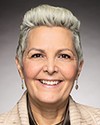
Bonita Zarrillo NDP Port Moody—Coquitlam, BC
With regard to the funding of operational stress injury clinics and satellite services by Veterans Affairs Canada, broken down by province or territory: (a) what are the details of each clinic or satellite service, including (i) the name of the clinic, (ii) the number of veterans, Canadian Armed Forces members, or active RCMP members served, (iii) the services available, (iv) whether the clinic is for-profit, (v) the regulatory oversight body; (b) what are the details of the funding arrangement with each clinic or satellite service in (a), including the (i) duration of the existing arrangement, (ii) amount received, (iii) services to be provided with public funding; and (c) for each clinic in (a), what is the process for complaint escalation for common issues, such as quality of service received, client satisfaction, or wait times?
(Return tabled)

Alexandre Boulerice NDP Rosemont—La Petite-Patrie, QC
With regard to the Treasury Board of Canada Secretariat's announcement of the return-to-office plan for federal public servants, broken down by office building or workspace in the National Capital Region: (a) were the buildings assessed by heating, ventilation, and air conditioning (HVAC) professionals to improve ventilation; (b) were new HVAC systems installed or improved to reduce the transmission of airborne viruses; (c) was ventilation improved in the buildings or workspaces; (d) were new workspaces provided or created with the intention of creating physical distance between public servants; (e) was proper ventilation in the workspaces or buildings considered in the decision to have employees return to the office; and (f) is personal protective equipment available at no cost to employees in these buildings or workplaces?
(Return tabled)

Tom Kmiec Conservative Calgary Shepard, AB
With regard to citizenship ceremonies completed in 2022, broken down by month: (a) how many citizenship ceremonies took place (i) in person, (ii) virtually, (iii) in a hybrid way; (b) how many individuals (i) were scheduled to become Canadian citizens, (ii) became Canadians citizens at the ceremonies, (iii) were considered no-shows, broken down by each type of ceremony in (a); (c) how many individuals scheduled to become citizens requested to attend a ceremony (i) in person, (ii) virtually; and (d) of the requests in (c), how many were granted?
(Return tabled)

Warren Steinley Conservative Regina—Lewvan, SK
With regard to the statement made by the Minister of Labour on February 9, 2023, in the Senate that "I need more workers in the oil and gas industry, not less. We need more.": (a) has the Minister of Labour taken any action aimed at increasing the number of workers in the oil and gas sector and, if so, what action has been taken; (b) has the Minister of Labour taken any action aimed at ensuring that oil and gas companies are able to retain workers currently employed in the oil and gas sector; (c) how many oil and gas workers have received training through the government's Just Transition Initiative to date, in total and broken down by program; (d) how many workers does Natural Resources Canada estimate are no longer working in the oil and gas sector as a result of the government's Just Transition strategy; and (e) what action, if any, is the Minister of Natural Resources taking to get more workers in the oil and gas industry?
(Return tabled)

Eric Duncan Conservative Stormont—Dundas—South Glengarry, ON
With regard to Health Canada's funding for PrescribeIT and e-Prescribing: (a) how much funding has the government provided to Prescribe IT (i) directly, (ii) indirectly, through the Canada Health lnfoway, broken down by year since November 4, 2015; (b) what are Health Canada's estimates based on the reports it has received as to how many (i) doctors, (ii) pharmacists, used PrescribeIT, broken down by each of the last five years; (c) what is the breakdown of (b) by province or territory; and (d) what metrics is the government using to measure the success or failure of Prescribe IT and how has the project measured up to the metrics?
(Return tabled)

John Nater Conservative Perth—Wellington, ON
With regard to information services (IS) employees (Treasury Board code 305) within the civil service, broken down by department, agency, or other government entity: (a) how many IS workers are currently employed by the government, in total; and (b) how many executives or workers, at the EX level or higher, do the IS workers report to, in total?
(Return tabled)

Kelly McCauley Conservative Edmonton West, AB
With regard to the Canada Revenue Agency and post-payment assessment for compliance of Canada Emergency Wage Subsidy (CEWS) recipients: (a) what risk parameters are used in assessing whether CEWS payments need post-payment verification; (b) how is each risk parameter used in assessing whether CEWS payments need post-payment verification and are all CEWS payments assessed for post-payment verification using the same formula; (c) what data was provided to the Office of the Auditor General in conjunction with their 2022 audit of the CEWS outlined in 2022 Report 10 published by the Office of the Auditor General; (d) considering the statement made by Bob Hamilton in his testimony at the Standing Committee on Public Accounts on January 26, 2023, what specific factors are great indicators of whether someone is eligible for the CEWS or not; (e) what data sources are considered to identify risk and build audit plans; (f) how is each data source used in the identification of risk and construction of an audit plan; (g) until January 31, 2021 inclusive, how many companies who received the CEWS were audited for suspected non-compliance, and how many of those audits (i) have been completed, (ii) were undertaken only after the company's final CEWS payment period, (iii) resulted in a finding of non-compliance; and (h) how many companies at a high risk of non-compliance were not audited due to a low potential for recovery?
(Return tabled)
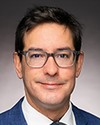
Alexis Brunelle-Duceppe Bloc Lac-Saint-Jean, QC
With regard to the Government of Canada’s discussions with the United States of America on the Safe Third Country Agreement, since January 1, 2022: (a) how many meetings, virtual, in-person or by phone, have there been where Roxham Road was discussed; (b) for each meeting in (a), which public office holders participated in those discussions, including their full name and title; (c) what briefing documents, internal memos or emails were written in preparation for or as a result of those meetings; (d) which departments were involved in preparing for those discussions?
(Return tabled)

Lori Idlout NDP Nunavut, NU
With regard to applications for registration under the Indian Act, broken down by province or territory and fiscal year since January 2016: (a) what is the total number of applications (i) received, (ii) processed; (b) what is the total number of applications that were (i) approved, (ii) denied; (c) how many applications for registration were processed within (i) less than six months, (ii) six to eight months, (iii) 12 to 18 months, (iv) 18 to 24 months, (v) longer than 24 months; (d) what is the total number of applications in (a) from individuals affected by known sex-based inequities in the Indian Act; and (e) as of February 9, 2023, what is the current backlog of applications for registration that remain unprocessed?
(Return tabled)
Warren Steinley Conservative Regina—Lewvan, SK
With regard to section 31 of the Conflict of Interest Act: what are the details of all administrative costs which were incurred by and reimbursed to public office holders, since November 4, 2015, including, for each cost, the (i) title of the public office holder who incurred the cost, (ii) amount, (iii) date, (iv) description of items reimbursed?
(Return tabled)

Laila Goodridge Conservative Fort McMurray—Cold Lake, AB
With regard to pharmaceutical drugs, treatments and therapies authorized by Health Canada since January 1, 2022: (a) how many treatments or therapies for rare diseases, known as orphan drugs, were granted authorization; and (b) what are the details of each drug in (a), including the (i) name of the drug, (ii) date of the approval, (iii) purpose of the drug, including the disease or condition treated by the drug?
(Return tabled)
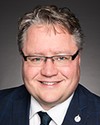
Richard Bragdon Conservative Tobique—Mactaquac, NB
With regard to the First-Time Home Buyer Incentive (FTHBI) announced by the government in 2019, from September 1, 2019, to date: (a) how many applicants have applied for mortgages through the FTHBI program, broken down by province and municipality; (b) of the applicants in (a), how many have been approved and have accepted mortgages through the FTHBI program, broken down by province and municipality; (c) of the applicants listed in (b), how many approved applicants have been issued the incentive in the form of a shared equity mortgage; (d) what is the total value of incentives, shared equity mortgages, under the program that have been issued, in dollars; (e) for applicants who have obtained mortgages through the FTHBI, what is the (i) value of each mortgage granted, (ii) average mortgage value of the mortgages granted; and (f) what is the total aggregate amount of money lent to homebuyers through the FTHBI?
(Return tabled)