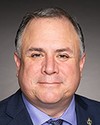
Mr. Chair, I will be splitting my time with the member for Skeena—Bulkley Valley.
I am honoured to rise today to speak on behalf of forestry workers in my riding on Vancouver Island. I want to be clear that the debate is not just about forestry workers; it is about whole communities and about broken promises from the Prime Minister and the government.
It has been months of the Prime Minister's making promises he just cannot keep. He ran his campaign this year on the promise of getting Canadians a deal with the United States. He even gave himself a deadline of July, but there has been nothing except a tripling of tariffs on softwood lumber. Tariffs on lumber are now at an industry-killing 45%. Mills cannot afford this, and workers cannot afford to lose their jobs, but that is the situation that mills and workers in my riding are facing.
As we have heard from my colleagues tonight, it is not just on Vancouver Island but across British Columbia and, indeed, across Canada. However, this is a failure of not just the last few months. Canadians have been waiting a decade for a softwood lumber deal. We have had 10 years of promises from the Liberal government to get a deal signed, yet there is nothing.
There has been over eight months for the Prime Minister to get a deal with President Trump, yet just this weekend the Prime Minister said, “Who cares?” when asked about the last time he spoke with President Trump. I will tell the House that forestry workers care, Canadians care and I care.
Families in my riding are scared. Shifts are curtailed. Workers are not working. Families who are already struggling with the rising cost of living are at risk of being unable to feed and house themselves. Amanda, a woman in my riding whose husband works at a local mill, said that she is terrified of what will happen should her husband lose his job. She works full-time, but she knows that her job alone cannot support her family of six. She does not know how she will afford to raise her four daughters if curtailment continues or, worse, if a total shutdown happens.
I have heard stories of families moving into campers because of curtailed shifts. They cannot afford to keep their homes. Across the riding, there are now tiny villages of people living in their campers.
The effect of the closures is not limited to forestry jobs. I want to be clear that the closures have affected entire communities, beyond those jobs. Across Canada, over 25,000 direct jobs have been lost in the forestry industry. Those losses have led to approximately 90,000 indirect job losses. That means that for one direct job lost, there have been three to five indirect jobs also lost.
When these workers lose their job, they stop contributing to the economy. For some communities that means that grocery stores are closed, restaurants are out of business and shops do not have the clientele to survive. Do members not believe me? Let us walk down the main street of Duncan, Crofton or Chemainus, and I will show them businesses that are shut down all over, even without full closures at the mills.
Beyond workers, the mills themselves contribute a significant amount in tax dollars to the communities they are a part of. For example, Crofton Mill in my riding contributes approximately $6.5 million annually in municipal taxes. That helps vital infrastructure and community programs in North Cowichan. These are programs that would not survive without that money coming in, which makes the closures even more detrimental to the community.
The closures are not just about the forestry industry; they are signs of a total economic failure. The situation is dire for mills, for workers and for our communities. The party opposite's solutions are subsidized loans, handouts and benefit packages. This is the equivalent of a band-aid on a severed artery. Worse yet, the Liberal band-aid solution is funded by more debt and more printed money that, as we know, as always, serves to make our economic problems only worse, a vicious cycle of handouts funded by debt that only extend a failing industry by months rather than rebuild it.
The solution is to negotiate a fair deal on tariffs with the United States. The Prime Minister has proven that he is either incapable, unable or not caring. Forestry workers would probably say that he is all of the above.
That is why I am calling on the Prime Minister to do what he promised and deliver a deal on softwood lumber to protect our hard-working loggers, truckers and mill workers. I am calling on the Prime Minister to care. If if he cannot or does not care to get the deal he promised Canadians, it is time for him to step aside and allow the rest of us to do what we were elected to do, to fight for Canadian jobs—