Oh, oh!
House of Commons Hansard #60 of the 45th Parliament, 1st session. (The original version is on Parliament's site.) The word of the day was industry.

House of Commons Hansard #60 of the 45th Parliament, 1st session. (The original version is on Parliament's site.) The word of the day was industry.

This summary is computer-generated. Usually it’s accurate, but every now and then it’ll contain inaccuracies or total fabrications.
International Day for the Elimination of Violence Against Women Members debate the International Day for the Elimination of Violence Against Women, marking the start of 16 days of activism against gender-based violence. They highlight the ongoing femicide crisis, particularly affecting Indigenous women and 2SLGBTQI+ individuals. While the Liberal government outlines funding and legislative measures, Conservatives and Bloc Québécois criticize budget cuts and the Prime Minister's abandonment of feminist foreign policy. New Democrats also call for greater action on MMIWG2S+ recommendations. 4400 words, 35 minutes.
Budget 2025 Implementation Act, No. 1 Second reading of Bill C-15. The bill implements Budget 2025, addressing economic impact through investments in housing, infrastructure, and social programs like the national school food program. Opposition parties criticize the bill's omnibus nature and the government's fiscal approach, arguing it drives up debt and creates a "productivity crisis." Debate also covers the repeal of the luxury tax and concerns about Veterans Affairs funding. 52200 words, 6 hours in 2 segments: 1 2.
Criminal Code Second reading of Bill C-220. The bill proposes to amend the Criminal Code to prohibit judges from considering a non-citizen's immigration status when sentencing, aiming to ensure that non-citizens convicted of serious crimes face deportation consequences. Conservatives argue this will prevent a two-tiered justice system and uphold the value of Canadian citizenship. Liberals and the Bloc Québécois express concerns about judicial independence, proportionality, and the impact on individuals' lives, suggesting the bill is ill-conceived and not evidence-based. 8600 words, 1 hour.
Softwood Lumber Industry Members debate the ongoing softwood lumber dispute with the U.S., where tariffs have tripled to 45%, leading to mill closures and job losses. The government details financial supports, legal challenges, and domestic demand initiatives. Opposition criticizes "10 years of failure," demanding immediate action, a negotiated deal, and exploring options like buying back duties or a national working table to protect communities. 35400 words, 4 hours.
Climate ChangeOral Questions

The Speaker Francis Scarpaleggia
Just a moment. Even though the member is a bit far away, I do have speakers. However, even with the speakers, I could not hear him.
I invite the hon. member for Repentigny to start again from the beginning.

Patrick Bonin Bloc Repentigny, QC
Mr. Speaker, I do not think that the Prime Minister wants to hear this.
It is official: Canada is giving up the fight against climate change. On Thursday, the Liberals are going to announce a new pipeline for dirty oil from western Canada, on top of Trans Mountain, which has cost taxpayers $34 billion and which will cost us even more in climate disruptions. It is a dark day, as dark as the dirty oil that the Liberals are rolling in.
Do they still believe in clean energy at all? They clearly do not.

Julie Dabrusin LiberalMinister of Environment and Climate Change
Mr. Speaker, I have said it before and I will say it again: Our government is committed to fighting climate change every day.
However, if my colleague wants to talk about major projects, I would love to talk about the Iqaluit hydroelectric project, which will help provide northern communities with clean energy. It is important for health and for the environment. We could also talk about high-speed rail, which will be important for our communities.
We are getting the job done, and we are going to fight climate change every single day.
Patrick Bonin Bloc Repentigny, QC
Mr. Speaker, on May 14, the Minister of Canadian Identity and Culture said that now is not the time to build pipelines.
Well, his party thinks anytime is the right time to build pipelines. First came Trans Mountain, and now the Liberals are announcing a second pipeline to transport dirty oil from the west. We remember the Harper years as a dark time for the environment, but even Stephen Harper did not approve a single pipeline. The Liberals, including the Minister of Canadian Identity and Culture, will have approved two.
Why is he still sitting over there?

François-Philippe Champagne LiberalMinister of Finance and National Revenue
Mr. Speaker, it is impressive to hear what the Bloc Québécois members have to say today, despite our generational budget that invests in infrastructure, that invests in national corridors and that will make clean energy projects possible across the country. If I were a member of the Bloc Québécois today, I would be standing up to applaud budget 2025.
They went and hid on budget day. They will have to explain to Quebeckers why they are voting against green projects across the country. On this side of the House, we will always be there to build a strong Canada.
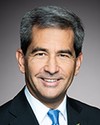
Pierre Paul-Hus Conservative Charlesbourg—Haute-Saint-Charles, QC
Mr. Speaker, the Liberals want to arbitrarily grant citizenship to whoever they want, just like they did 30 years ago. That is right. In Bill C‑12 the Liberals want to give themselves the power to change temporary residents' visas to give them permanent residency.
The Liberals will be able to “cancel or vary documents, including permanent resident visas, permanent resident cards, temporary resident visas, electronic travel authorizations, temporary resident permits, work permits or study permits”.
The Liberals want to speed up access to citizenship. Are they doing that in the interest of Canada or in the interest of the Liberal Party?

Lena Metlege Diab LiberalMinister of Immigration
Mr. Speaker, the government is focused on the future. We will reduce the number of temporary residents, give priority to economic immigration and strengthen francophone communities. I hope that the Bloc Québécois and the Conservatives will support us.
Pierre Paul-Hus Conservative Charlesbourg—Haute-Saint-Charles, QC
Mr. Speaker, I hope that the minister will read her own bill so that she understands what she is doing.
That said, at the G20 summit last weekend, when the Prime Minister was asked whether he intended to speak with the U.S. President, he replied, “Who cares?”
We also learned from Brookfield's chief operating officer, who testified before a parliamentary committee, that 95% of the companies owned by Brookfield are not subject to the Prime Minister's ethics review. This means that the Prime Minister will personally benefit from at least 1,900 profitable companies. We now understand why he could not care less about the 38,000 employees in Quebec's aluminum sector.
Is—
Steel and Aluminum IndustryOral Questions

Steven MacKinnon LiberalMinister of Transport and Leader of the Government in the House of Commons
Mr. Speaker, it is rather surprising that this experienced member continues to repeat these baseless, empty and completely untrue allegations. He knows full well that we have one of the strictest ethics codes in the world. The Prime Minister follows that code rigorously, and he will continue to do so.

Jacob Mantle Conservative York—Durham, ON
Mr. Speaker, the Prime Minister was elected on a promise to negotiate a win, a good deal with the United States, but when asked about it on the weekend, he said, “Who cares?...it's a detail”, and that he would speak with the President when it matters, going from negotiating a win to “Who cares?” in a matter of months.
Who cares about our most important trading relationship? Canadians care. Ontario's auto industry is more than just a detail. It matters to the thousands of workers in the York and Durham regions, and it matters now.
Will the Prime Minister explain to Ontario's auto workers why he said, “Who cares?”

Dominic LeBlanc LiberalPresident of the King’s Privy Council for Canada and Minister responsible for Canada-U.S. Trade
Mr. Speaker, as we said yesterday, just because our colleagues keeps repeating the same inaccurate phrase, that does not make it real.
The Prime Minister has said that our government will always stand up for workers in the auto sector, in the steel sector, in the aluminum sector and in the forestry sector. Unlike the Conservatives, our government is not going to sign just any old deal. We are going to sign a deal that is in the interests of Canadian workers and the Canadian economy, and we are going to continue to support those sectors as we go through these difficult times.

Eric Melillo Conservative Kenora—Kiiwetinoong, ON
Mr. Speaker, the Prime Minister proclaimed himself the so-called master negotiator when it came to dealing with the Americans. He promised to negotiate a win by July 21. Now months after failing to do so, he says, “Who cares?” Well, I can tell members who cares. Conservatives care, and the sawmill workers in Ear Falls, hundreds of whom have lost their jobs, care.
Will the Prime Minister look at those workers and tell them “Who cares?”

Tim Hodgson LiberalMinister of Energy and Natural Resources
Mr. Speaker, we care about the forestry industry. That is why we announced $1.2 billion in support for the industry. That is why we are meeting almost every day with the industry, as recently as last night.
We have good news for the opposition: There will be new supports coming this week for the forestry product sector.

Michael Kram Conservative Regina—Wascana, SK
Mr. Speaker, during the election campaign, the Prime Minister said he would be elbows up when dealing with the existential crisis of Trump's tariffs. Now months after failing to negotiate a win, he is saying, “Who cares?” Well, I will tell members who cares. Conservatives care, and so do the 1,200 steelworkers at Interpro Pipe and Steel in Regina, whose jobs are under threat because of this trade war.
How can the Prime Minister look the 1,200 steelworkers at Interpro Pipe and Steel in the eyes and tell them “Who cares?”
Dominic LeBlanc LiberalPresident of the King’s Privy Council for Canada and Minister responsible for Canada-U.S. Trade
Mr. Speaker, again, our colleagues keep repeating phrases that they know are not accurate. What is accurate is that our government has always supported the hard-working women and men who work in our steel sector in every corner of the country.
We have put in place unprecedented support measures. We are prepared to continue to do more. The Prime Minister met with industry leaders in this sector last week. We will always stand up for the hard-working women and men in our steel sector and in other sectors of the Canadian economy.

Kristina Tesser Derksen Liberal Milton East—Halton Hills South, ON
Mr. Speaker, Canadians want to see real results, including new jobs, new opportunities and growth that supports families, businesses and communities like mine in Milton and Georgetown. This past week, the Prime Minister and the Minister of Foreign Affairs were in the U.A.E. and South Africa making deals, securing those opportunities and showcasing the best of what Canada has to offer.
Could the Minister of Foreign Affairs update the House on how Canada is leveraging our strengths to deliver real benefits to Canadians?

Anita Anand LiberalMinister of Foreign Affairs
Mr. Speaker, everywhere I go, people say they want more Canada. Last week, the Prime Minister confirmed the largest foreign investment commitment in Canadian history at $70 billion. In addition, we have launched trade negotiations with India for a comprehensive economic partnership agreement. We are building the strongest economy in the G7 by unlocking generational investments.
Long live Canada.

John Barlow Conservative Foothills, AB
Mr. Speaker, three years ago, the finance minister promised Canadians he would stabilize food prices by Thanksgiving. Three pumpkin pies have come and gone, and food inflation is 50% higher than target. What could possibly have gone wrong when the finance minister promised that tools, such as the grocery code of conduct, would lower grocery prices?
Every single expert at the agriculture committee, including the president of the grocery code, said that it was never designed to lower food prices, so will the Minister of Finance please stand to explain to Canadians why he promised the code would lower food prices when he knew it would do no such thing?

Patty Hajdu LiberalMinister of Jobs and Families and Minister responsible for the Federal Economic Development Agency for Northern Ontario
Mr. Speaker, let us talk about something other than imaginary taxes, shall we?
While the Conservatives hammer away on taxes that are not real, we are actually helping Canadians with the cost of living. Every year, for example, the Canada child benefit and old age security are indexed to inflation, and what happens every year? Every year, these Conservatives vote against the increases that actually help Canadians keep up with the price of living. Finally, let me quote the food professor Sylvain Charlebois. He said, “Every year, when we write ‘Canada's Food Price Report’, climate change is the number one [wild card] factor.”
John Barlow Conservative Foothills, AB
Mr. Speaker, the fact is that food prices are rising because the Liberal government is the most expensive in Canadian history. Every time the Prime Minister sticks his hand in the pockets of Canadians, he drives up the price of everything. We are seeing that the Liberals' own imaginary taxes, such as the fuel tax and an increase to the industrial carbon tax, are making everything more expensive and driving up the cost to grow the food, move the food and buy the food. This is at a time when food inflation in Canada is 40% higher than it is in the United States.
Why is the Prime Minister so intent on forcing Canadians to food banks by increasing his taxes on food and fuel?
Carbon PricingOral Questions
November 25th, 2025 / 2:50 p.m.
Saint John—Kennebecasis New Brunswick
Liberal

Wayne Long LiberalSecretary of State (Canada Revenue Agency and Financial Institutions)
Mr. Speaker, if that leader, that member and that party actually cared about making life more affordable for Canadians, they would not have voted against automatic federal benefits, which would get 5.5 million Canadians benefits that otherwise would be left unclaimed. These are benefits such as the Canada child benefit, the disability tax credit and the Canada workers' benefit.
The only thing that leader cares about is keeping his job, keeping his dismal poll numbers and quashing a caucus revolt. We care about Canadians, and we will deliver for Canadians.

Rachael Thomas Conservative Lethbridge, AB
Mr. Speaker, it is clear that families across the country are struggling to afford even the most basic necessities. Under the Liberal government, many Canadians have been stripped of the basic dignity of being able to provide for themselves. Since 2017, for example, the price of baby formula has gone up by 84%, leaving parents so desperate that it is now the number one item taken from grocery store shelves.
Yesterday, the Secretary of State for Children and Youth suggested that hungry infants should enrol in the Liberal school food program, so I am just curious, do Liberals understand that babies do not go to school?

Sophie Chatel LiberalParliamentary Secretary to the Minister of Agriculture and Agri-Food
Mr. Speaker, we all want the best solution to drive down the price of food, and that is why we are working on real facts. My colleague mentioned the agriculture committee. Let me quote the VP of Costco and other grocers, who said, when asked what drives the price of food, that the first item is the commodity itself. With a bad crop, the price goes up; with a good crop, the price goes down. It has nothing to do with any policy.
We want solutions. To drive down the price of food, we have to support our farmers with climate resilience.