Agreed.
House of Commons Hansard #61 of the 45th Parliament, 1st session. (The original version is on Parliament's site.) The word of the day was sanctions.

House of Commons Hansard #61 of the 45th Parliament, 1st session. (The original version is on Parliament's site.) The word of the day was sanctions.

This summary is computer-generated. Usually it’s accurate, but every now and then it’ll contain inaccuracies or total fabrications.
Budget 2025 Implementation Act, No. 1 Second reading of Bill C-15. The bill implements provisions of the November 2025 budget. Conservative MPs criticize the budget for increasing deficit and debt, rising cost of living, and insufficient support for the Canadian Armed Forces and veterans. Liberal MPs defend the budget, highlighting investments in housing, a national school food program, and strengthening Canada's economy and trade relations. The Bloc Québécois opposes the bill, citing increased subsidies for the fossil fuel industry and inadequate support for the forestry sector. 16300 words, 2 hours.
Sergei Magnitsky International Anti-Corruption and Human Rights Act Second reading of Bill C-219. The bill proposes amendments to existing legislation to strengthen Canada's sanctions regime against corrupt foreign officials and human rights violators. It introduces new definitions for transnational repression and prisoners of conscience, and aims to enhance transparency and enforcement of sanctions. While members agree on the bill's intent, concerns exist regarding potential risks to human rights defenders and the practical implementation of some provisions. 8800 words, 1 hour.
The EnvironmentOral Questions

The Speaker Francis Scarpaleggia
The hon. member for Bécancour—Nicolet—Saurel—Alnôbak may sit in another seat.
The hon. member for Sherwood Park—Fort Saskatchewan is rising on a point of order.

Garnett Genuis Conservative Sherwood Park—Fort Saskatchewan, AB
Mr. Speaker, I wonder if you could clarify the rules around a question, 30 seconds in duration, that begins with a preamble that may seem unrelated to government business but that concludes on a matter that is related to government business. In the past, members have been able to finish—
The EnvironmentOral Questions
The Speaker Francis Scarpaleggia
I would allow a bit of a preamble, but I did not think that the second part of the question respected the rules in this case, so I ruled it out of order.
I have heard enough to reach a conclusion.
It being 3:12 p.m., pursuant to order made on Monday, November 24, the House will now proceed to tributes to the member for Bécancour—Nicolet—Saurel—Alnôbak.

Yves-François Blanchet Bloc Beloeil—Chambly, QC
Mr. Speaker, I am very pleased to acknowledge another record set by the member for Bécancour—Nicolet—Saurel—Alnôbak.
Yes, another record. He is basically the Céline Dion or Mario Lemieux of Parliament. Eventually, after so many records, people like that are no longer eligible. At some point, they have to step aside and make way for others, except that no one will ever beat my friend's records in Parliament.
The first reason is that 41 years is a long time. The second reason is that Quebec will be independent long before another 41 years go by. One record that no one talks about is the fact that he presides over the House. After all, he presides over the election of the Speaker at the beginning of each Parliament. As a result, my friend may not have been the Speaker for long, but God knows he has been Speaker often.
My friend is also a paradox. On one hand, he has beaten Wilfrid Laurier's record for longevity. On the other hand, he has been campaigning for Quebec sovereignty since 1990. Apparently Canada still does not understand: The only way to get rid of the tenacious MP and the Bloc Québécois crew is through Quebec's independence. However, everyone likes the member for Bécancour—Nicolet—Saurel—Alnôbak, even the federalists, so it is complicated.
The member, whose riding name has changed quite often, has been through a lot, from his impetuous youth to his apparent serenity today. He served for four years under Brian Mulroney after the 1980 referendum. He served under Lucien Bouchard during the 1995 referendum, after becoming one of the founding members of the Bloc Québécois. He travelled all over Quebec with Gilles Duceppe to keep the flame alive, and he will be with us at our next rendezvous with history.
The member for Bécancour—Nicolet—Saurel—Alnôbak was there when the Bloc Québécois won 54 seats and formed the official opposition. In a way, he has already been the party leader. At 82, it might be appropriate to talk about his wisdom, but that would be to misunderstand my friend completely. Is he wise, calm, polished and a stickler for the rules? Come on, not for a second. He still has a mischievous glint in his eyes like a young man looking for trouble.
What my friend is, however, is an encyclopedia of anecdotes. Above all, he is known for his kindness, generosity, advice, warm laughter, and unifying words of wisdom. He is a respected unifying force within the caucus. No, I will not lend him out to other parties.
His secret is that he loves his people. He loves politics. He loves to serve. He represents an era that should never end. My friend, my dear friend, has collected years the way others collect treasures and jewels, except that his treasure is worth more than all the riches in the world. He shares that treasure and will continue to share it with Quebeckers, whom he loves more than anything else in the world.

Marc Miller Liberal Ville-Marie—Le Sud-Ouest—Île-des-Soeurs, QC
Mr. Speaker, I want to congratulate the member for Bécancour—Nicolet—Saurel—Alnôbak.
I am not sure if it is a good sign for the future of our country that a sovereignist has broken the record of as great a Canadian as Sir Wilfrid Laurier, but such is reality. Although the former prime minister sat for 15,056 days in Parliament, the member for Bécancour—Nicolet—Saurel—Alnôbak sat for 15,059 days as of today. He has been elected consecutively in the same riding since 1984.
He outlasted prime ministers Mulroney, Campbell, Chrétien, Martin, Harper and Trudeau. However, his longevity as Speaker of the House of Commons lasted barely seven days. Still, let us hope that he will be offered a nice portrait here in this building, as parliamentary tradition dictates for all former speakers, whether illustrious or not, but especially given today's record, which will certainly remain unparalleled in our lifetime.
The member's political career is remarkable. There was even a time, in the first quarter of his career, when he was a member of a federalist party. This might have been easier to do at the start of his career, when he sat with the patriot Louis-Joseph Papineau. I took a shot.
While we may have a hard time forgiving him for his decision to establish the Bloc Québécois in 1991, no one on this side of the House can fault his intelligence, especially since he was leaving the Conservative Party. I will continue.
The member has always been quick witted and his career, which is not yet over, has been marked not only by his wisdom, but also by his independent spirit. He is a sovereignist after all. He is a deeply compassionate person, as evidenced by his dedication to progressive causes; for example, he opposed attempts to restrict services for women who were exercising their right to abortion and attempts to bring back the death penalty. It also goes without saying that his staunch defence, in the House and across Canada, of bilingualism, and French's place in the country makes him, in my eyes, not only a great Quebecker, but yes, I dare say, a great Canadian.
I recently read an article about him where he said that he planned to stay in politics. That is good news. The article also shared some surprising details about his perseverance. The article quoted him as saying: “I think it is the best job in the world. I'm hooked. It's a bit like a drug. For some people it's alcohol or weed, for others it's sports. But for me, it's...politics.”
It is clear that the member is passionate about his work. Another illuminating point in this article is, again, this man's humanity when he talks about his loneliness. I hope he gets to have that rare coffee with a good friend and, if not, there are at least 300 MPs gathered here who would jump at the chance to sit down for coffee with him.
Although he has been more discreet in recent years, since I have known him—or since most of us have known him, judging by the quality of the debates—his discretion is once again undoubtedly a profound mark of wisdom. It seems he has been following his own advice, which he shared with us in his speech as the dean of the House when the parliamentary session began. That advice was to keep our mouths shut unless we wanted to end up like a stuffed fish mounted on a wall. God knows we have seen plenty of stuffed fish in the House in recent years.
Another piece of wise advice that I have followed closely is the advice he gives to newly elected officials who are tempted to run for office for recognition. He said to buy a dog instead. I can tell the member that I am delighted with my yellow Labrador.
I will conclude by quoting one of his former leaders, the illustrious Lucien Bouchard, who shared these words with me.
When my friend [the member for Bécancour—Nicolet—Saurel—Alnôbak] became the all-time dean of the House of Commons of Canada, it was not mere chance, and it was not bound to happen given enough time.
His unwavering loyalty to his constituents deserves full credit for that.
Everyone saw him as an elected member who is keenly aware of the respect owed to parliamentary institutions and to his colleagues of every political persuasion.
Congratulations to [the member for Bécancour—Nicolet—Saurel—Alnôbak]!
Long live the member for Bécancour—Nicolet—Saurel—Alnôbak.

Jacques Gourde Conservative Lévis—Lotbinière, QC
Mr. Speaker, today we are marking a feat of longevity unprecedented in Canadian political life. On September 4, 1984, the member for Bécancour—Nicolet—Saurel—Alnôbak won his first of many elections, the culmination of which would earn him the title of dean with the longest uninterrupted career in the House of Commons.
Through all these years, he has remained an endearing individual who, against all odds, managed to weather every storm along the way. We are all witnessing a historic moment for our democracy. Few manage to achieve such a loyal connection to their constituents. For our dean, this achievement did not happen by accident or by luck. What drives our dean's work is a passion to serve his constituents to the very best of his ability every day.
He is not after glory or titles. He simply wants to be the kind of member who listens to his constituents. He tries to help them using his own secret formula. I remember bits of advice he gave me, and I listened and put them into practice. He told me to stay close to my constituents. He said that votes are not won in Ottawa; they are won by taking care of our constituents. I can confirm that this is excellent advice.
Our dean proves that in life, as in politics, one must have a goal. His goal was to be an MP who was close to his constituents. He treats everyone with the importance they deserve, and it pays off. He has earned his record and it is to his credit. He will leave a mark on the history of this place. He has witnessed the progression from typewriters to smart phones and now the age of artificial intelligence. Nevertheless, he remains the same man we have come to know and respect, the man we enjoy spending time with and whose advice is so important to us younger members.
In closing, Canada's history will forever be marked by the proud dean from the Quebec nation, a worthy representative of our democracy.

Don Davies NDP Vancouver Kingsway, BC
Mr. Speaker, I rise to join my colleagues in congratulating and honouring the member for Bécancour—Nicolet—Saurel—Alnôbak.
I was first elected in 2008, and even then, the hon. member was already the dean of the House, overseeing the election of the Speaker at the opening of Parliament. Surprisingly, he played the same role just a few months ago, when I myself became dean of the NDP caucus.
He was first elected with Brian Mulroney's Progressive Conservatives in 1984. He was re-elected four years later, when the election campaign focused on our trade relations with the United States, so what is happening these days should feel like familiar territory.
During our years of working together, I have appreciated the humour and the passion with which he represents his constituents. He has been re-elected 12 times, which is remarkable, so his constituents obviously appreciate those things as well. His ongoing presence in the House enriches us all and shows how hard he has been working for his constituents for over 40 years.
On behalf of the NDP, I want to congratulate the member on his achievements.

Elizabeth May Green Saanich—Gulf Islands, BC
Mr. Speaker, it is a great honour for me to rise on this occasion to pay tribute to our dean, my dear friend.
In 2011, when I was elected, we formed a very small team. People here may not be aware of that. At the time, I was the only Green Party MP, which comes as no surprise. However, there were only four Bloc Québécois MPs. We formed a team because five members could request a recorded division. We did things together. With his immense expertise, he helped me from time to time. I love him.
We are paying tribute to him right now because he is the longest continuously serving member of Parliament. I can attest to the Leader of the Bloc Québécois's claim that our friend is the “Céline Dion of Parliament”. He has an unparalleled record. He is the dean, a respected member and someone who is always here to work hard for the people of Bécancour—Nicolet—Saurel—Alnôbak.
I am very happy that we are taking the time to pay tribute to him because he is an extraordinary person. I hope we will have opportunities to meet like this more often to pay tribute to an extraordinary individual.
I want to mention another one of his accomplishments. When he took the Speaker's chair in his role of presiding over the election of the Speaker, he always maintained order without having to raise his voice because he kept the situation calm and clear leaving no room for misbehaviour by the members. I think that is thanks to the strength of his character.
I just want to say to my extraordinary friend that before he decides to leave the House, there is still a chance for him to add one more thing to his extraordinary record: becoming a member of the Green Party. I hope he will keep his options open.
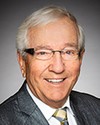
Louis Plamondon Bloc Bécancour—Nicolet—Saurel—Alnôbak, QC
Mr. Speaker, I would like to begin by sincerely thanking you for your work, your patience and your remarkable ability to remain calm.
I would also like to thank all the members of the political parties for their tributes, which I thought were almost too generous.
I want to thank my leader, the member for Beloeil—Chambly, the member for Ville‑Marie—Le Sud‑Ouest—Île‑des‑Soeurs and the member for Lévis—Lotbinière, whose riding is next to mine and who is also a friend. I also want to thank the member for Vancouver Kingsway and the member for Saanich—Gulf Islands. I thank them for their kind words. They were very generous. I was genuinely moved by all the fine speeches. I thank them for their kindness, which will remain engraved in my memory.
I also want to thank the members of the Bloc Québécois team, with whom I have the privilege of working. Their diligence, creativity, sense of duty and, above all, their ability to tolerate stories from a veteran politician like myself, deserve special recognition. I want to thank them for standing with me, for advising me, and sometimes, I admit, for bringing me back on topic.
Today, I am speaking not only as a member of Parliament, but also as a witness to a journey that, I admit, even exceeds what I could have imagined at the start of my career. Here is what my 42 years as a member of Parliament represent: more than 15,059 days of parliamentary service, majority governments, minority governments, governments that were defeated, governments that were rebuilt, 12 federal prime ministers, reforms, economic crises, impassioned debates, thousands of speeches, a historic referendum, major reforms and, quite likely, enough red tape to cover the Champlain Bridge twice.
I have seen the House at its best, and sometimes at its loudest, but I have always been witness to the fact that democracy, although imperfect, remains essential and invaluable. When I arrived here in 1983, some of the current members were learning their colours, others were starting their first day of school and some were not even a twinkle in their parents' eyes. I say this with humour, but also with deep humility. Having the honour of serving for so long is a privilege that I have never taken for granted. I will not hide the fact that when I started, many people told me to serve my term and then move on as best I could. They thought I would get tired of it and not stay very long. A few years turned into a quarter of a century, then three decades, and I will let my colleagues finish that list. However, I can say without hesitation that I have never been bored. What is fascinating about a political career is that the years go by, the debates change, governments come and go, but the passion remains.
I would say that I still have the energy, the will—and the enthusiasm, even—to get up every morning to serve the people of Bécancour—Nicolet—Saurel—Alnôbak because this role remains, even today, the greatest honour of my life. Being elected for a year is a gesture of trust. Being elected for a decade is a responsibility, but being elected for 42 years is an honour that words cannot describe. If I have persevered, it is first and foremost thanks to the people of Bécancour—Nicolet—Saurel—Alnôbak, thanks to their trust, renewed year after year; thanks to their advice, sometimes gentle, sometimes very direct; and thanks to their devotion to a representative who has always tried to be warm, accessible and down to earth. I owe it all to them.
Serving as a member of Parliament for four decades means witnessing the change in our people, debates, institutions, and technology. When I first arrived, we had no cell phones, no email, no fax machines, no social media. We only had typewriters and notepads. Today, everything moves faster, but the essence of the job remains the same. It involves the duty to listen, understand and represent. When I think back to my early days, I remember a Parliament where speeches were still typed on typewriters. Some of my colleagues were not even born yet, and the press gallery was packed. Since then, I have seen caucuses form, transform, split up, and sometimes heal. I have seen colleagues become friends, and others become history. I have witnessed Quebec struggle, grow, assert its rights and showcase the richness of its French language.
Over the years, I have become the dean of the House of Commons and the longest-serving member of Parliament in Canadian history. This fact still surprises me because it was not a goal of mine. Being the dean of the House is also a strange position. It comes with certain responsibilities, like opening the new legislative session and, above all, recounting memories that no one else remembers but me. It is also a privilege to witness the cycles of our democracy and the continuity of our institutions. The young members who arrive each year remind me of two things, that time passes very quickly and that the next generation is bright, idealistic and determined, which reassures me tremendously.
I am often asked what keeps me going after all this time. I always answer that it is the people, the folks back home. I have never forgotten that behind every debate, every vote and every speech, there is a farmer who gets up before dawn; a single mother who works miracles to make ends meet; an entrepreneur who risks it all for the sake of a dream; a young person who wants a greener, prouder and fairer nation; or a senior who wants what he is owed after a lifetime of toil and hard work. These are the people who guided me, encouraged me and got me through 15,059 days with the same unwavering conviction that a member of Parliament is never greater than the people they represent. There is also something profoundly human about this job: We age together.
I want to emphasize the important role that Quebec has played in my political career. Since the Bloc Québécois was first established, I have had the immense privilege of helping to defend the interests, values and aspirations of the Quebec nation here in Ottawa. I have watched our party grow, reinvent itself and welcome new generations of elected officials. To promote the French language all these years, to pass it on, defend it and hear it resonate in the House is something that I have always considered to be my highest calling.
I still remember my early days and my first caucus meetings, where we had more passion than knowledge, where we built a party with conviction as our main fuel and with hope as our compass. Today, I look at my colleagues, the new generation of the Bloc Québécois, and I know that the flame is still burning. The torch has been passed on, but the flame never goes out.
I would like to think that these 42 years have made me wiser. That is partly true. I have learned that listening goes further than anger, that bridges are often more useful than walls, that humour can save nearly any situation and that respect, even when two people disagree, is the key to a healthy democracy. I have also learned that it is important to remain true to oneself and to always be authentic, consistent and faithful to those who elected us to this place.
I will conclude by saying that I have never taken this job for granted. I see every election, every speech and every intervention as a renewed privilege. As long as the people of Bécancour—Nicolet—Saurel—Alnôbak place their trust in me, I will continue to serve with passion, consistency, humour—sometimes a little too much, some might say—and, above all, with unwavering loyalty to our democracy.
Today, as we mark these 42 years of service, as we acknowledge this record of 15,059 days, I want to make it clear that this is not a personal accomplishment. It is a tribute to the collective work of my staff, my Bloc Québécois colleagues, my family and the people who supported me. It is also a tribute to this institution, the House of Commons, that I deeply respect. It is not perfect; no parliament is. However, it remains a place where the will of the people is expressed, where ideas are debated and where the future is built. I have had the privilege of participating in this process for over four decades.
I want to thank the citizens who elected me. I thank my Bloc Québécois colleagues, past and present, who have supported me. I thank everyone here, from all parties, with whom I have shared debates, disagreements, compromises and sometimes real friendships. I thank my family, who have agreed to share my life with politics, which requires more patience than anyone can imagine. I thank my team, my employees who have helped me with my office work and in Parliament, including Rita, Carole, Michel, France, Jocelyne, Maxime, Caroline, Jacqueline, Denis and Charbel. I thank the House of Commons staff, the security and transportation staff, the interpreters and everyone who keeps our democracy running smoothly. I want to thank my former leaders, Mr. Bouchard, Mr. Duceppe, Mr. Paillé and, of course, my current leader, the member for Beloeil—Chambly.
Thank you for allowing me to keep doing today what I love the most, that is, representing my constituents with heart, pride and determination. Despite my 42-year long career, I do not see myself as reaching the end of a chapter; I see myself at the centre of a book still being written. As long as I have the strength and the trust of my constituents, I will keep rising proudly, day after day, as a member of Parliament. Thank you for the past 42 years, and for being here with me to mark these 15,059 days that have marked my entire life.
The Member for Bécancour—Nicolet—Saurel—AlnôbakOral Questions
The Speaker Francis Scarpaleggia
Dear colleagues, Thank you for your words, your kind thoughts and the deep respect you have shown our dear colleague, the member for Bécancour—Nicolet—Saurel—Alnôbak.
Every member of the House knows that uncertainty and change are the hallmarks of politics. Being elected and serving as a member of Parliament is usually a relatively short chapter in a career, a matter of a few years, if we are lucky. Well, our dear colleague is making history with a career of political service that shatters all records. History will tell the story of the member for Bécancour—Nicolet—Saurel—Alnôbak's longevity, spanning 13 parliaments, seven prime ministers and 11 speakers since he was first elected to the 33rd Parliament in 1984.
What is the secret of his success? In fact, it is quite simple: To make serving his constituents a priority. Our colleague explained it well last March when he said, “I feel just as motivated as I did when I was first elected. I am all the more determined not to drop the ball so that I can keep this wonderful partnership with my constituents going while I do the work I love.”
His constituents have, of course, heard this call to work in partnership many times. He serves as a great example of dedication. All MPs know that weekends and weeks spent in their ridings are often very busy times. If we do the math and figure out how many meetings and events our colleague has attended in his riding throughout his career as a member of Parliament and the number of exchanges he has had with his constituents since 1984, the numbers are staggering.
Far from his riding, here in the House, the member for Bécancour—Nicolet—Saurel—Alnôbak has always spoken eloquently on the major issues of the past four decades. He has always shown great respect for his colleagues and for democracy. Through his example, we have learned a great deal about how to conduct ourselves and work as members of Parliament, and we continue to learn.
I want to congratulate you and sincerely thank you for your service. With your generosity of spirit, your kindness and your wonderful smile, you have taught us that politics is about connection, dedication, empathy, compassion and, above all, service. Thank you, my dear friend, and well done.
Now, I invite you all to the Speaker's dining room to celebrate our colleague in style.
The Member for Bécancour—Nicolet—Saurel—AlnôbakOral Questions

The Assistant Deputy Speaker John Nater
Pursuant to order made on Monday, November 24, I wish to inform the House that, because of the tributes, the time provided for Government Orders will be extended by 37 minutes.

Steven Guilbeault LiberalMinister of Canadian Identity and Culture and Minister responsible for Official Languages
Mr. Speaker, pursuant to Standing Order 32(2) and subsection 85(1) of the Official Languages Act, I have the honour to table, in both official languages, the draft regulations on administrative monetary penalties for official languages.
Also, pursuant to Standing Order 32(5), the proposed regulations should be immediately referred to the Standing Committee on Official Languages.

Marie-France Lalonde Liberal Orléans, ON
Mr. Speaker, I have the honour to present, in both official languages, the third report of the Standing Committee on Veterans Affairs entitled “The Experience of Indigenous Veterans”. Pursuant to Standing Order 109, the committee requests that the government table a comprehensive response to the report.
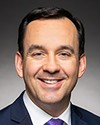
Blake Richards Conservative Airdrie—Cochrane, AB
Mr. Speaker, I rise to present the supplemental report of the Conservative members of the committee. Our supplemental report is entitled “Conservatives Demand Action Instead of Just Words for Indigenous and All Veterans”.
While we agree with much of the main report and the points that were heard from many of the witnesses, who feel left behind by the government, there were a number of concerns that were raised by many veterans in the committee that were left out of the main report, so we have tabled this supplemental report to highlight those issues: the all too familiar stories of the current cost of living crisis and the housing crisis, and what they are doing to our veterans. More and more veterans than ever are on the streets and relying on food banks.
We are recommending that the Liberal government get their out-of-control spending in order and stop ignoring the homelessness crisis amongst our veterans. We have tabled this supplemental report to highlight those issues.
Transport, Infrastructure and CommunitiesCommittees of the HouseRoutine Proceedings
Liberal
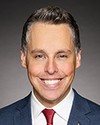
Peter Schiefke Liberal Vaudreuil, QC
Mr. Speaker, I have the honour to present, in both official languages, the seventh report of the Standing Committee on Transport, Infrastructure and Communities entitled “Putting Passengers First: Improving Via Rail's Emergency Response Effectiveness”.
Pursuant to Standing Order 109, the Committee requests that the government table a comprehensive response to this report.

Chris Bittle Liberal St. Catharines, ON
Mr. Speaker, pursuant to Standing Order 104 and Standing Order 114, I have the honour to present, in both official languages, the 10th report of the Standing Committee on Procedure and House Affairs, regarding membership of committees of the House. If the House gives its consent, I intend to move concurrence in the 10th report later this day.

Terry Duguid Liberal Winnipeg South, MB
Mr. Speaker, I have the honour to present, in both official languages, the first report of the Standing Committee on Natural Resources, entitled, “Supplementary Estimates (B), 2025-26”.
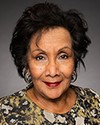
Hedy Fry Liberal Vancouver Centre, BC
Mr. Speaker, I have the honour to present, in both official languages, the second report of the Standing Committee on Health, entitled, “Women's Health in Canada: Closing the Gender Gap”.
Pursuant to Standing Order 109, the committee requests that the government table a comprehensive response to this report.

Dan Mazier Conservative Riding Mountain, MB
Mr. Speaker, I rise to present a supplemental report from the Conservative members of the Standing Committee on Health. We welcome the report, the study on women's health; however, we believe that the report did not fully reflect all issues raised during the study.
First, Canada's worsening shortage of doctors, nurses and health care professionals is denying women the timely care they need. With 6.5 million Canadians without a family doctor, delays in diagnosis and treatment are putting women's health at risk. Second, rising crime rates, including sexual assault and intimate partner violence, continue to harm women at alarming rates. This reality cannot be ignored in any serious discussion of women's health. Finally, Conservatives emphasize the urgent need to address the increasing rate of violence against health care workers, a workforce largely made up of women. People who dedicate their life to caring for others must never fear for their safety at work.
We urge the government to act on these concerns and deliver real results for Canadian women.
Chris Bittle Liberal St. Catharines, ON
Mr. Speaker, if the House gives its consent, I move that the 10th report of the Standing Committee on Procedure and House Affairs, presented to the House earlier this day, be concurred in.
Procedure and House AffairsCommittees of the HouseRoutine Proceedings
The Assistant Deputy Speaker John Nater
All those opposed to the hon. member's moving the motion will please say nay.
It is agreed.
The House has heard the terms of the motion. All those opposed to the motion will please say nay.
(Motion agreed to)
Gord Johns NDP Courtenay—Alberni, BC
Mr. Speaker, it is an honour to rise today to table a petition on behalf of Canadians who are deeply concerned about the future of indigenous languages.
The petitioners draw the attention of the House to the fact that reconciliation requires urgent action to address the devastating loss of language and culture that indigenous peoples have experienced. Petitioners note that while more indigenous people are seeking to learn their languages, the number of fluent speakers continues to fall. They further raise concern that recent changes to federal funding, especially in British Columbia, put language preservation and revitalization at risk.
Petitioners are therefore calling on the Government of Canada to ensure fair, adequate and long-term funding for indigenous language programming so this vital work can continue before it is too late, and to fix the changes that affect indigenous languages, indigenous language speakers and preservation needed in British Columbia in particular.
Elizabeth May Green Saanich—Gulf Islands, BC
Mr. Speaker, it is an honour to present a petition on behalf of the constituents of Saanich—Gulf Islands who are concerned with the global issue, which is also local, of the threat to our pollinators, including honeybees, which are an essential part of our food system.
We know that without pollinators, agriculture would crash, yet as petitioners point out, there continue to be extreme declines in pollinator populations across North America and Europe, particularly among bees. It is no surprise that this has been linked to insecticides that are particularly toxic to bees. The particular class of insecticides that the European Union has taken action to control but Canada has not are the ones called neonics, which is a short form; they are nicotine-based insecticides, neonicotinoid insecticides.
The petitioners ask that Canada follow the European Commission's lead, apply the precautionary principle and restrict the use of these dangerous chemicals to protect our bees and our agriculture.

Kevin Lamoureux LiberalParliamentary Secretary to the Leader of the Government in the House of Commons
Mr. Speaker, I would ask that all questions be allowed to stand.