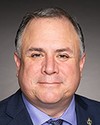
House of Commons Hansard #62 of the 45th Parliament, 1st session. (The original version is on Parliament's site.) The word of the day was billion.

Topics

line drawing of robot

This summary is computer-generated. Usually it’s accurate, but every now and then it’ll contain inaccuracies or total fabrications.

Budget 2025 Implementation Act, No. 1 Second reading of Bill C-15. The bill implements the 2025 budget, which the government says aims to build, empower and protect Canada through investments. Opposition criticizes it as a plan for higher taxes, higher debt, higher inflation, with insufficient action on affordability. Concerns include cuts to the public service, alleged corporate greed, and the elimination of the digital services tax. 52200 words, 6 hours in 2 segments: 1 2.

Statements by Members

Question Period

The Conservatives demand to know when a new pipeline to the Pacific will be built, accusing the government of delays, a carbon tax hike, and a "pipe dream." They also repeatedly allege the Prime Minister has conflicts of interest with Brookfield, benefiting the company over Canadians in areas like nuclear deals and space agencies. Concerns were also raised about private property rights in B.C.
The Liberals highlight their memorandum of understanding with Alberta, emphasizing an energy transition towards making Canada an energy superpower through carbon capture and clean electricity, while stressing co-operative federalism and Indigenous consultation for all projects. They link these to creating thousands of jobs, aim to diversify trade, and introduce legislation to combat hate.
The Bloc criticizes the government for abandoning climate issues to benefit oil companies, accusing them of imposing a new pipeline that disregards provincial powers, Indigenous consent, and environmental assessments, highlighting a record worse than the Conservatives.
The NDP condemns the government's bitumen pipeline plan, citing lack of first nation consent and betrayal over the oil tanker ban.

Financial Administration Act Second reading of Bill C-230. The bill aims to increase transparency by requiring the government to publish a registry of corporate, trust, and partnership debts over $1 million that have been waived, written off, or forgiven. Conservatives argue this will provide taxpayers with information on how their money is used, while the Bloc Québécois emphasizes the need for accountability given billions in write-offs. Liberals support the intent but raise concerns about privacy and the proposed $1-million threshold. 7800 words, 1 hour.

Adjournment Debates

Vaccine injury support program Dan Mazier asks how much money has been recovered from Oxaro, the consulting firm that mismanaged the vaccine injury support program. Maggie Chi states that an audit is underway and that the government will consider all options to ensure Canadians receive the support they need.
Student grant eligibility Garnett Genuis criticizes the budget for eliminating student grants to private institutions, arguing it unfairly disadvantages students in vocational programs. Annie Koutrakis defends the government's youth employment investments, noting increased job numbers and support for summer jobs and work placements. Genuis presses on the impact on future students.
Was this summary helpful and accurate?

Bill C-15 Budget Implementation Act, No. 1Government Orders

3:45 p.m.

NDP

Leah Gazan NDP Winnipeg Centre, MB

Mr. Speaker, we know that, in this country, we have elected a banker for a Prime Minister. His only focus seems to be on dollar figures and not the people in Winnipeg Centre who are struggling to find housing right now; not the people in Winnipeg Centre who are struggling with mental health and addictions; and not the people in Winnipeg Centre who are trying to flee to safety, needing safe places to go. Protecting women and gender-diverse people is not a focus of the current Liberal government. The focus of the Liberal government is lining the pockets of the Prime Minister's corporate buddies.

Bill C-15 Budget Implementation Act, No. 1Government Orders

3:50 p.m.

Bloc

Maxime Blanchette-Joncas Bloc Rimouski—La Matapédia, QC

Mr. Speaker, the NDP says it opposes handouts for oil companies, the underfunding of health care, and inaction on the housing crisis and on employment insurance reform. In fact, they have been calling for this reform for many years. However, it was the NDP that was able to get this budget through, because two of its members, the member for Courtenay—Alberni and the member for Nunavut, abstained on the deciding vote.

My question is quite simple and easy. How can the NDP claim to stand up for workers when it supports a budget that clearly abandons them?

Bill C-15 Budget Implementation Act, No. 1Government Orders

3:50 p.m.

NDP

Leah Gazan NDP Winnipeg Centre, MB

Mr. Speaker, I want to be really clear. The NDP could not stay quiet and support a budget that supports corporations and corporate greed. At the same time, we heard people from our ridings and people across Canada who were very clear: They did not want an election during the holiday season.

We listened to those voices, unlike other political parties, because this is not the NDP's budget; this is the people's budget. We went out to the people; we listened to the people, and we showed up at the vote to reflect their desire, to say, “This budget is awful, but we do not want an election during December.”

Bill C-15 Budget Implementation Act, No. 1Government Orders

3:50 p.m.

Conservative

Connie Cody Conservative Cambridge, ON

Mr. Speaker, Canadians are living through some of the most challenging times in recent memory. Families are struggling to make ends meet, young people are losing hope for stable careers, and businesses are facing an economy of uncertainty. A housing crisis is pricing out an entire generation, youth unemployment is climbing and productivity, the engine of our prosperity, is in decline.

The Prime Minister promised a generational budget to solve these problems, but the only thing generational about the current budget is the debt it will leave our children. Canadians were told this budget would mark a turning point, with less wasteful spending, more real investment and a plan to lower operating costs while boosting capital projects, yet even the Prime Minister's own fiscal watchdog warns that what is being called capital investment is little more than creative accounting, a sleight of hand designed to mask the truth.

Under the Prime Minister, federal debt has soared to $1.35 trillion. He plans to add another $321 billion over the next five years, which is more than twice what Trudeau would have added in the same period. Interest payments will cost over $55 billion in one year, which is more than the Canada health transfer and is even more than the government collects in GST revenue. That is $3,360 for every Canadian household, money that could have gone to the essential services Canadians rely on. Instead it is flowing to banks to pay interest on debt.

This reflects the same economic approach the Liberal government has relied on for years: heavy spending, large deficits and the belief that government can borrow its way through almost any challenge.

Just months ago, the Prime Minister stood before Canadians and made clear commitments that the budget has shattered. The deficit he vowed to cap at $62 billion now sits at $78 billion. Spending was supposed to shrink; instead it has surged by $90 billion, adding $5,400 per household. Investment is collapsing, consulting costs are soaring and the Parliamentary Budget Officer warns that without accounting gimmicks, the operating budget will run an $18-billion deficit by 2028, breaking the Prime Minister's flagship promise of balance.

These are not just numbers; they are broken promises, and Canadians are left to shoulder the cost. After 10 years of Liberal policies, the results speak for themselves. The self-proclaimed new government is anything but new or improved. Nothing has changed except the name on the Prime Minister's door. After the government got rid of the fiscal anchor of reducing the debt-to-GDP ratio, the Parliamentary Budget Officer has now warned that the ratio will rise and that Canada is no longer on a declining debt-to-GDP path.

The same insiders pull the strings, the same failed policies drive decisions and the same reckless spending continues, with no consideration for the struggles of hard-working taxpayers. That is why fiscal responsibility matters, not just as policy but as a principle I have lived with my whole life. My father came to Canada at the age of 19 for opportunity, and he started work as an electrician. He taught us that hard work is how people get ahead. He also taught us we cannot spend more than we have and cannot expect someone else to pay our debts when we live beyond our means. That is a lesson the government seems to have forgotten.

It was the same with my grandparents. They came to Canada with nothing but hope: hope for freedom, stability and the dignity that comes from providing for one's family. My grandmother was so thankful to come to Canada, and after one of her grocery trips, she was so thrilled about her full fridge that she took a photo and proudly sent it to her friends back home. To her, that picture was not just about the food; it was about Canada's promise to provide security, opportunity and a better future.

Back then, a full fridge was possible on one income for a family of nine, with no fear of falling behind on other household costs, but today that promise is slipping away. Parents are skipping meals so their kids can eat. A full-time job is no longer a guarantee that there will be enough money at the end of the month to pay the bills. The full fridge that my grandmother once celebrated is now empty for far too many people, yet Canadians are being asked to sacrifice even more by the Prime Minister.

Canadian food banks are seeing the impact first-hand, with over two million visits every single month. That is the highest level ever recorded, and numbers have doubled in less than a decade. Families that once donated are now standing in line. Food banks were never meant to become a permanent part of life for working households, but now their use is becoming normalized for people with a full-time job. Those are not my words; they are the words of the “Hunger Count 2025” report from Food Banks Canada.

The budget does nothing to change that. It piles on more debt, more pressure and more spending, without any plan to make life more affordable, and behind all the numbers are families and seniors whose lives are being upended. I recently spoke with a woman in her mid-seventies who shared something I will never forget: She can barely afford groceries, and she lives in constant fear that her furnace might break or that she might face a medical emergency. After a lifetime of hard work, she feels she has no safety net. She told me quietly that some days she hopes she will not wake up, because living in fear and indignity feels worse than dying.

In a country that once promised security and opportunity, no one should ever feel that way. That is not the Canada she believed in, and it cannot be the Canada we leave behind.

The budget does not just forget our history; it also disrespects the people who wrote it in blood and sacrifice. Our veterans are facing broken promises too. After putting on the uniform and defending Canada's freedom, they now see that the government is cutting Veterans Affairs by over $4 billion in the next four years. That is not just a budget line but a betrayal of the people who gave everything for our country.

Budgets are about priorities, and this budget makes them painfully clear. The priorities of the Liberal government are focused on Ottawa insiders, bureaucrats and bankers, all of whom stand to gain. They are not focused on making life affordable for the people in my community of Cambridge or across Canada. It is a split-screen contrast, with working Canadians on one side and the Prime Minister's well-connected friends on the other.

The budget is full of handouts for the Prime Minister's corporate buddies at places like Brookfield. It is going to create new bureaucracies, when businesses are already suffocating under piles of red tape. It is going to ship billions of dollars to wealthy bondholders as the Prime Minister loads up more debt onto the Canadian credit card. It will create higher taxes, more inflation and bigger borrowing costs for everyday people who cannot get by as it is.

Brookfield has been exploring investments in airports. Now we can see, buried on page 100 of budget 2025, a single vague sentence that states, “The government will also consider options for the privatisation of airports.” Is that coincidence? Hardly. When we connect the dots of the Prime Minister's interest at Brookfield and the company's interest in airports, it raises serious questions about whose interest the budget really serves.

Let us remember that the Prime Minister was once an executive at Brookfield, one of Canada's largest and most diversified companies, which later moved its headquarters to the U.S. and has been accused of using offshore structures to avoid paying up to $6 billion in Canadian taxes. The list goes on. In the budget, the finance minister wrote, “We will build new infrastructure and capitalise on projects that further Canada’s standing as a clean energy superpower.” Which company is one of the largest investors in solar panels and clean energy? It is Brookfield. Which one owns companies that manufacture and install heat pumps? It is Brookfield again.

As of recently, the Prime Minister owned approximately seven million dollars' worth of Brookfield stock. Does anybody believe that with a blind trust in place, the Prime Minister is just going to forget about all that wealth sitting in his portfolio? The only thing growing as fast as Brookfield stocks is our food bank lines.

The Prime Minister's conflicts of interest are costing Canadians, and that is not the only big handout in this budget, which contains billions for subsidies, initiatives, special funds and climate programs, with no performance measures, no timelines and no accountability. It is the same tried and true recipe that gave us a $1-billion infrastructure bank that built almost no infrastructure, a $1-billion housing accelerator that built almost no housing, and a $1-billion green slush fund whose only accomplishment was to send big bonuses to Ottawa bureaucrats.

The government is mortgaging Canadians' future, plain and simple. Canada should be a place where hard work leads to security, not to a future buried in debt. That is the promise my family believed in, and it is the promise millions of Canadians still hold today. We can keep that promise, but only with a government that respects taxpayers, lives within its means and puts Canadians first.


Bill C-15 Budget Implementation Act, No. 1Government Orders

4 p.m.

Winnipeg North Manitoba

Liberal

Kevin Lamoureux LiberalParliamentary Secretary to the Leader of the Government in the House of Commons

Mr. Speaker, putting aside the despicable comments the Conservatives have in their speaking notes regarding the Prime Minister, and the character assassination they persist in, I want to pick up on what the member mentioned with regard to the military. How wrong can a member actually be?

At the end of the day, when the leader of the Conservative Party was in the Conservative caucus, military spending fell to less than 1% of GDP . We are now at 2% with the current Prime Minister, and moving far beyond that. We have actually given a 20% increase in pay to Canadian Forces members. These are the things the member opposite votes against. The $1-billion cutback she is talking about is because of the cost savings on cannabis. Will she not reconsider her—

Bill C-15 Budget Implementation Act, No. 1Government Orders

4 p.m.

The Deputy Speaker Tom Kmiec

The hon. member for Cambridge.

Bill C-15 Budget Implementation Act, No. 1Government Orders

4 p.m.

Conservative

Connie Cody Conservative Cambridge, ON

Mr. Speaker, all we hear are paper promises all the time. The budget removes over $4 billion from Veterans Affairs over the next four years, while veterans continue to face long wait times for disability claims and experience gaps in mental health support and delays in accessing services. That is not my opinion; it is in black and white in the budget. Veterans do not need talking points; they need timely services, mental health support and dignity after their service. Slashing core funding is not progress; it is a broken promise to the people who wore the uniform. If the Liberal government truly values veterans, it should match its words with action, not reductions.

Bill C-15 Budget Implementation Act, No. 1Government Orders

4 p.m.

Bloc

Andréanne Larouche Bloc Shefford, QC

Mr. Speaker, if I understood correctly, my colleague talked about the situation facing one of her constituents, a 75-year old woman who is having trouble making ends meet and who is worried about her health.

I would like to point out that the budget contains no measures to help seniors cope with the cost of living. However, these people are on a fixed income with old age security. At least her 75-year-old constituent got the 10% increase, which is still not enough. A 73-year-old could probably tell the member the same thing. She could tell the member that she cannot make ends meet, that rents are too high and that her old age security is not enough to keep up with inflation, not to mention that she did not even get the 10% increase that 75-year-olds got.

Does my colleague not agree that all pensioners should be paid the same amount, starting at age 65? Her party supported my bill in the last Parliament, so let us increase old age security by 10% for seniors aged 65 to 74.

I would like to hear my colleague's thoughts on that.

Bill C-15 Budget Implementation Act, No. 1Government Orders

4 p.m.

Conservative

Connie Cody Conservative Cambridge, ON

Mr. Speaker, I agree that things are getting tough for everyone. Just today I heard about two more businesses closing in my community because of tariffs and the rising cost of doing business in Canada. These are the facts of the past 10 years of Liberal mismanagement, and it is not going to get better with this budget. Since January, $61 billion has left Canada, and domestic investors are pouring billions into U.S. markets. When investment leaves, housing projects stall, costs rise and Canadians pay the price.

In Cambridge, families tell me they need affordable homes and good-paying jobs, not more bureaucracy. The Liberals promised a trade deal with the U.S. to protect Canadian workers, and when the Prime Minister was asked about those stalled talks, his response was, “Who cares?” That attitude is disrespectful to Canadians and dismissive of the real struggles people are facing. I cannot support a budget that fails to put Canadians first or to bring back affordability.

Bill C-15 Budget Implementation Act, No. 1Government Orders

4:05 p.m.

Conservative

Rhonda Kirkland Conservative Oshawa, ON

Mr. Speaker, I was very touched when I heard the member for Cambridge talk about her grandmother and how, when she came to Canada, her fridge was full of groceries. I thought very long and hard at that moment about the seniors and the mothers in my riding who are struggling to feed their family and to keep the lights and the heat on.

I would ask if the member would take a few moments and share some stories or let us know what her constituents are saying about this budget and the fact that they need an affordable budget, not the kind that has been presented here in the House.

Bill C-15 Budget Implementation Act, No. 1Government Orders

4:05 p.m.

Conservative

Connie Cody Conservative Cambridge, ON

Mr. Speaker, it is really sad to hear that in my community, the fridges are not full as my grandmother's once was.

What the budget is bringing is more debt, higher taxes and less hope. Families in Cambridge are already skipping meals so their kids can eat. Demand at the Cambridge Food Bank is up 114%, and there are 1,000 new families turning to it for the first time, including people who have full-time jobs.

The budget adds $321 billion in new debt with no plan to make life affordable. The Liberals call this budget an investment, but it is really generational debt. While families are struggling to pay for groceries, well-connected insiders and former colleagues of the Prime Minister are positioned to profit. We need to listen to Canadians, our families—

Bill C-15 Budget Implementation Act, No. 1Government Orders

4:05 p.m.

The Deputy Speaker Tom Kmiec

Order.

It is my duty pursuant to Standing Order 38 to inform the House that the questions to be raised tonight at the time of adjournment are as follows: the hon. member for Riding Mountain, Health; the hon. member for Sherwood Park—Fort Saskatchewan, Employment.

Bill C-15 Budget Implementation Act, No. 1Government Orders

4:05 p.m.

NDP

Gord Johns NDP Courtenay—Alberni, BC

Mr. Speaker, we heard the Prime Minister in the time before the budget. He said it was going to be a transformational and generational budget, but when he tabled the budget, he failed to address the critical issues that Canadians are facing today: the affordability crisis, the cost of living crisis and unemployment. We have seen the highest unemployment in a decade. There is a failure to deal with the climate crisis and the growing inequality in our country.

I am going to speak about, obviously, the things that we do not like in the budget, things that are missing in the budget and things that we have been working on and have brought forward to the government that are possibly good. There are some things that we hope the government will follow through on.

First, I am going to talk about the cuts to the public service. They are cutting 40,000 public servant jobs. I will give an idea of what that looks like. They started this austerity already. They cut 3,000 jobs at the CRA call centres. Ask anybody in the House what it looks like in our offices right now with the backlog of constituents calling our offices because they simply cannot get through to the CRA. However, the CRA has no problem finding people in this country when they owe it money.

I will give an example. Ryan is a volunteer firefighter in Merville on Vancouver Island. He got chased because he got the new volunteer firefighter tax credit, which I helped fight for, which people in the House supported eventually and which the government adopted, but now the government is chasing Ryan around. Ryan spent his summer fighting wildfires. Can members imagine chasing around a volunteer firefighter, when we know it still has not dealt with the Panama papers and the corporate misuse of the tax system with the tax havens that are out there? Instead, the CRA is spending its time chasing around volunteer firefighters like Ryan.

Imagine a further cut at the CRA. Imagine cuts at Veterans Affairs. We saw the Conservatives cut a third of the staff at Veterans Affairs, and the disability application backlog grew to 50,000. This is not a time to cut the public service. This is a time to strengthen it, especially as the economy is struggling.

We saw the government do nothing to deal with the corporate greed and the inflation crisis that is happening right now. Whether it be at the pump, at the grocery till or when people are trying to access the Internet or get their basic cellphones covered, those prices are continuing to skyrocket, and also when they go to pay their rent or pay their mortgage. However, last year RBC made a record $16 billion. Bell made $6.3 billion. What did they do? They laid off 700 employees. Loblaws made over $2 billion, and Imperial Oil made almost $1 billion last quarter and $5 billion last year. What did they do? They also laid off almost 1,000 employees. That is the corporate responsibility and how it is playing out at the top for Canada's big corporations.

In fact, we have the lowest corporate tax rate in the G7, and what else do we have? We have record profits. Even Conservatives in Britain brought in an excess profit tax when the profits were so out of control, and I want people to win. I want small businesses to win. I want medium-sized businesses to win. I want large businesses to win. We all do, but it cannot be on the backs of everyday people when people struggling and suffering. It cannot be at their expense. It cannot be that they are preyed upon by companies that have control over the markets for the basic needs of everyday Canadians.

What is happening right now in our country is that we are normalizing this out-of-control, raging corporate greed, and this is how it is playing out for everyday Canadians: The gap between the richest two-fifths of Canadians and the poorest two-fifths of Canadians has reached the widest level since Stats Canada started doing the work of recording it and collecting data. It is highlighted that the share of disposable income is primarily due to investment gains. That is what is driving it. This needs to be addressed, and in this budget, the government did nothing to address the corporate runaway greed that is taking place in this country.

Also, when it comes to the climate emergency, we have a climate emergency happening. The government did not invest in a clean energy grid across this country like it could have. That was a generational and transformational opportunity that would have met the Prime Minister's needs. The government failed to do that. Instead, it is focusing on building pipelines that have no plan, no money behind them and no proponents. The Liberals are continuing to bring forward these ideas that failed under the previous Conservative government.

The government killed the greener homes program that was employing contractors and labour right across this country. The government just killed a very successful program, one that was certainly helping reduce emissions.

In terms of housing, the government has still not committed to an amount for co-op non-market housing. As a product of co-op housing, I know what it is like to have safe, secure and affordable housing. The government announced $13 billion for housing, but it still has not committed a percentage of that to be non-market or a percentage that will be geared to income, with a set amount for the threshold, which should be 30%.

Where are we when it comes to housing? We are at 3.4%. England and France are at about 16% or 17%. Denmark is at 21%. The Netherlands are at 34%. They do not see the homelessness that we see here. They do not see what it looks like at 3.4%. Every MP can go to a centre in their community and see what 3.4% non-market housing looks like. There is homelessness like we have never seen. It is skyrocketing out-of-control homelessness.

These are things that need to be addressed, and the government has failed to do that. There are many things missing. Pharmacare was mentioned, but there is no commitment, despite the fact that the Pharmacare Act passed in the House. However, the Liberals still tout the pharmacare plan that they were going to deliver.

There is no mention of the toxic drug crisis. Over 52,000 Canadians have died from a poisoned drug supply. We have the third-highest death rate per capita in the world from toxic drugs, despite the fact that we have seen other countries like Portugal take a holistic, integrated, coordinated approach to responding to their toxic drug crisis.

On mental health, a Mental Health Commission report says unaddressed mental health issues are costing the Canadian economy $200 billion a year. This is impacting everybody, everybody in the House, everybody who has a constituent in their riding. Nobody is left untouched by the mental health crisis that is happening. It does not have to be this way. Right now, provincial and territorial governments are spending half what is being spent in the OECD on mental health. It is costing the Canadian economy. This is an economic, nation-building, important investment that needs to happen right across this country. We need parity with mental and physical health, and it needs to be legislated.

There is still no mention of when the government is going to fund the salmon programs that are sunsetting at the end of March. Friendship centre agreements sunset in March. They cannot wait for an economic statement.

There is no investment when it comes to ship recycling or shipbuilding on the west coast, despite the fact that we need capacity. It is absolutely critical. We often hear Conservatives talk about the need for B.C. ferries to be built in this country. The former Conservative finance minister basically said, in 2010, that these ferries should not be built here, and he removed a 25% tariff that was meant to be in place, to be there as a barrier so that ships were built in Canada instead of outside the country. In fact, those ferries were built in Poland. Those ferries should have been built in Canada, and that tariff should never have been removed.

Lastly, I am going to talk about the disability tax credit. Over 250,000 disability tax credit forms were processed in 2022. This amounts to about 250,000 hours of family physicians' time. This was highlighted in the College of Family Physicians of Canada recently. All that has to happen is for the government, instead of investing $10 million in this budget to help people get $150 to go pay a doctor to fill out the forms, to say that if a person gets disability in their province or territory, they automatically qualify for the disability tax credit. That would seem to make sense, especially with a health care system that is way beyond capacity.

We need to be innovative. We need to reduce red tape. We need to support people living on disabilities.

Bill C-15 Budget Implementation Act, No. 1Government Orders

4:15 p.m.

Liberal

John-Paul Danko Liberal Hamilton West—Ancaster—Dundas, ON

Mr. Speaker, I thank the member for his ongoing advocacy and his tax credits for firefighters, for advocating for corporate responsibility and for advocating for the basic needs of everyday Canadians.

However, I also want to address a growing concern for Canadians, and that is the influence of Donald Trump's White House over the Canadian Conservative Party, which is importing trends from the U.S. such as cutting funding for public education, removing environmental standards, the misogynistic manipulation of young men and the vilification of immigrants in the global south. I wonder if the member opposite has any concerns about the increasing influence of Donald Trump over the Canadian Conservative Party and Conservative movements in Canada.

Bill C-15 Budget Implementation Act, No. 1Government Orders

4:15 p.m.

NDP

Gord Johns NDP Courtenay—Alberni, BC

Mr. Speaker, my concern is not about the influence over the official opposition, but over the government. The government is the one who brought in draconian legislation like Bill C-5, which the Conservatives would never even have dreamt of bringing forward. Of course they support it, because they know that it tramples indigenous rights and it overrides provincial governments and their aspirations.

We have continually seen the Liberals run with an agenda that is a Conservative, Trumpian, Republican agenda. I cannot even imagine what has happened to the Liberal Party. Today's announcement on pipelines was a perfect example of trampling rights and responsibility. It is unbelievable to see the government's approach and its failure in its fiduciary responsibility when it comes to first nations people and Canadians.

Bill C-15 Budget Implementation Act, No. 1Government Orders

4:15 p.m.

Conservative

Todd Doherty Conservative Cariboo—Prince George, BC

Mr. Speaker, I have a lot of respect for our colleague across the way. We have done a lot of work together on mental health. He spoke about mental health in his intervention. What a garbage question from a Liberal colleague. It just shows they are afraid of actually asking tough questions, because they know what is going to come back to them.

Over 50,000 Canadians have died in the opioid crisis since 2016. It is a generational crisis, yet there is not one mention of it in this budget. I would like to hear my hon. colleague's comments on that.

Bill C-15 Budget Implementation Act, No. 1Government Orders

4:15 p.m.

NDP

Gord Johns NDP Courtenay—Alberni, BC

Mr. Speaker, I want to thank my colleague, who has been working closely with me on mental health issues for many years. We both understand that the Canadian government has a document for a Canadian substitute strategy. It says we have a coordinated, integrated, compassionate approach, but guess what. There is no plan with a timeline and no money behind it. It means nothing without that, absolutely nothing. It is pie in the sky. What the government needs to do is roll out a plan.

The government had an auto theft summit. I am not saying auto theft is not important, but the fact that the government has never had a summit on the toxic drug crisis demonstrates the stigma right there. It demonstrates the stigma of the government not seeing this crisis as the crisis it truly is. It is the leading cause of death under the age of 59 in my home province of British Columbia. The federal government has failed to lead when it comes to tackling this crisis that is affecting people right across this country.

Bill C-15 Budget Implementation Act, No. 1Government Orders

4:20 p.m.

Bloc

Maxime Blanchette-Joncas Bloc Rimouski—La Matapédia, QC

Mr. Speaker, today, the member for Courtenay—Alberni is denouncing cuts to the public service, profits made by big grocery chains, oil subsidies, and inaction on the housing crisis and on homelessness. Where was he on November 17 during the deciding vote on the budget? He abstained.

Today he is denouncing a budget that does nothing to resolve the problems he is talking about. I am trying to understand. Usually in politics, when a person says one thing and does another, we call that inconsistency. This is what makes people more cynical about politicians and democratic institutions.

I would like my colleague to explain how he can denounce something today that he let pass on November 17.

Bill C-15 Budget Implementation Act, No. 1Government Orders

4:20 p.m.

NDP

Gord Johns NDP Courtenay—Alberni, BC

Mr. Speaker, clearly this was not an NDP budget. I promised I would go home and listen to the constituents. I talked to all nine mayors in my riding, three regional district chairs and 17 elected chief councillors in my riding. All of them were unanimous in that they said not to vote against the budget and not to bring down the government. That was what they said, although almost all of them opposed this budget.

This is like Stephen Harper in 2005, Jack Layton in 2006 and Ignatieff and Dion, when they abstained to not bring down the government right after an election because they were told by Canadians that Canadians did not want an election. In fact, they told us to work together. That is what I heard from my constituents and that is what we need to start doing more of here.

Bill C-15 Budget Implementation Act, No. 1Government Orders

4:20 p.m.

Conservative

Kelly DeRidder Conservative Kitchener Centre, ON

Mr. Speaker, it was more than five years ago that the federal government launched its so-called safe supply. It was more than five years ago that it decided the answer to this growing drug crisis was to use federal taxpayer dollars to expand access to hard drugs, not treatment, not recovery and not healing, just drugs.

After a half a decade of chaos and heartbreak and $1 billion spent, what did the Liberals decide to do? In this budget, they chose to walk away. They chose to let mental health and addiction support funding expire, with no plan to renew it, no plan to replace it and no plan to help Canadians who are living through the consequences of the policies the Liberals championed. They are passing the responsibility to the provinces and municipalities, claiming it is not their jurisdiction. They should have had that same mindset before starting the safe supply experiment. They are pretending their decisions had nothing to do with the crisis Canadians are facing today. The government set fire to the barn, and now it is walking away hoping for someone else to put out the flames.

The human toll of this drug crisis is being borne in large part by those we ask to save lives: our first responders. Recent reporting from CityNews shows the scale of what they are facing. The Vancouver Fire Rescue Services recently answered 54 overdose incidents in one day, the highest number of overdose responses ever recorded by that department. These are not rare, isolated events. In 2024, the average was between 20 and 25 daily overdose calls. In the Waterloo region, we just had to put out an overdose safety awareness alert this week.

Meanwhile, an article from Canadian Affairs showcases what paramedics, firefighters and other frontline workers, like our nurses, are describing as their mental health and moral injury trauma, not from overdoses but from the endless cycle of drug-related emergencies they are powerless to resolve. One paramedic candidly described attending calls day after day for the same individuals, often without any resources to offer any long-term help.

These are not merely medical emergencies; these are social emergencies rooted in addiction, homelessness and untreated mental illness, yet first responders regularly arrive at scenes where there is nowhere safe to send people, no capacity for long-term treatment and no effective wraparound supports. There is no durable strategy from the federal government to address the root causes. Essentially, we are sending paramedics and firefighters to fight a crisis that requires structural solutions while giving them nothing but repetition, burnout and trauma. Addictions and mental health are mentioned exactly once in this budget, only to say the funding is ending.

Another vulnerable group being affected by this crisis is our youth. They are now suffering deeply from this drug crisis. The data shows the trend is worsening. Even the CBC has recently reported that doctors in London, Ontario, are seeing alarming numbers of youth, some as young as early teens, using opioids and other substances. Another CityNews report highlights that non-medical prescription opioid use among students jumped 10% in two years.

Given all that, does it make sense for the solution to be funding opioids with taxpayer dollars? Given this information, the common-sense solution would be to crack down on illicit drug networks and use taxpayer dollars to help fund abstinence-based recovery treatment. We are witnessing rising drug use, rising overdose risk and growing addiction among youth, many of whom started using as children, yet we still lack the infrastructure, resources and political will to properly treat them. Addictions and mental health are mentioned exactly once in this budget, only to say the funding is ending.

The scale of loss in Canada's drug crisis defies comprehension. According to the federal government's own data, 53,821 Canadians have died from an overdose since 2016. To put that into perspective, Canada lost approximately 45,000 soldiers in World War II. This country has now lost more people to the drug crisis than we lost in the entirety of the Second World War.

Let that sink in. Let us think about this. A global conflict that spanned continents and years took fewer Canadian lives than drugs, untreated addiction and government failure, and despite the staggering loss and the fact that we are losing more Canadians to addiction than one of the deadliest conflicts in our history, the government has chosen to put zero new funding, zero new programs and zero new hope in this budget for mental health and addictions.

Communities are grieving at a wartime scale. Families are burying loved ones at a larger-than-wartime scale, and the federal government is responding with silence. Addictions and mental health are mentioned exactly once in this budget, and that is to say the funding is ending.

These are all national examples of how out of hand this drug crisis has gotten, but unfortunately, my community of Kitchener has not dodged it. This crisis is not abstract to the people of Kitchener. It is lived daily.

Our downtown core, once vibrant, busy and safe, is struggling. Small businesses are reporting lower foot traffic, rising theft, property damage and incidents that make customers and staff feel unsafe. Restaurants, cafés and shops told me directly that patronage is down because people no longer feel comfortable bringing their families downtown.

These small businesses are not just storefronts; they are jobs, community anchors and part of what makes our cities home. They are asking for leadership from the federal government. They are asking for mental health supports, treatment options and real solutions, not half measures and not abandonment, yet addictions and mental health are mentioned exactly once in this budget, and that is to say the funding is ending.

I have had numerous constituents write to me echoing the same thing: not feeling safe downtown and feeling disappointed that this is what has become of their once vibrant and safe community. One wrote to me recently describing what their family faces every day living near Weber Street. They said that every single day, they see something that they are amazed is even allowed in their community. They said just up the road is a hotel filled with homeless individuals, including children, living in conditions where drugs are openly used. They once witnessed a woman shooting up right in front of the window of the Pluto Day Care in broad daylight while children played inside.

Another constituent wrote that after a recent decision allowing the Victoria Street and Weber Street encampment to remain, they have lost all hope in the downtown core. They wonder why they must follow every bylaw, shovel their walkway and keep their property safe and clean while others' rights extend beyond theirs. What about the rest of Kitchener citizens? They ended with some sentences that no Canadian should ever have to say. They said this has become their new normal. They said this is downtown and they want to feel safe again. They do not know why their family does not matter anymore.

Let me be clear. This is not the fault of people struggling with addictions and mental illness. They are Canadians in pain, deserving of compassion, treatment and a real chance at recovery. However, the families in Kitchener, families watching their community deteriorate, are feeling unheard and abandoned.

The government set fire to the barn, and now it is walking away hoping for someone else to put out the flames. Well, I am proud to stand here and say that Conservatives will step up and put out the flames. I am here to tell Canadians that they do not have to suffer and that there is hope in abstinence-based rehabilitation. The Conservative plan offers a clear path out of this: end the failed experiment of safe supply and take the billions we are spending to perpetuate misery and invest it into 50,000 real treatment beds, medical detox and recovery housing.

We owe our youth more than safe supply and body bags. We owe our first responders more than burnout and despair. We owe the 53,000 already lost more than just a budget announcing that it is going to end. Every Canadian life is worth fighting for, and it is time to bring Canadians home drug-free.

Bill C-15 Budget Implementation Act, No. 1Government Orders

4:30 p.m.

Winnipeg North Manitoba

Liberal

Kevin Lamoureux LiberalParliamentary Secretary to the Leader of the Government in the House of Commons

Mr. Speaker, first and foremost, I appreciate the member's passion on the issue, but I would ask her to reflect on what the Conservative Party, as a political entity, actually says and does inside the House.

This is a government that has worked with different jurisdictions, whether on the crime file or on the issue of overdoses, and we continue to do that. We have provided strong leadership through financial support and through working with and supporting provincial and municipal initiatives. We have received virtually universal support on our legislation dealing with crime. It seems the only people who oppose the initiatives that municipalities, provinces and the federal government are doing in a co-operative—

Bill C-15 Budget Implementation Act, No. 1Government Orders

4:30 p.m.

The Deputy Speaker Tom Kmiec

The hon. member for Kitchener Centre.

Bill C-15 Budget Implementation Act, No. 1Government Orders

4:30 p.m.

Conservative

Kelly DeRidder Conservative Kitchener Centre, ON

Mr. Speaker, as a proud Conservative standing in this House, I will reflect on what we will do about this drug crisis. A billion dollars has already been spent by the government, only to perpetuate the problem. As a Conservative, I stand here today to say we will focus on recovery, we will focus on rehabilitation and we will take the lead and do what is right for Canadians in this country.

Bill C-15 Budget Implementation Act, No. 1Government Orders

4:30 p.m.

Conservative

Sukhman Gill Conservative Abbotsford—South Langley, BC

Mr. Speaker, I want to thank the hon. member for addressing the concerns that Canadians face across the nation. I know, coming from British Columbia, that many British Columbians face the same mental health and drug crisis situations that her constituents face. I want to know if she can elaborate and expand in detail on those situations and stories.

Bill C-15 Budget Implementation Act, No. 1Government Orders

4:30 p.m.

Conservative

Kelly DeRidder Conservative Kitchener Centre, ON

Mr. Speaker, my colleague is right that this is a nationwide crisis. This is not just on my doorstep; it is on the doorstep of every single of us sitting in this House.

When I was speaking with people when I was door knocking in my community, I do not think there was one family I talked to that was not affected, either directly or indirectly, by the drug crisis. That is just in my community. I know that every single one of the seats in this House represents communities that are the same. We need to start doing something about this.