House of Commons Hansard #72 of the 45th Parliament, 1st session. (The original version is on Parliament's site.) The word of the day was border.

Topics

line drawing of robot

This summary is computer-generated. Usually it’s accurate, but every now and then it’ll contain inaccuracies or total fabrications.

National Framework on Sickle Cell Disease Act First reading of Bill S-201. The bill establishes a national framework on sickle cell disease to improve awareness, research, screening, diagnosis, and care standards, particularly for disproportionately affected racialized communities. 200 words.

Petitions

Strengthening Canada's Immigration System and Borders Act Report stage of Bill C-12. The bill strengthens Canada's immigration system and borders by amending the Customs Act and Oceans Act to enhance border security and combat transnational organized crime and money laundering. While the Liberal government emphasizes its commitment to hiring 1,000 CBSA officers and modernizing immigration, Conservatives argue the bill is incomplete and fails to address staffing shortages, bail reform, and the chaotic immigration system. The NDP strongly opposes the bill, particularly its one-year bar on refugee claims and what it calls sweeping, unprecedented powers to cancel applications, which they deem a "Trump-style agenda." 15100 words, 2 hours in 2 segments: 1 2.

Statements by Members

Question Period

The Conservatives highlight the soaring cost of living, blaming Liberal inflation and hidden taxes on groceries. They criticize the government for blocking bail reform, allege unethical practices within the Major Projects Office through corporate insiders, and condemn the Stellantis contract's job losses. Other concerns include immigration and a Health Canada official lying about crack pipe funding.
The Liberals emphasize their crime-fighting agenda, accusing the opposition of blocking bail reform and public safety measures. They highlight economic growth and investments, including the Canada child benefit, $15-a-day child care, and the Canadian dental care plan. They discuss affordable housing, clean energy projects, trade diversification, and efforts to combat homelessness and support Indigenous communities. They also defend government recruitment of private sector talent.
The Bloc criticizes the Liberals' "Canada Inc." approach, where the Prime Minister acts like a CEO over Parliament. They highlight climate betrayal and "shift to oil," alongside cuts to homelessness programs in Quebec, despite a large deficit.
The NDP calls for respecting Indigenous rights and reconciliation, addressing violence against Indigenous women and girls on Indigenous lands.

Business of the House Members debate the passage of Bill C-14, which Conservatives link to "fixing Liberal bail". The Liberal House leader offers to pass C-14 and moves to expedite Bills C-4, C-13, and C-12, and adjourn the House. 700 words.

Living Donor Recognition Medal Act Second reading of Bill C-234. The bill establishes a national medal to recognize living organ donors in Canada. Members from various parties support the initiative, highlighting the importance of acknowledging these heroes for their courage, generosity and profound humanity. Proponents believe this recognition will raise awareness and encourage more people to give, ultimately saving lives and reducing transplant waitlists. 3100 words, 25 minutes.

Was this summary helpful and accurate?

TaxationOral Questions

2:20 p.m.

Toronto—Danforth Ontario

Liberal

Julie Dabrusin LiberalMinister of the Environment

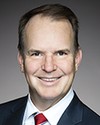
Mr. Speaker, we always seek more hope, which will never come from the Conservatives, that they will actually read a full report in its entirety and understand the actual implications. In fact, the fuel regulations do not have the impacts the member described. Let us go a little bit further. Let us talk about the opportunities. I hope he is thinking about canola farmers too. The regulation reduces emissions, but it creates opportunities for canola farmers. They have specifically said it is not a tax.

Once more, it spurs innovation and creates opportunities. That is what we are about. That is what hope is about.

JusticeOral Questions

2:20 p.m.

Battle River—Crowfoot Alberta

Conservative

Pierre Poilievre ConservativeLeader of the Opposition

Mr. Speaker, it is very telling that the Prime Minister is not prepared to stand up and defend his own tax. Just to prove that it is another counterfeit, the Liberals say a tax on the diesel that farmers use is going to help farmers, just like releasing criminals, they say, will reduce crime.

Conservatives have been fighting to end Liberal bail for a very long time. The Liberals pretended to agree with us, introducing a watered-down bail bill, but now they are blocking their own bill. Conservatives have moved 17 times to push the bail bill forward, and 17 times Liberals have blocked it. There has not been one second of study at their own justice committee.

Will they get out of the way so that we can scrap Liberal bail and bring safety by Christmas?

JusticeOral Questions

2:25 p.m.

Gatineau Québec

Liberal

Steven MacKinnon LiberalMinister of Transport and Leader of the Government in the House of Commons

Mr. Speaker, the Conservative leader lives in a bit of a parallel universe if he thinks we are the ones in the way of the most ambitious crime-fighting agenda that has been presented to this Parliament ever.

The Conservatives are blocking progress on bail reform. They are blocking progress on immigration reform. They are blocking progress against extortion, child pornography and all manner of crimes.

Will that leader stand up right now, turn around and tell his caucus to get out of the way of the Liberals fighting crime?

Government PrioritiesOral Questions

2:25 p.m.

Bloc

Christine Normandin Bloc Saint-Jean, QC

Mr. Speaker, usually—

Government PrioritiesOral Questions

2:25 p.m.

The Speaker Francis Scarpaleggia

We are not ready to start. In fact, that was mentioned when the Standing Orders were violated.

Government PrioritiesOral Questions

2:25 p.m.

Bloc

Christine Normandin Bloc Saint-Jean, QC

Mr. Speaker, this year we will be presenting a shareholders' report instead of our usual session review, because Canada has essentially become a business.

Under this Prime Minister, the Liberals are not even pretending anymore. The fight against climate change is over. The environment is a roadblock to trade. Bill C-5, Bill C-15 and Bill S-4 throw compliance with the law out the window because it slows down business. Quebec's distinctiveness does not matter anymore. The Prime Minister joined the challenge to Bill 21 as fast as he dropped his French lessons.

Are the Liberals aware that Quebeckers did not vote for their Canada Inc.?

Government PrioritiesOral Questions

2:25 p.m.

Toronto—Danforth Ontario

Liberal

Julie Dabrusin LiberalMinister of the Environment

Mr. Speaker, Canadians voted for a Canada that is not only built strong, but also built well. That is exactly what we are giving them. We are committed to strengthening the industrial carbon price. We are committed to strengthening methane regulations. We are committed to encouraging continued clean electricity generation. In Quebec especially, people will see that that it is going to continue. We are going to commit to do even more.

We are getting the job done. We are fighting climate change and building a strong Canada.

Government PrioritiesOral Questions

2:25 p.m.

Bloc

Christine Normandin Bloc Saint-Jean, QC

Mr. Speaker, the Liberals do not have a prime minister, they have a CEO. He does not listen to social priorities like health care or seniors. He does not listen to the ministers who are resigning just to be heard. He does not listen to voters, given his Conservative budget. He does not listen to Quebeckers who voted for him because they were afraid of Donald Trump, given that all he has to say about his relationship with Washington is “Who cares?”

He is a CEO. However, if a real CEO racked up such a huge deficit, they would be fired. Will the Liberals remind him that we are in a democratic Parliament?

Government PrioritiesOral Questions

2:25 p.m.

Louis-Hébert Québec

Liberal

Joël Lightbound LiberalMinister of Government Transformation

Mr. Speaker, if my esteemed colleague wants to review our track record, we can talk about the 180,000 jobs created in Canada in the past three months or the unemployment rate that has fallen for three months in a row and is now 5.1% in Quebec. We can also talk about major investments in Canada, like the $19-billion investment Microsoft announced this week. How about the fact that inflation is within the Bank of Canada's range and that wages are rising faster than inflation?

If we review the Bloc Québécois's record, what do we have? It did not make a single cultural or environmental request ahead of the budget. The Bloc even voted against the national food program for the most vulnerable young people, against investments in culture and against investments in a social safety net in Quebec.

Climate ChangeOral Questions

2:25 p.m.

Bloc

Patrick Bonin Bloc Repentigny, QC

Mr. Speaker, the most generational thing about the Liberal record is Canada's climate betrayal.

According to the former environment minister, the government's abandonment of all its green policies in favour of an oil deal with Alberta is a fire sale. The Liberals' shift to oil will scuttle any chance of meeting the greenhouse gas reduction targets. They are sacrificing everything older Quebeckers have done to help the climate. They are passing problems on to the next generation.

When the Liberals say “generational”, is that the legacy they want to leave?

Climate ChangeOral Questions

2:30 p.m.

Châteauguay—Les Jardins-de-Napierville Québec

Liberal

Nathalie Provost LiberalSecretary of State (Nature)

Mr. Speaker, I do not see this as a betrayal. The strategy is changing, but the objectives remain the same.

Our country will be able to meet the targets, but we have to deal with a different reality. We are changing our strategies, but we are sticking to the same vision. That is what building Canada is all about.

The EconomyOral Questions

2:30 p.m.

Conservative

Jasraj Singh Hallan Conservative Calgary East, AB

Mr. Speaker, before telling Canadians to judge him by grocery prices, the Prime Minister should have removed hidden food taxes like the industrial carbon tax, the Liberal fuel standard and the food packaging tax. The verdict is in, and it is very expensive. An average family of four will pay an extra $1,000 in grocery costs next year. In fact, weekly groceries have doubled under the Liberals from $160 a week to $340 a week.

Do executives at Brookfield need to start lining up at food banks before the Prime Minister gives a damn about lowering food prices?

The EconomyOral Questions

2:30 p.m.

Saint John—Kennebecasis New Brunswick

Liberal

Wayne Long LiberalSecretary of State (Canada Revenue Agency and Financial Institutions)

Mr. Speaker, here we go with imaginary taxes again. If the Conservative leader actually cared about the economy, he would not have spent the last 20 years in this House voting against it.

On this side, we are not playing procedural games. We have been governing. We passed a historic budget to build our economy. The Conservatives hid behind the curtains. The proof is in the pudding. In the face of a trade war, our economy is growing. We have added 180,000 jobs in three months alone.

I hope his heart grows two sizes bigger and he becomes more focused on affordability for Canadians. Let us get on with building the economy.

HousingOral Questions

2:30 p.m.

Conservative

Sukhman Gill Conservative Abbotsford—South Langley, BC

Mr. Speaker, the Liberals are failing Canadians on housing. They are breaking their promise of 500,000 new homes per year, and their fourth housing bureaucracy is a mess with the independent budget watchdog confirming it will only build 5,000 homes per year. Buyers cannot buy, sellers cannot sell and builders cannot build, yet the Liberals refuse to adopt our Conservative plan to axe the GST on all new homes built under $1.3 million to boost building immediately.

Why is it that when the Liberals make a promise, things get more expensive every time and things stay the same again and again?

HousingOral Questions

2:30 p.m.

Vancouver Fraserview—South Burnaby B.C.

Liberal

Gregor Robertson LiberalMinister of Housing and Infrastructure and Minister responsible for Pacific Economic Development Canada

Mr. Speaker, I have some good news to share with the House. On Monday, the Prime Minister and Mayor Sutcliffe announced a new partnership with the City of Ottawa for 3,000 mixed-income and affordable homes that will be built across the city. Through this joint investment, the City of Ottawa will fast-track the construction of 2,000 units of mixed-income and affordable housing on federal lands. Build Canada Homes will be financing 1,000 affordable homes from the City of Ottawa's slate of projects. This is fantastic news, streamlining the approvals and getting homes built fast.

Immigration, Refugees and CitizenshipOral Questions

December 11th, 2025 / 2:30 p.m.

Conservative

Michelle Rempel Conservative Calgary Nose Hill, AB

Mr. Speaker, this fall, the Liberals voted against the most comprehensive immigration reforms in recent history, despite their promise to get immigration under control. Conservative proposals presented would have boosted wages and opportunities for Canadian youth by ending the temporary foreign worker program, ensuring non-citizens convicted of serious crimes like sexual assault are deported and preventing illegal immigrants with bogus asylum claims from accessing benefits that Canadians do not get.

Why is it that whenever the Liberals say they are going to change, the results are always higher costs, more crime, fewer homes and more of the same?

Immigration, Refugees and CitizenshipOral Questions

2:30 p.m.

Halifax West Nova Scotia

Liberal

Lena Metlege Diab LiberalMinister of Immigration

Mr. Speaker, we have a sustainable and strategic immigration plan. This plan aims to attract the top international talent to build a strong economy, bring top researchers to Canada, invest in foreign credential recognition and support francophone and rural communities.

We will protect our borders and strengthen our immigration system with Bill C‑2 and Bill C‑12. I encourage the opposition to support these measures.

Major Projects OfficeOral Questions

2:30 p.m.

Conservative

John Brassard Conservative Barrie South—Innisfil, ON

Mr. Speaker, we found out today that the Prime Minister's signature Major Projects Office is directing Bay Street corporations, capital investors and banks to lend or second staff to the MPO, asking the companies to top up their pay. Here is how greasy this is: Banks, energy companies, mining companies and Brookfield could end up with employees on the inside of the MPO, giving them the inside track and advice on projects they are working on while these companies pay their salaries and provide lucrative bonuses.

Under this scheme, just to spell this out, the Prime Minister's corporate buddies will be paying to have insiders work at the MPO. How is this ethical?

Major Projects OfficeOral Questions

2:35 p.m.

Beauséjour New Brunswick

Liberal

Dominic LeBlanc LiberalPresident of the King’s Privy Council for Canada and Minister responsible for Canada-U.S. Trade

Mr. Speaker, on this side of the House we want to thank our friend for his excellent conspiracy theory work. We think only the Conservatives would be shocked that quality women and men with experience in the private sector would step forward to work with a government that is going to build Canada strong and get major projects done. We are proud of the people who want to come forward and serve Canadians, and we regret that the Conservatives find that is somehow a problem.

Major Projects OfficeOral Questions

2:35 p.m.

Conservative

John Brassard Conservative Barrie South—Innisfil, ON

Mr. Speaker, it is the Prime Minister's Bay Street buddies who are sounding the alarm. If someone is on Bay Street and wants a mine built, it is no problem, because they can pay to send an employee to the Prime Minister's Major Projects Office to help. If they want a reactor built, that is no problem either, because they can pay to send an employee to the Prime Minister's Major Projects Office to help them. Are they a large capital investor, say like, I do not know, Brookfield, and want to fund a green project that pads the Prime Minister's portfolio? That is no problem, because they can pay to send an employee to the Prime Minister's Major Projects Office to help.

This is wrong, unethical and corrupt. How is this happening?

Major Projects OfficeOral Questions

2:35 p.m.

Beauséjour New Brunswick

Liberal

Dominic LeBlanc LiberalPresident of the King’s Privy Council for Canada and Minister responsible for Canada-U.S. Trade

Mr. Speaker, again, on this side of the House, I remember being an opposition member of Parliament. I was very impressed with some of the quality people from Bay Street whom then prime minister Harper recruited to serve as chief of staff in his office, for example. It was not a scandal then that people with business experience could serve in the government. We are proud that this government and this Prime Minister are able to recruit that talent to join the talented women and men in Canada's public service to get things done and to grow the Canadian economy.

Major Projects OfficeOral Questions

2:35 p.m.

Conservative

Michael Barrett Conservative Leeds—Grenville—Thousand Islands—Rideau Lakes, ON

Mr. Speaker, while the Prime Minister and his government are looking to stack the Major Projects Office with corporate insiders and then have corporations send money to the Major Projects Office, Canadians are lined up at food banks in record numbers. The firms paying those so-called top-ups to government employees are the same ones that are going to benefit from fast-track decisions made by the Major Projects Office.

Why is it that the only pipeline the government is getting built is one that funnels cash from Bay Street to the Prime Minister's Major Projects Office?

Major Projects OfficeOral Questions

2:35 p.m.

Gatineau Québec

Liberal

Steven MacKinnon LiberalMinister of Transport and Leader of the Government in the House of Commons

Mr. Speaker, several years ago, the member earned the nickname “Death Valley well driller”. The Death Valley well driller is that lonely guy out in the desert who has gone looking for water and never finds it. Here he is once again, winding up the big pitch, and it all ends in nothing.

Of course, there are talented men and women joining with the government. We are going to help build the country. We are going to build Canada strong, notwithstanding the naysayers and the Death Valley well drillers.

Major Projects OfficeOral Questions

2:35 p.m.

Conservative

Michael Barrett Conservative Leeds—Grenville—Thousand Islands—Rideau Lakes, ON

Mr. Speaker, we have seen the depths of the corruption from the Liberals and these ministers, including those who sit in the front bench today, who have been found to have broken Canada's ethics laws. The Prime Minister is the one who has the market cornered on shadow lobbying, and now it looks very much as though he is inviting more of his Bay Street buddies to have the inside track and have Bay Street pay for access so that his government can fast-track their projects.

Canadians are lined up at food banks, and Liberal insiders are lined up at the Prime Minister's front door. Why will he not—

Major Projects OfficeOral Questions

2:35 p.m.

The Speaker Francis Scarpaleggia

The hon. Minister of Natural Resources has the floor.