The hon. member for Oshawa will be leading us in the singing of the national anthem today.
[Members sang the national anthem]

House of Commons Hansard #172 of the 45th Parliament, 1st session. (The original version is on Parliament's site.) The word of the day was seniors.

This summary is computer-generated. Usually it’s accurate, but every now and then it’ll contain inaccuracies or total fabrications.
International Day for the Elimination of Violence against Women Members mark the International Day for the Elimination of Violence Against Women and the start of 16 days of activism, calling for year-round action to prevent violence, support survivors and improve justice-system responses. Speakers discuss femicide, coercive control, technology-facilitated abuse, barriers to safety and the disproportionate risks faced by Indigenous women and girls. They differ on government policies and funding, while emphasizing collective responsibility. 3600 words, 25 minutes.
Scoliosis Awareness Act First reading of Bill C-298. The bill designates June as Scoliosis Awareness Month and June 26 as Canadian Scoliosis Screening Day to encourage early recognition and screening of scoliosis in children. 100 words.
Canadian Space Launch Act Second reading of Bill C-28. The bill establishes a licensing, safety, environmental, liability and oversight framework for commercial space launches in Canada. Liberals argue it will foster investment, jobs and innovation while strengthening satellite access, communications and national security, including for rural regions. A Conservative raises concerns about prioritizing space investment while cellular service remains unreliable in parts of the country. 2600 words, 20 minutes in 2 segments: 1 2.
Ability of Member to Represent Constituents Pierre Poilievre alleges that government contractor Calian is penalizing a veteran nurse for speaking with him about the aftermath of the CFB Wainwright fire, interfering with his ability to represent constituents. He asks the Speaker to find a breach of parliamentary privilege and refer the matter to committee. The Liberal government says it will examine the situation; the Bloc will review it. 2500 words, 20 minutes.
Old Age Security Act Second reading of Bill C-261. The bill raises the full Old Age Security pension by 10% for people aged 65 and older and increases the Guaranteed Income Supplement employment-income exemption from $5,000 to $6,500. Supporters say it improves fairness and affordability for seniors; the Liberal speaker cites existing targeted supports and explains the rationale for the current age-based increase. The vote is deferred. 7000 words, 45 minutes in 2 segments: 1 2.

The Speaker Francis Scarpaleggia
The hon. member for Oshawa will be leading us in the singing of the national anthem today.
[Members sang the national anthem]
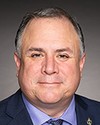
Gord Johns NDP Courtenay—Alberni, BC
Mr. Speaker, I rise today to pay tribute to a champion of local democracy, Tony Bennett of Ucluelet, who recently passed away at the age of 70.
For 19 years, Tony represented Long Beach on the Alberni-Clayoquot Regional District board, bringing passion, integrity and the unwavering belief that every voice mattered. He understood that democracy was not simply about casting votes but about listening, respecting differences, ensuring fairness and giving ordinary citizens a meaningful say in decisions affecting their lives. He championed reconciliation with first nations and believed coastal communities deserved greater control over their future. A logger, fisherman, tourism worker, volunteer firefighter, labour activist and devoted family man, Tony dedicated his life to his community.
To his family and friends I extend my heartfelt condolences.
May we honour Tony's legacy by practising the democracy he so passionately defended.

Kent MacDonald Liberal Cardigan, PE
Mr. Speaker, I rise today to give praise to outstanding Island achievement. Murray Harbour's very own Nicholas Herring has recently won the prestigious Giller Prize for his newest novel, Your Breath in Charcoal.
Islanders know how to spin a good story. It is a practice that has spanned generations back home and has always acted as a special way of bringing our communities together. Nicholas is a carpenter and a fisherman, and he is now one of Canada's finest writers. His newest work draws deeply from the people, places and experiences that shape Atlantic Canada. It reflects the strength of family, the complexity of belonging and the enduring connection we feel to the communities we call home.
This achievement shines a national spotlight on P.E.I.'s rich literary tradition and serves as an inspiration to aspiring writers in communities big and small. I ask the House to join me in congratulating Nicholas, his wife Norma Jean and his daughter Gwen on this outstanding achievement.

Andrew Lawton Conservative Elgin—St. Thomas—London South, ON
Mr. Speaker, Canada's best club-level curlers are in St. Thomas this week as the St. Thomas Curling Club hosts the 2026 Canadian Curling Club Championships. It was great joining the opening ceremonies on the weekend as players were piped in and the tournament kicked off.
Curling has a long history in this country and in St. Thomas. Curling came to town in the 1870s, at first on a pond off William Street and later on a rink built by the St. Thomas Curling and Skating Company. The sport has only grown in popularity since then. The St. Thomas Curling Club was founded in 1955, celebrating its 70th anniversary just last year.
I want to congratulate club president Ellen Luft, past president Peter Inch and all the St. Thomas Curling Club volunteers, sponsors and community supporters on hosting this national tournament. It is a fantastic opportunity to showcase all our community has to offer and celebrate a beloved Canadian pastime. I thank the St. Thomas Curling Club and wish all the competitors the best of luck.
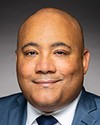
Michael Coteau Liberal Scarborough—Woburn, ON
Mr. Speaker, today I am rising to honour the life of Robert Carlo, a beloved community member and someone who dedicated and put so much of his life into helping people and bringing them together.
I had the pleasure of working with Robert during my time as an MPP and a member of Parliament in Don Valley East. He was someone who genuinely cared about his community. Whenever someone needed help, he was there to give it. At Sunrise Towers, Robert saw seniors who needed connection, and he brought people together. Through the tenant association, The Laughing Clinic and the Canada Day celebration, he helped neighbours feel included and valued. Robert made a lasting difference in his community, and I feel fortunate to have known him.
My heartfelt condolences go to his family, friends and everyone he helped throughout his life.

Éric Lefebvre Conservative Richmond—Arthabaska—des-Sources, QC
Mr. Speaker, today I want to pay tribute to the co-founder and first president of the Jeune chambre de commerce de Victoriaville. He passed away last week. He was a devoted and determined man, the owner of a surveying firm, a member of the very select Cercle à l'école club, and a seasoned athlete with a passion for golf. He was an inspiration to the people around him, but for me, the title that mattered most, the title that no one could take away from me, was brother.
Carl Lefebvre was my brother. I am so grateful for all the tributes we have received, because they have shown me what an impact Carl had on people. Throughout his life, he forged sincere and deep friendships that withstood the tests of time and distance. I offer my deepest condolences to the two loves of his life, my sister-in-law Isabelle and his daughter Mélodie, to our family and to his many friends.
Carl, thank you for being the big brother you were, my childhood idol, my friend and brother. I love you.

Yvan Baker Liberal Etobicoke Centre, ON
Mr. Speaker, I rise to commemorate the 93rd anniversary of the famine genocide in Ukraine known as the Holodomor.
When Joseph Stalin closed Ukraine's borders and confiscated all food to destroy a Ukrainian population opposed to his rule, 19 people per minute, which is 1,200 people per hour and 28,000 people per day, were dying of famine at the height of the Holodomor. The world was silent, and millions of people died as a result.
Right now in Russian-occupied Ukraine, it is happening again. Russia is deporting children, killing civilians and much more. The only way to stop this is for the world to provide Ukraine with the support it needs to liberate all its people and to decisively win the war. This is not just the moral thing to do; it is the right thing for Canada, because if Russia succeeds in Ukraine, NATO countries, including Canada, will be next in defending ourselves against Russian aggression.
On this sombre anniversary, I urge us all to collectively do what we must to help Ukraine win so we can stop commemorating history repeating itself and start celebrating the days since Ukraine's victory, since it regained its freedom and security and since we regained ours.
Vichna yim pamyat. Slava Ukraini.

Ted Falk Conservative Provencher, MB
Mr. Speaker, this coming Sunday, Christians around the world will celebrate the first of four Advent Sundays. Advent is a time of waiting and preparation for Christmas. Christmas is the celebration of a child born in a humble stable in Bethlehem. That child is Jesus Christ, Emmanuel, God with us, and the long-awaited Messiah.
At his birth, the angels announced good news of great joy for all people. That message of peace, mercy and goodwill is a gift that is offered to every home, every community and every neighbourhood. In the spirit of that, let us give generously, forgive freely and serve one another with open hearts. Jesus came to offer us forgiveness for our sins and the promise of eternal life to all who would put their faith in him. I invite all Canadians to consider Jesus this Christmas.
Mr. Speaker, to you and to all Canadians I wish a very merry Christmas and a blessed, joyful and peaceful new year.

Sukh Dhaliwal Liberal Surrey Newton, BC
Mr. Speaker, it is with a heavy heart that I rise today to honour the memory of Satinder Kaur Bahia, lovingly known as Shindy.
Over the years, Shindy became like a daughter to me and a dear member of my family. She touched many lives with her kindness, generosity and support. I will always remember the special bond we shared, and I will miss her deeply.
On behalf of our entire Liberal family, I offer my heartfelt condolences to her husband, Pavan Bahia, my valued assistant of nearly 20 years, and to their family and friends. Shindy will always have a special place in our hearts, and we will miss her dearly.

Tamara Jansen Conservative Cloverdale—Langley City, BC
Mr. Speaker, there is nothing quite like the fear of kissing your husband goodbye as he is wheeled away for open-heart surgery. Almost four and a half years ago, that was me at Royal Columbian Hospital. It seemed as though people from around the globe had come together under one roof to care for my husband. What a blessing it was that these remarkable people had chosen to make Canada their home.
Canada now has just 2.49 hospital beds for every 1,000 people. That is less than half the G7 average. In Cloverdale, we are finally getting a new hospital, but I worry that it will be too small the very day it opens its doors in 2030. The fundamental question is how many people can Canada responsibly welcome if our public services cannot keep up. Canadians deserve better and newcomers deserve better.
Will the government support our motion today to restore reasonable immigration levels?

Jean-Denis Garon Bloc Mirabel, QC
Mr. Speaker, on November 6, four businesses in my riding were honoured at the Ordre national du mérite agricole gala.
Two businesses from Saint‑Joseph‑du‑Lac received regional-level awards, with Vergers la tête dans les pommes placing third in the bronze category and Gestions chou‑bec placing third in the gold category for their Vents d'ange vineyard and their squash interpretation centre.
In Mirabel, Christian Thérien and Carole Viau's farm won second place in the silver category at the regional level, while Serres Stéphane Bertrand took second place in the silver category at the national level.
For my riding, these awards are a significant source of local pride. These businesses are mainly family businesses that have been in the community for generations. They are run by versatile entrepreneurs who innovate and adapt, while growing our food and educating us on the importance of protecting our farmland.
I want to sincerely congratulate them on behalf of all my constituents. I thank them for helping to promote our region and showcase the agricultural expertise of the Lower Laurentians.

Leslie Church Liberal Toronto—St. Paul's, ON
Mr. Speaker, visiting Ottawa today are three remarkable young Canadians from Toronto, including my riding of Toronto—St. Paul's. Will Vyse, Georges Kirijian and Nolan Aziz, all just 24 years old, spent more than 200 days paddling over 8,000 kilometres across Canada from Tadoussac to Vancouver, completing the longest single-season freshwater canoe trip ever recorded, but their journey was about more than adventure.
Their expedition, Canada by Canoe, set out to raise awareness and funds for True North Aid, a charity dedicated to supporting northern and remote indigenous communities. So far, they have raised over $162,000, combining their passion for the outdoors with a deep commitment to making a difference.
On behalf of the House, I want to thank Will, Georges and Nolan and congratulate them on this remarkable achievement. I thank them for reminding us of what Canadians can accomplish when we come together with a dream, a paddle and a shared purpose.

Rhonda Kirkland Conservative Oshawa, ON
Mr. Speaker, a 29-year-old mother of two from Oshawa recently shared her heartbreaking reality. No matter how hard she works, she believes she will never own a home. A 76-year-old pensioner who worked 45 years fears she will have to sell her home because she can no longer afford to keep it. One Canadian immigrant told me the last seven years have been financially unbearable. She has faced homelessness and now relies on food banks to feed her seven-year-old child. Meanwhile, the Prime Minister plans to admit 660,000 new permanent residents.
Newcomers have made invaluable contributions to our country. Those who come here in pursuit of the Canadian dream deserve a fair chance to realize it, not a life of financial hardship and homelessness. It is the government's responsibility to ensure that immigration levels reflect our capacity, so I urge the Liberals to support our Conservative motion and reverse their proposed increase to immigration levels so Canadians and newcomers can afford a home.

James Maloney Liberal Etobicoke—Lakeshore, ON
Mr. Speaker, I am pleased to welcome the Sikyong of the Central Tibetan Administration, Penpa Tsering, to Ottawa. Elected as Sikyong first in 2021 and again in 2026, he is the voice of the Tibetan people around the world and the leader of diaspora Tibetans.
Since the arrival of the first Tibetan refugees in the 1970s, Canadian Tibetans have contributed immeasurably to our economy and community. Their vibrant culture, faith and traditions deeply enrich the social fabric of our country. It is a privilege to have the Tibetan Canadian Cultural Centre in my constituency of Etobicoke—Lakeshore. Founded in 2007, it is the largest Tibetan centre in North America.
We recognize the importance of protecting Tibet's unique culture and its linguistic and religious identity, and we support the office of His Holiness the Dalai Lama, holding sole authority to recognize his future reincarnation. Tibetan Buddhism reflects a profound respect for life and harmony and transcends all cultures.

Jacques Gourde Conservative Lévis—Lotbinière, QC
Mr. Speaker, it seems that, under the Liberals, good contacts are worth a lot more than merit. Telesat, a company whose CEO is a close friend of the Prime Minister, received $2.3 billion in taxpayer money. Wealthy Liberal real estate speculators in B.C. got $1.4 billion in government bailouts. Now Ecostrat, led by the brother of the Minister of Artificial Intelligence, is getting nearly $3 million in government subsidies.
While those close to power are benefiting from this bountiful generosity, the Liberals are fast-tracking expropriations for their $243‑billion Alto train project, including eliminating all public hearings. They have no intention of consulting the public. They think they can do whatever they want. They want to ram their project down Canadians' throats and give the land they steal from farmers to their Liberal friends.
They may try to silence the people whose land is expropriated by Alto, but they will never succeed in silencing the people speaking out against all the Liberal scandals.

Louis Villeneuve Liberal Brome—Missisquoi, QC
Mr. Speaker, communities are stronger when everyone has the opportunity to participate and contribute.
For many senior men, initiatives like Men's Shed in Lac-Brome, Sutton and Bromont offer much more than just a workshop. They foster a sense of belonging, encourage social interaction, and provide members with opportunities to use their experience and expertise to help others.
For example, members recently rebuilt the gardening boxes at Knowlton Academy and refurbished canoes for use at local summer camps.
I had the pleasure of meeting with five members of Men's Shed here in Ottawa. Their dedication and their determination to make a difference in their community are truly inspiring. This is the kind of initiative the federal government can support through the New Horizons for Seniors Program.
I thank them for putting their skills and experience to work for our community, and for keeping the door open to the next person who may need a place to belong, contribute and connect.

Shelby Kramp-Neuman Conservative Hastings—Lennox and Addington—Tyendinaga, ON
Mr. Speaker, last Friday, the Liberals tabled their 521-page budget implementation bill. What is hidden inside it should concern every single property owner between Quebec City and Toronto.
Division 44 would shield Alto from legislative and regulatory safeguards, bypass established expropriation protection processes, establish a right to first refusal and lock down property rights for up to eight years. What is doubly insulting to Canadians is that the government is asking rural property owners and farmers to pay billions of dollars for the privilege of having that same government take their land for a project they do not want or need. This sets a troubling precedent and exposes the mindset of this government.
For any government expenditure, Parliament would be wise to remember where that money is coming from and be exceptionally concerned about who it is going to. If Alto is getting special treatment from the Liberal government, it demands scrutiny from all of the House.

Danielle Martin Liberal University—Rosedale, ON
Mr. Speaker, like so many city kids in this country, I learned to connect with nature by getting into a canoe on a beautiful Canadian lake. Canoeing is one of the oldest forms of transportation on these lands and a skill that people of all ages, those who were born here and newcomers, love to learn.
Project Canoe, in my riding, offers wonderful opportunities for Toronto's youth to get on the water, but some people take it to a whole other level, like the members of Canada by Canoe who have joined us in Ottawa today.
I extend a special welcome to Will, Nolan and Georges who, with the support of Ezra, Ally and Lisa, just completed a remarkable 8,000-kilometre journey across Canada, raising awareness and money for True North Aid.
I hope that our nature strategy, in which we commit to protecting 30% of Canada's lands and waters by 2030, will yield even more opportunities for future generations to go on adventures that make the world a better place.
Immigration, Refugees and CitizenshipOral Questions
Battle River—Crowfoot Alberta
Conservative

Pierre Poilievre ConservativeLeader of the Opposition
Mr. Speaker, the families of the 29,000 Canadians who died in a single year while waiting for health care simply do not believe that the mass immigration proposed by the Prime Minister will improve the health care system. Since this immigration policy has been in place, wait times have grown by 60%, and six million Canadians do not have a doctor. Immigrant doctors and nurses who are already here cannot even get work permits. We do not have enough hospital beds. How are we going to care for Canadians?

Mark Carney LiberalPrime Minister
Mr. Speaker, the government has regained control over immigration.
We have reduced the number of asylum seekers by two-thirds. We have reduced the number of foreign students by two-thirds. We have reduced the number of temporary foreign workers by more than half. We are going to build Canada strong.
Immigration, Refugees and CitizenshipOral Questions
Battle River—Crowfoot Alberta
Conservative
Pierre Poilievre ConservativeLeader of the Opposition
Mr. Speaker, the families of the 29,000 Canadians who died on waiting lists in the last year simply do not believe that even more massive Liberal immigration will improve the system. We tried it, and what has been the result? Wait times are up 60%. It is 12 hours, waiting in hell, in an emergency room. Six million Canadians do not have a family doctor, and immigrant doctors and nurses already here cannot get permits to work in their field as it is.
With the Prime Minister promising a record-smashing number of permanent residents this year, how is he going to care for them when we cannot care for the people already here?
Mark Carney LiberalPrime Minister
Mr. Speaker, the government has taken back control of immigration. Asylum seekers are down by two-thirds, temporary foreign workers are down by over half, and foreign students are down by two-thirds. We have reduced the temporary percentage of the population from around 7.5% to about 5.5% in just two years.
We are moving forward. One in three nurses is an immigrant. One in four doctors is an immigrant. We are bringing in medical professionals. We are building this country strong.
Immigration, Refugees and CitizenshipOral Questions
Battle River—Crowfoot Alberta
Conservative
Pierre Poilievre ConservativeLeader of the Opposition
Mr. Speaker, only a Liberal would claim that undercounting the number of people who are already here by 300,000 means taking back control of the system. Only a Liberal would say that when we have 500,000 people here, undocumented, that is taking back control. Only a Liberal who cannot even tell us how many people are in the country would say he has taken back control, but, on top of that, he has kneeled before the corporate lobbyists and promised a record-smashing permanent resident count this year.
Will he at least allow his Liberal MPs a free vote on whether to bring in this record-breaking number of people?
Mark Carney LiberalPrime Minister
Mr. Speaker, only a Conservative, the Leader of the Opposition, would say we should allow fast sponsorship of temporary foreign workers who can become permanent. Only the Conservative Party of Canada would have in its platform, “will create pathways to permanence for those already living and working in Canada”.
That is what this government is doing. We are listening to the Conservative Party of Canada. We are building Canada strong.
Immigration, Refugees and CitizenshipOral Questions
Battle River—Crowfoot Alberta
Conservative
Pierre Poilievre ConservativeLeader of the Opposition
Mr. Speaker, one cannot plagiarize something if one cannot properly read it.
For years, Canadians have welcomed newcomers who are already here, but under reasonable limits of 200,000 to 300,000 per year. The Prime Minister is proposing a number that is more than twice the 20-year average and 40% higher than the highest year of Justin Trudeau, and all of this while the Parliamentary Budget Officer says he is breaking his promises on housing.
How will he house 665,000 people when we do not have homes for people in Canada?
Mark Carney LiberalPrime Minister
Mr. Speaker, here are a few facts. The population of this country is growing at the slowest rate since World War I. The population of this country is growing at half the rate since the Leader of the Opposition, if he can remember that far back, was in government during Prime Minister Harper's government.
Immigration is back under control. We are working with the provinces to bring in the people this country needs.
Pierre Poilievre ConservativeLeader of the Opposition
Mr. Speaker, while a report today demonstrated that Canadian seniors are having to empty their life savings to help their adult children pay their ever-rising bills, the Prime Minister found $2.3 billion for a contract for his buddy's company over at Telesat. The same amount that Telesat actually owed in urgent debt payments. What an incredible coincidence.
The Prime Minister has a very simple question to answer. Did he ever discuss Telesat with Mr. Goldberg since he became Prime Minister, yes or no?
Mark Carney LiberalPrime Minister
Mr. Speaker, I have not participated in any decision, any vote, or any discussion about any decision or any vote in this government with respect to Telesat.
Pierre Poilievre ConservativeLeader of the Opposition
Mr. Speaker, now we realize why it is such a rare occasion that we get to ask him these questions. He does not want to answer whether he discussed Telesat with his friend of 20 long years, who vacationed with him in London and who was part of a book club and a jogging club. He is a regular friend so close that the Prime Minister had to recuse himself from dealing with this file, but only four months after he granted the $2.3-billion contract.
Did he discuss Telesat with his buddy Dan Goldberg, yes or no?
Mark Carney LiberalPrime Minister
Mr. Speaker, the Leader of the Opposition did not listen to my last answer. I did not participate in any decision or any vote.
I came back. I came back for him. I came back for all Canadians. I came back with three trade deals with two billion people to help the farmers, to help the fishers, to help the manufacturers in Canada.

Yves-François Blanchet Bloc Beloeil—Chambly, QC
Mr. Speaker, when the Prime Minister co-opted the motto maîtres chez nous from Quebec, it was evidently not meant to apply to Quebeckers. The Prime Minister is giving Alto a right of first refusal on any property sales for eight years, as well as the authority to prohibit any work on private land for four years. We are talking about a corridor 10 kilometres wide. He is also giving Alto the power to saddle people with up to $25,000 in arbitration costs simply for having the courage to challenge an expropriation.
This process amounts to nothing less than a land grab. What gives the Prime Minister the right to make Alto the master in Quebeckers' own home?
Mark Carney LiberalPrime Minister
Mr. Speaker, we have learned a great deal from Quebec's economic history. Before we can be masters of our destiny, we must build big. We must build infrastructure. This will be the largest infrastructure project in Canada's history. It will create 50,000 well-paid jobs and add $35 billion to the GDP of Quebec, Ontario and Canada. This will result in a strong Canada and a strong Quebec.
Yves-François Blanchet Bloc Beloeil—Chambly, QC
Mr. Speaker, he is not a Prime Minister. He is a pharaoh. On top of that, the Prime Minister is allowing Alto itself to expropriate people's property without a public hearing. Alto will be able to begin work anywhere, with or without the landowners' consent, with little notice and before any agreement is reached. Alto could even charge farmers whose land will be split in two by the tracks for the cost of building the right-of-way. This unprecedented shift towards authoritarian control over property rights raises an important question.
Does the Prime Minister understand that his majority is not a mandate to trample on the rights of Quebeckers?
Mark Carney LiberalPrime Minister
Mr. Speaker, we always comply with Canadian laws. This is a specially designed piece of legislation that will provide transparency, clarity and fair compensation for all landowners in Quebec and Ontario, for the largest project in Canadian history.
Yves-François Blanchet Bloc Beloeil—Chambly, QC
Mr. Speaker, the problem with his bill is that it nullifies laws. Not even the Government of Quebec is safe from the excessive expropriation powers that the Prime Minister is granting Alto. That is how far this authoritarian overreach extends.
The Prime Minister has to realize that the ends do not justify the means if the means involve attacking the rights of citizens and farmers. Quebeckers in Mirabel, Terrebonne and Berthier—Maskinongé are not mere administrative obstacles standing in the way of his imperial wishes.
Will he finally submit to democracy, even if doing so isolates him among his friends?
Mark Carney LiberalPrime Minister
Mr. Speaker, the opposition member talks about the Quebec National Assembly and its laws all the time. The National Assembly has an act respecting the Réseau électrique métropolitain, or REM. Our legislation is based on Quebec's REM construction legislation. Everyone will receive advance notice, along with fair compensation, the right to object and the right to appeal.
Pierre Poilievre ConservativeLeader of the Opposition
Mr. Speaker, the Liberal Prime Minister is abusing his power with the authoritarian law he is proposing, which will take land away from our farmers and citizens to build a monster of a project that will cost Canadians a lot of money. It will cost $150 billion. That is $10,000 per Canadian family. What is more, the Prime Minister has to repeal existing laws to expropriate the land.
Why does the Prime Minister think that he can take away people's rights, money and land to benefit the powerful Liberal club?

Steven MacKinnon LiberalMinister of Transport and Leader of the Government in the House of Commons
Mr. Speaker, Alto is the largest infrastructure project in Canada since the St. Lawrence Seaway. The St. Lawrence Seaway has generated billions of dollars, created thousand of jobs and provided economic opportunities for generations of Canadians. We want to think big. We want to build. We want to transform mobility in Canada. We want to give our young people, our workers and our economy a chance. The Leader of the Opposition should join us in building Canada.
Pierre Poilievre ConservativeLeader of the Opposition
Mr. Speaker, what the Prime Minister is preparing to do with his arrogant and authoritarian law is break every rule on expropriation so that the government can not only take $150 billion from taxpayers, but also rob land from farmers, homeowners and communities along the route. We built for over a century without these kinds of abuses, all to hand over the land and money to a powerful group of Liberal insiders.
Why is it that he always makes the common people pay and the powerful Liberal club profit?
Steven MacKinnon LiberalMinister of Transport and Leader of the Government in the House of Commons
Mr. Speaker, we are building this incredibly exciting nation-building project because we committed to do that. We committed in the last election to move at greater speeds to build our country, create opportunities for our young people and build infrastructure that helps people. The Conservatives used to think that way, because they too promised a high-speed rail network before flip-flopping. They say we have to build pipelines without process, and now they are opposed to building key things that will help people.
Pierre Poilievre ConservativeLeader of the Opposition
Mr. Speaker, what incredible arrogance from the Liberal Prime Minister. He will not even answer a question about taking people's land, money and rights. He has not actually answered a single question about the budget since it was tabled three weeks ago. Let us ask him one right now. The head of the auto workers union, the Premier of Ontario and Stellantis all believe that the jobs could be saved in Brampton if he got rid of the industrial carbon tax, but his budget doubled down on it.
Why will the Prime Minister not get rid of this job-killing tax, which is driving up the cost of living and driving our jobs out?

Carlos Leitão LiberalParliamentary Secretary to the Minister of Industry
Mr. Speaker, let me tell members a thing or two about autos. Honda just announced a major investment in Alliston, and Ford just announced a major investment in Oakville. They believe in Canada. They work with Canada. We work with them. By the way, the industrial carbon tax has nothing to do with those decisions.
Pierre Poilievre ConservativeLeader of the Opposition
Mr. Speaker, this is incredible arrogance at a time when Brampton workers are out in the cold. The Prime Minister refuses to even stand and answer the question. Their union, their premier and their employer all believe that the industrial carbon tax is costing them their jobs.
This is a tax not paid by our American or most European competitors, even now, so why will the Prime Minister not scrap the tax, save the jobs and finally stand up in the House for Canadians?

Anita Anand LiberalMinister of Foreign Affairs
Mr. Speaker, we are fighting for the auto workers and against U.S. tariffs every single day. Global automakers are doubling down on Canada and our auto industry. Honda in Alliston and Ford in Oakville are choosing to invest billions of dollars in our country. The federal government put $500 million into Ford in Oakville to build a super duty truck. That is happening as we speak. We will keep fighting every single day for every Canadian auto job, because we believe in Canada.

Vincent Ho Conservative Richmond Hill South, ON
Mr. Speaker, the Liberal Prime Minister said Canadians would be masters of our destiny, but the latest results are devastating. Equifax says consumer debt has hit a whopping $2.74 trillion. The share of mortgage balances that are over 90 days overdue is up 31.1% year over year, climbing for 16 straight quarters to a 13-year high. If interest rates rise, nearly one in four mortgage holders could face even more financial stress. Families in Richmond Hill South are already choosing between missing their next mortgage payment or their next credit card payment.
When will the Liberal Prime Minister finally make life more affordable, or is he content to go down as the master of our delinquencies?

Wayne Long LiberalSecretary of State (Canada Revenue Agency and Financial Institutions)
Mr. Speaker, the Leader of the Opposition has been in the House for over 8,000 days. He has never worked a day in the economy. Canadians know he has no economic credentials, no economic credibility.
Let us look at some facts. We have the best net debt-to-GDP ratio in the G7 and the fastest growing economy in the G7. We will balance our operating budget one year ahead of schedule. That leader has a new slogan on his podium: save jobs. The only job he is worried about is his own.

Sandra Cobena Conservative Newmarket—Aurora, ON
Mr. Speaker, mortgage delinquencies have reached a 13-year high, rising 31% in a single year. Canadians who have worked hard to buy a home are now struggling to keep it. At the same time, economists are warning that the Liberal government's reckless spending could further fuel inflationary pressures. Higher inflation means higher interest rates.
When will the Prime Minister realize that his government spending decisions have real consequences for Canadian families?

Ryan Turnbull LiberalParliamentary Secretary to the Minister of Finance and National Revenue and to the Secretary of State (Canada Revenue Agency and Financial Institutions)
Mr. Speaker, stewarding the nation's financial resources is a responsibility the government takes very seriously, and Canadians know that. This is why they hired a world-class economist to run Canada at a time when our economy and sovereignty are under threat.
Budget 2026 responds to exactly what Canadians are struggling with by focusing on income, housing, food and energy security, improving the conditions for families, workers and industries all across the country. We are using the strongest balance sheet in the G7 to invest in our growth and support the prosperity of all Canadians. This is exactly what we are going to do.
Sandra Cobena Conservative Newmarket—Aurora, ON
Mr. Speaker, let us be clear. It was the member's government that spent the last decade waging a war on Canadian history and the Canadian economy, driving dependence on government assistance. A 13-year high delinquency rate is the Liberal government's legacy. Canadian families need to fight to balance their budgets by cutting back groceries, taking the kids out of sports or delaying retirement.
Why are Canadian families expected to exercise a level of discipline the Prime Minister refuses to impose on his own government?
Carlos Leitão LiberalParliamentary Secretary to the Minister of Industry
Mr. Speaker, let us talk a bit about inflation. The Governor of the Bank of Canada just pointed out yesterday that we are facing inflation issues from a supply shock, from a global supply shock.
By the way, I would like to thank Governor Macklem for his service. He is retiring this year after seven years, during which he did an excellent job. I remind the House that that leader wanted to get rid of him in 2021. Shame on you.
The EconomyOral Questions
The Speaker Francis Scarpaleggia
This is just a simple reminder that members are to direct comments through the Chair.
The hon. member for Rivière-du-Nord.

Rhéal Fortin Bloc Rivière-du-Nord, QC
Mr. Speaker, there is a clown of a lawyer who thinks democracy means preventing elected officials from taking their seats, in the name of the monarchy. I suppose that is what they call “democracy by divine right”. For Quebeckers, democracy means the sovereignty of the people, and so all members of the National Assembly have taken an oath to the people.
Today, the federal Parliament served as a platform for one lawyer's crusade against the National Assembly. This farce must come to an end. Parliament will be back in session in Quebec City on December 1.
Does the Prime Minister recognize Quebec's 127 elected officials, and does he wish them a fruitful legislative session?

Joël Lightbound LiberalMinister of Government Transformation
Mr. Speaker, we have taken note of the Superior Court's decision. I understand that it is being appealed in Quebec City. That said, and given the magnitude of the challenges facing Quebec, we obviously hope that the elected members of the National Assembly will be able to take their seats as soon as possible.

Xavier Barsalou-Duval Bloc Pierre-Boucher—Les Patriotes—Verchères, QC
Mr. Speaker, it is disgraceful to allow this Ontario lawyer to use the federal Parliament as a platform to threaten Quebec's elected representatives with repercussions if they return to work, as the Quebeckers who elected them expect them to do. According to him, only monarchist members should be allowed to sit. That would get rid of quite a few people, including some in this Parliament here.
He is going too far. By staying silent, the Prime Minister is condoning the use of this kind of fanatical rhetoric right here on the Hill.
Does he recognize the legitimacy of Quebec's 127 elected MNAs, and does he want them to start work on December 1?
Joël Lightbound LiberalMinister of Government Transformation
Mr. Speaker, I am having a hard time understanding. I answered that question. The matter is before the courts as we speak. It has been appealed. As to whether we want the MNAs to get to work, of course we do. We want the members elected to the National Assembly to sit as soon as possible. As I said, there are some major challenges in Quebec. Some very important issues need to be addressed with respect to infrastructure and homelessness. As for the halls of Parliament, we have no control over that.
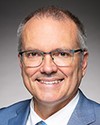
Luc Berthold Conservative Mégantic—L’Érable—Lotbinière, QC
Mr. Speaker, for 11 years, this Liberal government has wreaked havoc on our immigration system. In the regions, businesses are at risk of losing workers they trained because their applications are stuck in a backlog in Ottawa. The government's proposal will only create more chaos. Not only have the Liberals failed to process the cases of people who are already here, but they now plan to admit another 650,000 people.
This afternoon, will the Prime Minister allow his MPs a free vote on a motion that would finally get things back on track and restore order to Canada's immigration system?
Immigration, Refugees and CitizenshipOral Questions
Halifax West—Peggy’s Cove Nova Scotia
Liberal

Lena Metlege Diab LiberalMinister of Immigration
Mr. Speaker, our plan is not about new arrivals. It is about people who are already settled in our communities. These are people who are already working here. These are people who are already paying taxes here. These are people who are learning French here. At the same time, we have seen a significant decline in the number of new study permits, temporary foreign workers and asylum applications. Our plan is responsible, focused and sustainable.
Are you giving your—
Immigration, Refugees and CitizenshipOral Questions
The Speaker Francis Scarpaleggia
Members cannot direct questions to the Chair.
The hon. member for Cambridge.

Connie Cody Conservative Cambridge, ON
Mr. Speaker, this week at the health committee, we heard that wait times are now at their highest level on record, yet the Prime Minister plans to increase immigration levels to historic amounts next year. Nearly one million Canadians are waiting beyond medically recommended timelines for diagnostic scans. A delayed scan means a delayed diagnosis, and a delayed diagnosis means delayed care. Canadians are becoming sicker while they wait and the economic cost runs into billions of dollars.
Will the Liberals vote for our motion to reject their record-breaking immigration levels so that diagnostic-imaging capacity can keep up?
Immigration, Refugees and CitizenshipOral Questions
Halifax West—Peggy’s Cove Nova Scotia
Liberal
Lena Metlege Diab LiberalMinister of Immigration
Mr. Speaker, this government is investing $5 billion in Canada's hospitals. The Conservatives do not get it. At the same time, members can go to any hospital. They will find that one in three doctors is an immigrant. They will find that one in four registered nurses is an immigrant. One in three health care workers in the country is an immigrant. The immigration plan is stable. It is durable. It is predictable. It responds to the provinces and territories that have been asking for us to keep these workers here. Immigration is not the cause. Immigration is the—
Immigration, Refugees and CitizenshipOral Questions
Connie Cody Conservative Cambridge, ON
Mr. Speaker, the Liberals are the cause. A health policy expert told Parliament that wait times are rising because health care has failed to keep pace with population growth, but with his new record immigration levels, the Prime Minister just increased demand without increasing capacity. Today, Canadians wait longer for scans and tests than doctors consider safe. Twenty-nine thousand Canadians died last year before receiving the care they needed. The Prime Minister now wants to add a record number of people to the same waiting list.
When someone in his own riding finds out her cancer spread while she waited for a scan, what will the Prime Minister tell her?

Marjorie Michel LiberalMinister of Health
Mr. Speaker, as we all know, immigrants play a vital role in health care across the country.
On the issue of health care, the provinces deliver these services, and as I have already said, I am working in partnership with the provinces and territories to improve health care services. At the present time, the provinces have asked us to help them recruit a lot more health care professionals from abroad. We have done just that, making 5,000 spaces available to them.

Costas Menegakis Conservative Aurora—Oak Ridges—Richmond Hill, ON
Mr. Speaker, the CBC reported that 2.1 million temporary residents have permits that are expired or will expire this year. Not one of them is in the Prime Minister's immigration levels plan this year. His government does not track who leaves, so he cannot tell Canadians who has left and who is still here. On top of the 2.1 million people he cannot account for, he is now planning on bringing in a staggering record of an additional 662,000 people.
How can the Prime Minister ask Canadians to trust his immigration plan when he cannot even count the people who are already here?
Immigration, Refugees and CitizenshipOral Questions
Brampton North—Caledon Ontario
Liberal

Ruby Sahota LiberalSecretary of State (Combatting Crime)
Mr. Speaker, we are planning for the people who are already here in our immigration levels plan. The Conservatives are being dishonest when they tell Canadians that the levels plan is not about the people who are already in this country.
Immigration, Refugees and CitizenshipOral Questions
The Speaker Francis Scarpaleggia
I do not know if members can use that kind of language. The member may need to rephrase.
The member may continue.
Ruby Sahota Liberal Brampton North—Caledon, ON
Mr. Speaker, in our levels plan, we had a dedicated stream for doctors who were practising in Canada. Because of our levels plan and because of our immigration programs, more doctors have been able to practise in Canada, not to mention nurses, PSWs and everyone who fills a labour shortage.
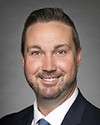
Branden Leslie Conservative Portage—Lisgar, MB
Mr. Speaker, The Globe and Mail reported that the Liberals did not factor in at least 500,000 undocumented people within their immigration levels plan. When Conservatives asked the immigration minister how many undocumented workers were in Canada, she could not give an answer. We cannot plan for housing, health care and jobs without knowing how many people are actually here. The Prime Minister should not be increasing immigration to record levels without that number either.
Will the Prime Minister give us that number today?
Immigration, Refugees and CitizenshipOral Questions
Halifax West—Peggy’s Cove Nova Scotia
Liberal
Lena Metlege Diab LiberalMinister of Immigration
Mr. Speaker, we have been clear that we have a sustainable and managed immigration levels plan. We are laying the foundation for comprehensive exit tracking. We have recorded the largest reduction in the temporary population in this country in 50 years. We are working to ensure anyone with an expiring permit keeps their legal status or leaves the country. We will keep working with our partners, including CBSA, to keep immigration controlled and managed.

Kristina Tesser Derksen Liberal Milton East—Halton Hills South, ON
Mr. Speaker, when my family was starting out, I was pursuing a professional degree and my husband was starting a small business. We had no choice but to enrol our four young children in day care. Back then, the expense was significant, and without our parents' help, it would have been prohibitive.
Positive changes have been made since then. Canadian parents can complete advanced education, build rewarding careers and contribute to the Canadian economy because they have access to affordable and reliable child care.
Can the Minister of Jobs and Families explain the measures in our 2026 budget that would make affordable and reliable child care even better for Canadian families?

Patty Hajdu LiberalMinister of Jobs and Families and Minister responsible for the Federal Economic Development Agency for Northern Ontario
Mr. Speaker, I thank the member of Parliament for Milton East—Halton Hills South for sharing her story.
Like so many women, we rely on child care in order to fully recognize our careers and our education. That is why making early learning and child care affordable is so important to ensure that every parent has a fair chance to join the labour market, to pursue their education and their career goals. This federal budget commits an additional $5.4 billion on top of the $70 billion already invested in provinces and territories to continue our capacity to—
Child CareOral Questions
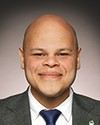
Jamil Jivani Conservative Bowmanville—Oshawa North, ON
Mr. Speaker, the Prime Minister described his ethics screen with Dan Goldberg as proactive, but it is 20 months late. It is unclear what the government means when it says it is being proactive. Before this House votes on the proposed budget that would give $1.6 billion more to the very program that funds Telesat, the government should come clean with the Canadian people.
Do Liberals admit that they intend to give more public tax dollars to Dan Goldberg's Telesat or not?
Steven MacKinnon LiberalMinister of Transport and Leader of the Government in the House of Commons
Mr. Speaker, we always, on this side of the House, comply with the ethics rules proactively and at all times. These are among the most stringent ethics rules that exist in the world. We will always comply with them at all times and do so in a very transparent manner.
Jamil Jivani Conservative Bowmanville—Oshawa North, ON
Mr. Speaker, Telesat was an insolvent and debt-ridden company until the Prime Minister and his government came along, and now its revenue is bolstered with tax dollars. The Canadian people deserve to have answers to their questions before a budget is voted on. The Prime Minister has been helping his friend by travelling around the world and promoting Telesat to international markets. There are almost 20 examples of the Prime Minister pumping Dan Goldberg's tires in countries all around the world.
The question goes back to this. Do they intend to bail out Dan Goldberg once again?
Carlos Leitão LiberalParliamentary Secretary to the Minister of Industry
Mr. Speaker, Telesat Lightspeed is a transformational project, crucial for Canadian sovereignty. Why are the Conservatives so determined to destroy jobs, to destroy our ability to really be masters of our destiny?

Warren Steinley Conservative Regina—Lewvan, SK
Mr. Speaker, we can always tell when we are getting close to the target when the House leader does not get up and pump his chest and yell. Then we know we are getting close to an answer. Let us connect the dots. Telesat CEO Dan Goldberg is a good friend of the Prime Minister. This we know. We know this through the fact that their kids went to an elite private school. They joined the running club together. Dan Goldberg even went to England, crossed an ocean, to visit the Prime Minister.
How can the Prime Minister tell Canadians he is above the law?
Carlos Leitão LiberalParliamentary Secretary to the Minister of Industry
Mr. Speaker, Telesat Lightspeed is crucial for Canadian independence. We want to rely on our own companies, our own systems. We do not want to be dependent on unreliable foreign companies. Telesat Lightspeed is crucial for Canada.
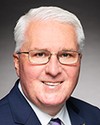
John Brassard Conservative Barrie South—Innisfil, ON
Mr. Speaker, 2.3 million Canadians are using food banks every month, mortgage delinquencies are at their highest level in 10 years and affording the necessities of life has become even harder for seniors and single moms, but for those who are part of the club of well-connected Liberal insiders and family members, life has never been better.
The brother of the artificial intelligence minister has received $3 million since the 2025 election to build, get this, a global bioeconomy. If building a global bioeconomy was so lucrative, could the minister's brother not do it on his own without hard-working Canadian taxpayer dollars?
Steven MacKinnon LiberalMinister of Transport and Leader of the Government in the House of Commons
Mr. Speaker, the minister has answered that question repeatedly. I would simply repeat that the rules have all been followed. The minister has recused himself from any discussion, and impugning this company that has existed since long before that member arrived here in Parliament is unbecoming of the Conservatives.
John Brassard Conservative Barrie South—Innisfil, ON
Mr. Speaker, youth unemployment is at its highest level in a generation. The country is bleeding jobs and with it, there is unimaginable stress and anxiety among Canadian families, but none of this is happening within the club of well-connected Liberal insiders. If someone is a friend, family member, corporate buddy, business connection or despot leader friend of the Prime Minister, life has never been better since the last election. The self-dealing under the Prime Minister has reached a whole new level while the people he is governing over are suffering.
Tell us again how the Liberals follow the strictest ethics rules, but always find a way around them.
Patty Hajdu LiberalMinister of Jobs and Families and Minister responsible for the Federal Economic Development Agency for Northern Ontario
Mr. Speaker, I hope when the member of Parliament meets with his constituents, he tells them about how he has voted down every single opportunity to help young people find jobs. Just this morning, I met with CASA, young students from across the country who advocate on behalf of their peers. They thank the federal government for maintaining Canada's student loans interest-free, something we have done that the Conservatives have voted against.
They say they want to give a hand up to youth, they say they want to invest in youth, but time and again, they vote against those kids.
Éric Lefebvre Conservative Richmond—Arthabaska—des-Sources, QC
Mr. Speaker, the CEO of Ecostrat is the Minister of Artificial Intelligence and Digital Innovation's brother. He just got $2.2 million from the government for his project.
The CEO of Telesat is a close friend of the Prime Minister. He just landed an untendered contract worth $2.3 billion. Why is the Liberal government not following an ethical, transparent and competitive process for a $2.3-billion contract? Who on the other side has the nerve to stand up to try to defend that? Who will dare to stand up? I hope no one—
Public Services and ProcurementOral Questions
Steven MacKinnon LiberalMinister of Transport and Leader of the Government in the House of Commons
Mr. Speaker, here is the irony of the situation. For one thing, the Conservatives' repeated insinuations are not true. For another, the Conservatives are not willing to repeat these absolutely ridiculous and false accusations outside the House, where they are not protected by parliamentary privilege.
Of course, we have the strictest rules in the world. We follow them rigorously and we will continue to do so.
Éric Lefebvre Conservative Richmond—Arthabaska—des-Sources, QC
Mr. Speaker, when it comes to ethics and transparency, the Liberal government is certainly not the first thing that comes to mind.
We know that the government wants its Alto project. It is prepared to do anything, even grant exceptional powers, to get our people out and relocated where they see fit. Handing property over to a private consortium sounds unbelievable, but it is true.
Agriculture puts food on our tables morning, noon and night. That is thanks to our farmers. We need our land to live, not a $150‑billion train—
Rail TransportationOral Questions
Steven MacKinnon LiberalMinister of Transport and Leader of the Government in the House of Commons
Mr. Speaker, this is a public project that will serve Canadians and benefit them.
It is a project of national significance that will create jobs, drive economic growth and be a game-changer for transport links between Quebec City, Trois-Rivières, Laval, Montreal and Gatineau-Ottawa, among others. The Alto project is one that Canadians are very keen to see happen. We will continue to drive it forward.

Michael Barrett Conservative Leeds—Grenville—Thousand Islands—Rideau Lakes, ON
Mr. Speaker, buried in the Liberals' 521-page omnibus budget bill are sweeping new powers that would allow the Liberals to take private property for their Alto project. This is something that Canada's budget watchdog says is going to cost Canadians $113 billion. We are learning now that farmers are going to be ordered to pay for infrastructure, including bridges, to cross from one part of their property to another if the train cuts through their land. Our community does not want it, does not need it and cannot afford it.
Will the government cancel the Alto project?
Steven MacKinnon LiberalMinister of Transport and Leader of the Government in the House of Commons
Mr. Speaker, farmers, and indeed all landowners, would be able to negotiate and, subsequently, if it is their wish, to contest the assessment. They would have their independent assessment costs covered. They would have their legal costs covered, and not one single numbered roadway in the Alto path would not have an access, an overpass or an underpass, so that will be hundreds.
Michael Barrett Conservative Leeds—Grenville—Thousand Islands—Rideau Lakes, ON
Mr. Speaker, I sent an invitation for the minister to come to my riding because he should talk to some of these farmers, who are growing food for Canadians and for the world. They are worried about their properties, not just numbered roads, being cut in half and being ordered to pay for the infrastructure to cross from one side to the other.
The minister is talking about legal costs, but in the bill it says arbitration costs. Twenty-five thousand dollars is what farmers are going to have to pay before they hire a lawyer or before they pay to build the infrastructure just to get their combine from one side of their field to the other.
Why are all the costs being downloaded onto farmers who are never even going to use this train and just want to grow food for Canadians?
Steven MacKinnon LiberalMinister of Transport and Leader of the Government in the House of Commons
Mr. Speaker, we, of course, value farmers. We, of course, work with farmers—
Rail TransportationOral Questions
Steven MacKinnon Liberal Gatineau, QC
Mr. Speaker, we, of course, value our farmers. We, of course, value their contributions. We, of course, value the fact that they cherish and have built their land and their farms over the years and over the generations. That is why we will deal with them with a maximum of sensitivity. We will always seek to achieve a negotiated agreement for a 60-metre-wide corridor for this nation-building project that will benefit all Canadians.

Guillaume Deschênes-Thériault Liberal Madawaska—Restigouche, NB
Mr. Speaker, Canada is blessed to have oceans surrounding it on three sides.
Protecting our oceans is absolutely essential, not only for our environment, but also for our economy and our coastal communities. For precisely that reason, our government announced a historic investment of more than $1.2 billion earlier this year to strengthen the protection of our oceans.
I would like to ask the Secretary of State for Nature if she could explain how budget 2026 advances the critical issue of marine conservation.

Nathalie Provost LiberalSecretary of State (Nature)
Mr. Speaker, I thank my colleague from Madawaska—Restigouche, described by iPolitics as a rising star among parliamentarians, for his question.
Oceans are a force of nature. That is why we are very proud that budget 2026 adds $1.2 billion to the $1.3 billion already provided under our strategy to protect nature. We are going to create two new national marine conservation areas and move forward with three more Arctic marine areas. By 2027, 20% of our oceans—
The EnvironmentOral Questions
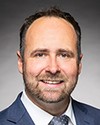
Philip Lawrence Conservative Northumberland—Clarke, ON
Mr. Speaker, last Friday the Liberals buried a new Alto expropriation law in their 521-page budget implementation act. Imagine this now: Bureaucrats can walk onto someone's field or farm with as little as 30 days' notice, without a public hearing, and seize the land. The best part is, they are going to give it to an entity that does not even exist yet. These powers are unnecessary, unprecedented and undemocratic.
Will the government finally withdraw these powers and give farmers their rights back?

Heath MacDonald LiberalMinister of Agriculture and Agri-Food
Mr. Speaker, it is certainly clear, with the investments we have made to farming, agriculture and agri-food in this country, that we should be standing right behind them all the time. We understand some of the frustrations that have arisen regarding high-speed rail in Quebec as it relates to agriculture. Any decision needs to be a balance of economic development with long-term need to protect farmland, maintain food production and support rural communities. We will always stand up for our farmers.
Philip Lawrence Conservative Northumberland—Clarke, ON
Mr. Speaker, do you know how you can stand up for the farmers? You can walk down to the Minister of Transport and tell him to cancel that project. It will cost over $100 billion. According to the PBO, now it could be a quarter of a trillion dollars. The government is going to flush billions down the toilet before even one piece of track is laid. Conservatives would cancel it right now.
Walk down to the Minister of Transport and tell him to cancel it.
Rail TransportationOral Questions
The Speaker Francis Scarpaleggia
I do not know if that sounded like it was going through the Chair or not.
The hon. minister has the floor.
Heath MacDonald LiberalMinister of Agriculture and Agri-Food
Mr. Speaker, all week in this House, I have heard about temporary foreign workers. I heard the opposition criticizing temporary foreign workers. They are critical to our harvests. Now, all of a sudden, the Conservatives are in favour of farmers. Before, they were not in favour of farmers. They have to make up their minds and choose a path. They should do what we are going to do and stand behind farmers.

Scott Reid Conservative Lanark—Frontenac, ON
Mr. Speaker, the High-Speed Rail Network Act will strip the victims of Alto's expropriations of access to the courts. Instead, appeals for inadequate compensation payments will go through a one-man tribunal. The tribunal will charge for its services, and as much as 100% of any costs over $50,000 can be imposed on the landowner, who must also pay 100% of the costs if he or she attempts to exit the arbitration process. This is the kind of procedural justice we read about in Kafka novels.
How is it that such an astonishingly one-sided process could ever have even been considered in this country?
Steven MacKinnon LiberalMinister of Transport and Leader of the Government in the House of Commons
Mr. Speaker, the member is talking about an arbitration process for crossings, not an arbitration process for the evaluation of the property. If it is Kafkaesque, then he should go talk to Doug Ford or François Legault, who put in place the exact same legislation to build transportation solutions and transit that benefit people in Ontario and Quebec. That is what Alto is, and we will continue to treat landowners with extreme respect and sensitivity.

Marilyn Gladu Liberal Sarnia—Lambton—Bkejwanong, ON
Mr. Speaker, the good people of Sarnia—Lambton—Bkejwanong elected me to always put their interests first. Like me, they want to see the government pursue a controlled, sustainable immigration policy that matches what communities need with what they can absorb, a plan that prioritizes economic growth and recognizes the realities of rural Canada.
Can the Minister of Immigration, Refugees and Citizenship tell the House why our new immigration levels plan is the right path forward for newcomers, communities and all Canadians?
Immigration, Refugees and CitizenshipOral Questions
Halifax West—Peggy’s Cove Nova Scotia
Liberal
Lena Metlege Diab LiberalMinister of Immigration
Mr. Speaker, I thank my colleague for that excellent question and her excellent advocacy in her community.
I am confident that our new immigration plan gets it right. It will keep population growth at the lowest rate in a century, 100 years. It will attract the very best talent, like health care workers. It will equip provinces to retain critical workers who create and maintain jobs for Canadians. It will give rural communities a permanent program to meet their unique needs. That is the right plan, and every member should support it.
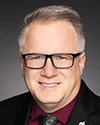
Marc Dalton Conservative Pitt Meadows—Maple Ridge, BC
Mr. Speaker, fierce outcry from parents and Conservatives forced the Liberals to reverse their reckless cuts to cadets, yet gutting our reserve force is even more devastating to Canada's military readiness. Financially starving reserves means cancelling training and slashing positions. As a former reservist, I know how vital they are to our defence.
At this most dangerous moment since the Cold War, why is the Prime Minister crippling the troops Canada needs for our sovereignty?

David McGuinty LiberalMinister of National Defence
Mr. Speaker, that is a bit rich coming from a party that has voted against every single measure for defence spending.
Let me be clear. The Canadian Army is not shutting down reserve units. On the contrary, the number of reservists has increased. The army is reviewing its funding allocations to prioritize readiness and modernization. This considers broader Canadian Armed Forces priorities, including personnel growth, generational investments, and capabilities supporting Canadian sovereignty. We are committed to ensuring that the CAF remains agile, able and ready.

Heather McPherson NDP Edmonton Strathcona, AB
Mr. Speaker, I just got off the phone with Parks Canada workers in Alberta who are stunned by the government's shameful disregard for public safety. These are essential workers who manage wildfire evacuations, protect communities and rescue Canadians in emergencies, and now, as the avalanche season begins, the Liberals are cutting search and rescue capacity, they are closing 13 park warden detachments, and they are throwing nearly 3,000 workers into uncertainty. These are the people we depend upon when lives are on the line.
How can the government be so reckless with Canadian safety?

Julie Dabrusin LiberalMinister of the Environment
Mr. Speaker, our national parks system is a gem and something we all hold close to our hearts. It is an important part of our national identity. Making sure that there is safety in our national parks is a top priority for all of us in the House and certainly for this government.
I do want to be clear, and I have said it before, that when we are talking about workforce adjustments, receiving affected notifications does not necessarily mean an employee will lose their position. Some positions will remain as they are. Some will change. We will work to make sure we use every possible means to minimize involuntary departures.
The House resumed from November 24 consideration of the motion.
Opposition Motion—Immigration LevelsBusiness of SupplyGovernment Orders
The Speaker Francis Scarpaleggia
It being 3:12 p.m., the House will now proceed to the taking of the deferred recorded division on the motion of the Leader of the Opposition relating to the business of supply.
Call in the members.
Business of SupplyGovernment Orders
The House resumed from November 24 consideration of the motion that Bill C-221, An Act to amend the Corrections and Conditional Release Act (disclosure of information to victims), be read the third time and passed.
Bill C-221 Corrections and Conditional Release ActPrivate Members' Business
The Speaker Francis Scarpaleggia
The House will now proceed to the taking of the deferred recorded division on the motion at third reading stage of Bill C‑221, under Private Members' Business.
Bill C-221 Corrections and Conditional Release ActPrivate Members' Business
The Speaker Francis Scarpaleggia
I declare the motion carried.
I wish to inform the House that because of the deferred recorded divisions, the time provided for Government Orders will be extended by 24 minutes.
International Day for the Elimination of Violence against WomenRoutine Proceedings
Mississauga—Streetsville Ontario
Liberal

Rechie Valdez LiberalMinister of Women and Gender Equality and Secretary of State (Small Business and Tourism)
Mr. Speaker, on this International Day for the Elimination of Violence Against Women, I rise in solidarity with victims and survivors of gender-based violence and with their families and loved ones. Today also marks the beginning of the 16 days of activism against gender-based violence.
For 35 years, this global campaign has been engaging people from across the world to speak out and demand meaningful change.
The 16 days of activism against gender-based violence grew out of the work of women's rights advocates who organized to ensure that ending gender-based violence against women remains a public responsibility. Women have led this work in their own communities and brought what they have learned to places such as this very chamber. They have helped shape the services people rely on and pressed governments to strengthen the laws meant to protect them.
During these 16 days, we also remember every person whose life was taken by gender-based violence. Every person was someone loved and was someone who should still be here with us today. We owe it to them and to every woman and girl to act earlier to ensure that violence is taken seriously when it is reported and to make it easier to help them get help before another life is lost. Survivors who chose to speak out about what they have lived through bring knowledge that should guide our decisions. Every survivor deserves support and the freedom to decide what comes next in their own life.
Survivors who chose to share their stories, and advocates who stood alongside them, helped shape both our national action plan to end gender-based violence and the Protecting Victims Act. Survivors and advocates asked for all levels of government to work together so help and resources are more accessible and easier to find. Through the national action plan to end gender-based violence, we are working alongside provinces and territories to strengthen services for survivors and help communities prevent violence from the start.
In 2024 and 2025 alone, over one million Canadians were able to access the help they needed through the national action plan, and this summer, our government announced an additional investment of $607.4 million to continue this work along with provinces and territories.
Survivors and advocates also asked for a justice system they can count on, so earlier this year, the chamber passed the Protecting Victims Act to criminalize coercive control, to enhance protections against non-consensual deepfakes and to recognize femicide as a first-degree offence in Canada. These changes are certainly an important step to ensuring that victims and survivors are heard, that their experiences are recognized and that our justice system is better equipped to respond.
Our efforts are not limited to policies and investments. We also want to provide dignity, safety and opportunity.
Behind every statistic is a person with their own story and hopes for their future. They are women, girls and gender-diverse and sexually diverse people in our families, our communities and our lives.
This is also a time to be honest about how much work is still ahead of us to do. Too many women still face barriers to getting help. We know this. Whether it is Black, indigenous, racialized, newcomer or underserved communities, these women often face racism and discrimination when they report violence or seek justice. Those barriers can make it harder for them to come forward, and when they do, their accounts can be dismissed. They often become retraumatized from the pain in their experiences.
Every member of the House has a responsibility to make it easier for people to find safety and to get help. Our responsibility is to ensure that victims, survivors and their families have the support, the resources and the opportunities they need.
As we begin the 16 days of activism against gender-based violence, I call on all members of the House, and all Canadians, to join us in building a safer and a more equitable and just society.
Ending gender-based violence is not the responsibility of survivors and victims; it is everyone's responsibility.
Our commitment will be measured by what we do to end gender-based violence today, throughout these 16 days and every day that follows.
International Day for the Elimination of Violence against WomenRoutine Proceedings
Conservative

Kelly DeRidder Conservative Kitchener Centre, ON
Mr. Speaker, there are many times in the House when we are deeply honoured to be able to do what we do here as parliamentarians. Today is one of those days.
First, I would like to thank the minister for her speech and her commitment toward making a safer and more equitable future for women facing violence.
Today marks the beginning of the 16 days of activism against gender-based violence, an internationally known time that runs from November 25, the International Day for the Elimination of Violence against Women, until December 10, Human Rights Day. It began in 1991 as a call to confront gender-based violence, and we renew our commitment to that here today.
The next 16 days cannot simply be about wearing a ribbon, changing a profile picture or even making statements in the House. They must be about the victims, the women who are afraid to go home; the survivor who has finally found the courage to report what happened, only to feel like she was the one on trial; the mother trying to protect her children from an abusive partner; the young woman who is living with the trauma, long after the trial is over; and the families who will never get their daughters, sisters or mothers back.
We cannot let the victims become statistics. Behind the stats we talk about are people, a life, a family and a future. Behind every survivor is someone who deserves to be heard, believed and supported. That means that we have a responsibility here in Parliament. We need better laws that recognize the realities of intimate partner violence, which we have been working on in the House, such as coercive control, sexual violence and, increasingly, technology-facilitated abuse.
However, passing laws is not enough. There has to be follow-through. A victim should not find the courage to come forward only to spend years navigating the delays in our court system. She should not have to continually relive the worst moments of her life because different parts of the system fail to communicate with one another. She should never walk away believing the justice system protected the perpetrator who hurt her instead of protecting her.
The United Nations Women's campaign this year focuses specifically on ensuring justice, protecting survivors and ending impunity. It says that too many survivors encounter disbelief, victim-blaming and institutional failures when they seek help. We need a system that puts victims and survivors at the forefront. That means timely court processes. It means properly enforcing the laws we pass. It means real consequences for offenders. It means accessible shelters, counselling, legal assistance and support for survivors who are rebuilding their lives. It means listening to survivors when they tell us the system is falling down.
During these 16 days, Canadians will also mark a painful anniversary. On December 6, we observe the National Day of Remembrance and Action on Violence Against Women, honouring the 14 women murdered at Polytechnique Montréal in 1989. This day carries particular meaning for me.
I am a woman in STEM. Those women were pursuing careers, educations and dreams in fields where women had fought hard for their place. Many were engineering students. They should have had decades ahead of them to build things, discover things, lead companies, raise families, teach students and change the world. Instead, they were targeted because they were women. Engineers Canada describes this attack as “an act of femicide”, saying these women were targeted simply because they were women in STEM.
When I think about December 6, I do not only think about what Canada lost that day, but about all the women who came afterward and still chose to walk through that door, women who become engineers, scientists, researchers, entrepreneurs, technology leaders and, yes, parliamentarians. Remembering the women of Polytechnique means ensuring that the generations following them never have to choose between their ambitions and their safety.
However, our commitment cannot stop when these 16 days end. Gender-based violence does not happen only 16 days of the year, so neither can our advocacy. On December 11, survivors will still need somewhere to go, court cases will still be proceeding, families will still be looking for help and governments will still have a responsibility to act.
Therefore, my call today, as the shadow minister for women and gender equality, is not simply for 16 days of awareness, but 365 days of action. We need to listen to survivors, strengthen our laws, improve our courts, support frontline organizations and hold offenders accountable. We need to teach our children what healthy relationships look like and refuse to accept violence, intimidation, coercion and abuse as something that happens behind closed doors, so it is, therefore, not our responsibility.
Ultimately, ending gender-based violence requires more than awareness; it requires action. Every survivor deserves to know that, when she finds the courage to speak, Canada will not look away. I look forward to working alongside the minister to create a more safe and equitable future.

Andréanne Larouche Bloc Shefford, QC
Mr. Speaker, I would like to read this short letter that I wrote to my daughter, but that could be addressed to all of our daughters.
Naomie, I cannot imagine a more beautiful moment than the day that you came into my life, the sheer joy of holding you in my arms and the constant bliss of having you with me. Nothing and no one is more precious to me than you. My greatest desire is for you to have a happy life, filled with love and success. I want you to be free and happy.
By choosing to be an MP, I hope that I will help make your life and the lives of thousands of little girls like you easier, safer and better, because you see, sweetheart, despite all of the progress that our mothers and grandmothers made before us, life is an even greater challenge for women today.
Women had to fight for the right to vote, to divorce, to work, to go to school and to earn equal pay, and even those rights are not yet fully secure. Women had to fight for the right to choose whether to carry a child in their own bodies, and there are still people who challenge that right. Women have always had to fight for their rights, and you, too, may have to take up the torch.
For the past few years, as part of this fight for women's rights, a fight we are waging for you and all the little girls of your generation, Quebec has been marking 12 days of action to end violence against women.
You live in an environment that is new to you. Things like bullying on social media, the sharing of intimate images without consent, harassment in digital spaces, and deepfakes are all new to us. Violence against women is taking new forms. Women who work in the public sphere are increasingly becoming the target of humiliating and degrading deepfakes.
Domestic violence remains a scourge. You know that some women are not safe in their own homes. You know how unfair that is. Coercive control, degrading acts of domination, constant monitoring of communications, humiliation and financial control all still exist in 2026, and it is still more dangerous for a woman to walk down the street at night or go out to a bar. Sexual assault and domestic violence always target women.
Then there is the issue of femicide. Even now, in Quebec, women are dying just because they are women. You know, sweetheart, it is not easy to write this. It is heartbreaking. It is certainly not the kind of world I want you to grow up in. That is why we must all fight. Women and men must band together. We must stand with one another, because if we do not come together to combat violence, we cannot hope to overcome it. For you, for all the girls growing up today, and for the women of today and tomorrow, failure is simply not an option.
During these 12 days of action to end violence against women, I am fighting for you. I want to combat violence, challenge violence and speak out against violence so that you never have to experience it yourself. I want you to grow up free, happy and safe, because you are the most precious thing in my life. In fact, I call you my precious one. Above all, I want you to know that I love you, today and always.
International Day for the Elimination of Violence against WomenRoutine Proceedings
The Speaker Francis Scarpaleggia
I see the member for Winnipeg Centre rising. I assume it is to ask for unanimous consent to reply to today's statement.
All those opposed to the hon. member speaking will please say nay.
It is agreed.

Leah Gazan NDP Winnipeg Centre, MB
Mr. Speaker, I would like to thank my hon. colleagues for allowing me to speak today on behalf of the NDP on the International Day for the Elimination of Violence against Women, and to mark the beginning of the 16 days of activism against gender-based violence.
These 16 days must be about more than words. They must be about action, because we know that action is needed. We have the research, the numbers and the reports. What we are missing is the political will. I want survivors, families, advocates and frontline workers to know that I see them, I hear them, I believe them. I carry their stories, their grief and their courage in my heart. I, along with the NDP team, recommit to ending gender-based violence.
Gender-based violence is a human rights violation, a public health crisis and a national emergency, yet violence continues to rise, disproportionately targeting indigenous women, girls, two-spirit people and trans women. This violence does not happen in a vacuum. It is rooted in colonialism, systemic racism and toxic masculinity.
In 2025, a woman or girl was murdered by femicide every two and a half days in Canada. As many as 44% of Canadians have experienced some form of assault, yet at a time when women's rights and gender equality are under attack, we are witnessing a disturbing rollback in support under the Liberal government. The government's own gender analysis in its most recent budget reveals who benefits: privileged men.
While families struggle through an affordability crisis, the government is cutting programs that advance gender equality while directing unprecedented public resources toward corporations and the billionaire class. This costs lives.
We cannot end gender-based violence without confronting economic inequality. Economic insecurity traps women in situations of violence without the resources to leave. This was among the findings of the National Inquiry into Missing and Murdered Indigenous Women and Girls. In a country as wealthy as Canada, poverty and economic vulnerability are not inevitable. They are the result of political choices. That is why the NDP continues to fight for a guaranteed livable basic income and livable wages. Women must never be forced to remain in unsafe situations because they cannot afford to leave.
We also know that women disproportionately work in undervalued sectors, particularly the care economy, which provides essential services that our entire economy relies on. Early childhood educators, flight attendants, health care aides and countless other workers are essential to our communities, yet remain among the lowest paid workers. How does the government respond? It responds by cutting 40,000 public sector jobs, 71% of which were held by women. This is not economic justice. This is a step backward.
The government is also diverting resources away from programs addressing gender-based violence to subsidize corporate elites through major resource projects, including $25 billion in public support. Corporations do not need another subsidy. Women need to earn a living wage and have access to adequately funded services and protection from violence.
We must confront the predictable increase of violence associated with major resource projects. The Standing Committee on the Status of Women, which I served on, heard clear evidence connecting resource extraction, transient work camps and increased violence against indigenous women and girls. We must never build an economy on the exploitation, sex trafficking and violence inflicted on indigenous women and girls, yet this is a real threat.
Just two months ago, the Permanent Peoples' Tribunal raised urgent concerns about the ongoing genocide against indigenous peoples and the consequences of the building Canada strong act. It called for sustainable indigenous-led security measures to protect communities, particularly women and girls, from documented increases in the violence associated with transient work camps. This is unfortunate because, just three years ago, the House of Commons unanimously passed my motion recognizing ongoing violence against indigenous women, girls and two-spirit people in Canada as a Canada-wide emergency, yet the violence continues to rise due to the government's failure to act.
We cannot keep declaring emergencies while refusing to address the conditions that allow violence to flourish, because this is not inevitable. As legislators, we have the power to change it. This is not a partisan issue. It is about our collective responsibility to uphold the humanity, safety and dignity of all people, including women, girls and gender-diverse kin.
I call on the Liberal government and every member in the House to move beyond words and take meaningful action to prevent gender-based violence and femicide. That means investing in economic security, adequately funding frontline services, supporting indigenous-led community safety plans and protecting the rights and lives of women and gender-diverse people.
Our lives are sacred. Everyone has a right to live free of violence. Let us do more than 16 days of activism. Let us make a commitment today that lasts 365 days a year until we end gender-based violence and femicide in Canada once and for all.

Elizabeth May Green Saanich—Gulf Islands, BC
Mr. Speaker, I hope to have unanimous consent to reply.
International Day for the Elimination of Violence against WomenRoutine Proceedings
The Speaker Francis Scarpaleggia
All those opposed to the hon. member speaking in reply will please say nay. It is agreed.
The hon. member for Saanich—Gulf Islands.
Elizabeth May Green Saanich—Gulf Islands, BC
Mr. Speaker, I thank all my esteemed colleagues for giving me the honour of speaking. This has been a very touching and emotional debate for some of the members who have already spoken.
I especially want to thank the minister for her very moving speech. As women, we are affected by this issue. In fact, everyone is. I would also like to thank my colleagues, particularly the member for Kitchener Centre and my Bloc Québécois colleague, the member for Shefford. I was very touched by her letter to her daughter. My colleague's approach to this issue showed that it is not just a world of statistics, facts and realities.
Today, November 25, is the International Day for the Elimination of Violence Against Women. As we have heard, it is also the beginning of the 16 days of activism against gender-based violence.
We have some commemorative events coming up very soon, like December 6. That was a serious and tragic event that is almost impossible to comprehend.
I remember it well. We all do. Obviously, particularly, our Secretary of State for Nature, who was one of the women engineering students who was wounded, does. Yet, we still wonder when we will make the progress that is needed to say that, in Canada, it is impossible to imagine femicides and impossible to imagine gender-based violence.
As my hon. colleague for Winnipeg Centre has reminded us, and we do not need to be reminded, gender-based violence falls particularly harshly, there is no question about this, and disproportionately on indigenous women and girls in this country. She was also right to point out that, as the Inquiry into Missing and Murdered Indigenous Women and Girls pointed out in its report, the man camps where we have a concentration of workers, good people, surely, but we do not have any doubt as to the evidence that those remote camps do create additional risks to indigenous women and girls, two-spirit and trans peoples across this country.
As we gather here, we are united in this place, despite the fact that five different parties have spoken to the issue, and it is not just the one-third of us in this place who are women. It is all of us. The men and women in this place are united against gender-based violence. We have many debates and moments of reflection on this point, and yet we know that women continue to die due to coercive control and intimate partner violence. Women are murdered more often by their intimate partners than by strangers.
How do we confront this? It can be taken up by governments. It can be taken up by more funding. It can be taken up by more support. It can be taken up by implementing the recommendations, the calls to action, from the report by the Inquiry into Missing and Murdered Indigenous Women and Girls for immediate assistance and immediate support in the wake of violence. There are specific things that are called for, but ultimately, it is in moments like this when we feel a unity of purpose.
As Canadians, we stand united against violence against women.
We are united in a common wish and hope. It may be beyond our reach, but surely, as elected people in this place, we can find a way beyond 16 days of activism, as many have said. We can find a way to find the resources and the change in our society. As we try to confront the violence promoted through social media, the horrors, we can try to confront it through laws and regulations, but ultimately, it is the condition of our hearts that matters.
I want to say a big thank you to all the members who rose and gave a speech, because we stand together, with the same devotion, against gender-based violence. We are united.
International Day for the Elimination of Violence against WomenRoutine Proceedings
The Speaker Francis Scarpaleggia
I want to thank everyone who spoke for giving such important and moving statements and comments on the scourge of gender-based violence, violence against women.

Ben Carr Liberal Winnipeg South Centre, MB
Mr. Speaker, I have the honour to present, in both official languages, the ninth report of the Standing Committee on Industry and Technology, entitled “Artificial Intelligence: Harnessing the Potential, Governing the Risks.” Pursuant to Standing Order 109, the committee requests that the government table a comprehensive response to this report.
James Maloney Liberal Etobicoke—Lakeshore, ON
Mr. Speaker, I have the honour to present, in both official languages, the first report of the legislative committee on Bill C-39 in relation to Bill C-39, an act respecting certain measures to strengthen the economy.
The committee has studied the bill and has decided to report the bill back to the House with amendments.
If I may, I would like to take a moment just to thank all of the committee members, the staff and all the people who contributed to this committee, which worked long hours over a short period of time to get this resolved. I just want to say how grateful everybody is to them.
Angelo Iacono Liberal Alfred-Pellan, QC
moved for leave to introduce Bill C-298, An Act to establish Scoliosis Awareness Month and Canadian Scoliosis Screening Day.
Mr. Speaker, one shoulder sitting a little higher than the other is a detail that many people might miss, but it could be the first sign of scoliosis. Here is something that could make a difference. Today, I am introducing a bill to designate June as scoliosis awareness month and June 26 as Canadian scoliosis screening day.
I want to thank the Canadian Scoliosis Screening Coalition and its chair, Dr. Jean Ouellet, for their commitment and their valuable contribution to this initiative.
Scoliosis can be painless at first, and many children are diagnosed late. By raising awareness, we can help parents recognize the early signs and get their children screened sooner. Every child deserves the best chance to get a timely diagnosis. I invite all my colleagues to support this bill.
(Motions deemed adopted, bill read the first time and printed)

Arielle Kayabaga Liberal London West, ON
moved for leave to introduce An Act to establish National Agricultural Innovation Day.
Mr. Speaker, it is an honour for me to introduce a bill entitled “An Act to establish National Agriculture Innovation Day”. In London and across the southwestern Ontario, farmers, researchers and food processors are finding better ways to grow and produce the food Canadians can count on. From using sensors to giving crops just the water they need to finding new uses for food that will otherwise go to waste, these ideas help producers cut costs and keep jobs within our communities.
I want to recognize the Western Fair District and the Grove for their innovative ways of bringing agripreneurs together, the support they give them and the opportunities to innovate, grow food and feed not just southwestern Ontario but the entire country of Canada.
(Motion deemed adopted)
Arielle Kayabaga Liberal London West, ON
Mr. Speaker, while I am on my feet, I move:
That the House do now proceed to orders of the day.
National Agricultural Innovation Day ActRoutine Proceedings
The Speaker Francis Scarpaleggia
If a member participating in person wishes that the motion be carried or carried on division, or if a member of a recognized party participating in person wishes to request a recorded division, I would invite them to rise and indicate it to the Chair.
National Agricultural Innovation Day ActRoutine Proceedings
An hon. member
Mr. Speaker, I would request a recorded vote.
National Agricultural Innovation Day ActRoutine Proceedings
National Agricultural Innovation Day ActRoutine Proceedings
Lena Metlege Diab Liberal Halifax West—Peggy’s Cove, NS
moved that a ways and means motion to introduce a bill entitled An Act to implement certain provisions of the budget tabled in Parliament on November 5, 2026 be concurred in.
Motion No. 15Ways and MeansGovernment Orders
The Speaker Francis Scarpaleggia
If a member participating in person wishes that the motion be carried or carried on division, or if a member of a recognized party participating in person wishes to request a recorded division, I would invite them to rise and indicate it to the Chair.

Chris Warkentin Conservative Grande Prairie, AB
Mr. Speaker, I would like to request a recorded division.
Motion No. 15Ways and MeansGovernment Orders
Ways and MeansGovernment Orders
The Speaker Francis Scarpaleggia
I declare the motion carried.
I wish to inform the House that because of the ministerial statement, the time provided for Government Orders will be extended by another 28 minutes.
It is my duty pursuant to Standing Order 38 to inform the House that the questions to be raised tonight at the time of adjournment are as follows: the hon. member for Courtenay—Alberni, Transportation; the hon. member for Yellowhead, The Economy; the hon. member for Swift Current—Grasslands—Kindersley, Agriculture and Agri-Food.
The House resumed from October 23 consideration of the motion that Bill C-28, An Act to amend the Aeronautics Act and other Acts, be read the second time and referred to a committee.
Stéphane Lauzon Liberal Argenteuil—Papineau—Des Collines, QC
Mr. Speaker, it is an honour for me to start the debate. I rise today in support of Bill C-28, the Canadian space launch act, which comes at a pivotal moment for our country and for the global economy.
We are seeing rapid growth in the space sector, not as a distant scientific frontier, but as a key driver of economic growth, national security, and technological sovereignty. The global space economy is projected to grow by more than 200%, reaching approximately $1.5 trillion over the next six years. The question is simple. Will Canada lead the way, or will we fall behind?
This legislation aims to ensure that Canada does not miss this opportunity. I remember advocating in 2015 for fibre optic technology to ensure a reliable network, which was extremely cutting-edge at the time. Today, I am proud to present Bill C-28.
For decades, Canada has been a respected and innovative player in space. From robotics to satellite communications, we have built a reputation that far exceeds our size. However, today, the global landscape is changing. Commercial launch capacity is expanding, private investment is booming and nations around the world are acting quickly to establish domestic launch capabilities.
Without a modern legislative framework, Canada risks losing economic opportunities and strategic autonomy. Great economic opportunities are available to us. Launch capability is not limited to rockets. This is about unlocking entire value chains.
Launch capability would enable satellite manufacturing, data services, telecommunications, earth observation and advanced research. It would create well-paying jobs in engineering, manufacturing, software development and skilled trades. After having served on the Standing Committee on Science and Research, I am confident that launch capability is an important addition to this committee as well as to the Standing Committee on Transport, Infrastructure and Communities, on which I now serve.
It will attract investment and help build innovation ecosystems here at home. Without naming names, it sends a message to our partners and the rest of the world that we mean business. Let us be clear: Satellites are not some abstract technology. They are deeply integrated into the daily lives of Canadians.
Satellites power GPS navigation, helping people and goods reach their destinations. They enable telecommunications in rural and remote communities. They support weather forecasting, disaster response and environmental monitoring. They also help farmers maximize crop yields, support fisheries management and strengthen our ability to respond to wildfires and floods. Satellites are critical infrastructure, and the ability to launch them is a strategic capability. This brings me to an important question: Why launch satellites from Canada?
Some argue that launches are better suited to equatorial regions. While certain orbital trajectories do offer advantages, Canada has unique geographical strengths of its own. Launching from Canadian soil also reduces our dependence on foreign suppliers, strengthens our supply chains, and ensures that Canadian companies have reliable domestic access to space. It is time for Canada to take its rightful place. This will allow us to keep more of the economic benefits here at home while strengthening our sovereignty in an increasingly contested domain.
Sovereignty and security are not abstract concepts in this context. Space assets are essential to modern defence and intelligence capabilities, a challenge that Conservatives themselves often say must be taken more seriously. Space assets are fundamental. Let me remind the Conservatives why.
They provide surveillance, communications, navigation and situational awareness. At a time of growing geopolitical uncertainty, ensuring that Canada has secure and independent access to space is not an option. It is essential. Let me be clear: Security remains paramount.
This bill establishes a robust and responsible framework for commercial space launch activities in Canada. It strikes a balance between innovation and oversight, ensuring that operators adhere to strict safety and regulatory standards.
With regard to the issue of indemnification, it should be noted that no country has ever had to use such provisions. This reflects the strong safety record of the global launch industry, and this law is based on best practices.
I will now move on to the six key pillars of this bill.
First, it establishes a clear and modern licensing framework for space launch activities in Canada, providing certainty to the industry and regulatory agencies.
Second, it establishes a robust framework for safety and environmental monitoring, ensuring that all activities comply with rigorous national and international standards.
Third, it establishes liability and indemnification provisions that are in line with global standards, striking a balance between risk management and the industry's growth.
Fourth, it strengthens Canada's compliance with international obligations, including treaties governing the peaceful use of outer space.
Fifth, it supports economic development by creating a competitive environment that attracts space sector investment and innovation.
Sixth, it strengthens national security by ensuring that launch activities are conducted in a manner consistent with Canada's defence and strategic interests.
Together, these pillars form a comprehensive, forward-looking framework. They allow Canada to compete and lead within the global space economy.
The next steps are clear. Passing this bill will create a quick path to implementation by establishing the required regulatory systems, by working with industry partners, by engaging the provinces and territories and by ensuring that Canada is ready to support commercial launch activities in the short term.
A sense of urgency is in the air; the global space race waits for no one. Investment decisions are being made now, infrastructure is under construction and partnerships are forming.
If we delay, we risk losing our competitive edge and letting the opportunity slip away. It is time for Canada to take its place in the aerospace industry. There are Canadian and Quebec suppliers working on producing satellites at this very moment. Thousands of direct and indirect jobs are being created. This is all to say nothing of the expertise it will bring to Canada. We will be seeking out knowledge from abroad and bringing that expertise back to Canada.
We are living in the age of satellites, satellite launches and innovation. That is why Bill C-28 is important to our government.
I am proud to serve on the Standing Committee on Transport, Infrastructure and Communities, where we will very soon begin a study on Bill C‑28, in parallel with the proceedings in the House. I have no doubt that the committee made the right choice when it voted in favour of this committee study in order to move the bill forward, thanks to the witnesses who will appear before the committee. The bill has implications for a number of fields, including agriculture, communications, national defence, meteorology and many professions that rely on satellite technology.
This bill will affect a number of fields and areas of expertise. This is not a partisan matter. It is a national crisis that requires urgent action. The global race does not wait for anyone. I urge members on both sides of the House to recognize the importance of this moment. Supporting this legislation means supporting Canadian workers. I would also like to mention that we need to support Canadian innovation and Canadian sovereignty in particular. That means positioning our country to thrive in one of the most dynamic and important sectors of the 21st century.
In my riding, in Papineauville, I had an opportunity to see a network of satellite domes being built. It will be operational in the coming months or years. This is a major investment in my riding. My colleagues cannot imagine how proud I am to be part of this equation, this triangle that will serve Canada, that will detect satellites in the sky and bring the information back to us. It is a network that will be distributed across Canada. There will be complementarity among the three networks, the three triangular pillars that we are going to establish in Canada. I am proud that my riding is one of those three Canadian networks. They will capture satellite information so it can be provided to Canadians.
That means that we are positioning our country to thrive in one of the most dynamic and important sectors of the 21st century. Canada has the talent. We have the expertise. We have the vision. Now is the time to act.

Gabriel Ste-Marie Bloc Joliette—Manawan, QC
Mr. Speaker, I would like to ask my colleague whether this bill will also allow for the launch of spacecraft. Time is running out. By 2034, the situation on earth will be catastrophic. The ozone layer will have been completely depleted by carbon dioxide from cars, the chemical industry and aerosol sprays. In 2034, Canada will have to respond to the “Planetary Federation's” demand to find a new planet on which to relocate. Only Canadian expertise will make it possible to launch on October 28, 2034, the Romano Fafard spacecraft, which will leave earth for the far reaches of the universe, where no human hand has ever set foot before.
Stéphane Lauzon Liberal Argenteuil—Papineau—Des Collines, QC
Mr. Speaker, my colleague just revealed that he is a big fan of the Quebec television show Dans une galaxie près de chez vous. It was Captain Patenaude and the infamous Bob who were at the helm. Back then, I only imagined the spacecraft Romano Fafard leaving earth. Now, that is no longer a dream, but a reality. Together, we will launch satellites into space. I thank the Bloc Québécois for its support.

Jason Groleau Conservative Beauce, QC
Mr. Speaker, I commend my colleague for his speech. I would like to ask him a question. He talked about investing and sending satellites everywhere. Perhaps the government should fix what is not working first. What does my colleague think about the fact that most of the cellular networks in regions like Beauce do not work. The government wants to invest elsewhere. It dreams of other planets, but it is not fixing the issues we have now. We cannot get reliable service in my riding.
Stéphane Lauzon Liberal Argenteuil—Papineau—Des Collines, QC
Mr. Speaker, we went into politics to bring about change. When I arrived here in 2015, I fought for the cellular network. I fought for Internet access. We have invested nearly $3.1 billion in Internet access. Our government worked with Quebec to connect 98% of households to the Internet. That happened in your riding and in mine. The first pilot project was carried out in Lachute in partnership with Fibre Argenteuil. That worked all across Canada. I am proud of that. Today, we are moving on to the next step: satellites to help with communications, health, security and, most importantly, cellular networks.

The Deputy Speaker Tom Kmiec
I would remind the member to address his comments to the Chair, rather than directly to other members.
Questions and comments, the hon. member for Alfred-Pellan.
Angelo Iacono Liberal Alfred-Pellan, QC
Mr. Speaker, I thank my colleague, with whom I serve on the Standing Committee on Transport, Infrastructure and Communities.
What has Canada done to strengthen our sovereign space capabilities to better protect our territory, detect emerging threats and ensure our national security?
Stéphane Lauzon Liberal Argenteuil—Papineau—Des Collines, QC
Mr. Speaker, that is an excellent question from my colleague, the member for Alfred-Pellan.
National defence relies heavily on communications. At present, those satellites do not belong to us. It is time for Canada to be sovereign, to have its own satellite system and its own security system. These systems will be crucial for the national defence strategy and to advance technologies for cybersecurity and national security.
Greg Fergus Liberal Hull—Aylmer, QC
Mr. Speaker, I thank my colleague, the member for Argenteuil—Papineau—Des Collines, because he raised a very important issue that concerns national security.
We see what is happening elsewhere, such as in Ukraine, where the satellite systems on which the country relies for its defence are not always dependable. Can my colleague explain how important it is for Canada to have our own satellite network to protect our country and ensure our country's security?
Stéphane Lauzon Liberal Argenteuil—Papineau—Des Collines, QC
Mr. Speaker, I want to thank my colleague for his excellent question. Sovereignty depends on security. This is a vitally important aspect of the national defence strategy. We are going to invest heavily in all strategies, including the national security strategy, which is an integral part of national defence communications. We are not behind, but we must act quickly to deliver services in support of Canada's sovereignty.

Kevin Lamoureux LiberalParliamentary Secretary to the Leader of the Government in the House of Commons
Mr. Speaker, when we think of space and having sovereignty in terms of launch capabilities, it assists in many different industries. I think of Magellan in Winnipeg. It has built satellites. Today, we have Canadian-made satellites in space. Having the ability, whether it is in the military or private sector, to provide a service of this nature is absolutely essential, not only to our sovereignty, but also in building an industry that is so vitally important and can contribute to good jobs into the future.
Can I get my colleague's comments on how important those jobs are to Canada, our future and our sovereignty?
Stéphane Lauzon Liberal Argenteuil—Papineau—Des Collines, QC
Mr. Speaker, I thank my colleague and congratulate him on his appointment every year as a member of the House.
After being a teacher for 21 years, I believe in the importance of attracting outside talent, but I also believe in training our people at home. We have a complete ecosystem within Canada that provides training to workers who go on to become essential employees in well-paying jobs. These are highly skilled positions. They are not limited to the communications sector and will drive development across every technological field.
Kevin Lamoureux Liberal Winnipeg North, MB
Mr. Speaker, the member makes reference to the importance of education. When we talk about the development, promotion and encouragement of that industry to grow, all we need to do is take a look abroad. When we take a look at the European Union, with which we are building a closer relationship, the need to be able to get things into space is there. It is real. It is tangible. The European Union will look at Canada as a place where it could actually launch into space.
Can the member provide his thoughts on that?
Stéphane Lauzon Liberal Argenteuil—Papineau—Des Collines, QC
Mr. Speaker, indeed, our Prime Minister is building relationships around the world. Having our own network here in Canada will definitely help us develop ties with other countries, allies with whom we will be able to act as our own vendor. It is time to stop relying on other countries and to be sovereign in our communications, with our own satellites and aerospace technology.
Greg Fergus Liberal Hull—Aylmer, QC
Mr. Speaker, thank you for giving me the opportunity to ask my hon. colleague this question.
As for the use of these satellites for our own non-military purposes, could he talk about how this initiative will benefit Canada's regions?
Stéphane Lauzon Liberal Argenteuil—Papineau—Des Collines, QC
Mr. Speaker, of course I am a strong advocate for the regions and rural life.
I have been the one fighting since 2015 to have the regions recognized and to make technology available in the regions. Bill C-28 is a key tool for the regions, for remote and rural areas. It will give us the opportunity to have a network on par with that of urban centres. Including remote regions with little or no service is part of Canadian sovereignty.
Ability of Member to Represent ConstituentsPrivilegeGovernment Orders
Battle River—Crowfoot Alberta
Conservative
Pierre Poilievre ConservativeLeader of the Opposition
Mr. Speaker, I have given notice of a question of privilege.
It is with a great deal of regret that I rise in the House of Commons today. When I addressed this chamber remotely in the aftermath of last month's tragic fire at Canadian Forces Base Wainwright, I vowed to follow through and ensure that the aftermath would not be an afterthought. Little did I know that it would include me rising here in the House of Commons on a question of privilege, but regrettably, that is what it has come to, because one of the government's contractors is interfering with my ability to represent the people of Battle River—Crowfoot.
In the days after the fire, I met with countless heroes in Wainwright, courageous first responders who intervened immediately, provided care and prevented suffering. They intervened to ensure that the tragedy did not turn to an even greater disaster.
One of those heroes was Maureen. She is a decorated veteran of the Canadian Armed Forces, as is her husband. She began a second career in the civilian sector as a registered nurse. Like many Canadians, she has two jobs to make ends meet, first as a nurse at the Wainwright hospital and second as a contract nurse for CFB Wainwright, through a contract with military supplier Calian health.
Maureen spoke to me on base with the permission of the unit commander. I had the permission of the base commander to be there. She talked about caring for our men and women on her shift that night, that horrendous night of the fire. The picture she painted for me, if I can be blunt, is nothing short of hell on earth. What she told me were the stories of the courageous young men whose bodies had been burned from head to toe and of the job that our first responders, nurses and doctors had to do, to peel scorched uniforms off live men before they even had a chance to fully administer painkillers. She told me of a tiny community hospital suddenly overwhelmed with dozens of men burned from head to toe, and the screams, the smells, the chaos, the courage and the incredible, miraculous work of people just like her to save as many lives as possible and get them triaged off to life-saving care in bigger centres.
We owe Maureen, as well as colleagues like her, our greatest gratitude. That is what I conveyed in our conversation. Instead, Maureen tells me that she has been threatened by Calian health, all because she spoke to her local member of Parliament. In the days following our meeting, I am told that Maureen was subject to a baseless complaint against her and told by her boss that if her term contract was not already coming to an end, she would be put under the microscope by the legal department for this government contractor. The implicit message was that her contract would no longer have any chance of renewal, which was something she had taken for granted before that point.
Other work opportunities that were also expected to follow have since vanished. Simply put, it appears she is losing her chance to continue her work at CFB Wainwright because she met with her local MP. This is at a time when the base needs more nursing care than ever before.
According to Maureen, her contract manager told her that she violated Calian policy by meeting with her MP. That is actually not true. There is no such policy. While the company does have a policy against speaking to the media, I am not, as members might all have noticed, a member of the press. There is no rule, nor could there be a rule, banning any person from meeting with their member of Parliament. In fact, a constituent meeting with their member of Parliament and expressing themselves is a basic charter right, freedom of expression, under section 2(b), as is the right to effective representation, under section 3.
In other words, Maureen was very properly using the rights that our Charter of Rights affords her and all Canadians but especially should afford someone as heroic as this military veteran and nurse. I add further that she did not reveal any state secrets, and she certainly did not shed any light on Calian's business information.
Truth be told, I did not even know she worked for Calian. I thought she was working directly for the base or the hospital. What she did tell me when we spoke, and this was outside her hours of work for Calian, was about the suffering, the agony, the courage, the bravery, the resilience and also the hope.
Maureen also gave valuable input for me to take back to the floor of the House of Commons and to the government. In particular, she spoke about the need for there to be a surge in mental health support and recovery for the many first responders, doctors, nurses, soldiers, firefighters and others who are brutally traumatized by witnessing their fellow human beings, our heroes, burned in some cases, to death. Maureen indicates that she has appealed the reprimands that she received to her superiors and asked for an apology for the harm and stress that this has caused her. She tells us that this appeal has been met with nothing but silence. She says that she is now being omitted from workplace gatherings and events. It is obvious that the fix is in.
When I first learned about Maureen's plight after our meeting, I immediately contacted the minister. My intention was not for this to be politicized. I simply wanted it to be resolved. I contacted the minister. I told him about the situation. I said that I hoped he could solve this, and we could put it quickly behind us.
I am aware of other members of Maureen's family who have spoken to the minister and his office since that time, but unfortunately, the problems have only gotten worse and the harassment with which she has been confronted has only been aggravated. Based on his original assurances, I had hoped the minister would put Calian in its place and fix the wrongs, but as I just said, her family is indicating that the problems have worsened and there is no end in sight. That is why I am rising today on this question of privilege.
In short, Maureen indicates she faces the possibility of serious professional consequences, along with immense compounding of her turmoil and stress, apparently for speaking to her member of Parliament. She has been told that people in the organization higher up are particularly critical of me personally, something I welcome. We all welcome that in this line of work. If they have criticisms of me, they can throw them at me any time they want. They can go online and say what they want about me, but, for God's sake, they should not take it out on a nurse and a veteran, because she did nothing wrong, other than bring her views, her concerns and her stories, rightly, to the person who serves her on the floor of the House of Commons.
The fact is that intimidation of constituents who come to see us prevents us from doing our work. As paragraph 4.44 of House of Commons Procedure and Practice, fourth edition, states, “Members sit in the House of Commons to serve as representatives of the people who have elected them to that office.”
While there is no official job description for members of Parliament, our duties are many. We introduce bills and laws. We present motions and petitions. We go and sit on committees. We make interventions and representations to ministers, but we do that all on behalf of our constituents.
The only way for us to relay our constituents' thoughts, concerns, ideas and problems is if they can share them with us. If they cannot, then a critical link in our democratic process is severed. Put in simple terms, if the people cannot speak to us, we cannot speak for them. That is why the Parliament of Canada Act provides for our travel and our offices and staff in the communities. If we were not listening to our constituents, we would never have to leave the four walls of this place.
When we use the words “privilege” or “parliamentary privilege”, we are not talking about elite perks that we as politicians are meant to enjoy. Instead, we are talking about the legal tools that MPs have to do their jobs. Janse and LeBlanc explain in paragraph 3.7 that “Parliamentary privileges are designed to safeguard the rights of each and every elector.” They are not referring to parliamentarians, but electors. Janse and LeBlanc continue:
For example, the privilege of freedom of speech is secured to members not for their personal benefit, but to enable them to discharge their function of representing their constituents.... When a constituency has returned a candidate, it is the electors’ right that this chosen representative should be protected from any kind of improper pressure.
If the constituents whom we represent are not allowed to speak with us and suffer drastic personal consequences when they do, then we simply cannot do our jobs as members of Parliament. By threatening and imposing consequences on Maureen for speaking with me, the government's contractor Calian is effectively interfering with my duties as the member of Parliament for Battle River—Crowfoot because of this improper and indirect pressure.
House of Commons Procedure and Practice, third edition, at page 111, explains, “A Member may also be obstructed or interfered with in the performance of his or her parliamentary functions by non-physical means. In ruling on such matters, the Speaker examines the effect the incident or event had on the member’s ability to fulfill his or her parliamentary responsibilities.” It continues, “It is impossible to codify all incidents which might be interpreted as matters of obstruction, interference, molestation or intimidation and, as such, constitute prima facie cases of privilege.”
On February 20, 1984, Speaker Francis found a prima facie case of privilege concerning allegations that an official at Canada Post said that he would no longer co-operate in helping the member of Parliament deliver his duties to his constituents if that member of Parliament were to pose questions about Canada Post without the president's prior sign-off. The Speaker found that this was a breach of the member's ability to do his job. At page 1560 of the Debates, the Chair stated:
A threat emanating from any government department or public corporation to withhold information or co-operation from a Member of Parliament would undoubtedly hinder that Member in the fulfilment of his or her parliamentary duties and therefore constitute a breach of privilege. By the same token, an offer of favourable treatment on condition that questions are first cleared with the office concerned would also violate privilege in an equally fundamental way.
Consistent with these authorities, I would respectfully submit that the interference by a government contractor, Calian, meets the threshold necessary for it to amount to a prima facie breach of parliamentary privilege, not to mention a trampling of Maureen's own constitutional rights.
Finally, there are the seen and the unseen consequences of this saga. We obviously see the enormous stress and strain that this has imposed on Maureen. One can only imagine the immense trauma from which she is recovering. She did tell me, and I think I can relay, that in all her years of nursing, she never experienced anything like what happened in that hospital on that horrendous, hellish night. Recovering from that hell alone would take months of rest, recuperation and counselling for the strongest among us, but to further have it compounded by threats, intimidation and potentially even loss of income must make it far harder indeed.
That is the seen. What is the unseen? It is very simple. How many people on that base might have a story they want to share with me, a concern they want to pass along or a federal intervention they believe is required in the aftermath of this horrendous event, which they are now frightened to talk about? Even though I was able to digest Maureen's input, there now may be countless conversations that may not be happening, out of fear and intimidation. That makes it impossible for me to do the job of representing those voices. It makes it impossible for me to be their voice.
I will conclude by moving the appropriate motion to refer this matter to the Standing Committee on Procedure and House Affairs for a thorough investigation. Ideally though, the government and Calian will instead simply say that they are sorry, fix the problem, and allow this wonderful nurse and veteran to do her job and continue serving valiantly and compassionately. However, until and unless that happens, my ability to represent my constituents has been interfered with, and, Mr. Speaker, you must denounce this conduct.
I will say that I truly tried to resolve this quietly. It was certainly not my intention to ever have this rise to the floor of the House of Commons. I believed that in sharing it with the minister, with Maureen's family, and doing the same with his office, this would be resolved by now, but it has now been a month.
Quite frankly, our job in this place is to speak for people such as Maureen. We are all getting a little sick and tired of the people who build this country, protect this country and do the most dangerous, heart-wrenching work for this country being told to sit down, shut up and do what they are told.
We work for them. I work for Maureen. If I cannot hear Maureen's voice, I cannot be Maureen's voice.
I ask you to find that this is a breach of privilege and join with me in calling for this injustice to be fixed for her, to send a signal to all Canadians that they have a right to a voice, to be heard and to be represented on the floor of the House.
Ability of Member to Represent ConstituentsPrivilegeGovernment Orders
The Deputy Speaker Tom Kmiec
I would like to thank the leader of the official opposition. I am going to take this matter under advisement, and the Speaker will return to make a complete ruling.
I see the hon. parliamentary secretary rising.
Ability of Member to Represent ConstituentsPrivilegeGovernment Orders
Winnipeg North Manitoba
Liberal
Kevin Lamoureux LiberalParliamentary Secretary to the Leader of the Government in the House of Commons
Mr. Speaker, I will return to provide some further comments on it before the Speaker's ruling, but suffice to say, the Prime Minister and the Government of Canada have been and will continue to be there for members of our Canadian Forces.
I find it very upsetting to hear the comments with regard to Maureen. We recognize the sacrifices, the emotion and the service that was provided by health care professionals and by first responders. We understand very clearly what has taken place on the base. We are going to continue to be there for that community in a real and tangible way.
I appreciate the member raising this, and I will report back when we have had the opportunity to look deeper into the situation.
Ability of Member to Represent ConstituentsPrivilegeGovernment Orders
The Deputy Speaker Tom Kmiec
I thank the hon. parliamentary secretary. It is so noted.
The hon. member for Joliette—Manawan.
Gabriel Ste-Marie Bloc Joliette—Manawan, QC
Mr. Speaker, I just want to inform you that the Bloc Québécois will examine the matter and provide its comments as soon as possible.
The House resumed consideration of the motion that Bill C-28, An Act to amend the Aeronautics Act and other Acts, be read the second time and referred to a committee.
Jamil Jivani Conservative Bowmanville—Oshawa North, ON
Mr. Speaker, with the limited time I have this evening, I would like to draw attention to some of the important issues embedded in the discourse around Bill C-28—
The Deputy Speaker Tom Kmiec
I have to interrupt the hon. member. I see the hon. parliamentary secretary to the government House leader rising on a point of order.
Kevin Lamoureux Liberal Winnipeg North, MB
Mr. Speaker, there have been some discussions among the parties, and if you seek it, I believe you will find unanimous consent for the following motion: that the question be put on Bill C-28, the Canadian space launch act, at second reading. That is my understanding.
The Deputy Speaker Tom Kmiec
The House has now reached 6:22 p.m.
It being 6:22 p.m., the House will now proceed to the consideration of Private Members' Business, as listed on today's Order Paper.
The House resumed from June 3 consideration of the motion that Bill C-261, An Act to amend the Old Age Security Act (amount of full pension), be read the second time and referred to a committee.

Marilène Gill Bloc Côte-Nord—Kawawachikamach—Nitassinan, QC
Mr. Speaker, I am pleased to rise this evening to speak to Bill C-261, a bill introduced by my colleague, the member for Vallée-du-Haut-Saint-Laurent. She has devoted a lot of effort to this initiative. It is not always visible from inside this chamber, but a great deal of work goes into certain bills—bills that are drafted with heart and conviction. The Bloc Québécois members want to work for Quebeckers. I know that is also what my colleague wishes to do.
As I was making my way to the House just a few minutes ago for this debate, I found myself reflecting. As elected representatives, we spend a lot of time talking to ourselves. I was thinking about the reasons that lead us to seek public office in the first place. Even after all these years, for me, for my colleagues in the Bloc Québécois, and certainly for the member sponsoring this bill, that motivation remains the same: to help the people around us. At times, it can be easy to give in to cynicism. Cynicism is everywhere. We saw that with the latest budget: It makes people cynical. We need to resist that. We need to stand up and say that there is never enough money, there are never enough tools or resources to help the people we should be helping first, meaning the most vulnerable among us.
That is what we are seeing. Those of us who travel around our ridings and talk to people know that the very first words out of their mouths are about all of their needs.
At the risk of repeating myself, there is one issue we hear about ad nauseam in the House, but it still has not been resolved. I am talking about the issue of housing and, of course, food. Once again, these are two basic needs: food and shelter. It is unbelievable that this is what we are discussing here in the House. There are segments of our population that are more vulnerable.
I live in an area that is considered rural and remote, and its population is in decline. At the same time, a large proportion of the people living in my riding are seniors. I would not go so far as to say that everyone has the same needs when it comes to housing, food, transportation and health care, but there are urgent needs in these areas throughout my riding. That is because the cost of living is so high. Not only are we living in a remote area, but we are also in the midst of an ongoing crisis as a result of the current circumstances.
The fact that we have been seeing this day after day for many years now is what has motivated the Bloc Québécois to continue the fight we started in 2021. I am not saying we did not criticize it before, but for five years now, we have been telling the government that the bill it passed that year to increase OAS benefits divided seniors into two classes, namely those aged 65 to 74 and those 75 and older. Creating two classes of seniors is discrimination. We have been repeating this non-stop, so we do not understand why, after five years, the government still does not understand that this is discrimination. Seniors are not divided into two classes. If someone is a senior, they get benefits and they have needs. Housing is not cheaper for seniors aged 65 to 74 and more expensive for seniors 75 and older. The same goes for groceries, gas and all consumer goods. The same applies to the population as a whole.
Here we are again, saying that this is what we need.
I talked about cynicism, and that, too, is something that really resonates with me. We sit here in the House and debate, yet we forget that we were elected to help these people, as I said at the outset. We are here to work for them. The government may well hide behind a budget or behind reasons that, in my view, are not even valid reasons. It is not rational at all.
Yesterday, she gave a clear example of this, along with my colleague from Shefford, the Bloc Québécois critic for seniors, who believes in this cause too and has also done a lot of work. They have the support of all of Quebec and all of the people who came to the House of Commons representing hundreds of thousands of others. FADOQ is one example. A huge number of groups are showing up here to voice their support for the bill. I have a hard time understanding why the government fails to grasp what the entire population saying. People are saying that the government has done something really wrong and discriminatory and that they want what is rightfully theirs.
I want to congratulate them for making a small crack in the wall of cynicism and for gathering all these supporters behind us. They may not necessarily back the Bloc Québécois, but they back our bill. What I mean by that is that the cause is just, and the bill is just. I am talking about the Bloc Québécois, but I am obviously encouraging the other parties to do what we are doing. This is not the first time that a bill like this has been introduced, but when all is said and done, nothing comes of it.
We do not want any discrimination. Everyone needs this money. The government constantly talks about measures to help with the cost of living, yet it rejects bills like this. This bill sends a clear message to the government: It got it wrong. It created a situation where people are treated unfairly. The public wants it to go back to the drawing board, even though it has taken five years to get to this point.
Even if the government decides to vote against the bill, we will carry on fighting. It is our duty to keep fighting on behalf of the people who have asked us to do so for them.
When I arrived here earlier, I was reflecting on the fact that I have talked about this bill several times now. It made me think about other bills and about the whole issue of employment insurance, for example. There is also the issue of tax havens. These are things that our constituents are always bringing up. When we meet with people, they tell us that what they want is a fair and egalitarian society, although they may not use those exact words. We talked about this just this afternoon, when several members gave statements about violence against women.
In my opinion, this discrimination is also a subtle form of violence against women. As we know, demographically speaking, most seniors are women.
As I was saying, I cordially invite my colleagues in the official opposition and, of course, those in the government to resolve an issue that never should have occurred in the first place by supporting the bill introduced by the member for Vallée-du-Haut-Saint-Laurent. She worked hard to get all of these people behind us. Seniors in Quebec and Canada want us to pass this bill.
The House resumed consideration of the motion that C-28, An Act to amend the Aeronautics Act and other Acts, be read the second time and referred to a committee.
Kevin Lamoureux LiberalParliamentary Secretary to the Leader of the Government in the House of Commons
Mr. Speaker, I rise on a point of order. I would like to try again, as there have been some discussions among the parties, and if you seek it, I believe you will find there is unanimous consent for the following motion:
That the question be put on Bill C-28: Canadian Space Launch Act, at Second reading
The Deputy Speaker Tom Kmiec
All those opposed to the hon. member's moving the motion will please say nay.
There being no dissenting voice, it is agreed.
The House has heard the terms of the motion. All those opposed to the motion will please say nay.
(Motion agreed to)
The question is on the motion at second reading.
If a member participating in person wishes that the motion be carried or carried on division, or if a member of a recognized party participating in person wishes to request a recorded division, I would invite them to rise and indicate it to the Chair.
The Deputy Speaker Tom Kmiec
Pursuant to Standing Order 45, the division stands deferred until Thursday, November 26, at the expiry of the time provided for Oral Questions.
The House resumed consideration of the motion that Bill C-261, An Act to amend the Old Age Security Act (amount of full pension), be read the second time and referred to a committee.
Kevin Lamoureux LiberalParliamentary Secretary to the Leader of the Government in the House of Commons
Mr. Speaker, I really enjoy talking about our seniors. I want to directly address the legislation, but also give a bit of background in terms of how we eventually got to the place the member is talking about, the idea of a 10% increase to individuals 75 years of age and over.
However, before I do that, it is important to recognize that members of not only today's Liberal caucus but past caucuses have demonstrated, I believe, a tremendous amount of effort at ensuring that seniors in Canada were well represented. There were many advocates, I like to think, on all sides of the House, but I can assure the member opposite that within both the present Liberal caucus and under the former government, we saw very strong representation dealing with senior-related issues.
In fact, when we became government under Justin Trudeau, one of the very first actions we took was to make a substantial increase in the GIS. The GIS is there to support seniors who have very low incomes. It is a top-up program. The discussion at the time was how we could support seniors most in need, and the best way to do that was through the GIS. There was a substantial increase given to those individuals back then.
Members will know there are annual increases in the OAS and applied through to the GIS. Talking about income supplements, if we go back to the pandemic, we once again provided a separate envelope of hundreds of millions of dollars to ensure there would be a top-up of money for our seniors. There were one-time payments to seniors.
We had the increase the member is referring to in legislation. What the member does not tell us is that it was part of an election campaign platform issue that made it very clear that an elected Liberal government under Justin Trudeau would see a 10% increase for seniors over 75. There was a rationale at the time that was provided to all Canadians. I am sure if we reflect on the issue, the arguments for it are very sound. More and more, we see seniors working past the age of 65. If we look at the savings of seniors between the ages of 65 and 75 versus those who are 75 and over, we will see there is a substantial difference. Often seniors, as they get older, will use up pension funds, extra funds, RRSPs or whatever it might be. In addition to that, we will find there are more costs, such as medications. As people age, sometimes there is more of a dependence on different types of medications.
When I would campaign back in the days when I was in opposition, seniors would tell me it was tough to pay for medications or even take a grandchild out for a simple meal because of the cost of medications, and they had to make tough decisions. Even back then, they were using the example of pet food being consumed by seniors, so there is no doubt that the issue of seniors and making sure they are provided with financial support is so critically important.
However, in addition to that financial support, one can also look at targeted support. That is something we have really given a lot of attention to. I think of things such as the dental care program. One of the biggest groups that benefit is our seniors on a fixed income. Every one of us represents seniors who find it very challenging to pay dental costs. One of the measures we continue to support because of that need and the reality of supporting seniors is providing programs such as the dental care program. There are seniors who are actually receiving the benefits of programs for things they otherwise might not have been able to afford.
We can talk about seniors who are diabetic, and the drugs they need. The pharmacare program has enabled more seniors to have, in a limited way, some medications. I was very happy to see, for example, the Province of Manitoba recognize the issue of shingles. I would like to think that, into the future, we will see more advancement of programs, because it is important to recognize that the federal government needs to work with provincial jurisdictions and other stakeholders to deal with the issue of affordability and supporting our seniors.
Another good example of that would be the hundreds of millions of dollars that the federal government is investing in affordable housing. By working with different levels of government, in particular our provinces, we are able to provide supports and hopefully growth in affordable housing. In the province of Manitoba, I am talking about 20,000-plus affordable housing units, many of which are there to support seniors in terms of accommodations.
I think there are the direct ways, such as the OAS and GIS, but we also have to pay attention to the indirect ways we can support our seniors. I think of programs such as New Horizons for Seniors. It is a program the government continues to support and encourage. I, for one, encourage that program in Winnipeg North. I have had the opportunity with some of the traditional groups that have made applications, as well as some of the newer groups. I think of our Punjabi heritage community or our Indian community and how they have seen this program as a way they can ensure that there are activities being planned for seniors in our community.
The point is that there are many ways we can support our seniors, but this is not to take anything away from the wage issue. That is the reason, long ago, a decision was made that we need to increase OAS and GIS, these supplements and income supports, based on inflation. That did make a significant difference, and the bill is proposing to ultimately change it from 65 to 75 in terms of a price increase. This is based on an election platform that the Liberal Party made many years ago that distinguished—
Bill C-261 Old Age Security ActPrivate Members' Business
Kerry Diotte Conservative Edmonton Griesbach, AB
Mr. Speaker, imagine a person who worked their entire life, paid their taxes, raised a family, contributed to the community and did everything right, and imagine that person reaching retirement and wondering whether they can afford to buy groceries. That is the reality facing far too many Canadian seniors today. The very people who built this country are struggling to afford to live in it. What a shame that is.
I rise today in support of Bill C-261, an act to amend the Old Age Security Act. This bill is about fairness, it is about affordability, and above all, it is about allowing Canadian seniors to retire with the dignity they have earned.
In their 2021 budget, the Liberals announced a 10% increase to old age security payments for seniors aged 75 and older. That increase took effect in July 2022, but what about seniors between the ages of 65 and 74? They were left behind. Apparently the Liberals believe that affordability problems magically begin on somebody's 75th birthday.
Grocery stores do not offer different prices depending on one's age, and nor do landlords and utility companies. A 68-year-old senior faces the same rising grocery prices as a 78-year-old senior. Inflation does not check one's birth certificate. Nonetheless, the Liberal government has created a two-tier pension system that treats Canadian seniors differently based on their age.
Bill C-261 seeks to correct that. It would extend the same 10% increase to seniors between the ages of 65 and 74, representing about $70 more per month. To some wealthy Ottawa bureaucrat, $70 might not sound like very much, but to a senior living on a fixed income, that is money for groceries. That is money for medication. That is money toward keeping the heat on during an Alberta winter. That is real money for real people.
The Liberals love to blame everyone else for Canada's affordability crisis. They blame global circumstances. They blame external pressures. They point fingers in every direction except at themselves. However, Canadians do not elect governments to make excuses. They elect governments to deliver results.
After more than a decade of Liberal government, Canadians are paying more and getting less, and seniors are particularly vulnerable. Most seniors living on a fixed income cannot simply walk into their boss's office and ask for a raise. They cannot always take on additional work. They have carefully planned their retirement around what they expected to be able to afford. Then the cost of living went through the roof. Their retirement savings suddenly did not increase to match it. Something has to give, and all too often it is their quality of life.
There is another important element of the legislation. It would increase the employment income exemption for the guaranteed income supplement from $5,000 to $6,500, which means that eligible seniors could earn more employment income before the initial exemption is exhausted. That is common sense.
Some seniors choose to continue working because they enjoy it. They enjoy the social interaction. They want to remain active and contribute to their community. Others continue working because they simply cannot afford not to. In any case, why should we discourage them from working? Why should a senior who picks up a few extra shifts to help pay the bills risk losing a portion of their benefits? Conservatives believe that hard work should pay off. That principle does not expire when somebody turns 65.
Canada has experienced labour shortages across numerous industries. Meanwhile, there are experienced, knowledgeable Canadians who want to continue to work. These are people with decades of experience. They can mentor younger workers. They can help small businesses. They can pass along valuable skills to the next generation. We should be encouraging that, not penalizing it. Let seniors work if they want to work, let them keep more of what they earn and let retirement be a choice rather than a luxury they cannot afford.
We also need to consider the unique financial challenges facing single seniors. Members can imagine someone losing a spouse after decades together. They are grieving the loss of their loved one and adjusting to an entirely different life. Suddenly, they are trying to cover many of the same household expenses on just one income. Their property taxes, electricity bill and home insurance do not get cut in half, but their household income can decrease dramatically.
Single seniors also cannot access some of the same tax advantages available to couples. According to Single Seniors for Tax Fairness, a single senior earning $50,000 can pay significantly more in taxes than a senior couple earning the same combined amount.
These are the Canadians who need breathing room. They do not need another government announcement. They do not need another flashy press conference. They need to be able to afford their next trip to the grocery store.
Some will argue that increasing old age security places an additional financial burden on younger Canadians. That is a legitimate concern. Young Canadians are already struggling to afford homes, find good jobs and build financially secure futures, but supporting seniors and supporting young Canadians should not be mutually exclusive. Today's young workers are tomorrow's retirees. They deserve to know that, after a lifetime of hard work, they too can retire with dignity. We should not pit grandparents against their grandchildren. The problem is not that seniors are asking for too much. The problem is that the government has failed to make life affordable for generations of Canadians.
Of course, there would be a cost associated with this legislation, but Conservatives believe governments must spend responsibly, respect taxpayers and prioritize essential services. That is precisely why spending priorities matter. Every dollar the government wastes is a dollar that cannot be directed toward Canadians who genuinely need support.
This legislation is not entirely new. The previous version, Bill C-319, was introduced in the last Parliament. Conservatives supported that legislation, but Liberals failed to get it passed. Parliament now has another opportunity to address this issue. Once again, because this legislation requires additional public spending, a royal recommendation is expected to be necessary. The government has a choice. It can allow this legislation to meet the same fate as its predecessor, or it can take meaningful action to support Canadian seniors.
I would encourage my Liberal colleagues to consider the seniors in their own constituencies, such as the retired factory worker, the former nurse, the widow living alone and the small business owner who spent decades creating jobs and serving their community. These Canadians are not asking for luxury vacations or extravagant lifestyles. They are asking for financial security. They are asking to stay in the homes they have worked their entire lives to pay for. They are asking to put food on the table without constantly worrying about the price. Surely that is not too much to ask.
In my riding of Edmonton Griesbach, seniors are an integral part of our community. They volunteer, support local charities, help raise their grandchildren and keep community organizations running. Their contributions do not stop when they retire, and our responsibility to them should not stop either.
Canada was built by generations of hard-working people who believed that, if they worked hard and played by the rules, they could build a better life for themselves and their families. That promise must mean something. It must mean something when Canadians enter the workforce. It must mean something when they raise their families, and it must mean something when they finally reach retirement. A lifetime of hard work should not be rewarded with a lifetime of financial uncertainty.
Conservatives believe in fairness for all Canadian seniors, regardless of age. We believe seniors should be able to keep more of what they earn. We believe Canadians deserve an affordable country where hard work is rewarded and retirement is something to look forward to, not something to fear. Our seniors spent their lives working and building Canada. They paid their dues. Let us give Canadian seniors—
Bill C-261 Old Age Security ActPrivate Members' Business
Jean-Denis Garon Bloc Mirabel, QC
Mr. Speaker, I thank all my colleagues for their speeches.
This is an important bill. This is not the first time a bill of this kind has been introduced. The reason we are still debating such a bill in the House today is that the government has decided, despite its past promises, to say “no” to seniors in Quebec and “no” to seniors in Canada.
That is why my colleague, the member for Vallée-du-Haut-Saint-Laurent, is using this bill to speak out with justice, compassion and clarity on behalf of our seniors, who are struggling to pay their rent. My colleague is not alone. This is not a Bloc Québécois bill. This is a bill from Quebec. This bill is about basic justice. My colleague has the support of the Association québécoise de défense des droits des personnes retraitées et préretraitées, the FADOQ, the Association québécoise des retraités des secteurs public et parapublic, the Organisation des retraités des Métallos and the Association des retraitées et retraités de l'éducation et des autres services publics du Québec. These groups represent real people. They represent real seniors in real life, not here in the Ottawa bubble.
What do these people know? They know that a dental care plan does not pay the rent. They know that when someone cannot pay their rent, they need money. They know that covering diabetes medication may be all well and good, but it does not pay the rent. These people know that the New Horizons for Seniors program pays for looms for our farmers and pays for all sorts of infrastructure to help our seniors feel less alone. These people may feel less alone, but if they cannot pay their rent and cannot afford groceries, it is not enough.
Let us be honest. The Liberals are going to vote against this bill. They love the monarchy here. We saw it this week. This bill will require royal recommendation, but the Liberals will not give it. They will not give a single penny to our seniors.
They are telling us that they index OAS and the GIS every year, but I am going to explain a little bit about how that works. When it comes to retirement support in Canada and Quebec, there are several major pillars. There are registered retirement savings plans, private pensions, the GIS, which is emergency assistance, and OAS. When we look at the plans that people contribute to, such as the Quebec pension plan, which is with the the Caisse de dépôt et placement du Québec, and the Canada pension plan, these plans are indexed to the average industrial wage. They are not indexed to the consumer price index.
The Prime Minister rises here in the House and makes a big deal out of repeating that wages are outpacing inflation. What does that mean? It means that, little by little, OAS and the GIS are worth less and less in our economy and are leaving more and more seniors high and dry.
What the government is effectively telling these people, people who were promised this income and who planned their retirement around it, is that they will watch their children and grandchildren grow wealthy and be able to weather crises and difficult times. As for seniors, they are given just one guarantee if they have been a little unlucky in life. The only guarantee the federal government gives them is that their standard of living will never improve for the rest of their lives. Today, this is what the Liberal Party of Canada is offering Quebec's seniors: a guarantee that their living conditions will not improve. That is how these people will vote. We understand that they have their pharmacare and all sorts of other things, but that does not help with the rent.
The Liberals will say that they have helped seniors in other ways. First, they helped them by buying votes. Buying votes helps seniors. Let me remind the House of the 2021 election. I see that my colleague, the member for Whitby, seems to find that funny. However, he has no reason to laugh at the fact that his government announced, right before the 2021 election, just days before the vote, that it was sending out $500 cheques to seniors. The government sent out $500 cheques, which were taxable, of course, to get seniors to vote Liberal, and it said there might be more if it was re-elected.
What happened? The Liberals turned their backs on them.
Obviously, the Liberals will argue that the existing program is fine and that seniors have access to all these programs. I will return to what I said at the beginning. The parliamentary secretary is telling us that seniors will get nice teeth and so it hardly matters whether they pay their rent. The fact that it implemented all these programs does not make our request any less legitimate. The government puts all sorts of programs in place.
The Liberals have created two classes of seniors. As we know, the legal retirement age in Canada is 65. That has not changed. What the Liberals are effectively doing is raising the retirement age by telling these people to go back to work until they are 75 so they can make ends meet. That is what the Liberals are telling them. At the same time, by creating these two classes of seniors and increasing OAS for those aged 75 and over, they are effectively acknowledging that OAS was insufficient. They are saying that we are right about saying that OAS is insufficient. It is indexed to the consumer price index, rather than the average industrial wage. Its role in our economy is dwindling. It is leaving more and more people behind. It feels like we are getting the message that we are right about those aged 75 and over.
Now they are targeting people aged 65 to 75. These people have contributed to society and paid their taxes their entire lives. We owe them an implicit debt, meaning we have an obligation to treat them equally. Now the government is telling these people that they have plenty of money and should keep working. Let us look at seniors' income. We have heard Liberals say that people whose retirement income exceeded $100,000 were receiving OAS. First, OAS benefits are taxable, because people have all kinds of sources of income. Individuals can find out the exact amount of their OAS benefits when they file their tax return. The way the Canadian tax system is structured means there is not much else a person can do. People aged 65 and older reported, on average, a total income of $50,000 and change in 2023. They also reported an average of $5,869 in employment income and $977 in business income. I hope no one is shocked to learn that there will be no going out to restaurants very often on that kind of money. These people were incredibly lucky to earn an average of $2,149 in capital gains, capital gains that will not be coming back.
What is the message? The message is that these people are entitled to that. The government recognized that it was unfair not to index it at the same rate. I would go even further. Every year we wait, the problem gets worse. This is something we proposed in our platform in 2019. It came up again in 2021 and it is coming up again today. However, every year, OAS and the GIS increase more slowly than wages. Wages are the tax base that is used to essentially fund these benefits. It means that the government is in fact telling Canadian taxpayers that it is going to use taxation to force them to take care of seniors less. Every year we wait, the problem gets worse. We need to resolve this problem of inequity and injustice. The government is going to have to address the issue of the two classes of seniors. Every year we wait, the problem grows by 1%, 2% and then 3%. Anyone who has financial investments knows that these small percentages compounded year after year become a gaping hole between the quality of life of seniors and the average person. These seniors are looking to the rest of society and realizing that they have been forgotten.
I want people to know that the Bloc Québécois and the people of Quebec have not forgotten them. Justin Trudeau forgot them. The current Prime Minister does not have time to think about them while he is travelling. It would amount to a few billion dollars a year. When it comes to paying out nearly $4 billion in bogus carbon tax rebates, they have the money. When it comes to a $150-billion high-speed rail project, they have the money. However, when it comes to seniors, they close their hearts and turn a blind eye. They say no to them. They turn their backs on them.
I congratulate and commend my colleague. Once again, she has come before this House to tell us that this unjust situation can be corrected, that fixing it is within our power, and that it is our duty as lawmakers to address it. If the government once again decides to turn its back on seniors and tell them to pay their rent with their dental care, I hope those seniors will have the clarity to make this government pay the political price.

Kathy Borrelli Conservative Windsor—Tecumseh—Lakeshore, ON
Mr. Speaker, I rise today in support of Bill C-261, an act to amend the Old Age Security Act, sponsored by the hon. member for Vallée-du-Haut-Saint-Laurent. At its core, this legislation is about fairness, dignity and keeping our word to the generation that built this country. Seniors played by the rules. They paid their taxes, raised their families and contributed to their communities with a simple expectation that when their working days were over, they would be able to retire with dignity and security.
In my community, that generation is easy to recognize. For decades, the men and women of Windsor—Tecumseh—Lakeshore punched the clock on assembly lines. They worked in our tool and die and mould-making shops, ran small businesses, taught in our classrooms and cared for the sick as nurses and health care workers. They were the factory workers who are the reason Windsor is the automotive capital of Canada. They were the farmers who built the thriving agriculture and agritech sector in Windsor-Essex, which is why we are proudly home to one of the world's largest greenhouse operations, as well as traditional outdoor farming and seasonal production of local crops.
Through labour struggles and economic insecurity, they held strong. They worked long days and overcame adversity. They also gave back well beyond their jobs. Age does not diminish a person's ability to make a difference. If anything, a lifetime of experience gives seniors skills and knowledge that they generously share. They volunteer at senior centres, health care facilities and community hubs. They help at food banks. They prepare meals in community kitchens, tend the community garden, assist with fundraising events, lead heritage tours and visit people who are often overlooked or alone. They volunteer in their parishes and coach minor sports. These everyday acts make Windsor a stronger, more welcoming and more compassionate community, and they set an example for younger generations.
Many of these workers are now retired and depend on old age security and the guaranteed income supplement to maintain their financial stability. After a lifetime of hard work, it is in our hands to give back to the seniors who gave their entire lives to support us.
This is why I am speaking to Bill C-261. The bill focuses on increasing retirement income for seniors and changing how employment income affects guaranteed income supplement benefits. It would make two main changes. First, it would increase the full OAS pension by 10% for pensioners aged 65 and older. Second, it would raise the GIS employment income exemption from $5,000 to $6,500, allowing low-income seniors to earn more before their benefits are reduced.
Let me begin with the first change. Under the current rules, the Liberal government has divided Canadian seniors into two classes. When we turn 75, our old age security goes up by 10%. Between 65 and 74, we get less. Inflation does not check our birth certificate before raising the price of milk, bread or home heating. Property taxes do not wait until our 75th birthday to go up. Medications, dental care and basic transportation cost the same for a 67-year-old retiree as they do for a 77-year-old retiree.
We are living through difficult times for affordability in this nation. For many people, that means adjusting their lifestyle. For seniors on a fixed income, that adjustment may not be possible. The cost of groceries, fuel and prescriptions has gone up. Even the cost of a kitchen sink has gone up. Everything has gone up except old age security and the guaranteed income supplement. We need a fair and equitable system that includes those aged 65 to 74, and I cannot find a reasonable case to exclude them. They face the same cost of living pressures and the same rising inflation. According to the latest annual data from Statistics Canada, the average retirement age in Canada is 65 and our policies need to reflect the reality that average incomes are not enough to afford the cost of living comfortably.
I have spoken with many seniors in my riding. Many of them are widows who have lost their husbands and live with the fear of not knowing how they will pay their next bill, let alone buy their next meal. A senior widow living on her own faces the same affordability challenges as someone who is slightly older. That raises the question that Bill C-261 is trying to answer. Why should age matter when a 68-year-old faces the same economic burden as someone a few years older?
We know that seniors across Windsor-Essex are turning to food banks in record numbers. People who spent 40 years donating to charity drives and supporting their neighbours are now forced to line up for assistance just to get through the month.
That brings me to the second pillar of Bill C-261, raising the guaranteed income supplement earnings exemption. Right now, low-income seniors who receive the GIS face a punishing clawback if they earn more than $5,000 a year from employment or self-employment.
Members can think about what that means in practice. Because the cost of groceries, housing and everyday essentials has skyrocketed, many seniors in my community have been forced back into the workforce just to make ends meet. Others simply want to stay active, contribute their skills and supplement their modest income with part-time work.
Instead of encouraging that work ethic, the current system penalizes it. Once seniors cross the $5,000 threshold, the government starts clawing back their benefits, effectively imposing a very heavy tax on some of the lowest-income workers in Canada. Raising the exemption to $6,500 is a practical, overdue adjustment that recognizes the reality of today's economy.
Conservatives believe that hard work should be rewarded, not punished, especially when it comes to seniors who are simply trying to make ends meet. This is a vulnerable group that is disproportionately affected by pension inequities. We must protect older, single and widowed seniors from poverty and economic vulnerability. Financial insecurity should never be a burden they carry day in and day out.
As members of Parliament, we have a responsibility to care for our seniors and to correct policies that stand in the way of them receiving the pensions they deserve. Bill C-261 will not solve every economic challenge created over the past decade, nor will it single-handedly undo the damage of inflation and high taxes, but it is a concrete, meaningful step in the right direction. It puts real money back into the pockets of the people who need it most. It restores a basic principle of equality to our old age security system. It ensures accountability and fairness. It sets the precedent for how we will care for our seniors for decades to come.
I urge all members of the House, across every party line, to listen to the seniors in their own ridings and vote in favour of Bill C-261. Let us stand up for our seniors, honour their lifetime of contributions and pass this bill without delay.
Bill C-261 Old Age Security ActPrivate Members' Business
The Deputy Speaker Tom Kmiec
The hon. member for Vallée-du-Haut‑Saint‑Laurent has five minutes for her right of reply.

Claude DeBellefeuille Bloc Vallée-du-Haut-Saint-Laurent, QC
Mr. Speaker, after more than 10 years in politics serving the people of Quebec, defending the people of Quebec on every issue they have faced, after all these years in which I have advocated to the best of my convictions, argued to the best of my knowledge, debated with the utmost respect, and defended my vision of social justice with the utmost sincerity, I rise today with humility, but also with indignation, to bring this debate to a close and to speak out one last time about what I consider to be one of the greatest injustices of all: the precarious situation of our seniors.
On behalf of the tens of thousands of seniors between the ages of 65 and 74 in Quebec and across the country who are suffering the effects of this injustice on a daily basis, I call on the government to end the unfairness it has created and, as it has done before in the case of other private members' bills, to grant the bill a royal recommendation. We are talking about 10%. The bill is about enhancing the quality of life for the most vulnerable members of our society by 10%. It is about giving the people who built our society, our parents, uncles and neighbours, some basic dignity. It is also about our ability as elected officials, but also as a society, to display the most elemental and important aspect of our work: empathy.
It aims to offer a glimmer of hope to Mr. Beauchemin from Saint-Georges de Beauce, who has been widowed for two years and has been living with a great deal of anxiety since his wife's death. This is for Ms. Tremblay from Alma and Ms. Girard from Baie-Comeau, who have both been threatened with eviction by their landlords, which keeps them up at night, not knowing how they will manage and pay today's exorbitant rents. It is also for Mr. Billargeon from Saint-Zotique, who has cancer and who wonders how he is going to make ends meet every time he goes to the grocery store and sees food prices skyrocketing. Lastly, this is for Ms. Mercier from Les Coteaux, who works for a few hours a week at the Écolocal market to supplement her income, but also because it allows her to get out of the house, be around people and still feel useful. She has been offered the chance to work a few more hours, but is wondering whether it will affect her guaranteed income supplement.
There was a time when caring for our elders was part of our tradition, part of the way we did things. It was normal. It was natural. It was the way things were supposed to be. There was a sense of respect owed to those who came before us and paved the way, like a passing of the torch of solidarity, a natural empathy passed down from generation to generation. The question here is whether we, as a society, are still capable of preserving the best, the most beautiful, and I would even say the most human of legacies to support these hundreds of thousands of men and women who, in their time, demonstrated courage and tenacity during periods often more difficult than our own, so that we, today, can live in a better world.
It is all the more important to pass on this legacy because, in doing so, we are sending a message to future generations. After all these years as a member of Parliament, I sincerely believe that there are times when we have bills before us that not only call on us to set aside partisanship, but also ask us to reflect on the core values that guide us as elected officials and on the meaning of our political commitment.
That is precisely what Bill C-261 represents. It is obviously about our seniors' purchasing power, but above all, it is about values and passing them on. The bill calls on us to think about what kind of society we want to live in and what kind of message we want to send to future generations. We, all of us gathered here today, have the power to profoundly change the quality of life of hundreds of thousands of our constituents. I hope we will make the right choice. I therefore call on my colleagues, with all my heart and in all sincerity, to follow the example of all the Bloc Québécois members in the House and join me to support Bill C-261.
Bill C-261 Old Age Security ActPrivate Members' Business
The Deputy Speaker Tom Kmiec
The question is on the motion.
If a member participating in person wishes that the motion be carried or carried on division, or if a member of a recognized party participating in person wishes to request a recorded division, I would invite them to rise and indicate it to the Chair.
Claude DeBellefeuille Bloc Vallée-du-Haut-Saint-Laurent, QC
Mr. Speaker, I request a recorded division.
Bill C-261 Old Age Security ActPrivate Members' Business
The Deputy Speaker Tom Kmiec
Pursuant to Standing Order 93, the recorded division stands deferred until Wednesday, December 2, at the expiry of the time provided for Oral Questions.
A motion to adjourn the House under Standing Order 38 deemed to have been moved.
Gord Johns NDP Courtenay—Alberni, BC
Mr. Speaker, Vancouver Islanders, to no surprise, were abandoned once again in budget 2026. I am going to talk about BC Ferries again. Members have heard me talk about the inequality that is happening. Right now we know that British Columbians get about $6 per capita for operating costs for ferry funding. East coast residents get about $125.
In terms of federal operating funds, the federal government contributes about 3% of operating costs for British Columbians and about 43% for people in Atlantic Canada. We support every dollar that goes to operating ferries in Atlantic Canada. What we are calling for is fairness. It equates to about $1.63 per passenger in British Columbia, compared to $291 in Atlantic Canada.
All we are talking about is fairness. British Columbians pay the same amount in taxes and contribute the same amount to Ottawa as people in Atlantic Canada, but what did we see in this budget? We saw nothing to change the situation in terms of operating for British Columbia at BC Ferries.
We signed a 50-year agreement with Canada. W.A.C. Bennett signed it in 1977. It was a bad deal then, but it is a worse deal now because our population has more than doubled. We are looking for that agreement to be modernized. It has not happened, and it was not done in this budget. What we saw in this budget was money for infrastructure for Atlantic Canada in the amount of $1.3 billion. This was on top of a $350-million capital investment for Marine Atlantic this summer. This year alone, that is $1.65 billion in commitments to Marine Atlantic.
What did B.C. get? It got a loan for $1 billion. The government says it is giving B.C. a good deal. It says it is shaving a couple of points off the loan from the Canada Infrastructure Bank, and that amounts to about $26 million a year over 25 years. That is $650 million in savings on $1-billion ferries. That does not make sense, and British Columbians are not buying it. They are saying to give them the money right now if that is true.
We hear all the time from the federal government that this is constitutional and that is the reason for what it is doing on the east coast. Guess what. This is 2026. We have a 50-year agreement, and we are looking for that to be modernized.
We have created a lot of pressure. My son River and I travelled up Vancouver Island. We went across the Sunshine Coast. We went to Vancouver. We had a rally with over 100 local elected officials. We went to Victoria. We were doing these rallies to raise attention. People were coming out in droves in support of our fair ferry funding campaign. Why were they? It is because we know that BC Ferries is facing a cliff. In 2028, the PT7 review is going to dictate that there will be, potentially, a 30% increase in ferry increases in terms of getting to the mainland and back, and up and down the coast.
We heard from the member for Vancouver Granville, who said, “It is clear there is a history of why Atlantic ferries have been supported, and the member opposite knows that. It does not mean we cannot do more things for British Columbia”. Well, why was that not in this budget? The MP for Victoria said, “Our ferry services are an essential public highway for Victoria and the Island as a whole. Funding disparities with ferry services on the East Coast are deeply unfair to people on the West Coast”.
Liberal MPs are finally caving, but they did not cave quickly enough, because it did not happen in this budget. When is it going to happen? We are getting sick and tired, as Vancouver Islanders, of being abandoned. The MP for West Vancouver—Sunshine Coast—Sea to Sky Country also raised concerns about this
I am looking forward to hearing from the parliamentary secretary.
Ryan Turnbull LiberalParliamentary Secretary to the Minister of Finance and National Revenue and to the Secretary of State (Canada Revenue Agency and Financial Institutions)
Mr. Speaker, I will start by saying that ferries are important to Canada. I have three daughters at home, Alexis, Brooke and Taylor and my wife, Suze, who are watching tonight. They all believe in fairies, the magical kind, and they believe in ferries. They have ridden the BC Ferries on our annual trip out to Victoria, which we enjoy every single year. We really appreciate the member opposite's advocacy.
From visiting friends and family, commuting to school or work, going to medical appointments and supporting supply chains, Canadians rely on safe, predictable ferry service. BC Ferries is one of the largest operators in the world, carrying more than 22 million passengers and nine million vehicles each year, although the lineups can be long sometimes. BC Ferries is an independently operated, regulated ferry service provider. Its single voting share is held by the BC Ferry Authority, an independent body established under provincial legislation.
BC Ferries is critical to the daily lives of British Columbians and is an essential public service. Since 1977, the year I was born, the Government of Canada has provided an indexed annual contribution to the province of B.C. to support coastal ferry services. This year alone, the Government of Canada will provide nearly $38.6 million, which is a tangible expression of the partnership between Canada and the province.
During the pandemic, federal funding through the safe restart agreement allowed ferries to continue to sail. This funding helped offset pandemic-related operating losses, maintain essential ferry services and limit fare increases.
The Government of Canada has also taken steps to support BC Ferries by providing financing to help it renew its fleet and removing import duties on used ferries to help operators across Canada. In addition, the national shipbuilding strategy, which helps to support Canada's marine sector, has created stability, including the maintenance of more than 20,000 jobs per year since 2012, and has contributed tens of billions of dollars to GDP.
By launching a buy Canadian policy, the Government of Canada is prioritizing domestic suppliers and Canadian materials in federal procurement. This is why the “Made in Canada: Ferries and Rail Summit” was convened in September 2025, where industry leaders spoke with one voice: Canada must strengthen domestic content requirements and invest in long-term shipbuilding capacity here at home.
On September 29, the Prime Minister announced the development of a national ocean strategy to better protect our ocean and marine ecosystems, secure our waters and sustainably build our ocean economy. Furthermore, BC Ferries and the federal government recently signed a conservation agreement to reduce underwater radiation noise by 50% and strengthen measures to prevent vessel strikes and disturbances to marine mammals like the southern resident killer whale, by 2036.
Colleagues, ferries are part of the national infrastructure that helped build a strong economy in Canada. We realize that investing in ferry services is an investment in Canadians, in communities and in the unity of our country.
Gord Johns NDP Courtenay—Alberni, BC
Mr. Speaker, radiation equipment is not going to help people get to work and back.
What we are looking for is a modernized agreement. The parliamentary secretary said it himself: $37 million for funding for ferry operating costs on the west coast. However, it was $182 million for Marine Atlantic. What did we get in terms of capital infrastructure? We got a $1-billion loan with interest. The east coast got $1.65 billion in infrastructure investments this year. Again, we support it, but our call to action is being supported by the B.C. Chamber of Commerce. Farmers, including dairy farmers, say that they are not sustainable if we do not get support. I talked to Megan Eadie from the B.C. Crab Fishermen’s Association. She says that the blue economy will be crushed with a 30% increase. Local government, first nations and now, finally, we are seeing some B.C. Liberal MPs, are standing up. They are stepping out, and they are not supporting this narrative. They are saying that we are being treated unfairly.
When are they going to step up to the plate and treat us properly as Vancouver Islanders?
Ryan Turnbull Liberal Whitby, ON
Mr. Speaker, I appreciate the member opposite's passion and advocacy for BC Ferries. We share, with full knowledge, that B.C. Ferries and the ferry support economy are lifelines for communities like the member opposite's.
BC Ferries provides an essential public service that plays a critical role in the lives of British Columbians. Since 1977, as I said, the Government of Canada has provided an indexed annual grant to the province of B.C. for ferry services in the province. This year, the government will provide $38.6 million, and in exchange for the grant, the province assumed sole responsibility for determining which services receive financial assistance. The Government of Canada was relieved of all obligations related to funding ferries within the province. Funding was also provided to BC Ferries through the safe restart agreement during the pandemic, as well as loans to support fleet renewal.
We are making investments in BC Ferries, and we are very supportive of the member opposite's requests.

William Stevenson Conservative Yellowhead, AB
Mr. Speaker, I want to follow up on a question I previously raised about the state of Canada's economy. The Liberals continue to tell Canadians that their economic plan is working, but Canadians are seeing a very different picture. Families are struggling with the cost of living, businesses are struggling and now even our national parks are feeling the impact of the government's economic decisions.
The Liberal government is planning to cut between 500 and 750 jobs at Parks Canada. Nearly 3,000 Parks Canada employees across the country have received letters warning that their jobs may be at risk, so thousands of hard-working Canadians are heading into Christmas, not knowing if they are going to have a job or not in the new year.
These are not just numbers on a government spreadsheet. These are people who maintain our parks, protect our natural spaces, keep visitors safe and support tourism communities across the country. In Yellowhead, we know just how important Parks Canada is. Jasper National Park and Banff National Park are two of the most important tourism destinations in the country. Together, they account for roughly half of all the Parks Canada visitors and their revenue. At the same time, the Liberal government is cutting hundreds of Parks Canada jobs, renewing the Canada strong pass and again offering free admission to everyone to our national parks.
I want Canadians to enjoy our national parks, but making admission free to everyone while cutting those responsible for maintaining and protecting the parks is not a sound economic decision. Banff and Jasper already face significant visitor pressures. Waiving admission fees brings even more people into parks that are already struggling with overcrowding. That means more pressure on roads, facilities, trails, campgrounds and park staff. It means a reduction of the quality of visitor experiences.
One of the most egregious decisions was that to cut the 55-year-old search and rescue dog program—
The EconomyAdjournment Proceedings
The Deputy Speaker Tom Kmiec
There are no points of order during Adjournment Proceedings.
The hon. member for Yellowhead may continue.
William Stevenson Conservative Yellowhead, AB
Mr. Speaker, one of the most egregious decisions is to cut the 55-year-old search and rescue dog program in Banff National Park. For five decades, these highly trained dogs and their handlers located missing people and saved lives in some of the most challenging terrain in the country. This is not an unnecessary government expense. This is an essential public safety service. The timing could not be worse. We are heading into the avalanche season when these search and rescue teams are especially important.
The government appears to think that these services can be handed over to volunteer organizations. I have talked to some of those organizations in Yellowhead, and they do not have the funding or resources and do not want to take on that responsibility. That is not a plan. That is passing the responsibility on to volunteers and hoping they can make it work.
These decisions point to a much bigger problem with how the government manages taxpayers' money. Canadians are working hard, paying taxes and expecting their government to spend their money responsibly. Families and small businesses need a tax system that is fair, competitive and encourages people to work, invest and grow our economy.
We need meaningful federal tax reform. We need to take a serious look at the taxes Canadians pay, how the government spends its money and whether taxpayers are getting value for every dollar. That is why I am encouraging Canadians to have their say. I want to hear from families, workers, farmers, small business owners and the communities about what needs to change. Canadians can share their ideas and recommendations at williamstevenson.ca/taxreform. Their voices should help shape the future.
It is time for the government to start putting—
The EconomyAdjournment Proceedings
The Deputy Speaker Tom Kmiec
I must interrupt the member to allow a chance for the Parliamentary Secretary to the Minister of Finance to respond.
As a reminder to members, in Adjournment Proceedings they should keep as tightly as possible to their original question. I understand that, on this slalom, members are going down the hill and will reach their final destination, but when they take the longest possible path to get there, it sometimes causes confusion, and we then have to go back to check the question.
Ryan Turnbull LiberalParliamentary Secretary to the Minister of Finance and National Revenue and to the Secretary of State (Canada Revenue Agency and Financial Institutions)
Mr. Speaker, it reminded me of the long and winding road, listening to the member opposite's speech and wondering what his question was actually about, because the question on the Notice Paper was quite different from what the member was talking about for 90% or 95% of the time. Nonetheless, he did circle back to, I think, a bit of a question although seemingly was promoting his online portal to gather feedback from people, I guess.
The Government of Canada is focused on both cutting taxes and making it easier for people to file their taxes. We have done considerable work in this area. The new budget tabled in the House just a few weeks ago would continue that progress by simplifying the tax system in a number of different ways. I have many examples of this, and the BIA, obviously, will inform members even further on the specifics.
It would make the caregiver tax credit refundable, for example. Caregivers are people who take care of our loved ones and who, in many cases, do not have enough income to claim a non-refundable tax credit, so making this tax credit refundable means they would actually get a payment for some of the care they have provided. That is good news for many Canadians.
We have also cut taxes, just to remind the member opposite, on income, housing, fuel and new business investment.
A really significant change in budget 2026 is the productivity mega deduction. It is a measure taken by the government that would cover about 65% of all capital assets. This measure would allow businesses to have the confidence to invest in themselves and reduce their tax liability for the year in which they purchase new equipment, machinery or a number of other things that would help boost their productivity. Those are capital investments they would not make in the uncertain, trade-exposed world we live in today, with the global energy price shocks we are being subjected to because of the war in Iran. There is a reason that the government is doing this to really support Canadian businesses right now. I am sure the member opposite, being a tax professional, would agree with those measures.
We have also moved forward with automated benefits and automated tax filings. This is going to help millions of Canadians who often, in almost every case, have no tax burden but cannot access other federal benefits like the groceries and essentials benefit, the Canada child benefit and many others without having filed their taxes. In essence, this would allow 4.5 million Canadians to get access to the benefits they are entitled to by making our tax system and tax filing system much more accessible. For some, it would be fully automated. I think this is a way to really get support to Canadians who are most in need.
I am really happy and proud that our government is making these efforts and changes. There is much, much more I could highlight, but I will leave it there for now.
William Stevenson Conservative Yellowhead, AB
Mr. Speaker, with the government changing to a fall budget and having spring cut-offs, I think the government member is also a little confused. I believe we were talking about 2025, and now he is talking about everything being done in the 2026 budget, which is also fairly late.
A letter signed by me and several of our colleagues was sent to the environment minister, raising serious concerns about the cuts to Parks Canada. In 2025, 26 million visitors spent $6.5 billion in these parks, and they supported 59,000 jobs. Now the government is cutting hundreds of Parks Canada positions. At the same time, it is giving $560 million to forest conservation in Brazil.
Why is the government cutting the people who protect Canada's national parks while spending hundreds of millions of dollars abroad?
The EconomyAdjournment Proceedings
The Deputy Speaker Tom Kmiec
Again, a reminder to members that a previous Speaker made a ruling back in November 2022 that members have to keep proceedings germane to the theme on which they asked the original question.
I see the hon. Parliamentary Secretary to the Minister of Finance rising for a response, so I will give him his time.
Ryan Turnbull Liberal Whitby, ON
Mr. Speaker, I am going to respond to the member's actual question that was put on the Notice Paper and not the member's comments that were made in the House, which were completely irrelevant and focused on Parks Canada and other things. As much as I respect the member's ability to express those views in the House, they are not relevant to the actual question he put forward.
Our government, as I have said, is making a whole number of changes in this year's budget to make the tax system more fair, to provide better access to people and to simplify the process. There are hundreds of thousands of trade workers who will have access to an apprentice tool deduction. There are changes to the disability tax credit system to make it easier for people to access that. There is much, much more that I could highlight. There is a lot for small businesses and for sole proprietors as well.

Jeremy Patzer Conservative Swift Current—Grasslands—Kindersley, SK
Mr. Speaker, when I rose during question period, I asked the Minister of Agriculture about cuts to research. Obviously, the answer was completely ridiculous, so that is why I am here today.
One of the themes we continue to hear from the Liberals is that they are going to spend less so they can invest more. At no point did anybody ever think that when they said “spend less”, it would mean they were going to cut funding for research. They did not only cut funding for research. It is even more offensive that they cut funding for research for agriculture, because agriculture is directly related to one in seven jobs in the Canadian economy. It is one of the breadwinners for the national economy. It is right up there with the oil and gas industry for what really drives the national economy and manufacturing, and agriculture is such an important piece of that.
I am going to speak again specifically to the example from the Swift Current Research and Development Centre. It had a 20-year regenerative and organic ag test plot on which it had done 20 years of research, and once the announcement was made that the Liberals were pulling funding on this program, they tilled under that entire plot. The government tried to say that it is organic, so it does not really matter, but the problem is that these plots were not cultivated on a regular basis. These were for regenerative ag, so they were designed to be zero till. That way, they could see the benefits of having the continuous crop grow without plowing underneath everything that was grown on it in previous years.
This was vital research that was designed to see how the soil was going to interact over the years with different nutrients being fixed into the soil and the various crops that were grown on it. The research was incredibly valuable and vital. It also has applications in conventional agriculture as well. This was more than just a niche organic issue. This was general farming practices, broadly speaking.
This is also kind of mind-boggling because farmers now, for AgriInvest, have to provide an environmental impact assessment. Not only did the government end funding for organic research, but also the environmental implications of plowing under this vital 20 years of research that was lost go completely in the face of what they are doing in other parts of government.
I would suspect, then, that if the Liberals are going to spend less on research, it would mean they are also going to be removing some of the other things that are implicated in that, such as forcing farmers to go through this environmental impact assessment, which has become a barrier to farmers being able to apply for their AgriInvest and other BRM programs. That has implications going forward in terms of being able to access capital and other funding. The agriculture committee unanimously, meaning members from every party, the Liberals, Conservatives and the Bloc, all agreed in a report at the agriculture committee to restore funding for agricultural research. The government, in budget 2026, did not do that.
I am wondering if the parliamentary secretary could tell the House when the government will restore funding as it was prior to the cuts. When will this funding be restored?
Ryan Turnbull LiberalParliamentary Secretary to the Minister of Finance and National Revenue and to the Secretary of State (Canada Revenue Agency and Financial Institutions)
Mr. Speaker, just for the record, I support organic regenerative agriculture. I am very passionate about it, actually, so maybe the member and I could trade notes some other time.
The member opposite, it seems, wants to have his cake and eat it too. The Conservatives stand up in the House every single day and say that the government is spending too much. We have made an effort, through a comprehensive expenditure review, to limit, bring down or rightsize government operational spending to what we think is a reasonable level given the size of the economy and how much it is growing. It is relative.
Operational spending was increasing by approximately 8% or more per year. We have brought that down to under 2%. We have also found, over a five-year period, $60 billion in savings with that exercise. That required departments to find reductions of about 15% over that time period.
Each department, as the member opposite well knows, had to evaluate its core mandate and look at where they were spending money and where their operational expenses could be optimized to still get great results for Canadians.
To take a step back here for a second, we have to acknowledge that this effort was necessary. How can the Conservatives say that they want us to spend less and then nitpick about where the government is investing at every turn? We cannot have it both ways. The Conservatives are saying that we need to save money and that the government needs to spend less. The Conservatives go much further than that and seem to want to make significant cuts and changes. When we make some of those reductions and look to optimize government expenditures, they start complaining, insofar as it relates to one specific thing within their particular riding.
That may be a good political game from an electoral perspective, but I do not think it reflects consistency within the Conservative Party's overall stance on government expenditures. It does not really seem to make much sense.
The other thing is that we are supporting our farmers across the country. We have opened up market access that they were missing for canola. We have done all kinds of things to support the agricultural industry. The national food security strategy is something else that I would highlight, which is investing in that missing middle infrastructure needed for regional food systems across the country. That is significant in supporting local and regional food systems and building resilient, sustainable food systems in Canada. I am sure many of the organic and sustainable producers in his riding would support that work wholeheartedly.
Jeremy Patzer Conservative Swift Current—Grasslands—Kindersley, SK
Mr. Speaker, let me just correct the record for him. When he says that they opened canola markets, the only reason they were closed was Justin Trudeau's gross incompetence as the prime minister of this country.
The member is saying that the Liberals saved all this money with the departmental reviews, but I will point out to him that they are going to add $765 billion to the national debt, on top of the supposed savings that they found.
Government revenue has increased, from 2020 to 2025, by $130 billion, yet the deficit continues to grow year over year. He says they are finding savings, yet they are managing to spend all of that money and blow it on things that do not even matter.
When it comes to the seven sites that are impacted by the cuts to research, it was $40 million to run those seven sites in 2024-25. The Minister of Agriculture is spending $40 million on consultants alone. They could axe the consultants and save the research.
Ryan Turnbull Liberal Whitby, ON
Mr. Speaker, I am sure the member opposite was mistaken and that it was an accidental slip when he said those investments do not matter. The investments we are making through budget 2026 are significant to the country's productivity. There is $36 billion in the fiscal track that is allocated for the productivity mega deduction. I am sure the member opposite knows businesses in his riding that will take advantage of that deduction to invest in themselves. What about doubling the electricity grid and ending homelessness? What about providing long-term, sustained, predictable support for economic reconciliation for indigenous communities?
Is the member opposite saying that those investments really do not matter and are not in the national interest? From my perspective, those are essential, and they are exactly what the Liberal Party is about. It reflects our values and reflects Canadians' values. They are good investments to make, and we will continue to make them.
Agriculture and Agri-FoodAdjournment Proceedings
The Deputy Speaker Tom Kmiec
The motion to adjourn the House is now deemed to have been adopted. Accordingly, this House stands adjourned until Thursday, November 26, at 10 a.m., pursuant to Standing Order 24(1).
(The House adjourned at 7:48 p.m.)