I would remind the member to address his comments to the Chair, rather than directly to other members.
Questions and comments, the hon. member for Alfred-Pellan.

House of Commons Hansard #172 of the 45th Parliament, 1st session. (The original version is on Parliament's site.) The word of the day was seniors.

This summary is computer-generated. Usually it’s accurate, but every now and then it’ll contain inaccuracies or total fabrications.
International Day for the Elimination of Violence against Women Members mark the International Day for the Elimination of Violence Against Women and the start of 16 days of activism, calling for year-round action to prevent violence, support survivors and improve justice-system responses. Speakers discuss femicide, coercive control, technology-facilitated abuse, barriers to safety and the disproportionate risks faced by Indigenous women and girls. They differ on government policies and funding, while emphasizing collective responsibility. 3600 words, 25 minutes.
Scoliosis Awareness Act First reading of Bill C-298. The bill designates June as Scoliosis Awareness Month and June 26 as Canadian Scoliosis Screening Day to encourage early recognition and screening of scoliosis in children. 100 words.
Canadian Space Launch Act Second reading of Bill C-28. The bill establishes a licensing, safety, environmental, liability and oversight framework for commercial space launches in Canada. Liberals argue it will foster investment, jobs and innovation while strengthening satellite access, communications and national security, including for rural regions. A Conservative raises concerns about prioritizing space investment while cellular service remains unreliable in parts of the country. 2600 words, 20 minutes in 2 segments: 1 2.
Ability of Member to Represent Constituents Pierre Poilievre alleges that government contractor Calian is penalizing a veteran nurse for speaking with him about the aftermath of the CFB Wainwright fire, interfering with his ability to represent constituents. He asks the Speaker to find a breach of parliamentary privilege and refer the matter to committee. The Liberal government says it will examine the situation; the Bloc will review it. 2500 words, 20 minutes.
Old Age Security Act Second reading of Bill C-261. The bill raises the full Old Age Security pension by 10% for people aged 65 and older and increases the Guaranteed Income Supplement employment-income exemption from $5,000 to $6,500. Supporters say it improves fairness and affordability for seniors; the Liberal speaker cites existing targeted supports and explains the rationale for the current age-based increase. The vote is deferred. 7000 words, 45 minutes in 2 segments: 1 2.

The Deputy Speaker Tom Kmiec
I would remind the member to address his comments to the Chair, rather than directly to other members.
Questions and comments, the hon. member for Alfred-Pellan.

Angelo Iacono Liberal Alfred-Pellan, QC
Mr. Speaker, I thank my colleague, with whom I serve on the Standing Committee on Transport, Infrastructure and Communities.
What has Canada done to strengthen our sovereign space capabilities to better protect our territory, detect emerging threats and ensure our national security?

Stéphane Lauzon Liberal Argenteuil—Papineau—Des Collines, QC
Mr. Speaker, that is an excellent question from my colleague, the member for Alfred-Pellan.
National defence relies heavily on communications. At present, those satellites do not belong to us. It is time for Canada to be sovereign, to have its own satellite system and its own security system. These systems will be crucial for the national defence strategy and to advance technologies for cybersecurity and national security.
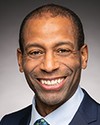
Greg Fergus Liberal Hull—Aylmer, QC
Mr. Speaker, I thank my colleague, the member for Argenteuil—Papineau—Des Collines, because he raised a very important issue that concerns national security.
We see what is happening elsewhere, such as in Ukraine, where the satellite systems on which the country relies for its defence are not always dependable. Can my colleague explain how important it is for Canada to have our own satellite network to protect our country and ensure our country's security?
Stéphane Lauzon Liberal Argenteuil—Papineau—Des Collines, QC
Mr. Speaker, I want to thank my colleague for his excellent question. Sovereignty depends on security. This is a vitally important aspect of the national defence strategy. We are going to invest heavily in all strategies, including the national security strategy, which is an integral part of national defence communications. We are not behind, but we must act quickly to deliver services in support of Canada's sovereignty.

Kevin Lamoureux LiberalParliamentary Secretary to the Leader of the Government in the House of Commons
Mr. Speaker, when we think of space and having sovereignty in terms of launch capabilities, it assists in many different industries. I think of Magellan in Winnipeg. It has built satellites. Today, we have Canadian-made satellites in space. Having the ability, whether it is in the military or private sector, to provide a service of this nature is absolutely essential, not only to our sovereignty, but also in building an industry that is so vitally important and can contribute to good jobs into the future.
Can I get my colleague's comments on how important those jobs are to Canada, our future and our sovereignty?
Stéphane Lauzon Liberal Argenteuil—Papineau—Des Collines, QC
Mr. Speaker, I thank my colleague and congratulate him on his appointment every year as a member of the House.
After being a teacher for 21 years, I believe in the importance of attracting outside talent, but I also believe in training our people at home. We have a complete ecosystem within Canada that provides training to workers who go on to become essential employees in well-paying jobs. These are highly skilled positions. They are not limited to the communications sector and will drive development across every technological field.
Kevin Lamoureux Liberal Winnipeg North, MB
Mr. Speaker, the member makes reference to the importance of education. When we talk about the development, promotion and encouragement of that industry to grow, all we need to do is take a look abroad. When we take a look at the European Union, with which we are building a closer relationship, the need to be able to get things into space is there. It is real. It is tangible. The European Union will look at Canada as a place where it could actually launch into space.
Can the member provide his thoughts on that?
Stéphane Lauzon Liberal Argenteuil—Papineau—Des Collines, QC
Mr. Speaker, indeed, our Prime Minister is building relationships around the world. Having our own network here in Canada will definitely help us develop ties with other countries, allies with whom we will be able to act as our own vendor. It is time to stop relying on other countries and to be sovereign in our communications, with our own satellites and aerospace technology.
Greg Fergus Liberal Hull—Aylmer, QC
Mr. Speaker, thank you for giving me the opportunity to ask my hon. colleague this question.
As for the use of these satellites for our own non-military purposes, could he talk about how this initiative will benefit Canada's regions?
Stéphane Lauzon Liberal Argenteuil—Papineau—Des Collines, QC
Mr. Speaker, of course I am a strong advocate for the regions and rural life.
I have been the one fighting since 2015 to have the regions recognized and to make technology available in the regions. Bill C-28 is a key tool for the regions, for remote and rural areas. It will give us the opportunity to have a network on par with that of urban centres. Including remote regions with little or no service is part of Canadian sovereignty.
Ability of Member to Represent ConstituentsPrivilegeGovernment Orders
Battle River—Crowfoot Alberta
Conservative

Pierre Poilievre ConservativeLeader of the Opposition
Mr. Speaker, I have given notice of a question of privilege.
It is with a great deal of regret that I rise in the House of Commons today. When I addressed this chamber remotely in the aftermath of last month's tragic fire at Canadian Forces Base Wainwright, I vowed to follow through and ensure that the aftermath would not be an afterthought. Little did I know that it would include me rising here in the House of Commons on a question of privilege, but regrettably, that is what it has come to, because one of the government's contractors is interfering with my ability to represent the people of Battle River—Crowfoot.
In the days after the fire, I met with countless heroes in Wainwright, courageous first responders who intervened immediately, provided care and prevented suffering. They intervened to ensure that the tragedy did not turn to an even greater disaster.
One of those heroes was Maureen. She is a decorated veteran of the Canadian Armed Forces, as is her husband. She began a second career in the civilian sector as a registered nurse. Like many Canadians, she has two jobs to make ends meet, first as a nurse at the Wainwright hospital and second as a contract nurse for CFB Wainwright, through a contract with military supplier Calian health.
Maureen spoke to me on base with the permission of the unit commander. I had the permission of the base commander to be there. She talked about caring for our men and women on her shift that night, that horrendous night of the fire. The picture she painted for me, if I can be blunt, is nothing short of hell on earth. What she told me were the stories of the courageous young men whose bodies had been burned from head to toe and of the job that our first responders, nurses and doctors had to do, to peel scorched uniforms off live men before they even had a chance to fully administer painkillers. She told me of a tiny community hospital suddenly overwhelmed with dozens of men burned from head to toe, and the screams, the smells, the chaos, the courage and the incredible, miraculous work of people just like her to save as many lives as possible and get them triaged off to life-saving care in bigger centres.
We owe Maureen, as well as colleagues like her, our greatest gratitude. That is what I conveyed in our conversation. Instead, Maureen tells me that she has been threatened by Calian health, all because she spoke to her local member of Parliament. In the days following our meeting, I am told that Maureen was subject to a baseless complaint against her and told by her boss that if her term contract was not already coming to an end, she would be put under the microscope by the legal department for this government contractor. The implicit message was that her contract would no longer have any chance of renewal, which was something she had taken for granted before that point.
Other work opportunities that were also expected to follow have since vanished. Simply put, it appears she is losing her chance to continue her work at CFB Wainwright because she met with her local MP. This is at a time when the base needs more nursing care than ever before.
According to Maureen, her contract manager told her that she violated Calian policy by meeting with her MP. That is actually not true. There is no such policy. While the company does have a policy against speaking to the media, I am not, as members might all have noticed, a member of the press. There is no rule, nor could there be a rule, banning any person from meeting with their member of Parliament. In fact, a constituent meeting with their member of Parliament and expressing themselves is a basic charter right, freedom of expression, under section 2(b), as is the right to effective representation, under section 3.
In other words, Maureen was very properly using the rights that our Charter of Rights affords her and all Canadians but especially should afford someone as heroic as this military veteran and nurse. I add further that she did not reveal any state secrets, and she certainly did not shed any light on Calian's business information.
Truth be told, I did not even know she worked for Calian. I thought she was working directly for the base or the hospital. What she did tell me when we spoke, and this was outside her hours of work for Calian, was about the suffering, the agony, the courage, the bravery, the resilience and also the hope.
Maureen also gave valuable input for me to take back to the floor of the House of Commons and to the government. In particular, she spoke about the need for there to be a surge in mental health support and recovery for the many first responders, doctors, nurses, soldiers, firefighters and others who are brutally traumatized by witnessing their fellow human beings, our heroes, burned in some cases, to death. Maureen indicates that she has appealed the reprimands that she received to her superiors and asked for an apology for the harm and stress that this has caused her. She tells us that this appeal has been met with nothing but silence. She says that she is now being omitted from workplace gatherings and events. It is obvious that the fix is in.
When I first learned about Maureen's plight after our meeting, I immediately contacted the minister. My intention was not for this to be politicized. I simply wanted it to be resolved. I contacted the minister. I told him about the situation. I said that I hoped he could solve this, and we could put it quickly behind us.
I am aware of other members of Maureen's family who have spoken to the minister and his office since that time, but unfortunately, the problems have only gotten worse and the harassment with which she has been confronted has only been aggravated. Based on his original assurances, I had hoped the minister would put Calian in its place and fix the wrongs, but as I just said, her family is indicating that the problems have worsened and there is no end in sight. That is why I am rising today on this question of privilege.
In short, Maureen indicates she faces the possibility of serious professional consequences, along with immense compounding of her turmoil and stress, apparently for speaking to her member of Parliament. She has been told that people in the organization higher up are particularly critical of me personally, something I welcome. We all welcome that in this line of work. If they have criticisms of me, they can throw them at me any time they want. They can go online and say what they want about me, but, for God's sake, they should not take it out on a nurse and a veteran, because she did nothing wrong, other than bring her views, her concerns and her stories, rightly, to the person who serves her on the floor of the House of Commons.
The fact is that intimidation of constituents who come to see us prevents us from doing our work. As paragraph 4.44 of House of Commons Procedure and Practice, fourth edition, states, “Members sit in the House of Commons to serve as representatives of the people who have elected them to that office.”
While there is no official job description for members of Parliament, our duties are many. We introduce bills and laws. We present motions and petitions. We go and sit on committees. We make interventions and representations to ministers, but we do that all on behalf of our constituents.
The only way for us to relay our constituents' thoughts, concerns, ideas and problems is if they can share them with us. If they cannot, then a critical link in our democratic process is severed. Put in simple terms, if the people cannot speak to us, we cannot speak for them. That is why the Parliament of Canada Act provides for our travel and our offices and staff in the communities. If we were not listening to our constituents, we would never have to leave the four walls of this place.
When we use the words “privilege” or “parliamentary privilege”, we are not talking about elite perks that we as politicians are meant to enjoy. Instead, we are talking about the legal tools that MPs have to do their jobs. Janse and LeBlanc explain in paragraph 3.7 that “Parliamentary privileges are designed to safeguard the rights of each and every elector.” They are not referring to parliamentarians, but electors. Janse and LeBlanc continue:
For example, the privilege of freedom of speech is secured to members not for their personal benefit, but to enable them to discharge their function of representing their constituents.... When a constituency has returned a candidate, it is the electors’ right that this chosen representative should be protected from any kind of improper pressure.
If the constituents whom we represent are not allowed to speak with us and suffer drastic personal consequences when they do, then we simply cannot do our jobs as members of Parliament. By threatening and imposing consequences on Maureen for speaking with me, the government's contractor Calian is effectively interfering with my duties as the member of Parliament for Battle River—Crowfoot because of this improper and indirect pressure.
House of Commons Procedure and Practice, third edition, at page 111, explains, “A Member may also be obstructed or interfered with in the performance of his or her parliamentary functions by non-physical means. In ruling on such matters, the Speaker examines the effect the incident or event had on the member’s ability to fulfill his or her parliamentary responsibilities.” It continues, “It is impossible to codify all incidents which might be interpreted as matters of obstruction, interference, molestation or intimidation and, as such, constitute prima facie cases of privilege.”
On February 20, 1984, Speaker Francis found a prima facie case of privilege concerning allegations that an official at Canada Post said that he would no longer co-operate in helping the member of Parliament deliver his duties to his constituents if that member of Parliament were to pose questions about Canada Post without the president's prior sign-off. The Speaker found that this was a breach of the member's ability to do his job. At page 1560 of the Debates, the Chair stated:
A threat emanating from any government department or public corporation to withhold information or co-operation from a Member of Parliament would undoubtedly hinder that Member in the fulfilment of his or her parliamentary duties and therefore constitute a breach of privilege. By the same token, an offer of favourable treatment on condition that questions are first cleared with the office concerned would also violate privilege in an equally fundamental way.
Consistent with these authorities, I would respectfully submit that the interference by a government contractor, Calian, meets the threshold necessary for it to amount to a prima facie breach of parliamentary privilege, not to mention a trampling of Maureen's own constitutional rights.
Finally, there are the seen and the unseen consequences of this saga. We obviously see the enormous stress and strain that this has imposed on Maureen. One can only imagine the immense trauma from which she is recovering. She did tell me, and I think I can relay, that in all her years of nursing, she never experienced anything like what happened in that hospital on that horrendous, hellish night. Recovering from that hell alone would take months of rest, recuperation and counselling for the strongest among us, but to further have it compounded by threats, intimidation and potentially even loss of income must make it far harder indeed.
That is the seen. What is the unseen? It is very simple. How many people on that base might have a story they want to share with me, a concern they want to pass along or a federal intervention they believe is required in the aftermath of this horrendous event, which they are now frightened to talk about? Even though I was able to digest Maureen's input, there now may be countless conversations that may not be happening, out of fear and intimidation. That makes it impossible for me to do the job of representing those voices. It makes it impossible for me to be their voice.
I will conclude by moving the appropriate motion to refer this matter to the Standing Committee on Procedure and House Affairs for a thorough investigation. Ideally though, the government and Calian will instead simply say that they are sorry, fix the problem, and allow this wonderful nurse and veteran to do her job and continue serving valiantly and compassionately. However, until and unless that happens, my ability to represent my constituents has been interfered with, and, Mr. Speaker, you must denounce this conduct.
I will say that I truly tried to resolve this quietly. It was certainly not my intention to ever have this rise to the floor of the House of Commons. I believed that in sharing it with the minister, with Maureen's family, and doing the same with his office, this would be resolved by now, but it has now been a month.
Quite frankly, our job in this place is to speak for people such as Maureen. We are all getting a little sick and tired of the people who build this country, protect this country and do the most dangerous, heart-wrenching work for this country being told to sit down, shut up and do what they are told.
We work for them. I work for Maureen. If I cannot hear Maureen's voice, I cannot be Maureen's voice.
I ask you to find that this is a breach of privilege and join with me in calling for this injustice to be fixed for her, to send a signal to all Canadians that they have a right to a voice, to be heard and to be represented on the floor of the House.
Ability of Member to Represent ConstituentsPrivilegeGovernment Orders
The Deputy Speaker Tom Kmiec
I would like to thank the leader of the official opposition. I am going to take this matter under advisement, and the Speaker will return to make a complete ruling.
I see the hon. parliamentary secretary rising.
Ability of Member to Represent ConstituentsPrivilegeGovernment Orders
Winnipeg North Manitoba
Liberal
Kevin Lamoureux LiberalParliamentary Secretary to the Leader of the Government in the House of Commons
Mr. Speaker, I will return to provide some further comments on it before the Speaker's ruling, but suffice to say, the Prime Minister and the Government of Canada have been and will continue to be there for members of our Canadian Forces.
I find it very upsetting to hear the comments with regard to Maureen. We recognize the sacrifices, the emotion and the service that was provided by health care professionals and by first responders. We understand very clearly what has taken place on the base. We are going to continue to be there for that community in a real and tangible way.
I appreciate the member raising this, and I will report back when we have had the opportunity to look deeper into the situation.
Ability of Member to Represent ConstituentsPrivilegeGovernment Orders
The Deputy Speaker Tom Kmiec
I thank the hon. parliamentary secretary. It is so noted.
The hon. member for Joliette—Manawan.

Gabriel Ste-Marie Bloc Joliette—Manawan, QC
Mr. Speaker, I just want to inform you that the Bloc Québécois will examine the matter and provide its comments as soon as possible.
The House resumed consideration of the motion that Bill C-28, An Act to amend the Aeronautics Act and other Acts, be read the second time and referred to a committee.
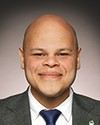
Jamil Jivani Conservative Bowmanville—Oshawa North, ON
Mr. Speaker, with the limited time I have this evening, I would like to draw attention to some of the important issues embedded in the discourse around Bill C-28—
The Deputy Speaker Tom Kmiec
I have to interrupt the hon. member. I see the hon. parliamentary secretary to the government House leader rising on a point of order.
Kevin Lamoureux Liberal Winnipeg North, MB
Mr. Speaker, there have been some discussions among the parties, and if you seek it, I believe you will find unanimous consent for the following motion: that the question be put on Bill C-28, the Canadian space launch act, at second reading. That is my understanding.
The Deputy Speaker Tom Kmiec
The House has now reached 6:22 p.m.
It being 6:22 p.m., the House will now proceed to the consideration of Private Members' Business, as listed on today's Order Paper.
The House resumed from June 3 consideration of the motion that Bill C-261, An Act to amend the Old Age Security Act (amount of full pension), be read the second time and referred to a committee.

Marilène Gill Bloc Côte-Nord—Kawawachikamach—Nitassinan, QC
Mr. Speaker, I am pleased to rise this evening to speak to Bill C-261, a bill introduced by my colleague, the member for Vallée-du-Haut-Saint-Laurent. She has devoted a lot of effort to this initiative. It is not always visible from inside this chamber, but a great deal of work goes into certain bills—bills that are drafted with heart and conviction. The Bloc Québécois members want to work for Quebeckers. I know that is also what my colleague wishes to do.
As I was making my way to the House just a few minutes ago for this debate, I found myself reflecting. As elected representatives, we spend a lot of time talking to ourselves. I was thinking about the reasons that lead us to seek public office in the first place. Even after all these years, for me, for my colleagues in the Bloc Québécois, and certainly for the member sponsoring this bill, that motivation remains the same: to help the people around us. At times, it can be easy to give in to cynicism. Cynicism is everywhere. We saw that with the latest budget: It makes people cynical. We need to resist that. We need to stand up and say that there is never enough money, there are never enough tools or resources to help the people we should be helping first, meaning the most vulnerable among us.
That is what we are seeing. Those of us who travel around our ridings and talk to people know that the very first words out of their mouths are about all of their needs.
At the risk of repeating myself, there is one issue we hear about ad nauseam in the House, but it still has not been resolved. I am talking about the issue of housing and, of course, food. Once again, these are two basic needs: food and shelter. It is unbelievable that this is what we are discussing here in the House. There are segments of our population that are more vulnerable.
I live in an area that is considered rural and remote, and its population is in decline. At the same time, a large proportion of the people living in my riding are seniors. I would not go so far as to say that everyone has the same needs when it comes to housing, food, transportation and health care, but there are urgent needs in these areas throughout my riding. That is because the cost of living is so high. Not only are we living in a remote area, but we are also in the midst of an ongoing crisis as a result of the current circumstances.
The fact that we have been seeing this day after day for many years now is what has motivated the Bloc Québécois to continue the fight we started in 2021. I am not saying we did not criticize it before, but for five years now, we have been telling the government that the bill it passed that year to increase OAS benefits divided seniors into two classes, namely those aged 65 to 74 and those 75 and older. Creating two classes of seniors is discrimination. We have been repeating this non-stop, so we do not understand why, after five years, the government still does not understand that this is discrimination. Seniors are not divided into two classes. If someone is a senior, they get benefits and they have needs. Housing is not cheaper for seniors aged 65 to 74 and more expensive for seniors 75 and older. The same goes for groceries, gas and all consumer goods. The same applies to the population as a whole.
Here we are again, saying that this is what we need.
I talked about cynicism, and that, too, is something that really resonates with me. We sit here in the House and debate, yet we forget that we were elected to help these people, as I said at the outset. We are here to work for them. The government may well hide behind a budget or behind reasons that, in my view, are not even valid reasons. It is not rational at all.
Yesterday, she gave a clear example of this, along with my colleague from Shefford, the Bloc Québécois critic for seniors, who believes in this cause too and has also done a lot of work. They have the support of all of Quebec and all of the people who came to the House of Commons representing hundreds of thousands of others. FADOQ is one example. A huge number of groups are showing up here to voice their support for the bill. I have a hard time understanding why the government fails to grasp what the entire population saying. People are saying that the government has done something really wrong and discriminatory and that they want what is rightfully theirs.
I want to congratulate them for making a small crack in the wall of cynicism and for gathering all these supporters behind us. They may not necessarily back the Bloc Québécois, but they back our bill. What I mean by that is that the cause is just, and the bill is just. I am talking about the Bloc Québécois, but I am obviously encouraging the other parties to do what we are doing. This is not the first time that a bill like this has been introduced, but when all is said and done, nothing comes of it.
We do not want any discrimination. Everyone needs this money. The government constantly talks about measures to help with the cost of living, yet it rejects bills like this. This bill sends a clear message to the government: It got it wrong. It created a situation where people are treated unfairly. The public wants it to go back to the drawing board, even though it has taken five years to get to this point.
Even if the government decides to vote against the bill, we will carry on fighting. It is our duty to keep fighting on behalf of the people who have asked us to do so for them.
When I arrived here earlier, I was reflecting on the fact that I have talked about this bill several times now. It made me think about other bills and about the whole issue of employment insurance, for example. There is also the issue of tax havens. These are things that our constituents are always bringing up. When we meet with people, they tell us that what they want is a fair and egalitarian society, although they may not use those exact words. We talked about this just this afternoon, when several members gave statements about violence against women.
In my opinion, this discrimination is also a subtle form of violence against women. As we know, demographically speaking, most seniors are women.
As I was saying, I cordially invite my colleagues in the official opposition and, of course, those in the government to resolve an issue that never should have occurred in the first place by supporting the bill introduced by the member for Vallée-du-Haut-Saint-Laurent. She worked hard to get all of these people behind us. Seniors in Quebec and Canada want us to pass this bill.