
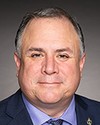
Mr. Speaker, it is an honour to rise on behalf of the New Democratic Party in support of Bill S-246, the wartime service recognition act.
Before I get started, I want to thank all veterans and currently serving members of our military, RCMP and all police services, as well as their families, for their service. I thank the senator who brought the bill forward. I thank my colleague for Ottawa West—Nepean for her advocacy and the work she has done to bring us all together across party lines on something that should not be partisan. I thank my colleague for Bruce—Grey—Owen Sound for such a powerful speech and for his incredible service to our country. He is a true hero, and the people he served with, including those who never came home, are heroes. I also thank my colleague for Vallée-du-Haut-Saint-Laurent for her very powerful speech. It demonstrates how we can work together on something of such importance, supporting our veterans.
At the heart of the bill is a simple principle: When Canadians put their life on the line for our country, then their courage and sacrifices deserve to be properly recognized. This should not be controversial, yet for far too many Canadian veterans, securing that recognition has been a long and frustrating battle. We heard about that tonight, and we heard about it in the press conference.
I have met with veterans who served in the Persian Gulf, Afghanistan and the former Yugoslavia, women and men who have spent years, sometimes decades, fighting to have that service properly acknowledged. For some Persian Gulf veterans, that fight has lasted 35 years. Mike McGlennon and Harold Davis from the Persian Gulf Veterans of Canada have been relentless. They stood with us today. We owe it to them. Just think about it for a moment. It has been 35 years of trying to convince their own government, our government, that the dangers they faced and the conditions in which they served deserve recognition.
These veterans did not choose the conflicts they were sent into. They answered the call of duty, faced life-threatening situations and did everything their country asked of them, yet after all these years, they are still waiting for their country, our country, to fully acknowledge what they went through. This simply is not good enough, and it is the injustice that Bill S-246 seeks to address.
The legislation before us would require the minister of national defence to establish a national framework for recognizing wartime service based on clear, objective criteria and a transparent and accountable process. Whether a veteran's service is recognized should not depend on an outdated definition, an arbitrary distinction or the label that a government happened to attach to a military operation. It should depend on what actually happened. Were our service members exposed to hostile fire or life-threatening conditions? What was the nature, duration and intensity of their operations? Did they face circumstances that could cause lasting physical or psychological harm? These are the questions that should guide the recognition of wartime service.
Importantly, the bill acknowledges something that should be obvious: Wars do not become less dangerous simply because governments choose not to formally declare them. A bullet does not distinguish between a declared war and an undeclared conflict, and neither does an explosive device or the trauma that follows a veteran home, often for the rest of their life.
Bill S-246 would also require the government to consult veterans and their representatives in developing this framework. This is critical, because if we want to understand what military service was really like, we should start by listening to the people who were actually there, as we heard from our colleague for Bruce—Grey—Owen Sound tonight. It should not just be government officials reviewing files in Ottawa but the women and men who lived through these experiences, the ones who served. Their voices have to be at the centre of this process.
The legislation also presents the Liberal government with an opportunity to honour its own commitments. In its 2025 platform, the Liberal Party promised specifically to expand recognition of military service, including reviewing the designation of missions in the Persian Gulf. That promise was made to Canadian veterans, but they are still waiting. Here is an opportunity for the government to deliver, for all of us. The government has already acknowledged there is a problem. Now it needs to do something about it.
Let us be clear about why this matters. Recognition is not simply a designation on a service record. It is about dignity and respect. We heard that at the press conference today. We heard, specifically from the indigenous veterans association, that this is about respect. It is about ensuring that veterans and their families know that their country understands what they have been through and has not forgotten them.
Although this bill is about recognition, it would not, on its own, establish new financial benefits for veterans, but New Democrats believe that recognition needs to be accompanied by meaningful support. Veterans who return home with physical injuries, psychological trauma or other service-related hardships should never have to fight their government to get the care and benefits they have earned. We cannot thank veterans for their service with one hand and put bureaucratic obstacles in the way with another. That is why we need a veterans system that reflects the realities of modern military service, one that is fair, accessible and grounded in respect for the people who have served. Bill S-246 is an important step in that direction.
Every November, as earlier today in the House of Commons, members of this place stand together to honour the courage and sacrifice of Canada's veterans. We wear a poppy, we attend ceremonies and we speak solemnly about the debt of gratitude our country owes to those who served. Those traditions matter, but gratitude cannot end when ceremonies are over. If we truly believe that we owe our veterans a debt of gratitude, then surely the very least we can do is acknowledge what they have done for our country. When someone puts their life on the line in service to our country, the very least we can do is to make sure their service is properly recognized.
Veterans who have served in dangerous and demanding circumstances deserve recognition that reflects the risks they took and the sacrifices they have made. Far too many veterans have spent years fighting for this recognition, but they should not have to ask for it. This bill is an important step to correcting that. It is about making sure veterans who face the dangers of wartime service receive the recognition that they deserve, along with the benefits that should come with it.
Again, New Democrats fully support this initiative. Canada's veterans should never have to fight for recognition after everything they have already done for our country. We owe them more than words of gratitude. We owe them fairness, dignity and meaningful action. It is time we got this right. Our veterans should not have to spend decades fighting for this recognition. They have already done their duty. Now it is time for us to do ours. The Senate moved the bill through rapidly. It moved it through committee. I hope the House can move things through quickly and that the bill can move through committee quickly.
I want to thank my colleague from Manitoba who is leading on the Conservative side. He has been pushing for that. He is pushing for it to move through committee rapidly. We wholly support that. This is an opportunity for us to move the bill fast and for the minister to support it. New Democrats are proud to support the bill, and I urge all members of the House to do the same and to help do everything they can to move the bill fast into law.