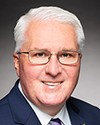
House of Commons Hansard #109 of the 45th Parliament, 1st session. (The original version is on Parliament's site.) The word of the day was majority.

Topics

line drawing of robot

This summary is computer-generated. Usually it’s accurate, but every now and then it’ll contain inaccuracies or total fabrications.

Military Justice System Modernization Act Report stage of Bill C-11. The bill seeks to modernize the military justice system by transferring jurisdiction over sexual offences to civilian courts, a move Liberals describe as crucial institutional reform. Conversely, Conservatives and the Bloc argue the legislation removes essential options for victims. They advocate for amendments to ensure victim choice between systems, contending that the government is ignoring concerns regarding capacity within civilian police and failing to listen to survivor testimony presented during committee. 32800 words, 4 hours.

Statements by Members

Question Period

The Conservatives condemn the Liberal government's inflationary deficits and excessive spending, demanding tax relief at the gas pumps and an end to wasteful boondoggles. They highlight the impact of U.S. trade tariffs on employment and criticize red tape. Additionally, they raise concerns about crime and drug policies and asylum seeker health care.
The Liberals emphasize Canada’s strong fiscal position and second-fastest growth in the G7. They champion investments in affordable housing, dental care, and school food programs while highlighting asylum claim reductions. The party also focuses on trade diversification, space-based security, and bail reforms to enhance economic resilience and public safety.
The Bloc urge tariff crisis relief via wage subsidies, EI overhaul, and pension increases. They advocate for the forestry industry, protecting health care funding, and ending oil subsidies to ensure the government meets its climate targets.
The NDP condemn transit funding cuts and urge the government to uphold commitments to public pharmacare.

Government Business No. 9—Changes to Standing Orders Members debate Government Motion No. 9, proposing expanded committee sizes to ensure a government majority. Liberal members argue this reflects parliamentary tradition, while opposition MPs, including Andrew Scheer and Yves Perron, contend the change stifles accountability and ignores election results. Critics argue the government seeks to evade scrutiny on key issues, and John Brassard introduces an amendment to preserve the composition of specific oversight committees. 19100 words, 2 hours.

National Framework on Skilled Trades and Labour Mobility Act Second reading of Bill C-266. The bill proposes a national framework to harmonize skilled trades certification and improve labour mobility. Liberals argue it will boost economic efficiency. Conservatives, however, accuse the government of attacking trades workers through recent funding policies, while the Bloc Québécois rejects the legislation, claiming it constitutes federal encroachment on Quebec jurisdiction regarding labour training. 7700 words, 1 hour.

Adjournment Debates

Agricultural and fishery policies In two separate debates, Jonathan Rowe critiques the government's rejection of his bill to extend the Newfoundland food fishery, while Ernie Klassen defends the decision as necessary to avoid new fees. Separately, Dave Epp protests agricultural research station closures, while Anthony Housefather focuses on broader government tax and economic relief.
Youth unemployment and economic opportunities Garnett Genuis criticizes the government's record on youth unemployment, calling for policy changes in training and immigration. Anthony Housefather defends the government record, citing investments in summer job programs and skilled trade apprenticeships as key opportunities for young Canadians to enter the workforce.
Was this summary helpful and accurate?

Government Business No. 9—Changes to Standing OrdersGovernment Orders

3:55 p.m.

Conservative

John Brassard Conservative Barrie South—Innisfil, ON

Mr. Speaker, if Canadians wanted any evidence at all that what the Liberal government wants is an audience and not an effective opposition, Motion No. 9 reflects that accurately and precisely.

It was just under a year ago that the Prime Minister of this country was elected by Canadians. It was a fair election, but the Prime Minister was elected in a minority situation. He received fewer votes than what he needed for a majority. Canadians sent that message, as they did in previous elections, because they were not happy with the Liberal government and what it was doing to this country. Canadians elected the government in a minority situation because we had an untested, unproven Prime Minister who had never engaged in politics before.

Canadians voted for a minority government. What that meant, as is the convention around this place in relation to the Standing Orders, is that we had committees that were negotiated at that time that were structured in a way that reflected the results of the election. It meant that for Conservatives and members of the Bloc, we had the majority of members on those committees.

For the committees that were not oversight committees, that meant that if the opposition members wanted to determine what a study was going to be, wanted to compel witnesses, wanted to summons or wanted to compel documents, they could do it without it having to get to the chair. That is the way committees were formed.

The same can be said about the oversight committees. I am the chair of the ethics committee. The oversight committees exist because they deal with issues of importance related to government operations, government contracts, ethics, accountability and transparency. If it was not for the oversight committees in previous parliaments, as the member for Regina—Qu'Appelle said, none of the scandals that became big scandals, one which caused Parliament to be prorogued in the case of the Winnipeg lab scandal, would have come out if not for the oversight committees.

The purpose the oversight committees serve is to hold the government to account, to ensure there is transparency and to ensure that the information is available to us, especially when a minority government is elected. We run a real risk. I have a grave concern that the level of accountability and transparency is not going to be there with Liberal members on these oversight committees, controlling these committees.

When those committees were constituted, there were good-faith negotiations. The proportionality of what has happened now in this transactional nature of a majority government, where we have seen floor crossers give the government a majority, means they have just over 50% of the seats right now, which, again, should be reflective on those committees.

What the Liberals are proposing with Motion No. 9 is to in fact give themselves 58% of representation on those committees, which would ensure that nothing the opposition wanted to do at those committees would actually happen. There would be no summoning of documents. There would be no appearances by witnesses. There would be no studies on things that happen as a result of scandals within the government that would ever see the light of day. That is what is most troubling to me.

The other thing that has been troubling, and I have seen a pattern of this over the 10‑plus years I have been here, speaks to the importance of what is needed in this country. If we do not have any accountability and do not have the type of transparency that Parliament is going to be able to provide at this point, especially given the work the committees are charged with, it seems like we have turned into a country where we are the only country in liberalized democracies around the world where the opposition party is held to a greater account than the government by media.

That needs to stop right now, because the power that is given to this Parliament, the power that is given to MPs, the supreme power that is given, is being taken away by the Liberal government through Motion No. 9.

It is a sad indictment on where we are with respect to oversight, accountability and transparency, when there are YouTubers who are finding out more about what is happening within the Liberal government, the scandals and the connections of well-connected insiders, lobbyists and family members. When YouTubers are researching this stuff and finding this stuff out, that is a sad indictment on where we are with respect to media accountability in this country and holding the opposition to greater account than the government party.

With all that is happening with Motion No. 9, I want to send a message, because it is going to become increasingly important for the media if this passes without amendment on the oversight committees: “Do your goddamn jobs.”

Government Business No. 9—Changes to Standing OrdersGovernment Orders

4 p.m.

Some hon. members

Oh, oh!

Government Business No. 9—Changes to Standing OrdersGovernment Orders

4 p.m.

The Assistant Deputy Speaker John Nater

Order. The member knows that is not parliamentary. I will ask him to withdraw, and we will carry on.

Government Business No. 9—Changes to Standing OrdersGovernment Orders

4 p.m.

Conservative

John Brassard Conservative Barrie South—Innisfil, ON

Mr. Speaker, I will withdraw that.

The message to the media is, “Do your jobs. Hold the government to account for everything that is going on with respect to spending, contracts and all that stuff.” Canadians are going to need to rely on the media to do this. The Liberal government is handcuffing the opposition party right now, particularly on oversight committees.

With this motion and with everything else that we have seen, the sad reality is that Liberals expect Canadians to give up, get complacent and go away, so that the Prime Minister can have total power without any accountability.

That will not happen. Our country and its people are worth fighting for. We will continue to fight for people to afford homes, fuel and food. We will continue to fight for safety on our streets. We will continue to fight for our resource workers and our soldiers. Conservatives will continue to lead that fight, every day and in every way, in Parliament, across the country and into the next election when Canadians will reclaim this country we know and love, and put the power back to the people and not the government.

With that, I would like to close with an amendment to Government Motion No. 9. I move:

That the motion be amended, in paragraph (b), (a) by adding, after the words “and Estimates”, the word “and”; and (b) by adding, after the words “Public Accounts”, the following: “which shall consist of nine members and be composed of four members from the Liberal Party, four members from the Conservative Party and one member from the Bloc Québécois.”

Government Business No. 9—Changes to Standing OrdersGovernment Orders

4 p.m.

The Assistant Deputy Speaker John Nater

The amendment is in order.

Questions and comments, the hon. member for Burlington.

Government Business No. 9—Changes to Standing OrdersGovernment Orders

4:05 p.m.

Liberal

Karina Gould Liberal Burlington, ON

Mr. Speaker, I have been here for over 10 years and I have seen a lot of theatrics in this place, but the drama coming from that last speech was a bit much even for that hon. member and the Conservatives.

Speaking as if we are taking away members' rights and their opportunities to be representatives is over the top. In fact, every member in this House has an important role to play. What the government is doing is acting on the fact that we now have a majority.

I will put this to him because I did not actually get an answer from his House leader when I asked. If the Conservatives should ever, and we will see if that ever happens, find themselves in a situation where they have a majority government, will he commit right now to ensuring that the Conservatives do not hold a majority on committee?

Government Business No. 9—Changes to Standing OrdersGovernment Orders

4:05 p.m.

Conservative

John Brassard Conservative Barrie South—Innisfil, ON

Mr. Speaker, I am sorry that the hon. member thinks that the passion I am showing for accountability and transparency, and for ensuring that the government acts in an ethical manner, is just theatrics. Nothing could be further from the truth. I am very passionate about this.

As chair of the ethics committee, I am keenly aware of this topic. We just dropped a report today on the Conflict of Interest Act. Throughout the testimony on the Conflict of Interest Act, we heard some pretty disturbing things when it comes to blind trusts and ethics screens not being applied properly, like companies having $5.6 billion in unpaid taxes through offshore accounts. In the last little while, we have seen contracts, like the spaceport, handed out to Liberal family members.

I will make no apologies for being passionate about defending the rights of Canadians and making sure that ethical standards are met in this country.

Government Business No. 9—Changes to Standing OrdersGovernment Orders

4:05 p.m.

Bloc

Patrick Bonin Bloc Repentigny, QC

Mr. Speaker, after promising to co-operate and seek the views of opposition MPs in a fair manner, the first move by this now-majority government was to unilaterally change the rules of the game without consulting the Bloc Québécois.

The Liberals are even going against parliamentary tradition, which dictates that the composition of committees should be determined by consensus. What we are seeing right now is the exact opposite. Worse still, the proposal would give Liberals 58% of the seats on parliamentary committees, whereas they hold 51% of the seats here in Parliament.

I would like to know what my hon. colleague thinks of that.

Government Business No. 9—Changes to Standing OrdersGovernment Orders

4:05 p.m.

Conservative

John Brassard Conservative Barrie South—Innisfil, ON

Mr. Speaker, I already mentioned that in my speech. Following the election last April, the parties took part in negotiations regarding the number of members on each committee, but because some MPs have switched sides, we now find ourselves in this situation.

We have to ensure we have accountability, oversight and transparency at our committees. This would do nothing to ensure that. In fact, I suggest that it would make it much worse, and the Liberals would run roughshod through everything. They would pass whatever they want to pass, and committees would not have a say in any of it.

Government Business No. 9—Changes to Standing OrdersGovernment Orders

4:05 p.m.

Conservative

Warren Steinley Conservative Regina—Lewvan, SK

Mr. Speaker, I am quite shocked by the question coming from the member for Burlington in saying that it is theatrical to care about accountability and oversight in the House of Commons and in committee structures. The government that she is a part of, the Liberal government, has more ethics violations than any government in the history of Canada. There is corruption, there are scandals in the government, and now it is trying to change the committee structure so that the opposition parties cannot hold the government to account.

How can someone say that it is not something that should matter to each and every Canadian when the government is trying to run roughshod and do whatever it wants? Is no one supposed to hold it accountable? How can we trust the government to get it right if we cannot hold it accountable?

Government Business No. 9—Changes to Standing OrdersGovernment Orders

4:10 p.m.

Conservative

John Brassard Conservative Barrie South—Innisfil, ON

Mr. Speaker, it is going to be increasingly difficult, but we are not going to stop. We are going to continue to ensure that we have accountability, transparency and oversight.

I did mention that the role of the media is going to be that much more important now. If the media acts like it does in other western democracies and actually holds the government to account, then maybe we will get some action in holding it to account as well.

Government Business No. 9—Changes to Standing OrdersGovernment Orders

April 23rd, 2026 / 4:10 p.m.

Bloc

Yves Perron Bloc Berthier—Maskinongé, QC

Mr. Speaker, I am usually very pleased to speak in the House. I know it is a great privilege. I do not want to take this privilege for granted, but today I take less pleasure in it than usual because we are deeply disappointed, as, I hope, are most Canadians and Quebeckers who are listening. They are realizing once again that Liberal promises are just hot air, as they usually are most of the time. The way the Liberals are acting today is very cavalier.

I will begin by outlining some of my main points. The Bloc Québécois believes that committees must reflect the composition of the House. Government MPs claim that the opposition parties do not want to recognize this, but that is absolutely untrue. What we do not want to recognize is overrepresentation of the ruling party. That is what we do not want. The Bloc Québécois respects parliamentary tradition and believes that the composition of committees must be negotiated in good faith, by consensus. However, negotiations require effective communication. No one has communicated with us, so we consider the current process to be fundamentally flawed.

They actually could have found common ground with the Bloc Québécois. We are all adults here, as everyone knows. I hardly need to tell anyone that we are an intelligent opposition, we put forward constructive proposals and we listen closely to the government's proposals. We always make sure that whatever it is is good for Quebec. That is and will always be our criterion, no matter what anyone says to the contrary. People seem to be saying that we did not want to collaborate. Nothing could be further from the truth.

I wanted to set the record straight on that, especially since the government seized a majority partway through its mandate. Legitimate byelections took place, and we fully recognized the outcomes. We have no issue with that. Those three seats were already Liberal seats anyway. That is not what changed the composition of the House.

Floor crossers are what changed the composition of the House. It is funny, because in this situation, the Liberals were negotiating behind the scenes. They were chatting people up to persuade them to cross the floor. Where is the legitimacy in that? I think that the voters in these five ridings were fundamentally disrespected in all this. People vote for a federal member. My riding has 108,000 voters. I would like to think that I am pretty good, but I know that these people were not voting for an individual. Many of them were voting for a political party. The legitimacy factor is missing from this majority.

Nevertheless, the Bloc Québécois would have been open to negotiating, because the composition of committees does need to reflect the composition of Parliament. I would like to remind members that parliamentary tradition dictates that the composition of committees is decided by consensus at the start of every new Parliament. We are already sidestepping tradition. This is the first time that a government has bought itself a majority by negotiating with elected members of the opposition to get them to cross the floor. We are not entirely sure what they received, but objectively, that is what happened. We are not passing serious judgment against anyone in this regard, but these are the facts.

We had hoped to receive some communication. We even talked about it among ourselves. We thought that they would talk to us. The Prime Minister said, as recently as April 14, that all perspectives in Parliament are needed. That was not that long ago. He promised to work collaboratively with the other parties. He said: “The work ahead demands collaboration, partnership, and ambition to deliver at the speed and scale Canadians are counting on.”

Now, he may still have ambition, but so much for collaboration and partnership. In fact, that only lasted seven days. Collaboration lasts seven days for the Prime Minister, or rather the CEO of Canada. We have a Prime Minister who wants to move quickly, who has little interest in parliamentary procedure, and I say this politely, and who thinks that the opposition gets in the way. However, that is not true. We are far from that, in fact.

The Bloc Québécois was not consulted in any way, shape or form. Worse still, we received an email informing us that this motion would be moved, and here it is. That was it. Guess when we received that email. I am going to say this with a great deal of irony: We were just coming out of the House leaders' meeting. The leaders' meeting, for those who do not know, is when the House leaders meet. It happens once a week. That is where we discuss matters. It is a formal forum for discussion.

Of course, there are plenty of other opportunities to discuss things in the hallways; we can call each other or send a text. However, the leaders’ meeting is the formal gathering with all the leaders of the recognized parties. We talk about the agenda or the fact that someone would like to move a motion, for example, and we discuss what we think about it. In the end, we usually say that we will bring it up with caucus and come back with an answer. It is a constructive process.

That being said, barely two hours after we left that meeting yesterday, we received an email telling us that a motion would be introduced the next day and that we would be silenced in committee, because that is the goal. I urge people not to buy into the government's friendly rhetoric today, as it claims it has not affected the representation of opposition parties and that it will listen to all points of view. What it is not saying is that it is going to give itself a supermajority so it can shut down debates as quickly as possible the moment they start to become bothersome. Then it tries to tell us that it wants to work as a team and build consensus.

I think we are right to be skeptical. The government House leader is going to be quite disappointed. He was hoping just a moment ago that we would say that we are voting with him. Well, no, we are not voting with him. We will not endorse stacking the standing committees partway through this Parliament, because that is what is happening. The government House leader even went so far as to tell reporters that he was not ruling out using a closure motion to impose this measure. It really takes some nerve: intending to ram through an amendment via a closure motion, an amendment that is usually adopted by consensus and through discussion, without even discussing it once with the Bloc Québécois.

What is the rationale for that? I hope that everyone is sitting down. I see they are, so I can say it now, since no one will fall over. The underlying reason was allegedly that the Conservatives were against it, so it would serve no purpose to talk to us about it. That is what Liberals do. Now that they have a majority, we have no choice but to listen to what they say. That is about it as far as a rationale goes. It is deeply disappointing, especially considering that, as I said, the Prime Minister had pledged just seven days earlier to keep co-operating. The leader of the Bloc Québécois responded to that by saying that the Bloc Québécois's constructive proposals prove our goodwill. We felt that a hand was being held out to us and we took it. We said that we would be there. The Bloc Québécois is an intelligent opposition party. We work constructively because we are not here to score political points on a daily basis. We are here to advance the common good, the collective good. That is what we try to do. We are therefore deeply, even bitterly, disappointed.

It falls to me to explain this today. This is truly worrisome. I would like to point out that a Conservative member moved a motion. The purpose of Motion No. 27 is precisely to prevent changes to the Standing Orders imposed by a majority vote. Traditionally, this is negotiated and discussed, so when people stand up and deliver flowery speeches, like the ones we heard earlier, saying that this is what needs to be done, that it is British tradition and so on, I am sorry, but that is not good enough. The rhetoric does not hold water. The Liberals are trying to muzzle the opposition parties, and the opposition parties will not stand for it. That is that. That is the message I have to send today. This is troubling. When someone pledged to work together and then turns around a few days later and ignores any discussion, what does that say about the future? If the government maintains its majority, we are in for another three years of this. It is going to be a long haul. I am also sending this message to Liberal MPs.

I hope there will be internal discussions and a return to constructive negotiations. They cannot make speeches claiming that all opinions matter and then not take any of them into account. I heard the Leader of the Government in the House of Commons say earlier that committee work is incredibly important and that it allows us to explore issues in greater depth and raise questions, but that only happens when we have the opportunity.

With the plan he is proposing, it is all over. Everything is going to happen very quickly. It is like high-speed rail. It is like a bunch of things they want to rush through. Some things cannot be rushed. I urge the government members to reconsider and, in fact, to take their time. It is important.

When a government sets out to change rules like this, it must always remember that this is not a matter of majority rule. This concerns the institution of Parliament. We are talking about democracy in Canada and Quebec. The rules of procedure do not belong to the majority party. The rules of procedure belong to Parliament. That is why I am calling for co-operation and discussion. Furthermore, again, in case the Liberals did not get the message, let me say that if they had spoken to us, they would have found us open to dialogue, as we always are.

We can face facts. There is a majority in the House of Commons now. We have no intention of denying it. What we would not accept is to give the Liberals more than 58% of representation on committees when they make up only 50.7% of the House of Commons. I would like them to give me a reason to justify that. I really look forward to hearing it.

That is not it. There were other workarounds. There were other proposals for changing the committees that we could have discussed together. Once again, I keep coming back to the same thing. There were other options, but no one talked to us. Unless people talk, it is very hard to come to terms. The call has been made. I am leaving time in my speech to let people take in what I have just said and reflect.

There were other possibilities. I might come back to that if I have time at the end, but I do not want to run out of time. I am being given the excuse that the committee chair is not supposed to vote. I am sorry, but that is set out in the rules. If the chair always had to vote in committee, then it would mean that we were not doing our job properly. In last year's election, the public gave the Liberal government a minority mandate. What message was the public trying to send? Citizens chose to trust this government to govern, but they did not trust it completely. They gave the opposition a major role so that the government would not become a dictatorship by virtue of its numbers and so that it would have to compromise.

History shows us that many excellent laws have been passed under minority governments because minority governments work well. The government has been in a minority position since 2019. We are experiencing a change. I am not saying that the Liberals did not have a right to go after a majority. That is not what I am saying. We have to tell it like it is. When a vote results in a tie in committee, it is because there was no negotiation, no listening and no compromise. The government is saying that it is going to give itself a majority in committee because the Conservatives are filibustering. Let us hold on for just a moment. The Bloc Québécois has not done any filibustering so far.

Could such radical and unilateral changes not have unintended consequences, such as encouraging the opposition to filibuster in order to exert some influence, slow down the agenda or gain leverage? That concerns me a great deal, because I do not do that stuff. I think that, in committee and in the House of Commons, we are paid to make progress for the common good. That is why I think we should have worked together. What is happening today is truly disheartening.

House of Commons Procedure and Practice states:

Chairs are responsible for, among other things, presiding over meetings, maintaining order and decorum, ruling on procedural matters and playing a leadership role in the administration of the committee. Chairs do not normally vote, but can exercise their casting vote to break a tie.

That is possible, and we saw that happen in the House not too long ago when we called for a commission of inquiry on Cúram, the software that is leaving thousands of seniors without their pension cheques. The government keeps telling us that this is no big deal, that it is not a real problem and that not that many seniors are affected. It does not matter if not that many seniors are affected. Even one is one too many. Unfortunately, the Speaker cast the deciding vote and voted with the government. We understand that. Those are the rules. We are not happy with the final results of the vote, but those are the rules.

What is the problem with a committee chair having to vote every once in awhile? The problem is that I heard the Leader of the Government in the House of Commons clearly indicate in his speech that the government does not intend to discuss, compromise or negotiate. It intends to move forward quickly and vote quickly. He made it clear that he did not want committee chairs to always have to vote. If the government, which does not hold that strong of a majority, did its job properly, then committee chairs would not have to vote so often. Meanwhile, the Liberals are talking to us about goodwill and saying that the opposition parties are putting up obstacles and going in circles, that they are delaying all of Canada's great legislation, and so on. That is hogwash.

The Speaker's deciding vote is used sparingly, but it is used effectively. Generally, the Speaker will vote in favour of the status quo to avoid controversy. This is well established and was not an issue. It is a fake excuse. The excuse the Liberals are giving is that they have a majority in the House and therefore have the opportunity to force this down members' throats. That is what is happening today. Rather than adding one member of the ruling party to each committee, which would have given them a majority, the Liberals are deciding to add two, just to be safe. They want to add two because the opposition parties are a nuisance and they do not want too many questions, challenges or suspicions. They do not want scandals to come to light. In the same speech, they have the nerve to say that, and then say that a committee is virtuous and extraordinary, the place where bills are thoroughly examined. Seriously?

Let us talk about fast-tracking bills. The high-speed rail project is a recent example of that. They are taking away everyone's right to oppose expropriation, they are rushing ahead and ramming this down people's throats. People will not have a choice because this is happening. That is kind of what we are seeing again today. The government says it is changing the rules and opposition parties will not have a choice. We will have to live with it. We might protest, but our protest will die down and everything will be fine. Then the government will be able to do whatever it wants as quickly as it wants, and Canada's CEO will be able to make things happen faster.

That is what I am hearing today, and I am very worried about what will happen next. Committee work is important. It is about digging deeper. I would like someone on the government side to tell me that the opposition's work is not important. We are the voice of the people. It is our job to look at what is being done and raise concerns, not to prevent legislation from being passed, but to ensure that good legislation is passed. To do that, we need to be able to propose amendments in committee that have even a small chance of being adopted. Those days are over. Based on what is being proposed today, we are going to say no and the vote will go ahead. That is what I heard in the speech by the Leader of the Government in the House of Commons. I have serious concerns.

When we are told that things are not working, that we need to move faster and that this is a crucial change, I would respond that, since the beginning of the 45th Parliament, that is, over the past 11 months, we have passed 28 bills. That is not a bad result. I can compare that with other Parliaments. In the 44th Parliament, 30 bills were passed. In the 43rd Parliament, 35 bills were passed in the second session and 19 bills were passed in the first session. Minority governments work well, in my view.

What the government is doing today is trying to muzzle the opposition parties while claiming not to be reducing their representation, all while holding a fragile majority. The members who defected may realize in a few months' time that, ultimately, the government is further to the right or further to the left than they thought. They may realize in a few months' time that the government does not share the wealth as freely as they thought. I am thinking of the NDP member who crossed the floor. The last Conservative floor crosser may realize that this lot is a tad too left-wing. Perhaps the member for Laurier—Sainte-Marie will get fed up too.

To conclude, I am calling on the government to change its stance and talk to us.

Government Business No. 9—Changes to Standing OrdersGovernment Orders

4:30 p.m.

Liberal

Natilien Joseph Liberal Longueuil—Saint-Hubert, QC

Mr. Speaker, having listened to my colleague, I understand that he feels vulnerable. We know full well that a majority means stability and action for Canadians and Quebeckers, moving beyond partisan deadlocks.

Why is the opposition so afraid of a majority when the national interest should take precedence over political calculations?

That is the question I am asking myself.

Government Business No. 9—Changes to Standing OrdersGovernment Orders

4:30 p.m.

Bloc

Yves Perron Bloc Berthier—Maskinongé, QC

Mr. Speaker, I thank my colleague for the question and I also thank him for the tone of his question. In our recent exchanges, there were comments about tone, among other things. I can see that an effort is definitely being made. However, as for the substance of the question, I am afraid I am going to have to disappoint him.

We are not here to score political points. We are here to talk about the common good, the collective interest and constructive work. However, it is hard to be constructive without input from others. I was conducting job interviews recently, and I told the people I was interviewing that if I ask them a question, I want to hear their opinion. I do not want people to tell me what they think I want to hear. I want them to tell me what they think, because that will challenge me and help me grow.

I invite my colleagues to take a look at the Bloc Québécois's voting record and actions since 2019. We have made it a mission to be constructive in Parliament. The Liberals giving themselves a supermajority goes against that.

Government Business No. 9—Changes to Standing OrdersGovernment Orders

4:30 p.m.

Bloc

Alexis Deschênes Bloc Gaspésie—Les Îles-de-la-Madeleine—Listuguj, QC

Mr. Speaker, I would like to begin by congratulating my colleague on his eloquent speech, which ultimately called for the government to be magnanimous. He held out an olive branch, while acknowledging that the current government has indeed become a majority. Yes, it was achieved by taking in floor crossers, but the fact remains that it is a majority.

Here is my question for my colleague. He mentioned the opposition's positive co-operation since this Parliament was formed. He mentioned the number of bills that have been passed in the last few months. Can he give some other examples so that the people watching at home can understand just how well this Parliament is functioning?

Government Business No. 9—Changes to Standing OrdersGovernment Orders

4:30 p.m.

Bloc

Yves Perron Bloc Berthier—Maskinongé, QC

Mr. Speaker, I thank my colleague for his excellent question and for his great assist.

He is asking me for examples. The first one that comes to mind is my proudest accomplishment since getting elected in 2019. I am talking about the bill that I managed to get passed that protects supply-managed products from any new concessions in trade agreements. God knows how important that is right now as we renegotiate the free trade agreement with the United States and Mexico.

The Bloc Québécois did not do this all on its own. It was a collaborative effort. I was speaking daily with the then agriculture minister, whom I commend. We had a great working relationship. We gradually convinced the Conservative Party members as well. This was a good example of collaboration and a good example of a bill that originated with the opposition, since we are the ones who introduced it. That legislation would not exist otherwise. Today, it is a precious tool in the Prime Minister's hands in his negotiations. That is a good example.

Government Business No. 9—Changes to Standing OrdersGovernment Orders

4:30 p.m.

Mount Royal Québec

Liberal

Anthony Housefather LiberalParliamentary Secretary to the Minister of Emergency Management and Community Resilience

Mr. Speaker, naturally, I will adopt the same tone as my colleague, because I like the collaboration we have with the Bloc Québécois and all the partners in the House.

Did I understand what the hon. member said correctly? If the number of Liberal members on committees were set at six instead of seven, the Bloc Québécois would agree with the proposed changes?

Government Business No. 9—Changes to Standing OrdersGovernment Orders

4:30 p.m.

Bloc

Yves Perron Bloc Berthier—Maskinongé, QC

Mr. Speaker, I appreciate that my colleague likes our collaboration and the fact that he recognizes that there is collaboration.

I am tempted to say that we probably would have come to an agreement. The government certainly has a majority. However, I cannot promise him on my own that this is the collective decision that would have been made. I will not do that. It would have been much closer to the percentage of elected members in the House.

What we are criticizing is the way things were done, the number that the Liberals decided on and the fact that they did not even call us. We had just come from a meeting. It is the height of contempt.

Government Business No. 9—Changes to Standing OrdersGovernment Orders

4:35 p.m.

Conservative

William Stevenson Conservative Yellowhead, AB

Mr. Speaker, I am wondering if my colleague would agree with what we heard today in some of the other speeches, which is that there is a little more importance with the oversight committees. Does he agree that there should be some priority on how opposition members are valued on those committees?

Government Business No. 9—Changes to Standing OrdersGovernment Orders

4:35 p.m.

Bloc

Yves Perron Bloc Berthier—Maskinongé, QC

Mr. Speaker, all parliamentary committees are of great importance, but oversight committees are especially important. This could have been negotiated or discussed. We could have looked into it.

Technically, committees should reflect the composition of the House, but in the current situation, where that principle is not being followed in most committees, perhaps we could have discussed it. I do not know.

Again, I will repeat what I said to the member from Mount Royal. I cannot say today what the outcome of a vote or a discussion that never took place would be. It never took place, and that is what we take issue with. It is like a bulldozer running us over today. The Liberals are thinking, finally, we have a majority, they are going to leave us alone. That is what they are telling us. That is the message we are getting.

Government Business No. 9—Changes to Standing OrdersGovernment Orders

4:35 p.m.

Winnipeg North Manitoba

Liberal

Kevin Lamoureux LiberalParliamentary Secretary to the Leader of the Government in the House of Commons

Mr. Speaker, I am wondering if the member can speak to the principle of parliamentary tradition throughout the years where, when there is a majority in the House, there has consistently been a majority on the standing committees. That is what we have seen historically. There is a valid argument for the reason that takes place.

Does the member support that principle and would he not agree it would be universally applied, whether it is at the federal or provincial level?

Government Business No. 9—Changes to Standing OrdersGovernment Orders

4:35 p.m.

Bloc

Yves Perron Bloc Berthier—Maskinongé, QC

Mr. Speaker, that is a fine principle. However, I find it rather ironic to hear about parliamentary tradition, given that the composition of committees has always been determined through negotiation and consensus precisely because of that parliamentary tradition. For them to force this change down our throats today and then dare to invoke that principle is a bit much. Those are polite words, because I had other words in mind.

Government Business No. 9—Changes to Standing OrdersGovernment Orders

4:35 p.m.

Conservative

Luc Berthold Conservative Mégantic—L’Érable—Lotbinière, QC

Mr. Speaker, this is not the first time the Liberals have played games to secure themselves a majority in the House. There have indeed been backroom deals in the past with certain individuals who chose to cross the floor. In fact, the by-elections had nothing to do with this outcome. Those seats were Liberal before and remain Liberal now. The Liberals bought themselves a majority and now they seem to want to buy themselves a majority on the committees.

The Liberals even had an agreement in the past with the NDP that allowed them to manipulate the proceedings of the House to secure precisely that majority. It was not an official majority, and we sometimes managed to get the NDP to vote with us. However, this is the second time in two terms that the Liberals have played games with democracy. I would like to hear my colleague's thoughts on that.

Government Business No. 9—Changes to Standing OrdersGovernment Orders

4:35 p.m.

Bloc

Yves Perron Bloc Berthier—Maskinongé, QC

Mr. Speaker, I rarely have the opportunity to say so, but that is a really wonderful question. My colleague has raised a really good point, because this is indeed the second time that the results of a general election have been distorted. I think it is becoming a habit.

Those people make flowery speeches from balconies, with the sun shining and their hair blowing in the wind while they tell us that they are going to work with the opposition parties, that they are good people, blah, blah, blah. Then they return to the House and buy themselves a majority, either by securing the NDP's vote on an ongoing basis, like they did during the previous Parliament—completely destroying the constructive work we were doing in the process—or like now, by bringing in floor crossers. As I mentioned earlier, however, I am not sure that this majority is going to hold for three years.

The member for Laurier—Sainte‑Marie could grow tired of seeing environmental initiatives scrapped. The member for Nunavut might realize that the Prime Minister leans more to the right than she knew. Perhaps the member for Sarnia—Lambton—Bkejwanong will discover that the Liberal Party is more left-leaning than she thought. These people may have changed their allegiance, but the values that drew them to their original political party run deep. These values continue to exist somewhere deep inside them, and they could resurface.

Government Business No. 9—Changes to Standing OrdersGovernment Orders

4:40 p.m.

The Assistant Deputy Speaker John Nater

It is my duty, pursuant to Standing Order 38, to inform the House that the questions to be raised tonight at the time of adjournment are as follows: the hon. member for Terra Nova—The Peninsulas, The Economy; the hon. member for Chatham-Kent—Leamington, The Economy; and the hon. member for Sherwood Park—Fort Saskatchewan, Employment.